

To the front of the house, between the front garden and the shore, there’s a field of around one and a half acres. In the days when this was a working croft it would have been summer grazing or hay, once full of wildflowers and life. As the land was decrofted and left unworked the field fell into disuse. Not mown or grazed within living memory it had over time rewilded itself into two main species, rush and common bent. There were also patches of brambles here and there and a bright pink honeysuckle, a garden variety, planted against a long collapsed shed, that had woven a web of twining stems across an area of the field. Despite not being touched for at least sixty years there were no trees or saplings to be seen. The only silver lining was the common bent, the farmers “poverty grass”, an indicator of poor soil. A good sign for a perennial meadow where low fertility generally aids wildflowers and hinders stronger growing grasses.
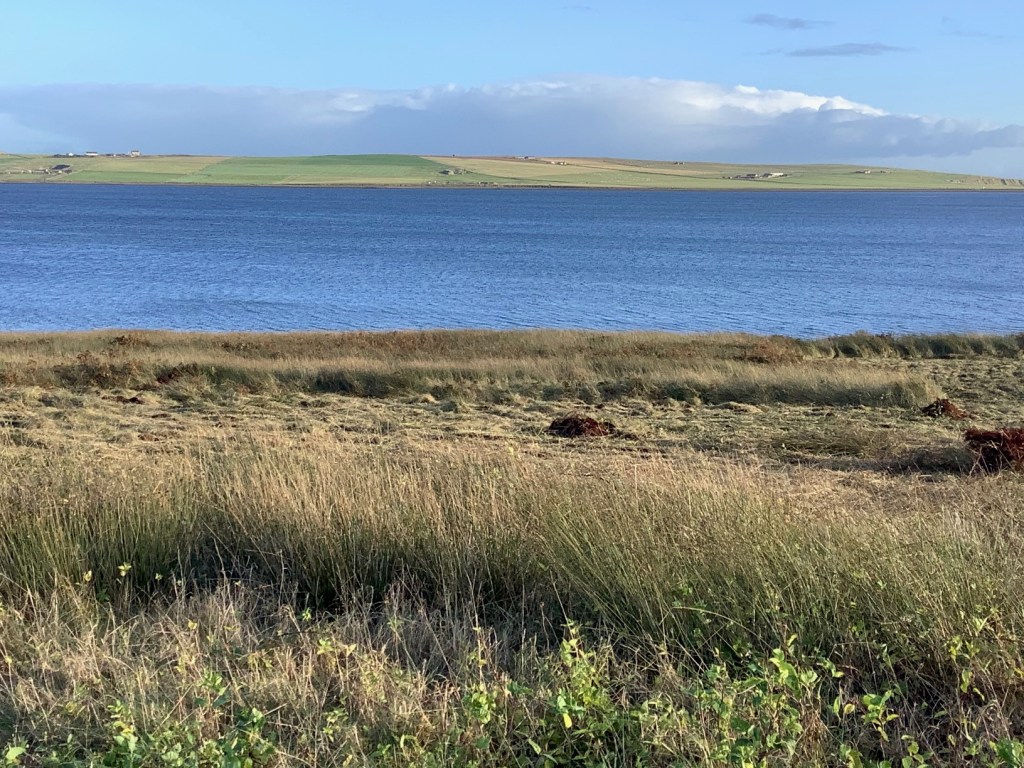
The first task was to cut and clear it. The growth was waist high, walking across the field was akin to walking on a trampoline, so thick was the bouncy mattress of light stealing thatch that had built up over the years. We borrowed a power scythe, a walk behind machine that has a wide ground level cutter bar, a reciprocating blade that scissors off everything in its path. Once cut we cleared the field, raking and forking the grass and rush into long winrows. They snaked across the field. So tall they looked like berms, ready to repel a sea born invasion.
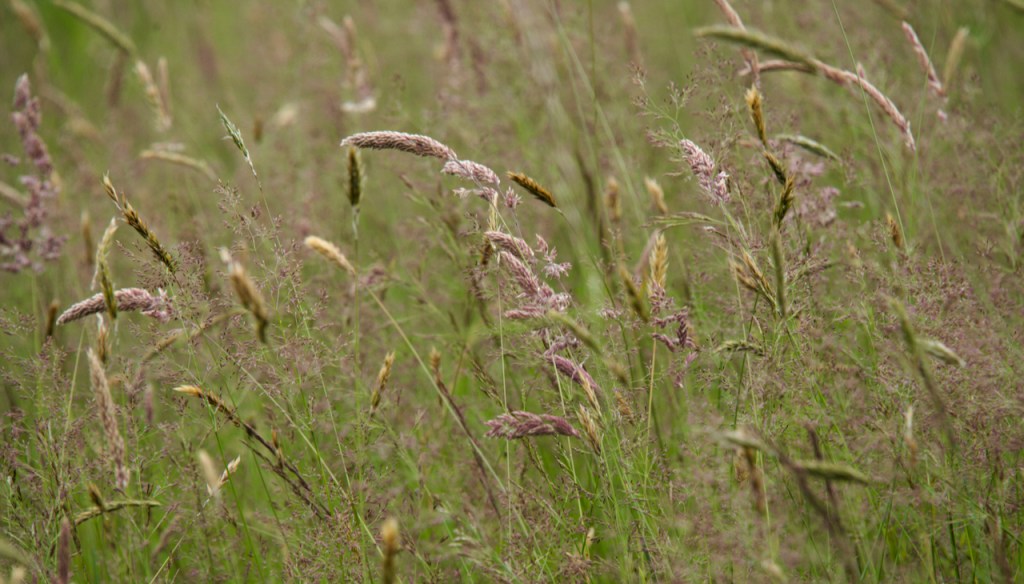
In the first year, while the winrows rotted down to a volume that could be taken away, we ran a mower over the meadow every two weeks or so, keeping new growth short and giving the meadows seed bank a chance to spring to life. The result was better than expected, different grasses appeared along with a wide variety of wildflower seedlings. In the second year we mowed until early may and then left the meadow be. That summer for the first time in decades the ground was lit gold with the yellows of cats ear and buttercup. In a wet spot sorrels flowered, from a distance the flowers of the closely packed plants giving the look of a haze of crimson smoke. Close to the shore a patch of meadowsweet came into its own, abundant with creamy white flower heads.

In addition to the species that have appeared naturally, other natives have been added, thousands of home grown plugs, ox-eye, yarrow, bedstraw, knapweeds and many more. Wood cranesbill, that, despite its name, is a plant of northern meadows, is a new addition for this year.
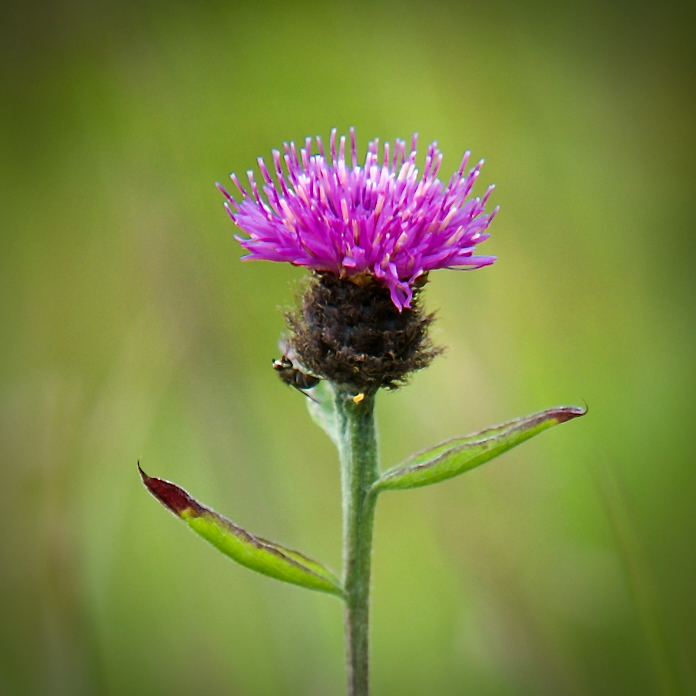
Non natives that have turned up uninvited are also tolerated. Orange flowered montbretia, a plant that grows feral here, has a toe hold in places, as does alchamilla mollis. Lupins, once grown as a crop in Orkney, pop up now and then. Close to a boundary fence there’s a patch of sweet rocket. All are kept under control by early spring and late autumn mowing. Ditto the rushes, weakened by regular cutting they no longer grow in thick green knitting needle clumps. Ragged robin, water avens and other damp lovers have space now to grow and flower.

The meadow is still evolving. Trees have been added in small groups, alder, rowan, whitebeam and others. A sloping bank is dressed with young gorse. Close to the shore two ponds have been dug, there’s a coppice of grey leaved willow. More life has arrived, greylags nest in a quiet corner, last summer a pair of curlew were seen with fluff-ball chicks in tow. In winter snipe and oystercatcher arrive to prod and poke the earth. The grass from autumns annual mowing and clearing is piled in low haycocks close to the shore, left to dry and eventually rot. New homes for wood mice and fungi, somewhere for queen bumblebees to slumber away the winter.

 A garden in Orkney
Are the lupins you get in your meadow white? Just wondering, as the white ones are being trialed on the prairies and Prince Edward Island to both fix nitrogen and as a human and animal protein source.
Lovely photos as ever and your meadow is clearly a great success, though I know from experience how much work they can be. Given all those bee-magnet plants, had you considered beekeeping? I know you enjoy honey straight from the hive 😉
LikeLike
Hi Penny, they look like a Russel type, dark blue and white. It’s hard to find information online but I have found a few photographs, they also look like russel types but of course are in B&W so you can’t see the colours. I think they were probably both soil improver and also a crop here as well , the seeds are said to be higher in protein than peas or beans.
There are bee keepers on Orkney mainland, I’m not sure about the outer isles, if food sources are in short supply some say it puts the honey bees in direct competition with the bumblebees so probably not an option for us in our location, very few gardens here and not many flowering crops.
Straight from the hive – I still have Mr Jaggers words ringing in my ears 🙂
LikeLike
The meadow looks so beautiful, Gary, and immensely hard to create something so “natural.” Do you have anybody else working with you, besides your wife?
I tried to create a “meadow” in my postage stamp garden. What a failure. Teazels loved it, but nothing else, in spite of sowing yellow rattle.
Rain, rain, rain here and icy wind, interspersed with lovely Spring days, lulling us into hope!
Best Wishes, Margot
LikeLike
Hello Margot. It’s just the two of us. We were lucky to inherit poor soil. At first the grass growth exploded, we mowed it hard for a year, always removing clippings, by the start of year three the grasses had exhausted themselves. Low fertility is perfect for a perennial meadow and with little competition from grasses the fields own seed bank and the thousands of added plugs have got off to a flying start, we expected to start seeing results in five or six years but have been lucky, only three years in and it has turned out just as we had hoped.
We tried yellow rattle, direct sown, spring sown in trays, autumn sown in trays, all were a complete failure.
Overnight gales here but a bright day, daffodils are opening, a Siren song of Spring….
LikeLike
Way down South, have daffs, crocuses, heliabores, primroses and, on a walk on Monday near Ringstead, wild violets. Also a solitary marigold in my garden, what on earth is it thinking?
LikeLiked by 1 person