
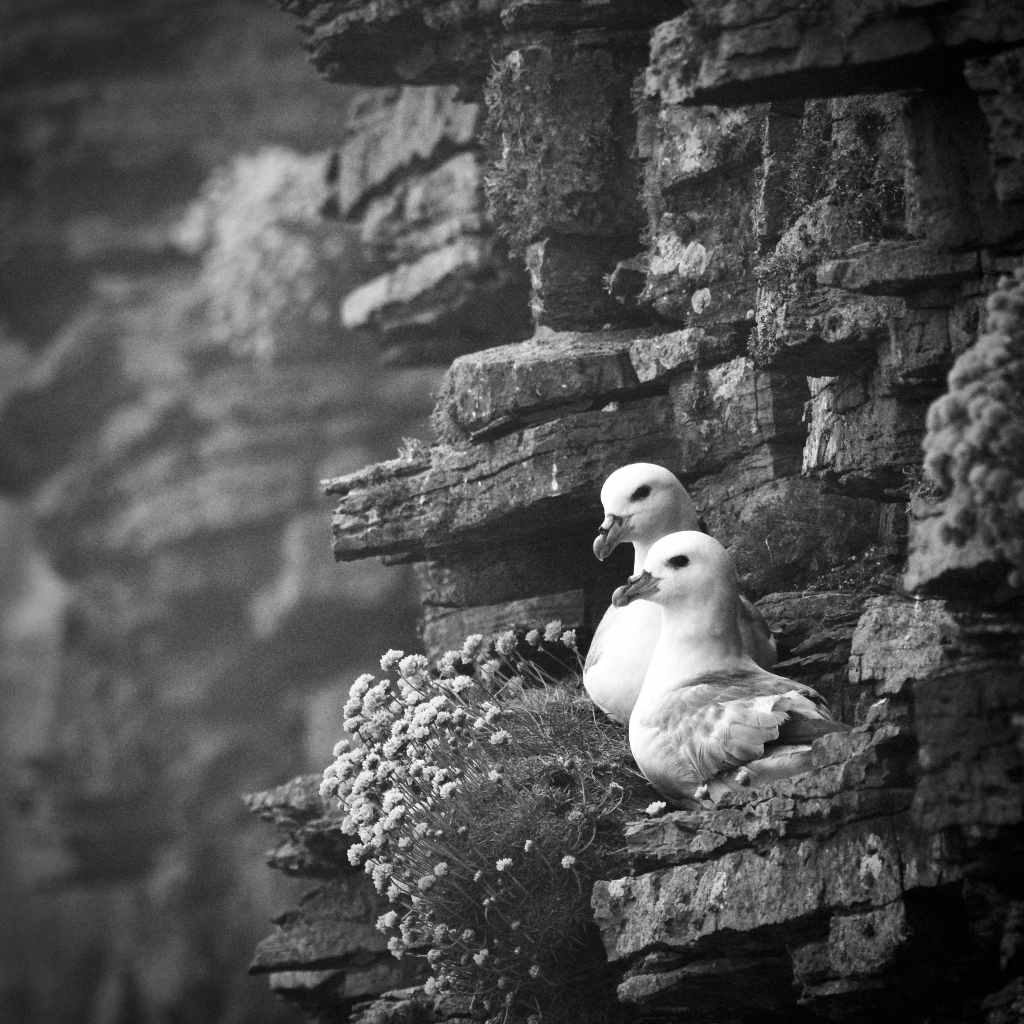
The last week of May brought mostly dry days. Tuesday past was the odd day out, a bright start to the day followed by an afternoon haar. I’d set off to photograph Fulmars in a nearby geo, managing the single frame above before the fog rolled in and stole the light. Tuesday apart, a bright and settled spell. Sunshine and blue sky days.

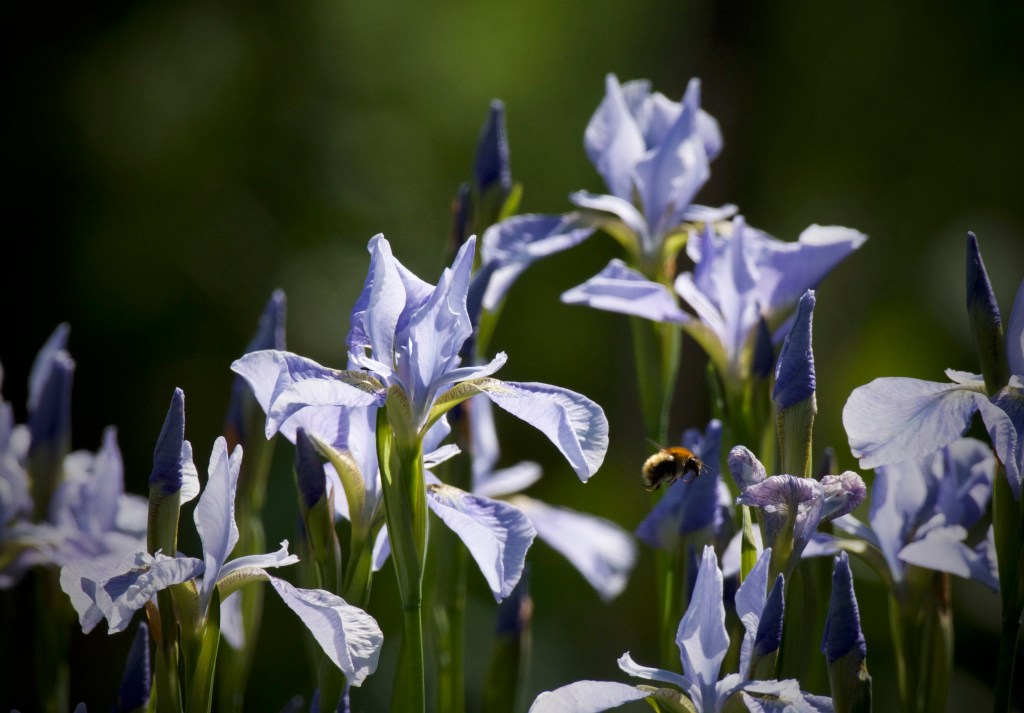
In the garden the flowers of irises are starting to unfurl. On our old patch down in Yorkshire we grew bearded iris, lovers of heat and dry conditions, they were perfect for that gardens sandy soil and south facing aspect. Up here we grow iris sibirica, the Siberian iris, lovers of cooler and damper conditions they have become an early summer mainstay for this island garden.
At the edge of the garden our old Rowan tree is heavy with dense clusters of creamy white five petaled flowers. At some time in the past it has been felled by a gale, re-rooting and throwing out new growth from its horizontal trunk, anchoring itself back to the earth and refusing to yield to the wind. A great tree for wildlife, the flowers providing pollen and nectar for bees and other insects and in late autumn, the berries, while they last, attract visiting Redwings and Fieldfares. Autumn past brought a bonus, a small flock of Waxwings quietly arriving in the half light of dawn, feasting on the berries and staying for three weeks.

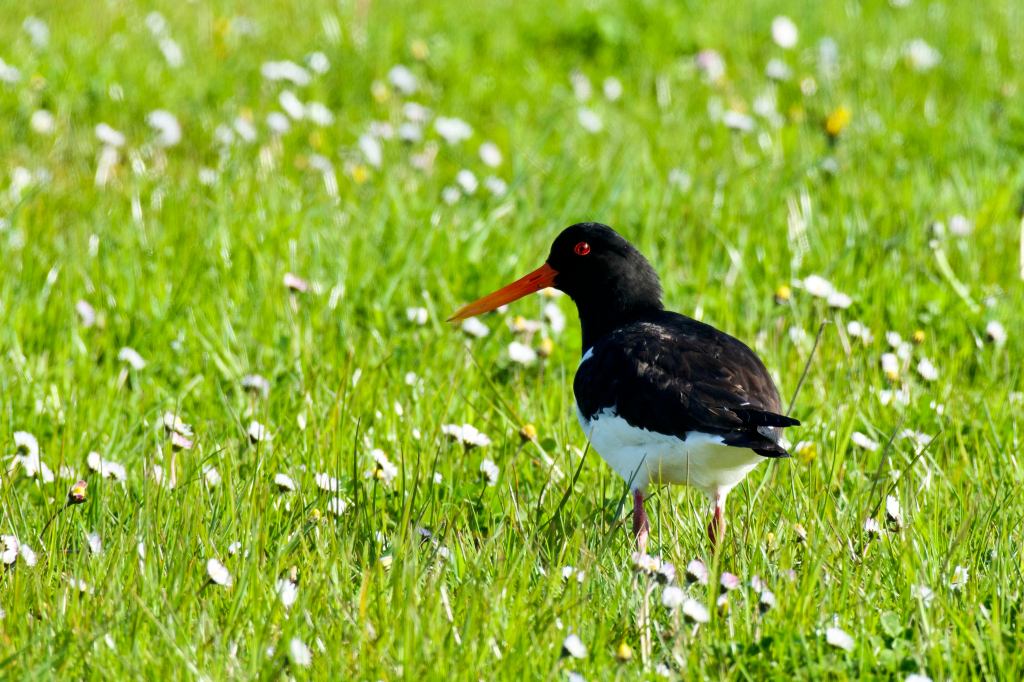
In the wider landscape wildflowers are dusting the fields with colour. On a favourite walk, that at first has the sea to one side and pasture to the other, the low lying fields are white with the flowers of daisies. The pastures, grazed by cattle in the summer months, are a favourite haunt of Curlews and Oystercatchers who prod and poke amongst the short sward, searching for worms and other invertebrates.
Further along, where the pasture gives way to coastal heath, the clifftops wear a distant haze of pale violet-blue, the short turf shimmering with thousands of tiny flowers of Spring Squill, scilla verna. They grow from a bulb, hence the name in other parts of the country of the sea onion. In Orkney the local name is swines beads, believed to come from the jet black seeds that in autumn are shed from papery seed heads.

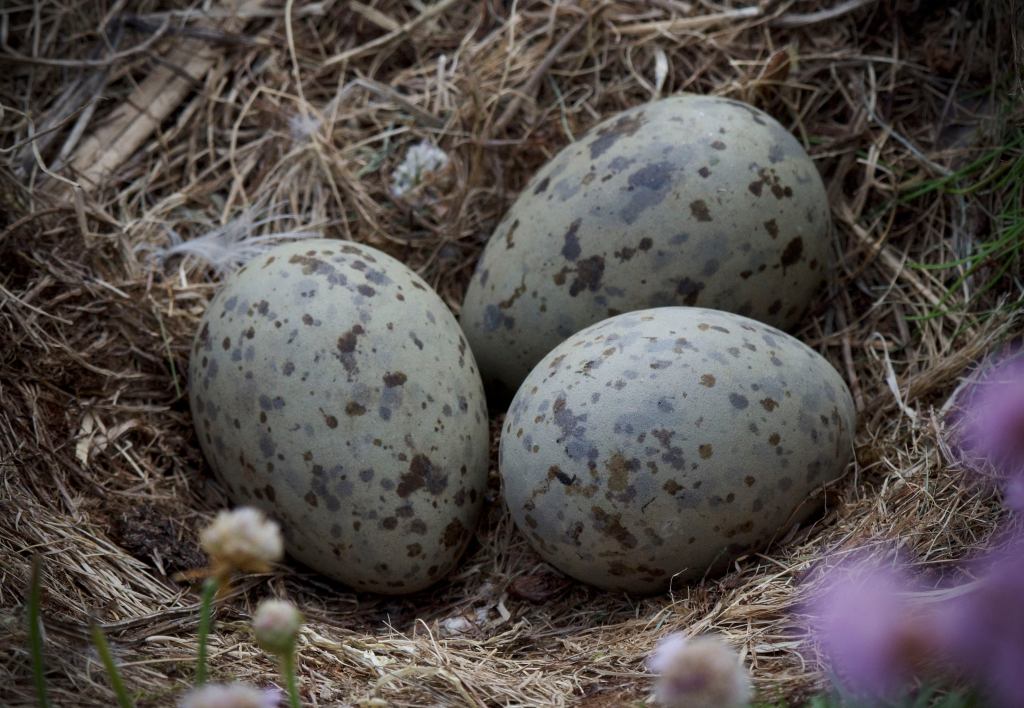
On the same walk, a few yards from the narrow footpath, tucked amongst a patch of bright pink sea thrift, there’s the nest of a Lesser black-backed gull. A simple scrape in the earth lined with a few wisps of grass that holds a clutch of three olive green eggs, each egg dotted with browns and soft blue-greys, as if randomly dabbed with a brush. As you approach, the bird slips quietly from the nest, watching you from atop a nearby lichen silvered rock, returning to the nest just as quietly as you walk on into the distance.
An unusual sight this week was a Greylag Goose with leucistic plumage, a condition where the melanin pigment in the birds feathers is absent or weak, causing normally dark feathers to appear pale or white. A hereditary condition that can skip generations, only when two birds who both carry the gene for leucism mate, can a chick with leucistic plumage be hatched.

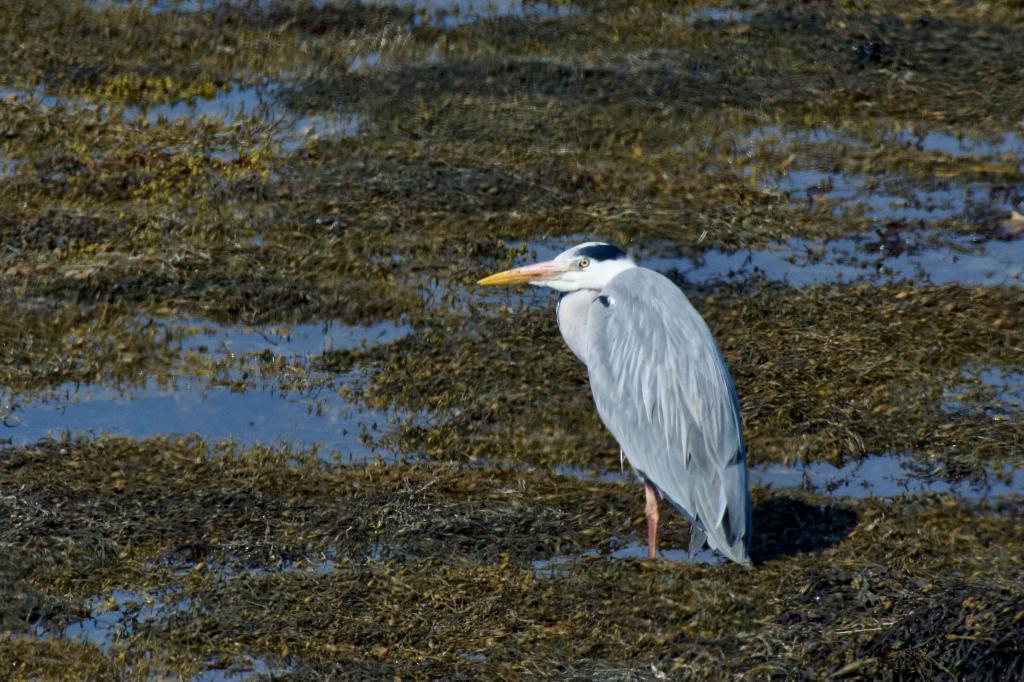
Closer to home the new ponds dug a few weeks ago are seeing more life. Three Mallard drakes have been here most days, passing the time while the females sit tight on hidden clutches of eggs. As the Mallards dabbled in the pond, a Heron flew past, he or she choosing to land on the shore just below the meadow. A rare sight here for this time of year, more common in winter when we see them in small groups of a half dozen or so. On wild and wet winter days they tuck themselves into the lee of the low cliff, stooped and grey, like old men who’ve worked a life too hard.
 A garden in Orkney