
The first days of June brought unsettled weather. A mix of sunshine and showers with a sharp breeze that even on the best days took the edge off the warmth, more April than June.

In the wider landscape fields are starting to fill with livestock. After a long winter indoors, small herds of cattle are back on the land. Cows with calves at foot briefly pause from hoovering up new grass to watch you pass. Younger beasts, full of teenage devilment, give mock chase, all tossing heads and kicking legs. Other fields have ewes with lambs, each wearing a graffiti of numbers in either red or blue, a guide for the stockman for which lambs belong to which ewe.

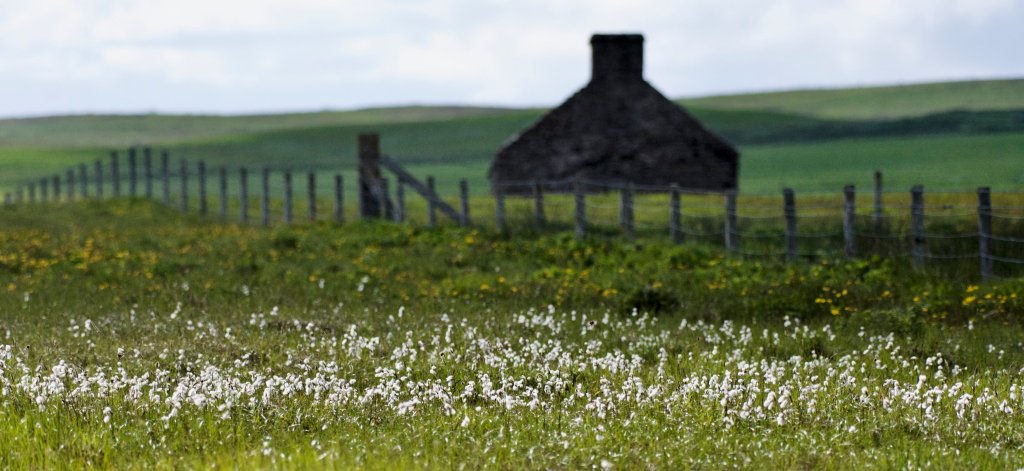
A midweek walk took me to Cantick. A headland on the island of South Walls, that, at its tip, has the lighthouse of Cantick Head. There’s a circular walk that takes you past the lighthouse itself, but I chose to follow the lighthouse road only so far before cutting across open ground towards a wide bay named Hestie Geo. The land is a patchwork of rough grazing and coastal heath. Here and there are roofless crofts, they stand as a silent testament to a lost way of life, a time when the winds passing over the fields would have carried the voices of adults and the laughter of children.

There’s no marked footpath, just a case of picking a route that avoids disturbing ewes with lambs and that takes you around wet spots that will attempt to suck the boots from your feet. At this time of year the boggy areas are an easy spot, given away by the white heads of cotton grass, nodding and swaying in the ever present breeze.
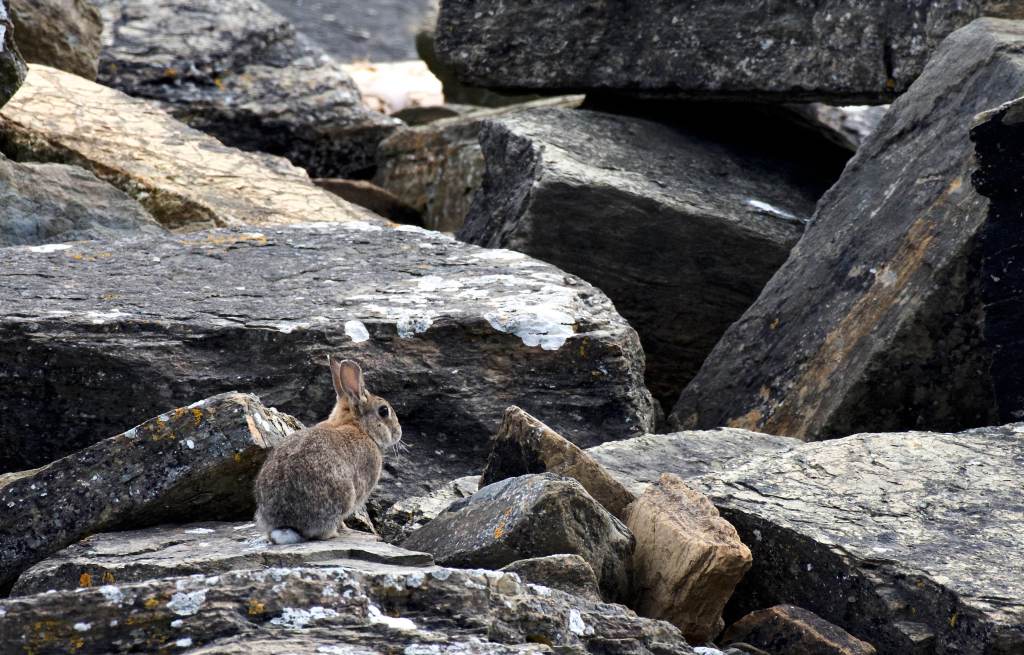
The geo is wide and shallow, its shore a tumble of stone. In winter the stone is regularly arranged and rearranged by surging tides. The land above the geo shows the power of a winter sea, for a hundred yards inland the grass is scattered with a shrapnel of wave thrown rocks. Last year, after one particularly bad storm, I paced out the distance from the shore to a slab the size of a pool table bed, 60 paces. Picked up by a wave and dropped cleanly onto the pasture, two tennis courts distant.
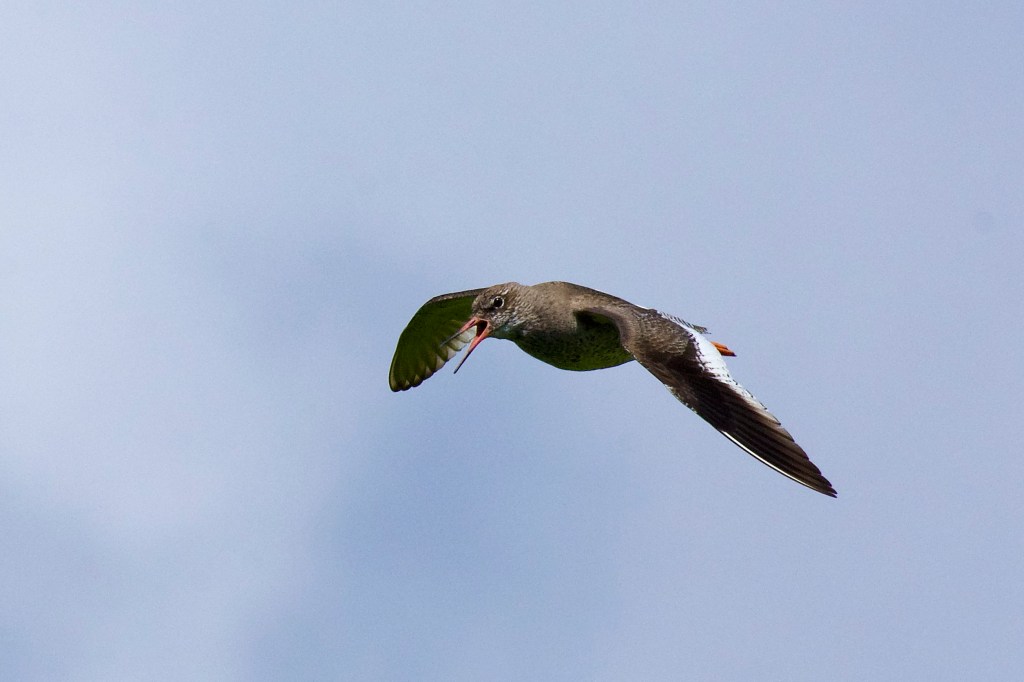
The rough pasture is a mecca for ground nesting birds. At this time of year the air is resonant with the whistled cur-lee of Curlews and the almost mournful peee-wits and wee-oos of Lapwings. Redshank are also heard, pleeping a warning to a mate or hidden chicks.
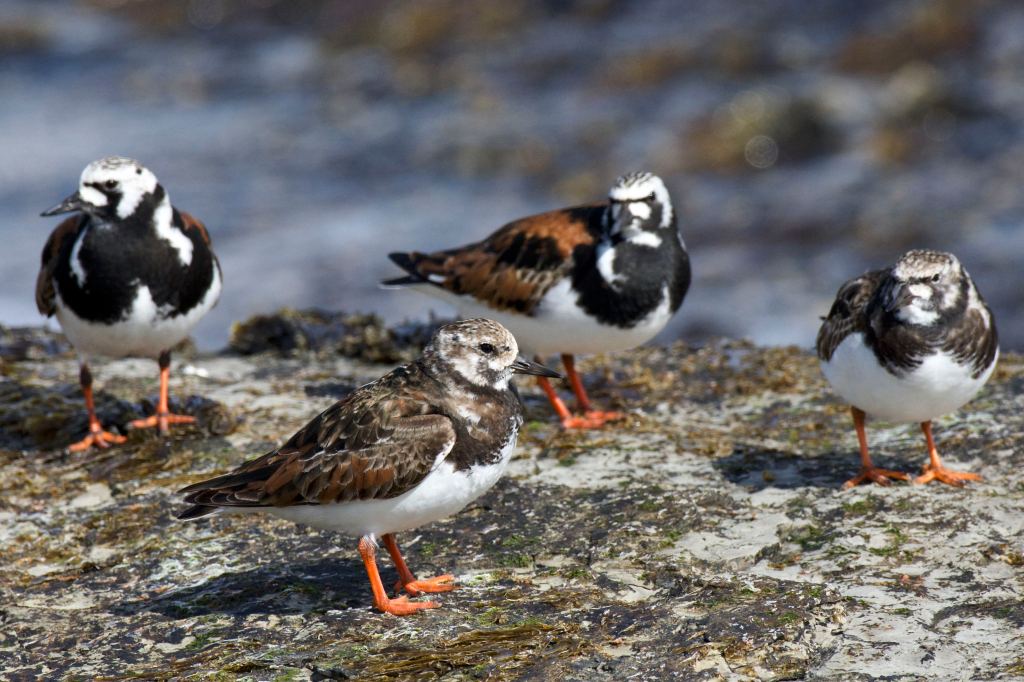
Turnstones were busy exploring the shore. On shingle beaches they live up to their name, on an area of sea smoothed rock, with no stones to flip, they were searching for goodies amongst seaweed left exposed by a retreating tide. Almost missed were two Dunlins, small starling sized birds that belong to the stint family, their name comes from the colour of their backs, dun – dull brown.

On the way home a couple of pieces of driftwood were claimed. A bole of pine, perhaps ten feet long and nine inches in diameter, along with a thigh thick piece of what I think is Hawthorn, both were put above the high water mark, left to dry, to be collected at a later date. The pine was dense and heavy, moved a few feet at a time. As I struggled with it a Shetland ram sauntered over to watch my efforts, posing for a quick photo before wandering off.

 A garden in Orkney