

April ended as it began, bright days with little in the way of rain, occasionally made cold by a breeze off the sea. As with February and March, a local weather station recorded the driest April in almost forty years. The first days of May have brought showers and the Lambing winds, a gale or two, whitecaps on the bay and a sea rough enough to see the lifeline ferry, that runs from Scrabster to Stromness, seek shelter by cutting a detour through the quieter waters of Scapa Flow.
The winds didn’t last and in the garden, where Spring and Summer curveball gales are a fact of life, no harm was done. Anything that is leggy or thin stemmed, has, depending on the plant, either a discrete stake or a couple of hoops or for the likes of Catmints and Geraniums, a supporting corset of Alder twigs. At this time of year changes are rapid, this week the back garden is suddenly white, the last of our Daffs, creamy white pheasants eye, have opened, ditto an inherited white form of the Spanish bluebell. The latter aren’t something you might willingly introduce, especially where the native Bluebell grows, but they’re good for insects, were here already, and at dusk or on a dull day, they bring a brightness to the garden. They get a free pass.
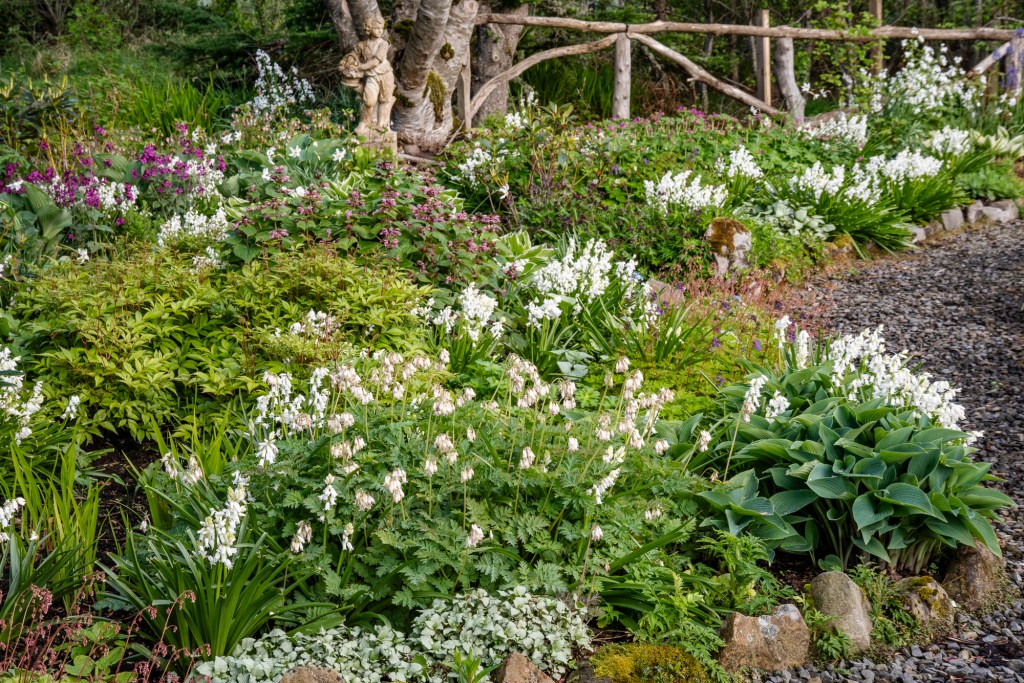
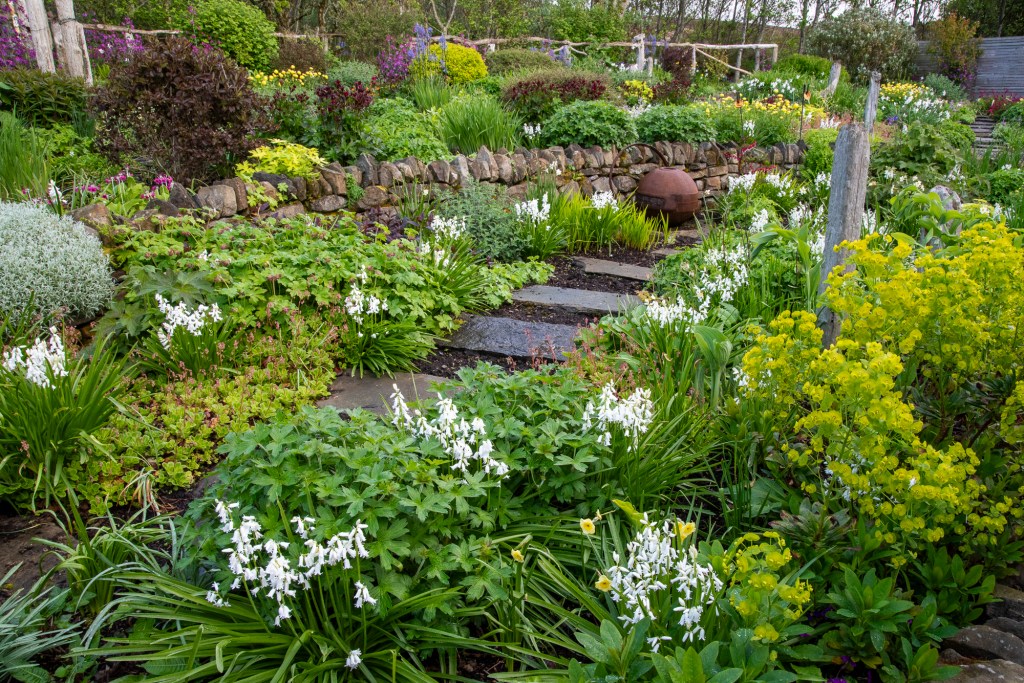
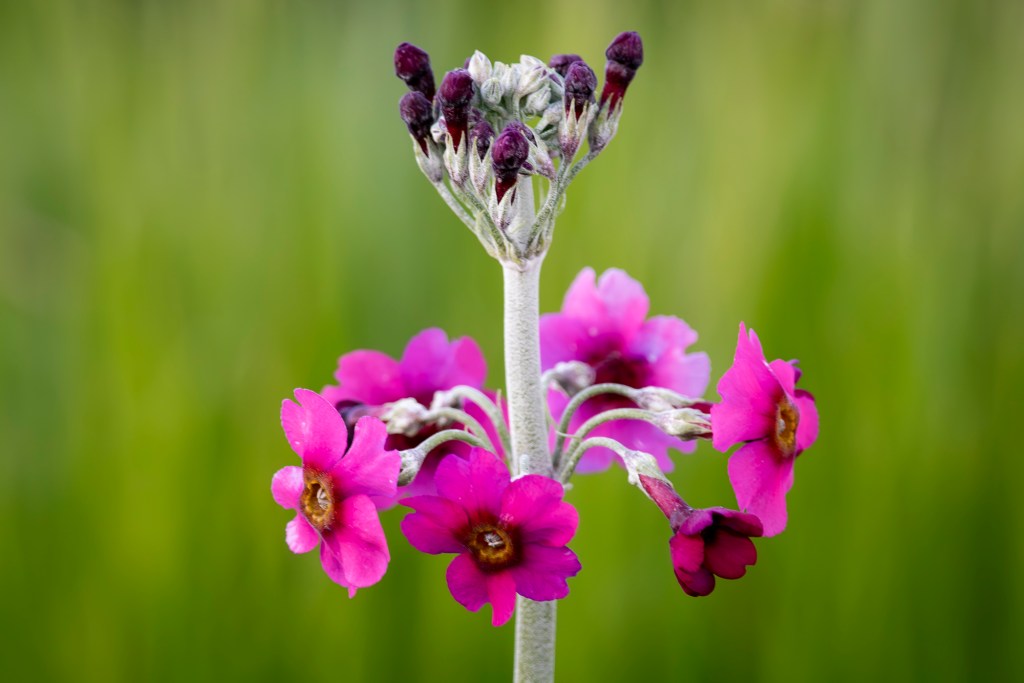
A few favourites have started to appear. In a front garden, Astrantia claret, which with regular dead heading will flower for most of the year, has come into its own. A new plant that has thrived despite our drought is Primula pulverulenter, they’re a genus that does well here, but as newly transplanted plugs in dust dry front garden soil, we had our doubts.
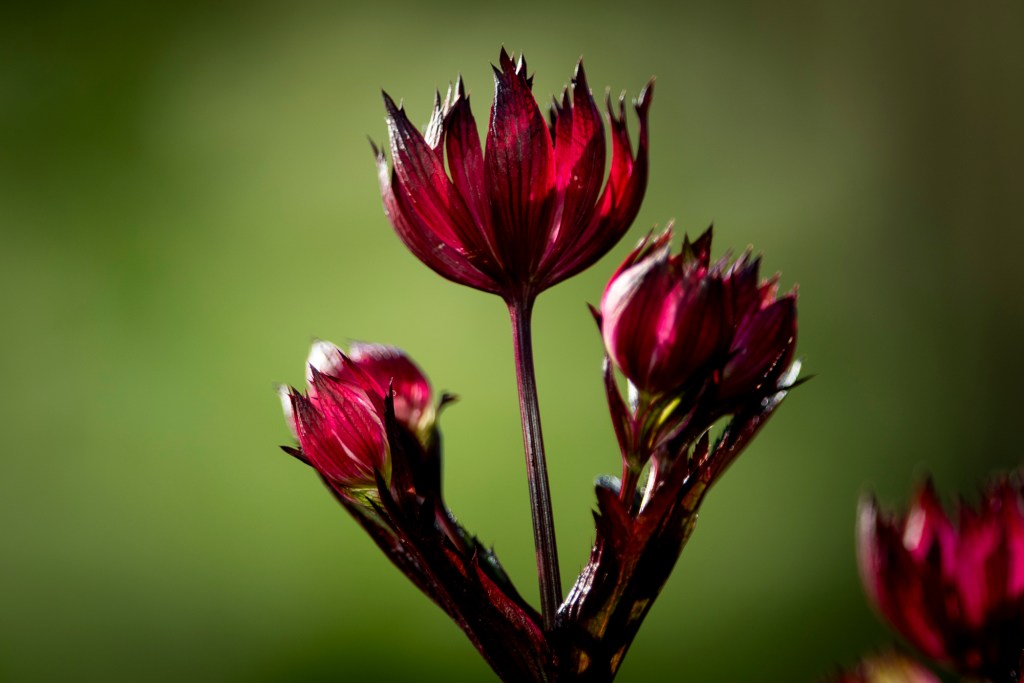
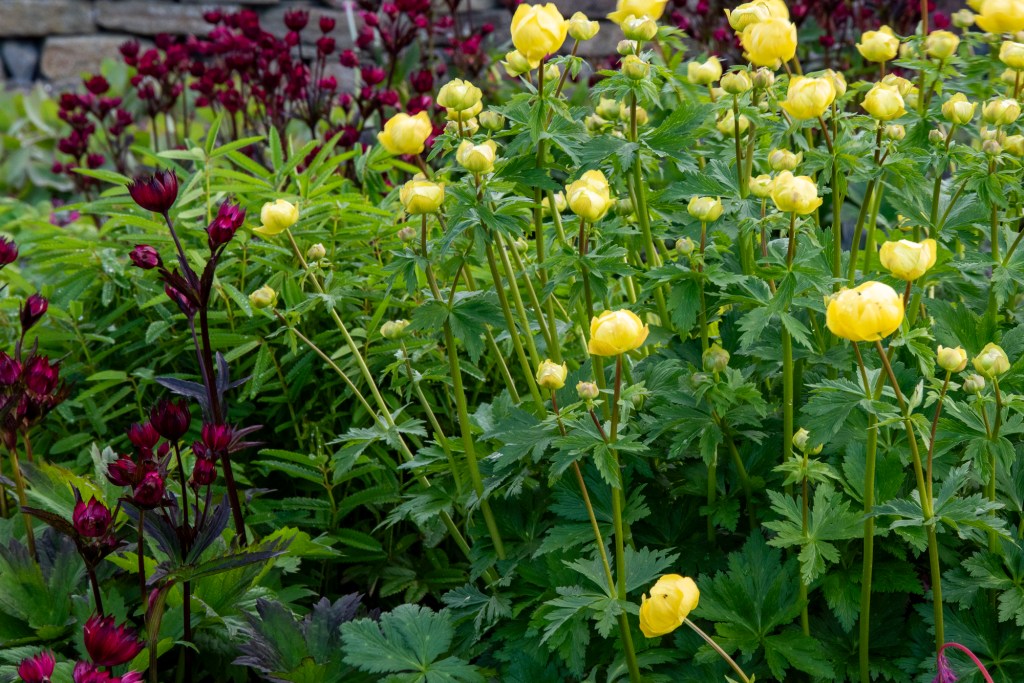
Another garden favourite is Trollius europaeus, a relative of the buttercup family that fortunately hasn’t the DNA of its wilder creeping cousin. It flowers for a while and then sits for the rest of the year as a well behaved clump of greenery. The bright yellows work well with dark flowered A.claret.
Camassia are yet another favourite – it’s a long list. They hail from the pacific North-west of America. The bulbs are edible, once a staple of Amerindians, who prepared them in fire pits. They’re a plant of damp meadows that thrive in our cool and, with the exception of this year, usually wet soil. We grow both cream and blue varieties and the blues are always the first to flower. They don’t last long, by the time the top flowers of a stem are out, those at the bottom are already fading. When the time comes to split them, the spares will go into a boggy spot where we’ve planted Alder and Aspen, once there they’ll be left to naturalise and do their own thing.

Despite all this growth and unseasonable mildness, most of our trees have yet to come fully into leaf. At the northern edge of the garden, tucked among a few inherited Larch and Sitka spruce, there’s also an inherited Horse chestnut. It’s thin and leggy, stretching for light. Not a tree for an edge of moorland spot in Orkney. I often wonder if it was picked up as a conker further South, grown on and then planted out in the best shelter that could be found. However it arrived, it’s determined to grow, each spring the leaves slowly unfurl in hope and stay bright and lush against Larch and Sitka, until we get a gale from the North. Green then turns to crispy brown. In some summers, depending on the will and direction of the wind, the leaves will last for a few weeks, in others until late Autumn.
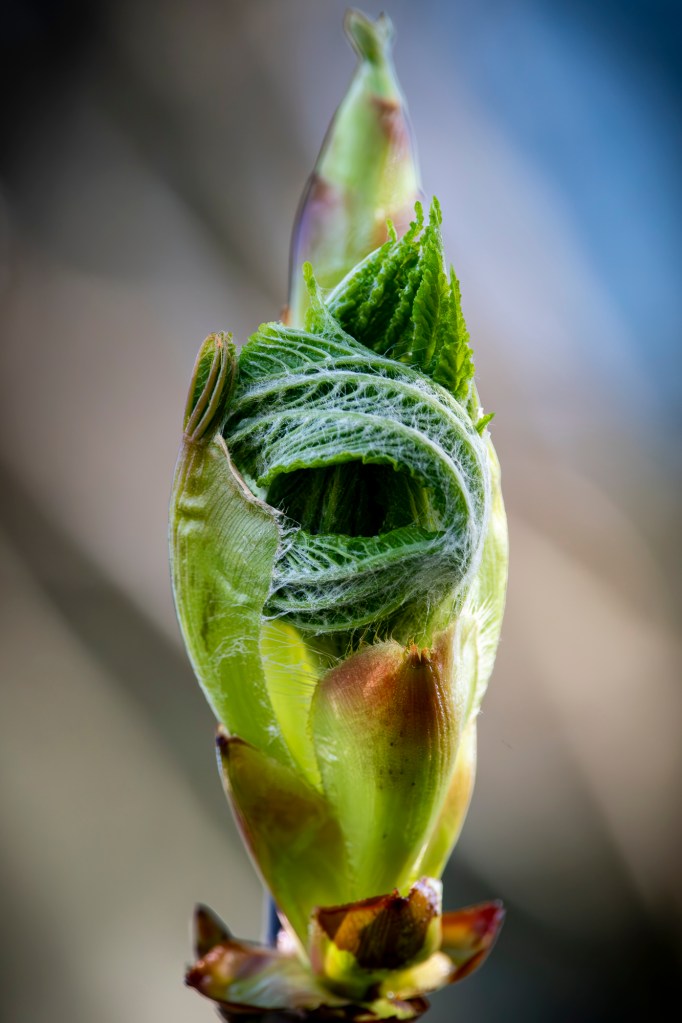
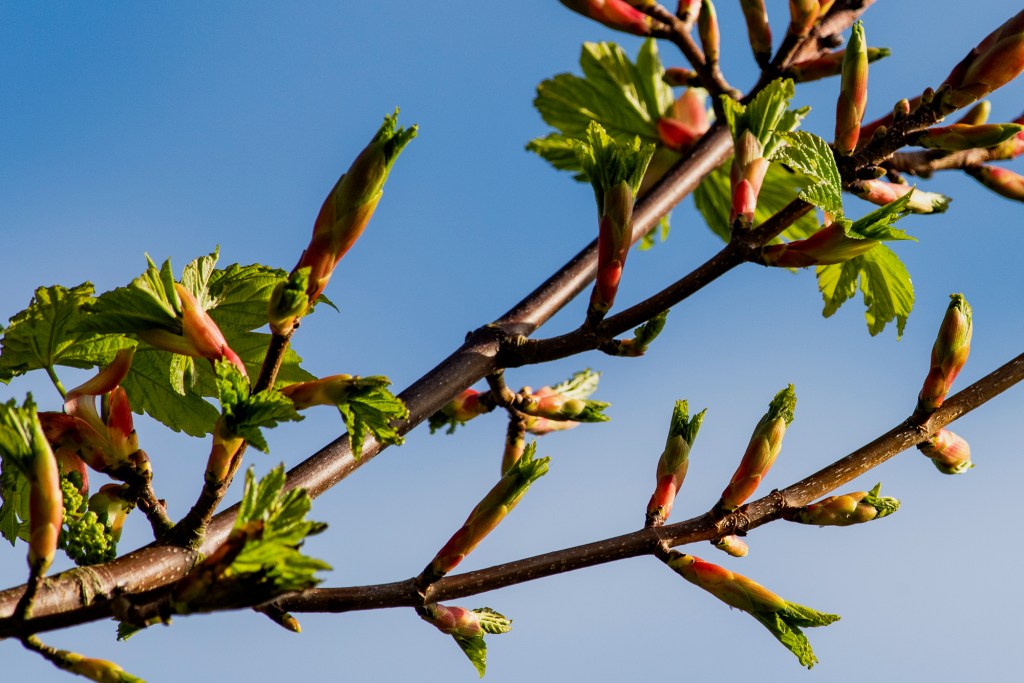
A tree that does better here, but for us is a painfully slow grower, is the Sycamore. Three were here when we arrived and more have since been planted. The ones that were here must be many decades old. Their leaves are also just starting to unfurl, fat pink buds turning green. In a few weeks racemes of lime green flowers will hang in the canopy and the trees will literally buzz with life, time to crane your head and watch and listen as dozens of bumblebees busy themselves amongst the upper branches.
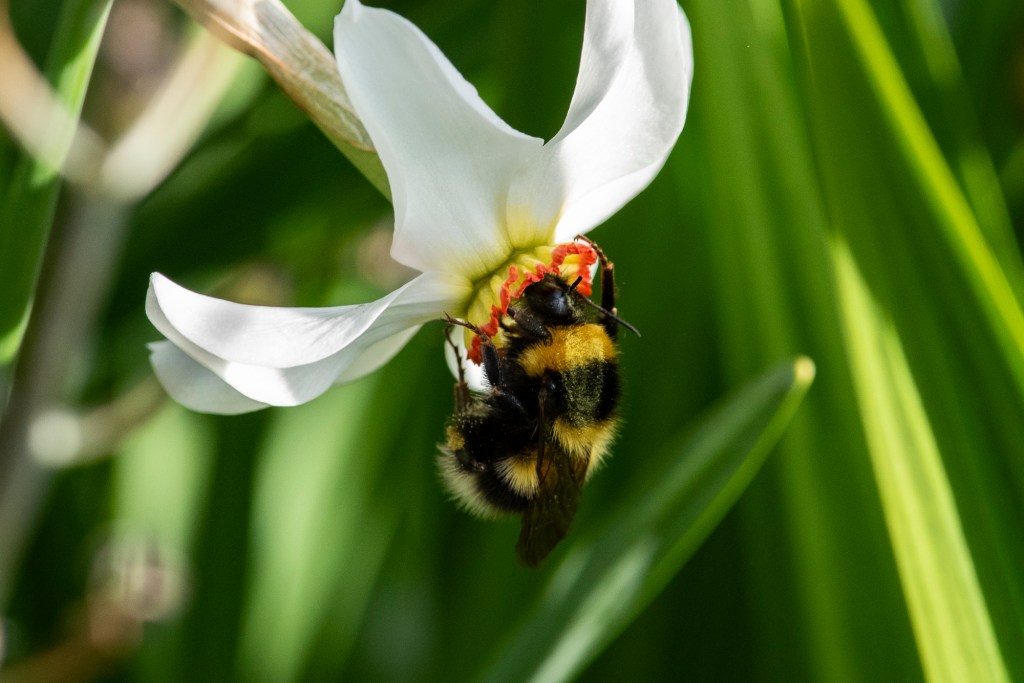
As the year goes on, we’re seeing more and more bees on the wing, as with the swallows and cuckoos, both of whom arrived in mid April, bees up here are slow to appear. I watched a queen bee, either a white or buff-tailed, go from various flower to flower, delicately probing each one, when she reached a pheasants eye daffodil she made me smile, ladylike manners forgotten she clung to the edges of the flower and dived in head first. Watching her woke a childhood memory, a cousin and myself, on a hot summers day, dunking for apples in a bucket of ice cold water.
 A garden in Orkney
Lovely to see all the burgeoning new growth in your borders Gary, and it seems to be about the same as ours here in Inverness. I get impatient in February and March for things to happen and then it becomes like an express train. I love the Astrantia and Trollius combination. Some of these happen for me by accident like a Siberian Iris next to some border Auriculas with colours that complement each other beautifully. Your tree growth patterns is interesting and has made me think about my tree choices here. The Rowans, Sorbus and Himalayan Birch seem to be growing reasonably quickly, but a Corkscrew Hazel and a small Acer have been fairly slow to get going. The Eucalyptus Gunnii that went in as a foot high sapling in 2018 reached almost 5 metres before it was taken down to just under 3 metres back in March. I wonder how Eucalyptus fare in Orkney.
LikeLiked by 2 people
Hi Geraldine
By one of those strange coincidences, we were only talking about trying Eucalyptus a few days ago. They should be fine. Our only issue would be where to put one, or better still a few of them, gunnii looks to be a very good option for wet soil, and as you say they coppice well if they get to big. Got to be worth a try.
We’ve also got a few shrubs and trees that have just stood still, Liquidambar, Euonymus and others, all still twigs. Rowans and Sorbus give the impression of being slow growers here but they sneak up on you, there’s a bird sown Rowan, just outside the garden on the moor, knee high when we moved here (we were digging a ditch to keep the garden dry and I remember taking care not to track over it with the digger) I noticed the other day that it’s now above head high.
I think the further North you come gardening is all “hurry up and wait” February and March are great, longer days, better weather but everything in the garden seems to be moving at an almost glacial pace, suddenly it’s April and there’s a burst of life, then it’s May and changes are almost hourly. Hard to think that the garden is just getting up to speed and we’re only six weeks from the longest day!
LikeLike
I so agree with your last paragraph. I have been musing on the way things are progressing as I move through all the garden activity that comes on May. Yes, everything is now bursting into fast growth after going so slowly. Maybe it is just a bit of an illusion, but the growth seems stronger and more vigorous with many of my garden regulars. It all seems turbo charged somehow. The Acer palmatum atropurpereum is one such example; the leaves seem much bigger and the colour is amazing. I have looked after it in the same way I always do, nothing extra! Oh, another example, is my pair of Kojo-no-Mai cherries, which are suddenly looking like they may get too big for their space.
LikeLiked by 1 person
I don’t know if the long dry spell we’re having but I agree, every time you walk around the garden it seems there’s been a change within a few hours, and the colours this year seem so vibrant.
We grew Kojo-no-mai in Yorkshire on very light free draining soil, a while ago Jacqui picked one up in a supermarket bargain bucket, we weren’t convinced it would live here but after a slow start it has established well and looks perfectly happy.
LikeLike
I have a good friend here in Inverness who introduced me to Kojo-no-mai when I saw her potted example in flower. She always tells me that it is very hardy and she wouldn’t be surprised that it is thriving for you. However, her plant has been grown in a large pot for almost 20 years and the pot is completely full of roots. Her plan this year is to try and get it into the ground despite the risk of killing it! I’m keeping my fingers crossed for her.
LikeLiked by 1 person
Hi Gary am reading your lovely blog from my hospital bed having just had HRS. Feeling relaxed and cosy and being looked after very well.
loved your flower pics and news.Lots of my favourites too. Plotting how to water my plants once home, tomorrow. My blackbird will be very cross I’ve missed a day!
Have a good week. Hoping for some.rain too.
Margot xx
LikeLiked by 2 people
Wishing you all the best for your hip replacement recovery journey!
LikeLiked by 1 person
Thank you so much, Penny. Consultant said I can water with a.hose! 😊 x
LikeLiked by 2 people
Morning Margot, I hope you’re soon on the mend, I’m sure the Blackbird will forgive you!
Watering with a hose looks like a plan. Still dry here, grey and flat calm today, not a hint of rain on the forecast.
Have a good week
LikeLiked by 1 person
Looking lovely! It’s nice to see all these flowers that will flower here some weeks (or a month) later. It’s been very cold these last weeks and everything is on standby.
LikeLiked by 2 people
Well our trees are ahead of yours with every one of our acers and the oaks on the street in full leaf, but your camassias are in flower and my buds have yet to break.
Got The Outrun DVD from the library last week. Such a great movie and I think the Oscar for best co-actor should go to Orkney. So wonderful to see the wildlife, wild seas, towering cliffs and wild weather on Pappay. It’s a movie I’d watch many times over just for that, even though the story itself is excellent and very moving. Loved that so many of the actors were locals.
The end scene is very amusing. I remember hearing corn crakes in South Yorkshire.
LikeLiked by 1 person
Hi Penny
Loved the Outrun, both the film and the book, I’ll second the Oscar 🙂 So good to see the weather as it often is, wild days and blattering rain, the ending was perfect. I’ve yet hear a Corncrake.
Of our three Sycamores two are still half naked, one, whose leaves open purple and then turn green as the year goes on, has yet to come into leaf. The same for Rowans and Whitebeams. First into leaf here is Coastal Willow, salix hookeriana, is it in leaf in Canada yet?
Blue camassia are just about over.
LikeLiked by 1 person
Sorry, can’t answer that question!
S hookeriana, according to E-Flora Atlas BC is only found between sand dunes and in intertidal marshes here. The map shows only a few places it’s been recorded and all but a couple of those are as preserved specimens in the University of BC herbarium. The other two sightings seem to be in an urban garden in the Kerrisdale neighbourhood, so likely in a large garden of an older house, and on the coastline of the island in the Fraser River delta that is our airport.
I was surprised by how much of Orkney used in the movie looked like Anglesey. Similar houses, similar weather. I’m guessing the cottage they showed her staying in would have been stone block/rubble infill with a slate roof like in North Wales, so that determines what your structural possibilities. Is that the what yours is made of?
LikeLiked by 1 person
Hi Penny, Hookeriana seems to be everywhere here, the man who gave it its name was on the Ross expedition, serving on Erebus. I assume at some point in his life he introduced it to the Uk. Locally it’s the Balfour willow and is said to have originally come from the gardens of Balfour castle on Shapinsay.
The houses are very similar, the original house here, the butt & Ben, is stone and would have had a stone roof, slate tended to be used in Kirkwall and Stromness but is rare out on the islands, no foundations, the house is built on wide flat slabs laid onto the ground, as you say a good inner and outer course with a rubble infill. Rare to see stone used nowadays, when this house was extended in the early 90’s to give bedrooms and a bathroom it was a timber frame with rendered block skin, at the same time it lost its stone roof and got a new roof of man-made slate 😦 When we extended to the front a couple of year ago, the same timber frame technique but with a Larch skin.
It’s very rare to see a new house in Orkney that doesn’t have at least a skeleton of timber, I can’t see why timber framing is so frowned on in England, Jacqui went to see her Mum, tongue in cheek I promised an extension before she returned, it was built, roof on but admittedly no windows due to a delay, within a week, so quick and easy and very little needed in the way of skills.
https://en.wikipedia.org/wiki/Joseph_Dalton_Hooker
LikeLiked by 1 person
What a lovely garden!
LikeLiked by 1 person
Thank you!
LikeLiked by 1 person