
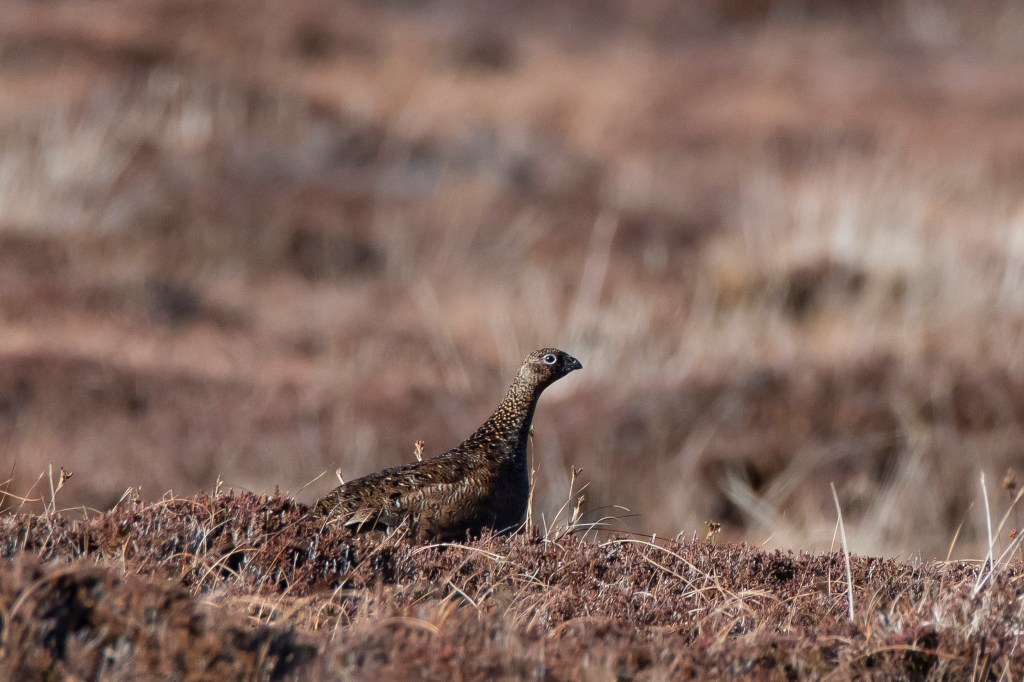
For the past few weeks, from the moor beyond the garden, we’ve occasionally heard the call of Red grouse. Often described as go-back-go-back, for me at least, it’s more guttural; Ko-kerr-ko-kererrrrr. However the ear interprets it, it’s a sound of Spring. We first heard them in late February, my boots were already laced, a walk on the shores of South Walls was planned, a driftwood hunt. The grouse sang a siren song and off I went, driftwood plans forgotten, through the back of the garden and out onto the moor. They were once shot for sport here, driven by beaters towards lines of men and guns hidden in butts, half-sunken hides built of stone or turf. There’s what’s left of a butt on the patch of moor that came with the house, stone built and circular, set waist deep in the peat. One fine day, when I have a suitable sapling, I’ll plant a Rowan in its shelter.
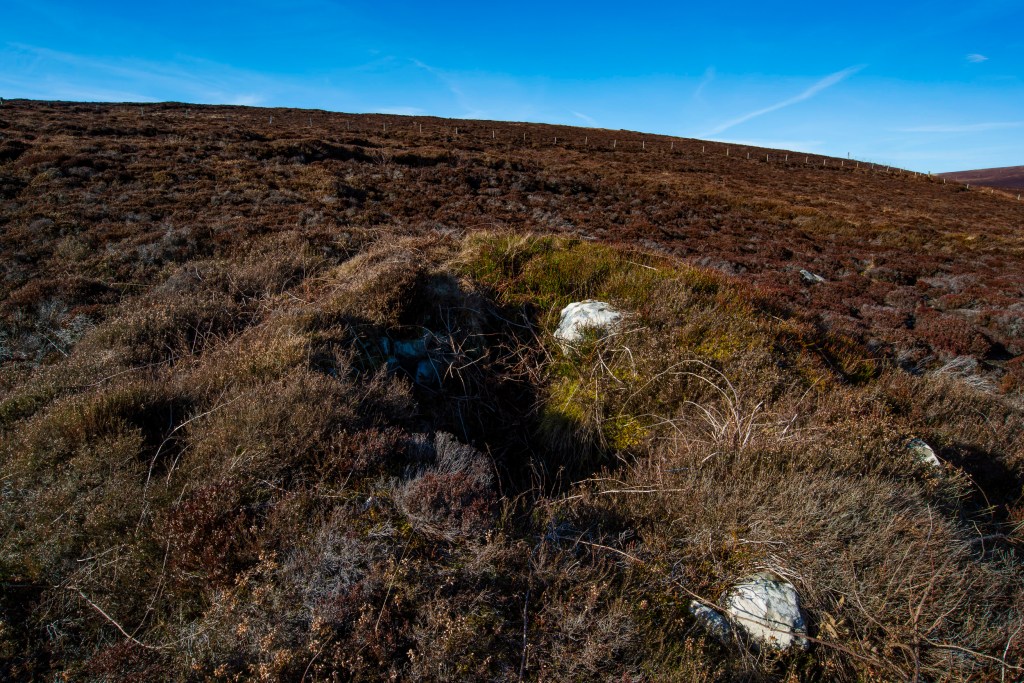
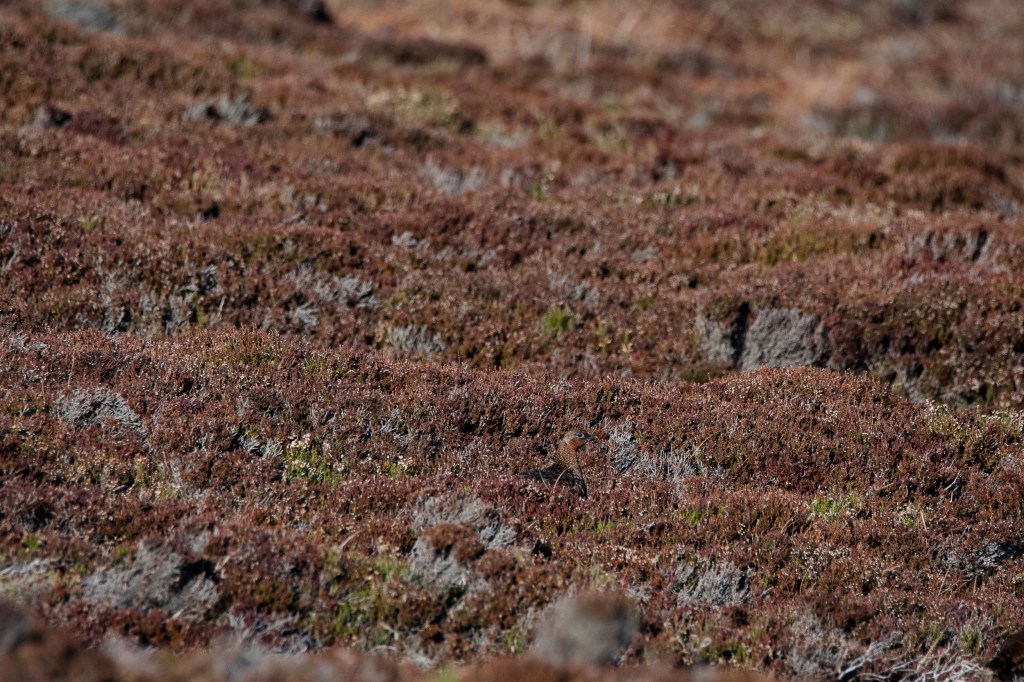
The other method of grouse shooting is walking up, a man with a dog, usually a Pointer or a Setter, doing what it says on the tin, walking the moor, gun at the ready, bagging the grouse as the dog flushes them out. I did the same, with a camera instead of a gun and no dog for company. The grouse are easy to hear, hard to spot and even harder to photograph.
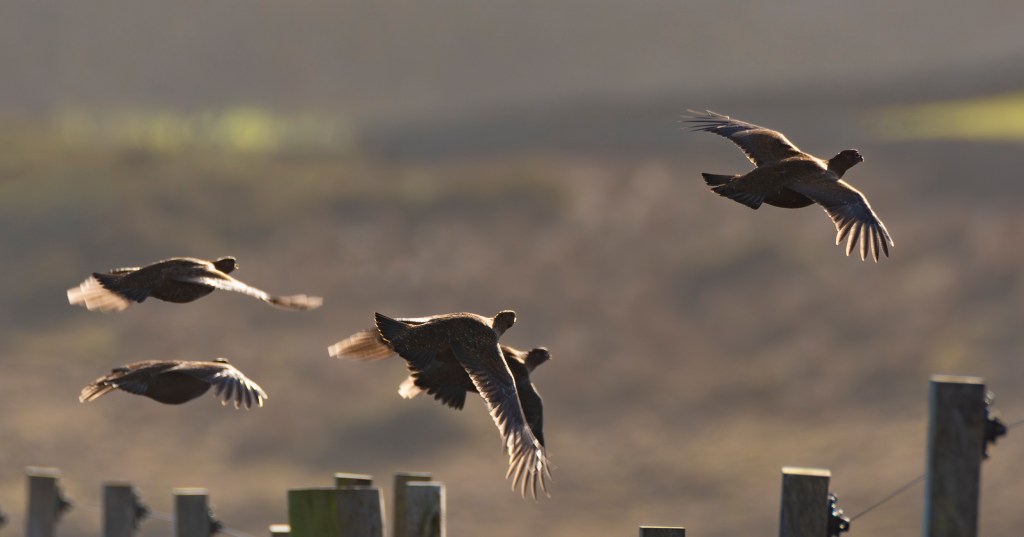
February rains have made the ground spongy and sodden, walking uphill from the garden is akin to walking on a trampoline that has been covered in treacle. As the ground levelled I followed the boundary fence, heading for a makeshift stile. A covey of nine birds bursts from the heather, a blur of wing and bodies. I swung through them as you would with a shotgun, catching five of the nine as they topped the fence.
The birds were lost to sight over a brow but I heard them land. As they settle they have a different call, a low and gargled aaaa-kaa-kaa. Once over the makeshift stile, (two fence stabs and a horizontal piece of wood: imagine a one rung stepladder) you’re into the peat cuts, they’re silent now but would once have rung with voices as families cut fuel for their hearths. I’d marked where the birds had landed but they had already moved on, a quick glimpse of three birds on the edge of a cut and they were gone, disappearing into the heather. Fast on foot as well as wing.
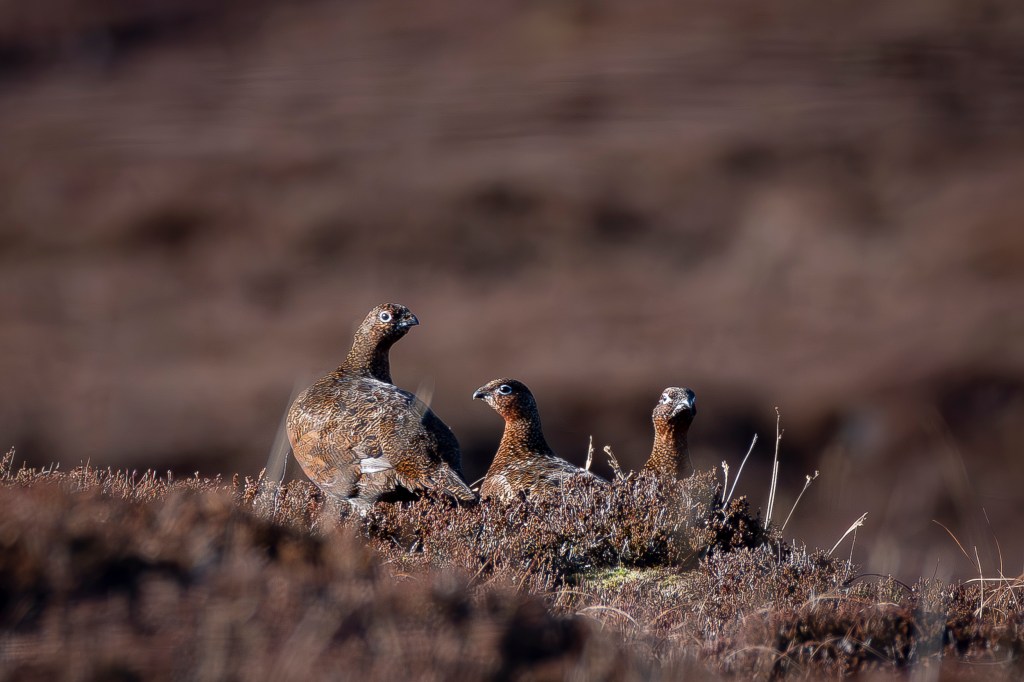
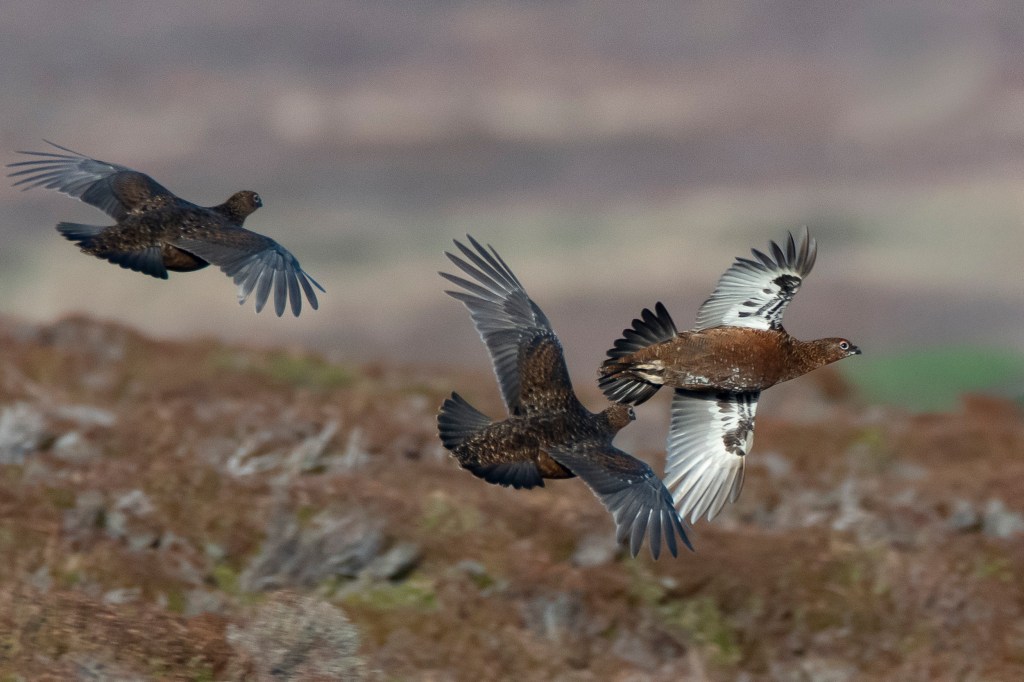
Beyond the cuts the ground rises again, there’s another fence, rising and falling with the contours, running arrow straight across the moor, a testament to the skill of the man or men who put it up. It terminates in a valley, a mile or two further on, on the shore of the islands reservoir. It’s a few years since I’ve seen any livestock up here, changes in farming practice mean the fence currently keeps neither nothing in nor nothing out. From the base of the fence three grouse burst from the heather, chestnut bodies flashing silver-white underwings. They glide away, heading downhill, back to the cuts.
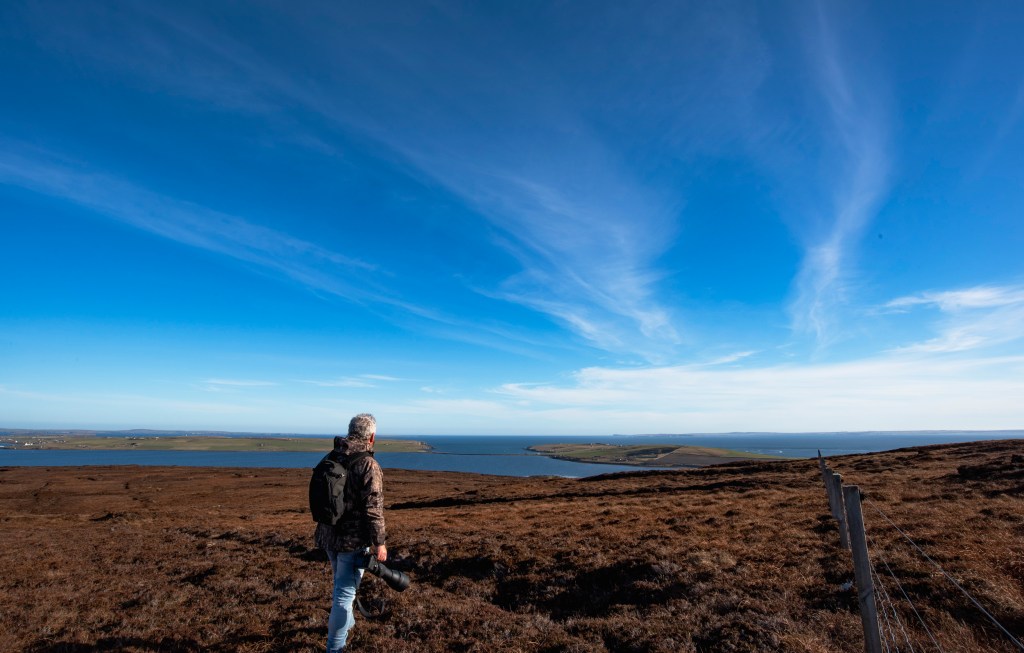
As you climb higher the view opens up. A fence post becomes a handy tripod, with camera balanced and fingers crossed that it wouldn’t fall off, I tripped the self timer and walked into the frame. To my right there’s Hoys southerly tip, the headland of Brims, with the open scar of its now disused quarry. The source of the stone that built the ex croft house that we live in, ditto many of the other homes that dot this landscape. Above Brims, beyond the dark blue waters of the Pentland Firth, there’s a faint grey smudge, the coast of Scotland, the county of Caithness. To my left lies the island of South Walls and centre frame there’s the thin black line of the Ayre, the narrow causeway that ties each island to the other.
As the ground rises again more grouse are seen, a female appears, a moorfowl, she blends perfectly with the heathers and grasses. In April or early May, she’ll lay a single clutch of eggs in a nest so well hidden amongst the heathers, that only if you almost step on her, will she reveal its location. There’ll be perhaps 10 or more eggs, each speckled with blacks and red-browns, the colours of her plumage.
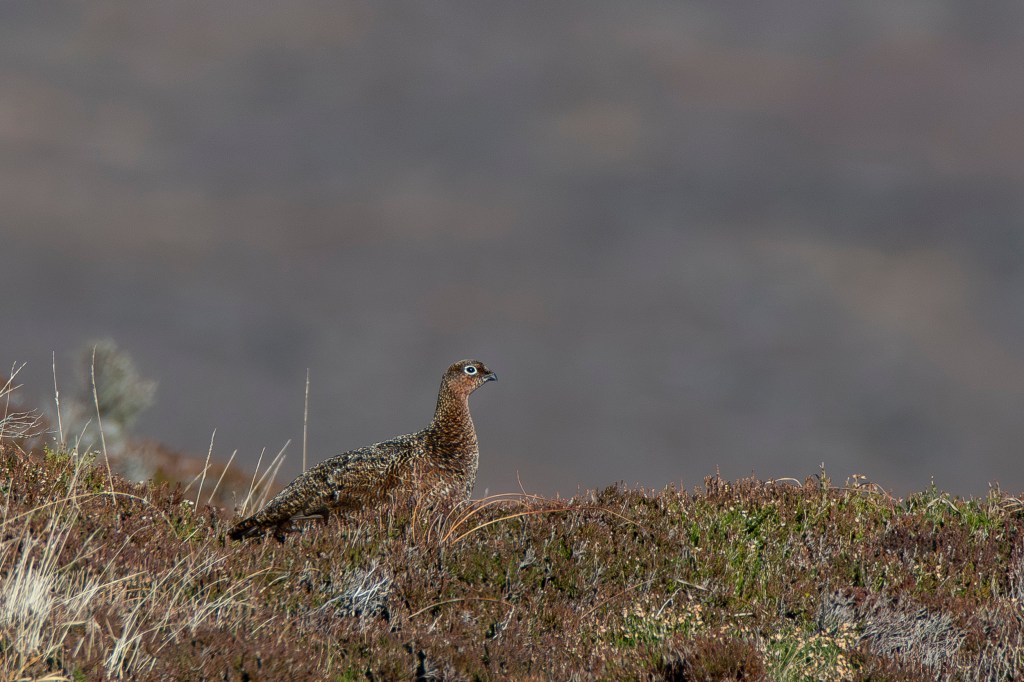
Her mate, the moorcock, appeared a few moments later, stocky and alert, darker in plumage with lipstick-red eyebrows. A bird whose image has adorned thousands of bottles of Scottish Whisky.
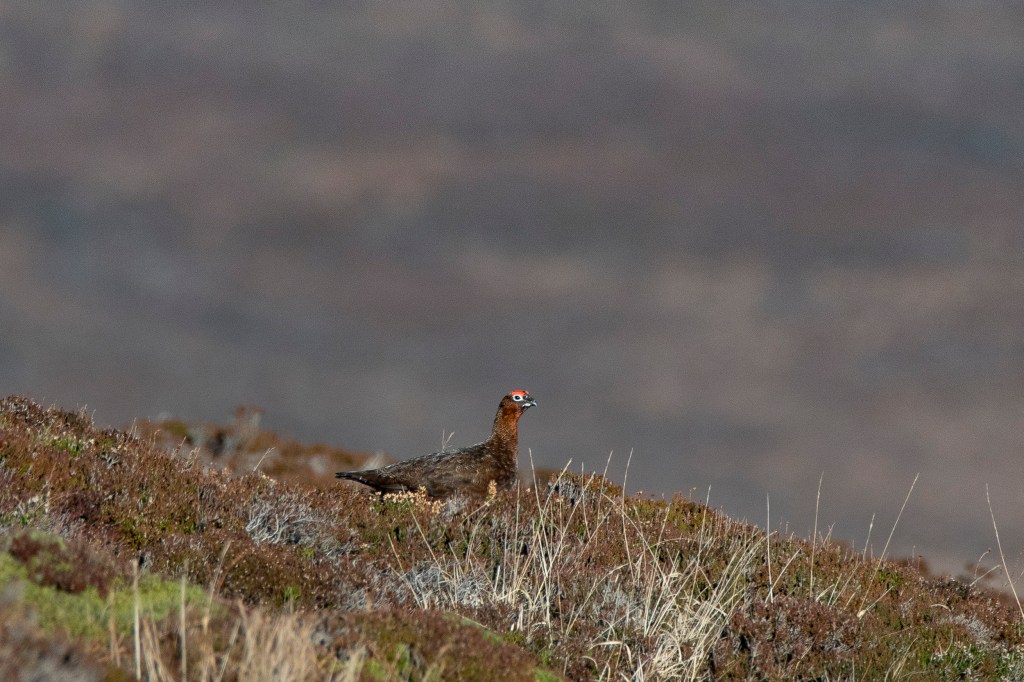
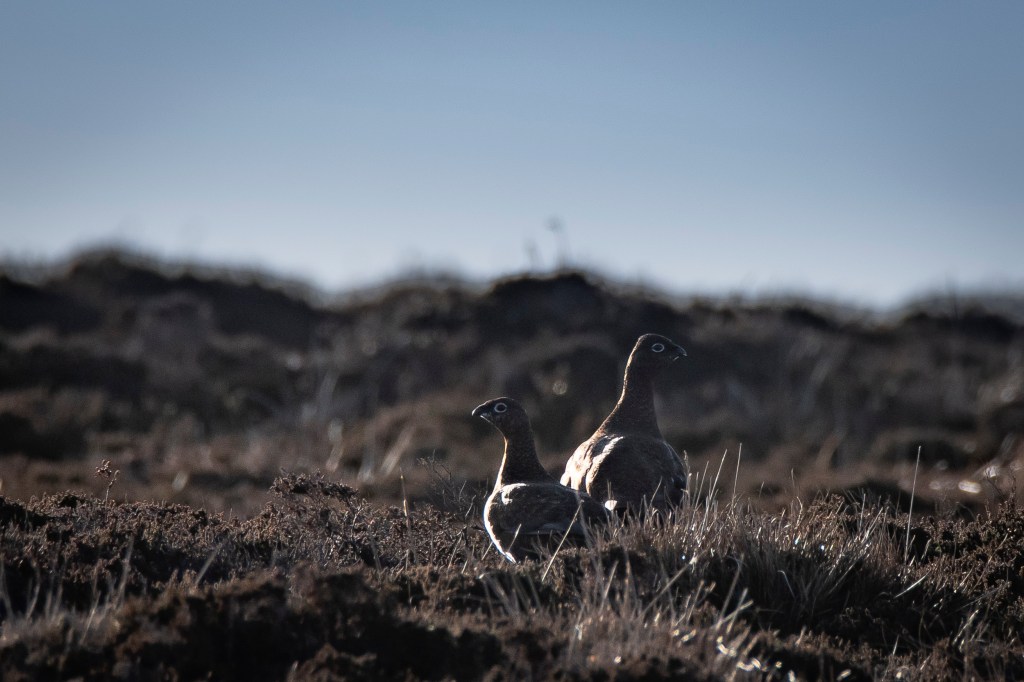
Red grouse are unique to Britain and Ireland. Along with the Mountain Hare and Hen Harrier for me they’re an iconic species of open moorland. Their Latin name is Lagopus scotica, the first, lago-pus means hare-foot, a reference to feathered feet that give them traction when snow is on the ground, the latter means of Scotland, a bit of a misnomer as along with the Emerald Isle, they’re also seen from the moors of Cornwall through to the Northern counties of England. With dusk approaching I walked the same route home, the last frame of the day was taken back in the peat cuts. A pair of birds, probably yearlings, caught by the last light of the day.
 A garden in Orkney