
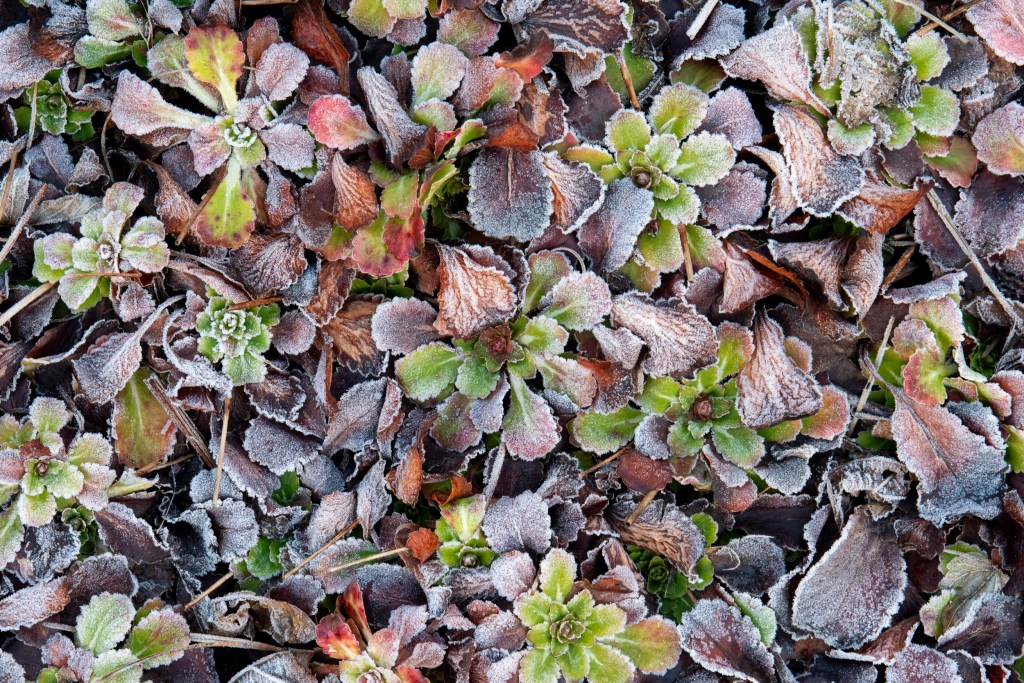
In Orkney, March ended pretty much as it began, breezy and wet. The early weeks of the month also brought what were probably the last frosts of the winter, just hard enough to sugar-coat the newly emerging leaves of London pride, a plant whose latin name saxifraga urbium, literally translates to stone breaker of the city – one of the first plants to colonise London bomb sites in WW2.
We had rain and gales aplenty but also some rare bright and beautiful days, blue skies and flat calm. Days that make you forget the wet and the wild and forgive Orkney of the worst that she throws at you. A sure sign of better days to come was the first haar of the year, they form when warming air passes over a cooler sea. A soft low blanket of grey-white that stole the sunrise and hid neighbouring islands from view.

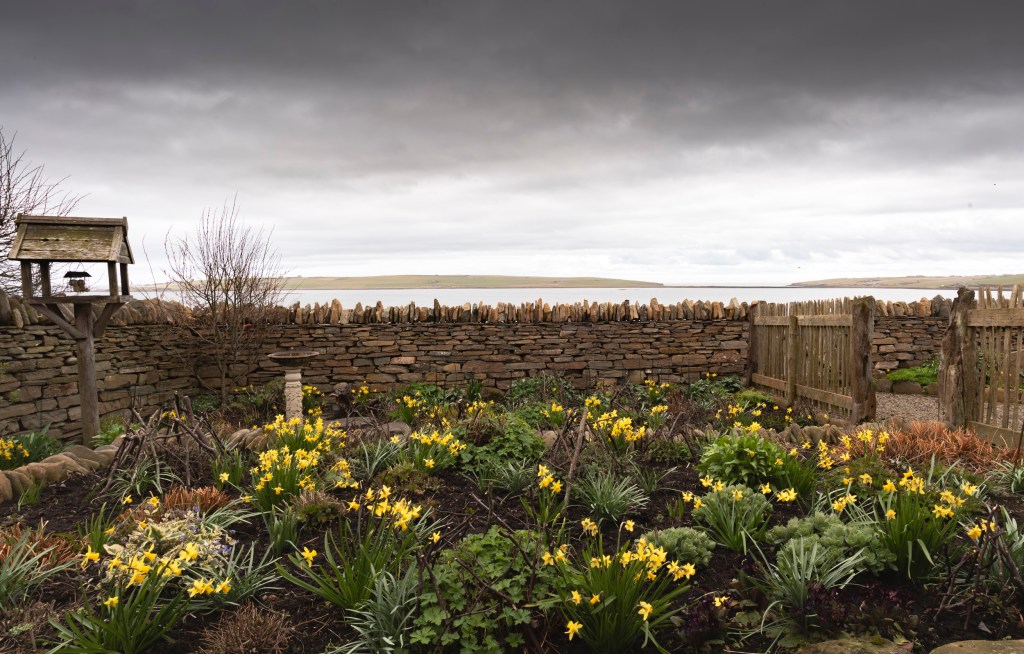
In the garden the cupboard is still pretty much bare, snowdrops have faded, tete-a-tete daffodils have taken their place, swapping white bells for citrus yellow trumpets. It will be some weeks yet before the gardens dark earth is lost beneath foliage and flowers. Gardening in Orkney is a slow burn start.
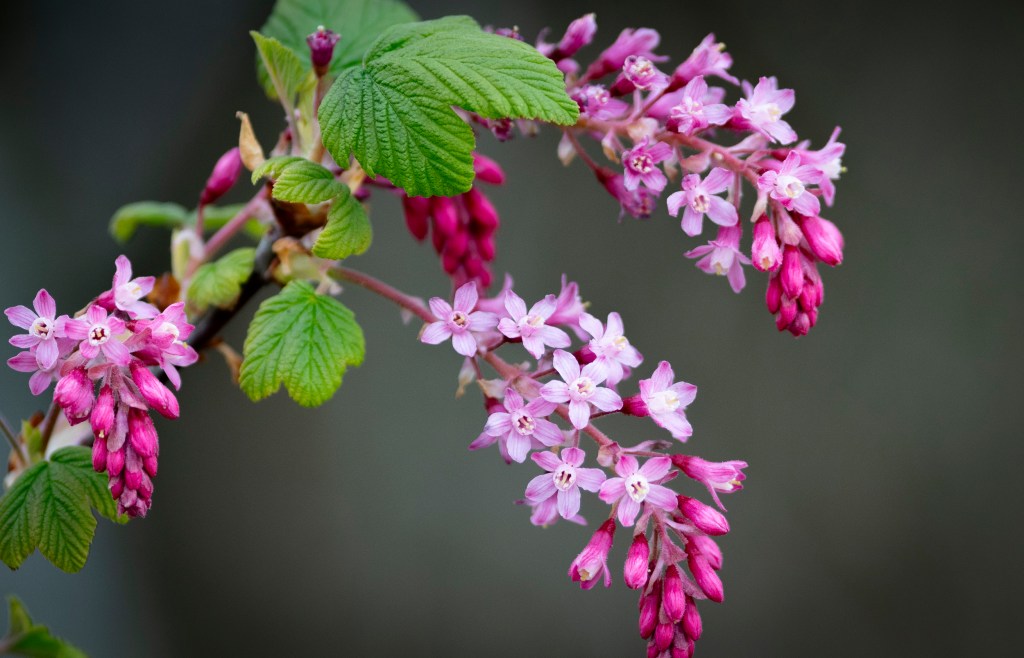
In the back garden, the first of our Ribes are in flower. We grow white and pink varieties and of the two, the pink is by far the hardiest, tough enough to grow not just at the edge of the garden but beyond the shelter-belt, on the edge of the moor. The pink was already here, a single overgrown shrub whose offspring, via cuttings, are now dotted wherever there’s a space. A magnet, and a life saver, for early flying bees.
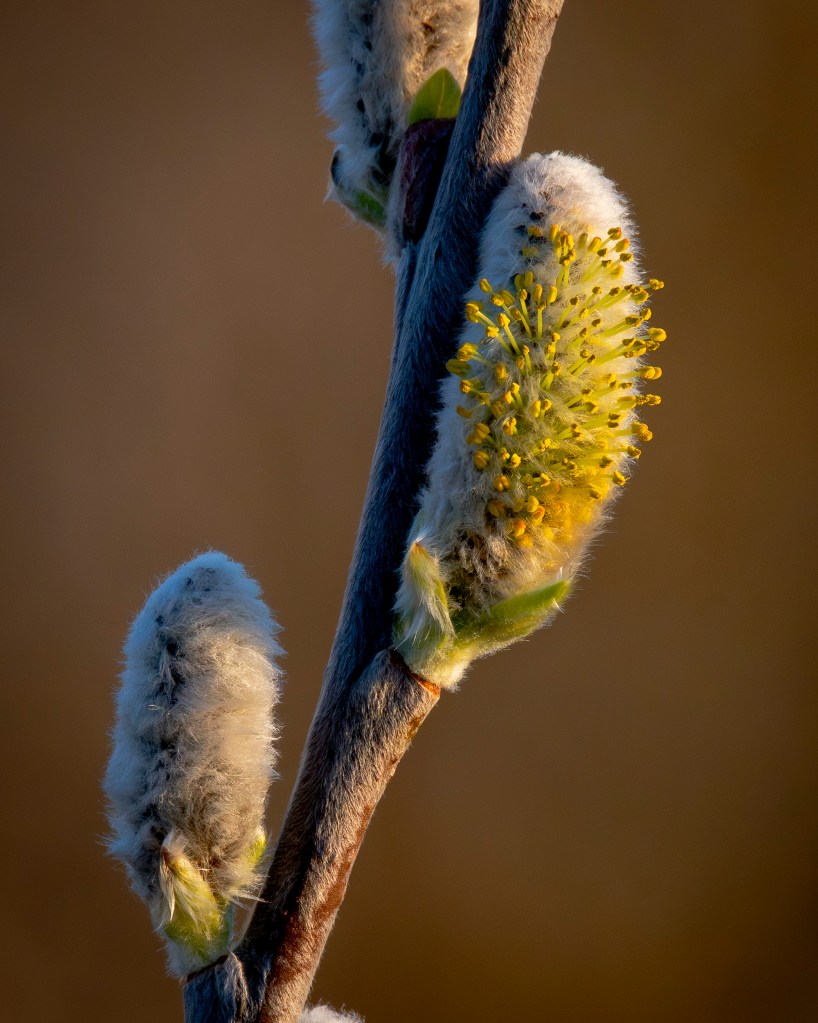
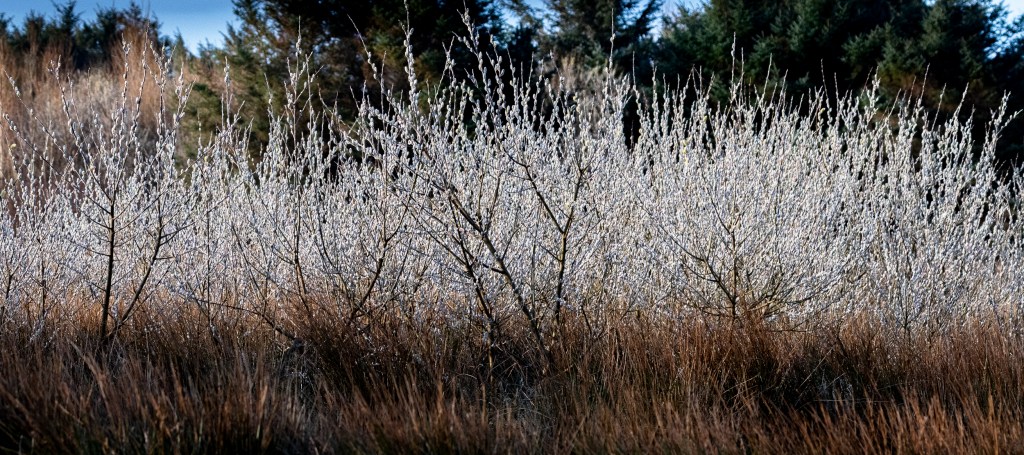
Beyond the garden, close to the shore, a willow coppice, planted three years ago on a patch of ground that never dries out, has come into its own. Each cutting has reached at least head height, many are ten feet or more, all are adorned with hundreds of catkins, plump and white, as soft as lambs wool. From a distance, especially when backlit by the morning light, they glow like cherry blossom, white against dark, just the look we had hoped for. As March turns to April the catkins, as per the photo at the top of this page, will flower, bursting open, morphing from white to lime green. Next will come silver-grey leaves that in Autumn will fade to a soft orange-yellow. One of those trees that never stops giving.
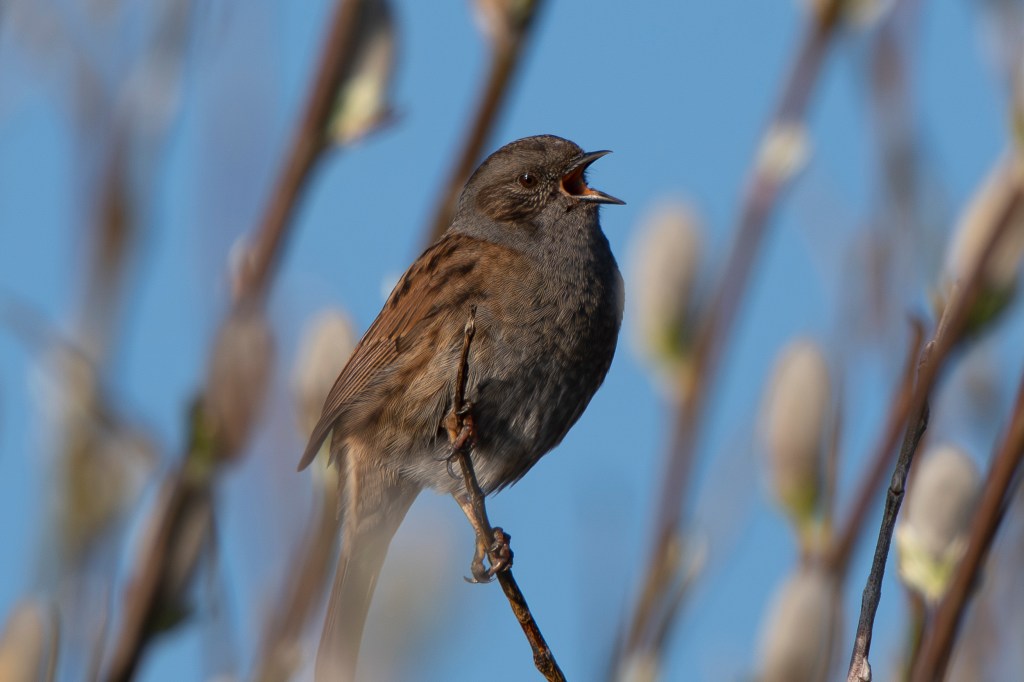
As the willows have grown and thickened, birds have been drawn to them, long-beaked woodcock lurk beneath them, hiding amongst leaf litter and sedge, coming out at night to probe turf in the meadow, leaving behind the tell-tale daylight sign of ground dotted with hundreds of holes. This year a pair of Dunnocks have made the coppice their home. They’re hard to spot as they flit from low branch to low branch but the male, as I witnessed one morning last week, will occasionally rise to a loftier perch and sing a claim to his territory.
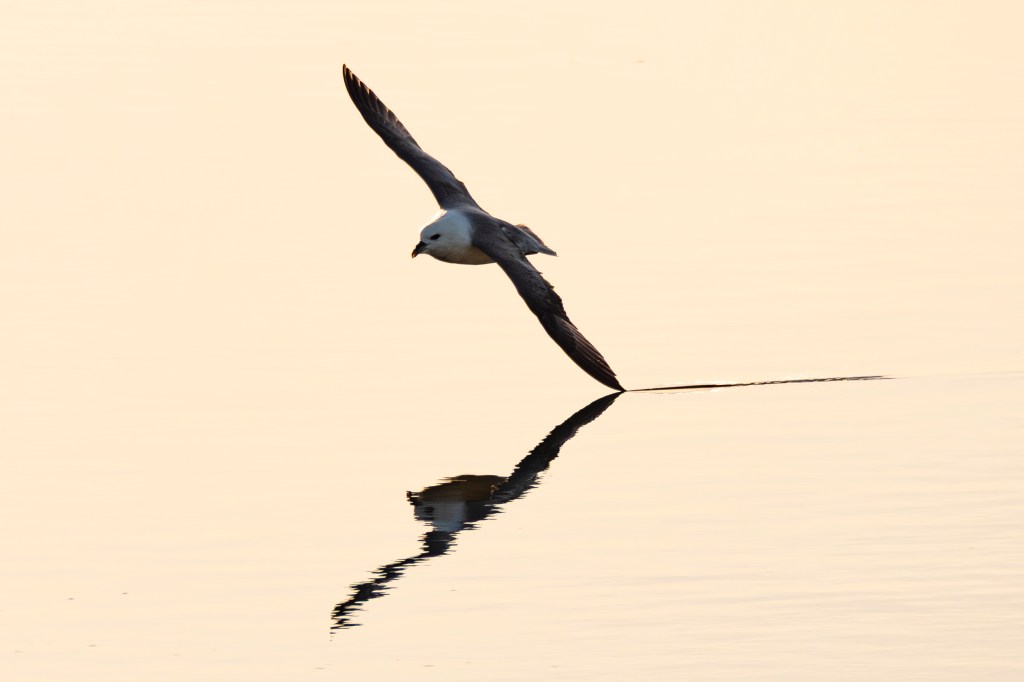
When we’re gifted flat calm days, one of my favourite things is to walk to the top of the low cliff beyond the willows, to a vantage point where flat ground falls quickly away to a beach of sea worn stone. A hidden spot, thick with ankle-snagging bramble and wild rose. The best time is just after sunrise, as the birds begin to stir for the day and the bay, untroubled by a breeze, is as still as a pool of mercury. Patrolling Fulmars, who nest on the low cliff, fly water-skimming figures of eight, occasionally cutting the bays surface with the lightest touch of a wing tip.
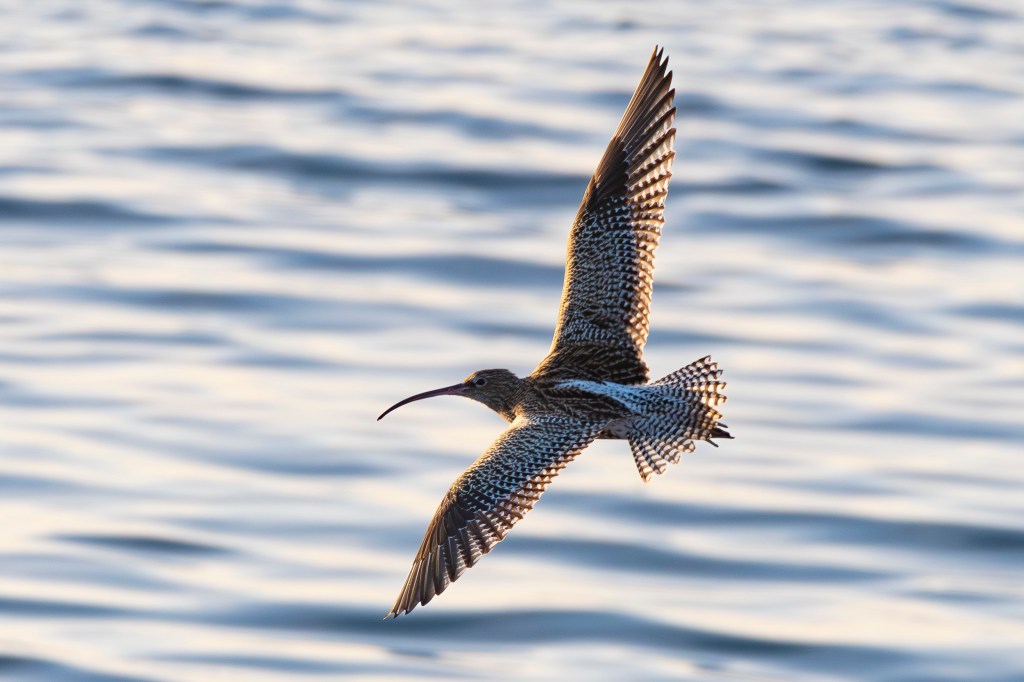
In March I managed a half dozen mornings, a clear and flat calm hour or two where, as the sun climbed higher, the warmth on your face rose as if controlled by a dial. There’s no real aim but to just watch and listen, to see the day come to life. Shore birds come and go, bright-billed oystercatchers and diminutive redshanks dash past, following the tides edge at zero feet. Curlews rise from a shore of sandstone and bladderwrack, complaining loudly of your presence.
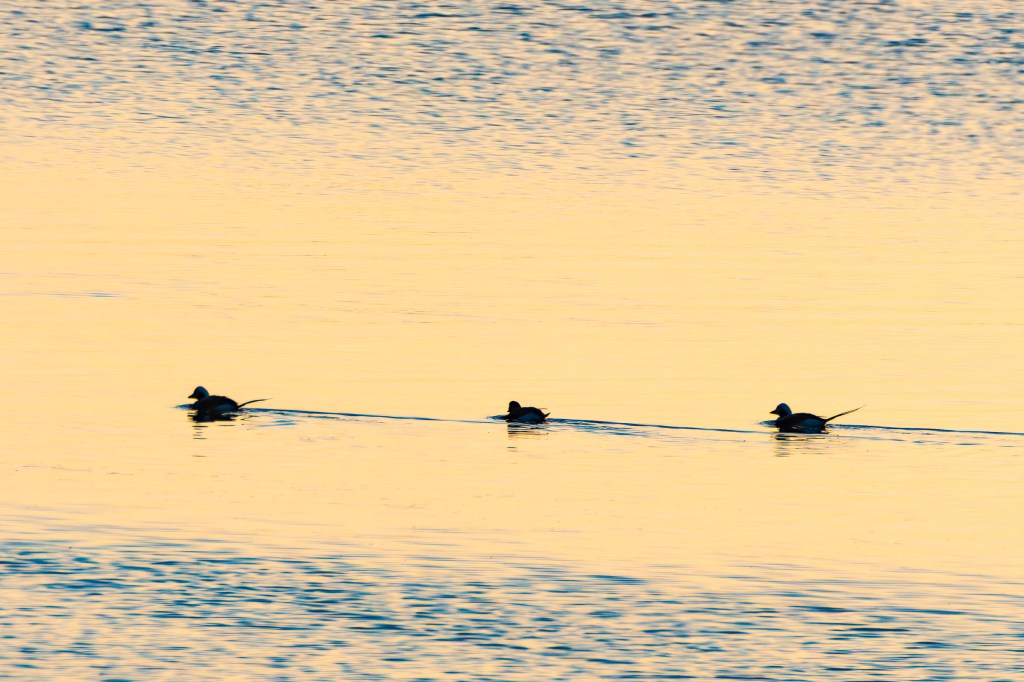
Out on the bay, there’s a trio of Long-tailed ducks, a male and a female followed by another male – tail end Charlie. He’s tagging along, hoping she may elope with him. Soon, elopement or not, all three will leave to spend the summer in the high Arctic.
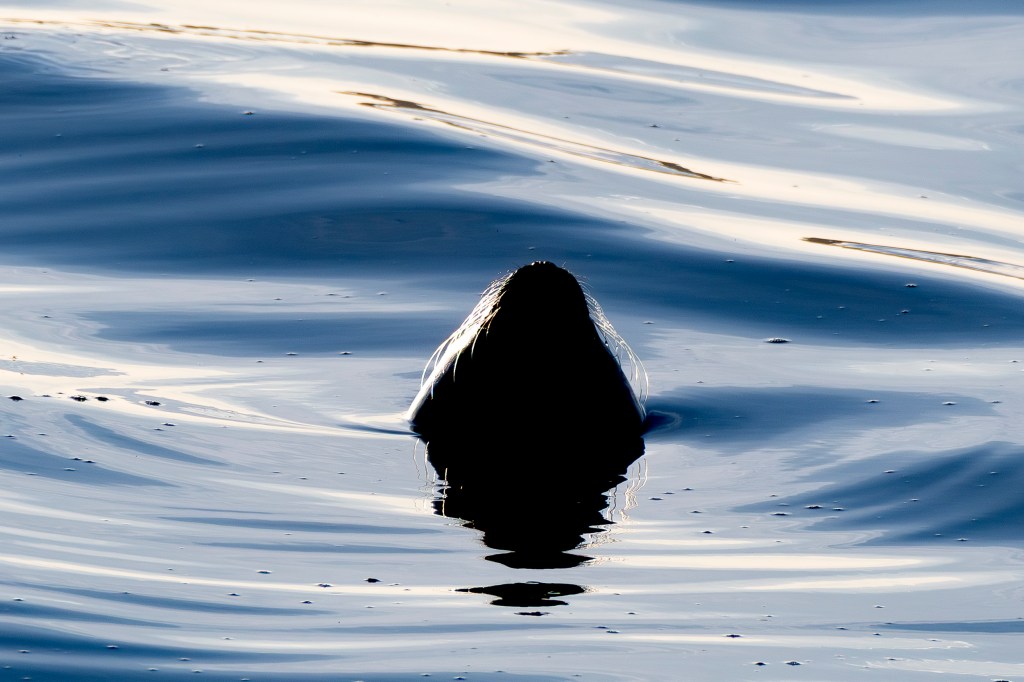
As the day wakes the ducks and the waders come and go, but the one abiding thing is a bob of Harbour seals. There are around twenty in total, a number that give or take one or two, has been pretty much constant in the seven years that we have lived on this side of the bay. Perhaps it’s the number that this small body of water can comfortably sustain. Most days they’re either hauled out on the rocks, taking a siesta, or out swimming in the shallows but occasionally, when the tide is neither ebbing nor flowing, you’ll catch one bottling, sleeping upright in the water, just chilling, at peace with the world.
 A garden in Orkney