Green Shoots and Dolphins.

Green spears of new growth are starting to push through the earth, Camassia, Daffodil and Snowdrop are starting to show. In the race to flower Snowdrops will be the clear winner but a while yet before they carpet the ground white. Daffodils come next, Tete a Tete then Thalia and finally Pheasants eye, the latter flowering well into May.

The past week was wet and sometimes wild, gales and rain and monochrome skies. The coming week is more settled, high pressure in charge. Light winds and sunshine, a chance to catch up with outdoor jobs.

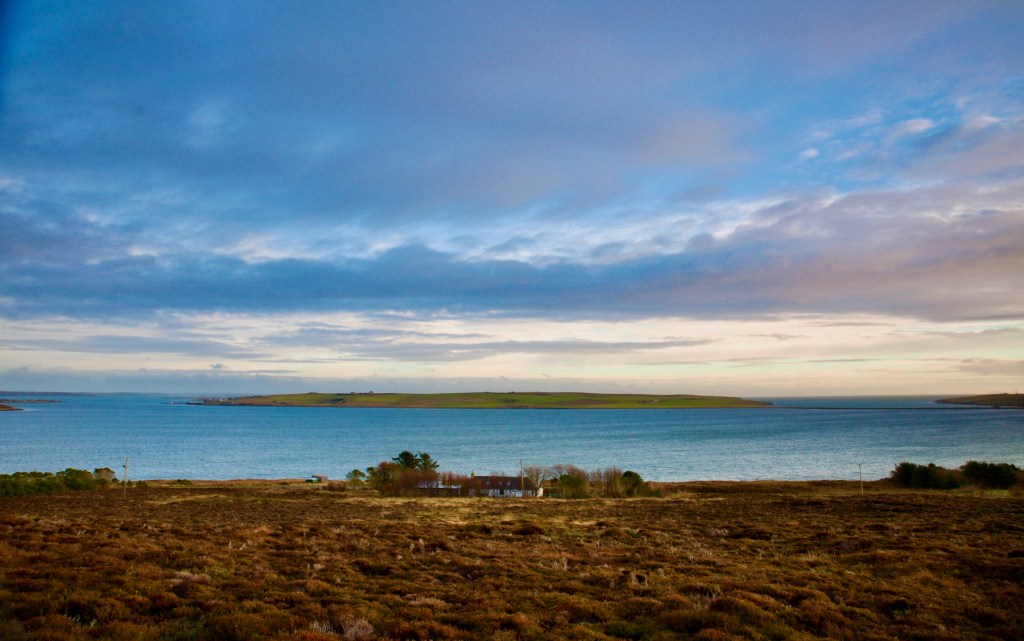
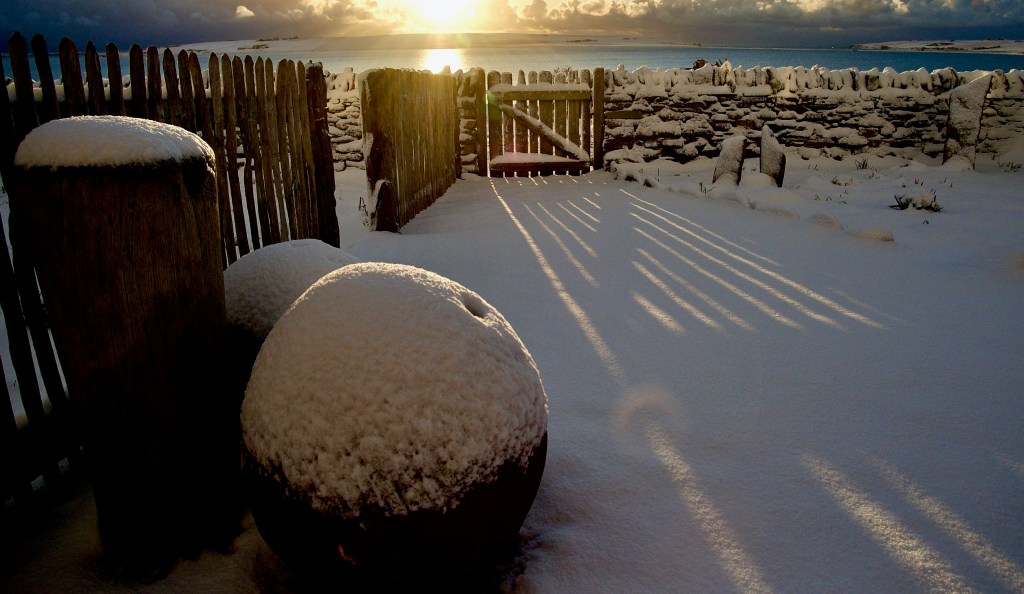
Late afternoon, towards Caithness.

Young trees recently planted among rough grass and heather low down on the moor will need to be checked for wind rock. Most are Red Alder, our pioneer tree, happy on the poorest of soils. Three years ago high on the moor on a spot where soil was eroding due to our sometimes almost biblical rain I planted a group of Red Alder. The peaty topsoil had washed away leaving shaley bedrock, the ground so hard that planting holes were made with an iron bar. I checked on them a few months ago, lashed by gales from every side, without stakes or shelter. They were thriving, chest high and thick stemmed.

New trees at the top of the meadow will also be checked. An L shape of Red and Italian Alder giving shelter to an infill of Rowan and Whitebeam with Amelanchier Canadensis that, gales permitting, might give a brief show of Autumn colour. At the front of the copse, facing South-east, a few dozen gorse went in. The vanilla scent of the flowers bringing back memories of an East Yorkshire childhood, a Delf full of Gorse and Linnets nests lined with horsehair.

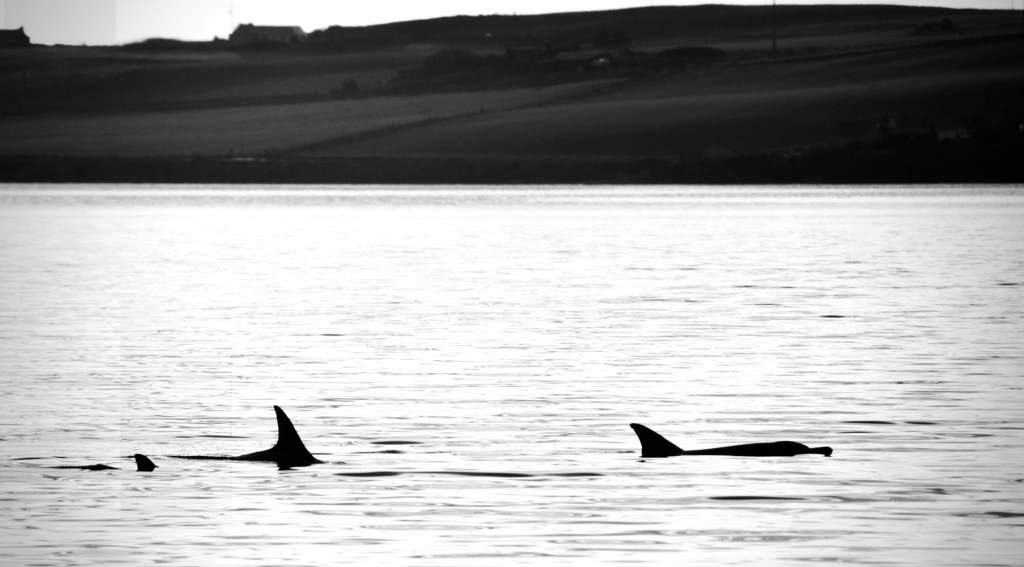
A male Hen Harrier was seen hunting the shore. A grey ghost of a bird floating a few feet above the low cliff, almost lost in the half light of dawn. Common Dolphins came into the bay, a pod of three coming close to the shore, the sound of blowhole breaths carrying across the water.

Dolphins in North Bay.

Location, location…..

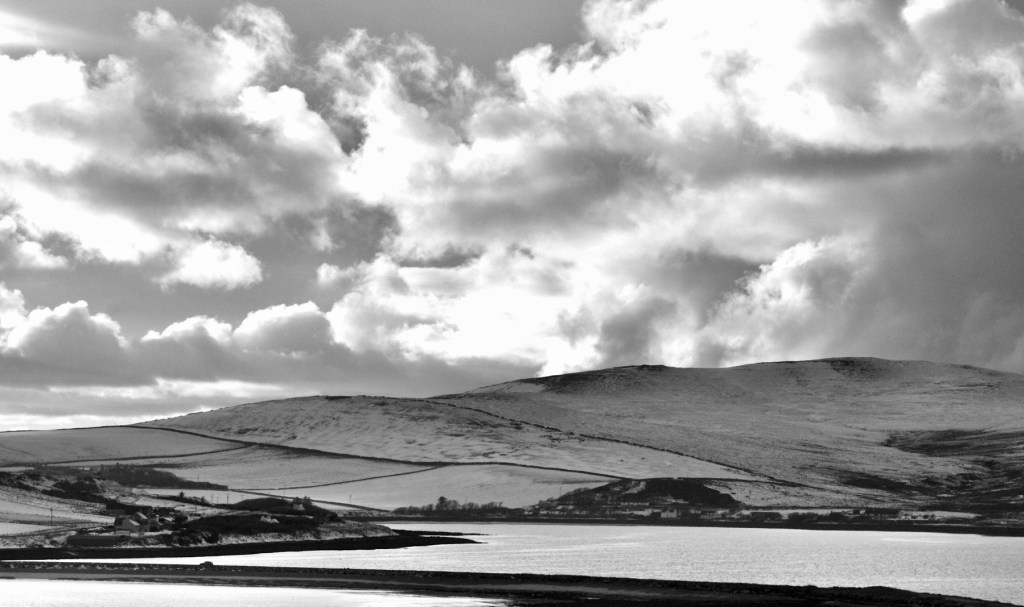
Our home and the landscape of Hoy.

Our house sits tucked low in the landscape, halfway between the islands ferry terminal at Lyness and the settlement of Longhope in an area of ground named on old maps as Simmary, Norse for Summer or Summery. East facing front gardens benefit from the first rays of a rising sun, on the longest days with the sun high in the sky they keep the sunlight for most of the day, losing it in late afternoon to the shadow of the hill. The rear garden is shadier, courtesy of two old multi stemmed Sycamores that at sometime in the past have been coppiced. Perhaps by a man for firewood or perhaps much earlier in their lives by an escapee Sheep. By mid-afternoon they rob half of the garden of light. A border beneath them has turned out to be the perfect spot for Hosta’s and other shade lovers.

The soil is dark, in places almost a silt, at the most a spit or two deep. Some areas are heavy with stone. Once a working croft digging a hole can be interesting, the worst find a rusting trailer chassis, the best the foundation of a byre, salvaged with a mini-digger and reused as dry stone dykes were rebuilt.

We inherited the Sycamores and an ancient Rowan and to the North edge of the garden a few Sitka and Larch. A small stand of Lodge Pole Pines were lost a couple of years ago when storm Arwen swung in from the North. A shelter belt of Red Alder has been planted, five years on they are already taller than the house. Tough fast growing trees hailing from Canada’s pacific coast, so far so good, shrugging off the worst of the salt laden winds.

Sycamore in an Autumn gale.

Beyond the front garden there’s a field that slopes down to the shore. A project to convert it from monoculture to meadow is underway, three years in the change has been dramatic. Beyond the meadow is North Bay, a haunt of Eiders and Harbour Seals, a bob of twenty or so of the latter hauling out daily onto the rocks thirty feet below the meadow. In Summer Fulmars nest on the low cliff, the adult birds riding the breeze, flying figures of eight on set wings.

At the back walk through the young trees and the moor rises away from you, close to the shelter belt Honeysuckle and Bramble are left to run wild, beyond that a mix of rough grasses newly planted with Alder, Rowan and Whitebeam. As the ground gets steeper Heathers are dominant, ankle high, cropped tight by the wind. Here and there are other species, spikes of Deer Grass and the green tongues of Ferns, wet spots have Cotton Grass. Bright Mosses cover rocks as if poured from a bucket. Bleak and beautiful, a home to Hen Harriers and Mountain Hares.

From the moor looking East over North Bay toward the island of South Walls.

January the 1st.

The year has turned. The shortest days are behind us. Still not light here much before nine and on a grey day dusk by three thirty but the days will lengthen now, slowly at first and then rapidly. By June the sun will barely dip below the horizon, the time of the ‘Simmer Dim’.

December brought almost daily gales and rain, the gales testing trees, the rain making the ground sodden. In the new meadow every footstep is a squelch, in the veg plot mud sticks to boots, too clarty to dig, spiky pin cushion seedlings of Rush dotting ground that in summer grew salads and spuds, the edge of moor plot doing its best to revert back nature. Close to the shore two wildlife ponds dug in spring are full to bursting, the ditch that feeds them running like a stream.

The garden is slumbering, waiting for longer and warmer days. Snowdrops have yet to push through the earth and tell of a coming spring. Perennials that lit borders bright with colour in summer are reduced to low leafy mounds, biding their time, a thin dressing of compost, green waste from the garden and tang and ware from the shore, covers the bare earth. Foliage and seed heads scorched by storm Babet, a three day visit of salt laden winds, have been cut back and composted. There are no lingering reds and golds of autumn here, no winter frosted seed heads. Gales are the gardens secateurs, once shelter belt trees have lost their leaves they sweep in unopposed, knocking flat and scorching brown, deciding when the garden is finished for the year.

Cold frames though are full of new life, cell trays of seedlings sown in late summer, a few are perennials for the garden but most are wildflowers, top up plants for the newly reinstated meadow. Most are easy, some like Ox-eye and Yarrow only have to be shown compost, once sown growing as thick as grass. Others are more tardy, Wood Cranesbill are taking their time, some appeared within days, others only now pushing through, weeks after sowing. Devils Bit Scabious are yet to show, a favourite, as the year warms and the days lengthen fingers are crossed that one morning as cold frames are opened up the trays they are sown in will be found to be dusted green with new seedlings.

Birds are busy on the feeders. Finches are counted by the dozen. On a front garden Rowan Greenfinch and Goldfinch are vying for feeder space with House Sparrows and ever squabbling Starlings. Chaffinches take the less stressful route, searching the ground beneath shelter belt trees in the company of Collared Doves and Blackbirds for bird seed mix cast daily among the leaf litter.

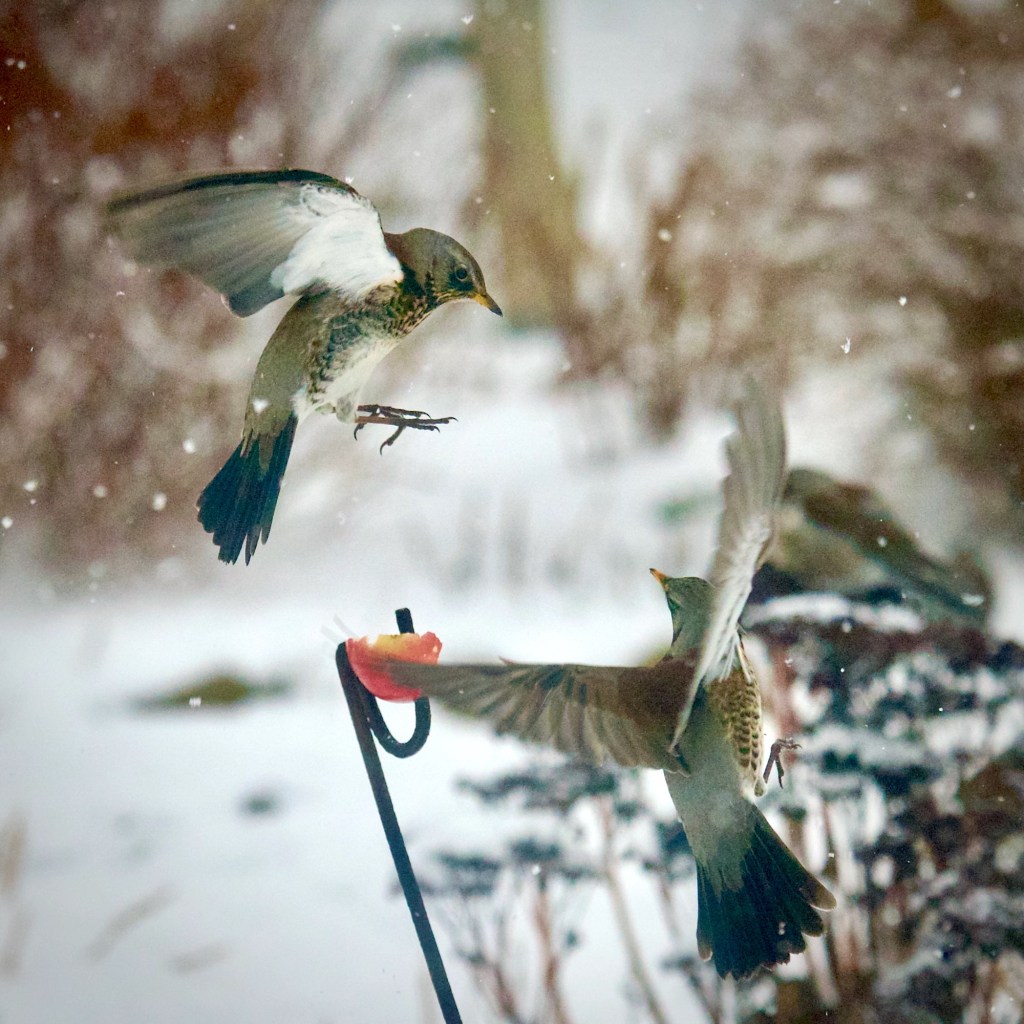
Fieldfares and Redwings are being seen again, absent for the past few weeks, the Redwings joining the Chaffinches and Doves amongst the leaf litter, the Fieldfares are seen on cliff tops, groups of ten and twenty searching rough pasture and wind scoured coastal heath, soon we’ll see hundreds. Waxwings may be seen again, autumn visitors from Scandinavia who like the Redwings and Fieldfares will soon be heading back North to breed where summers are even shorter than ours.

Waxwings visit the garden.