
Green spears of new growth are starting to push through the earth, Camassia, Daffodil and Snowdrop are starting to show. In the race to flower Snowdrops will be the clear winner but a while yet before they carpet the ground white. Daffodils come next, Tete a Tete then Thalia and finally Pheasants eye, the latter flowering well into May.
The past week was wet and sometimes wild, gales and rain and monochrome skies. The coming week is more settled, high pressure in charge. Light winds and sunshine, a chance to catch up with outdoor jobs.

Young trees recently planted among rough grass and heather low down on the moor will need to be checked for wind rock. Most are Red Alder, our pioneer tree, happy on the poorest of soils. Three years ago high on the moor on a spot where soil was eroding due to our sometimes almost biblical rain I planted a group of Red Alder. The peaty topsoil had washed away leaving shaley bedrock, the ground so hard that planting holes were made with an iron bar. I checked on them a few months ago, lashed by gales from every side, without stakes or shelter. They were thriving, chest high and thick stemmed.
New trees at the top of the meadow will also be checked. An L shape of Red and Italian Alder giving shelter to an infill of Rowan and Whitebeam with Amelanchier Canadensis that, gales permitting, might give a brief show of Autumn colour. At the front of the copse, facing South-east, a few dozen gorse went in. The vanilla scent of the flowers bringing back memories of an East Yorkshire childhood, a Delf full of Gorse and Linnets nests lined with horsehair.
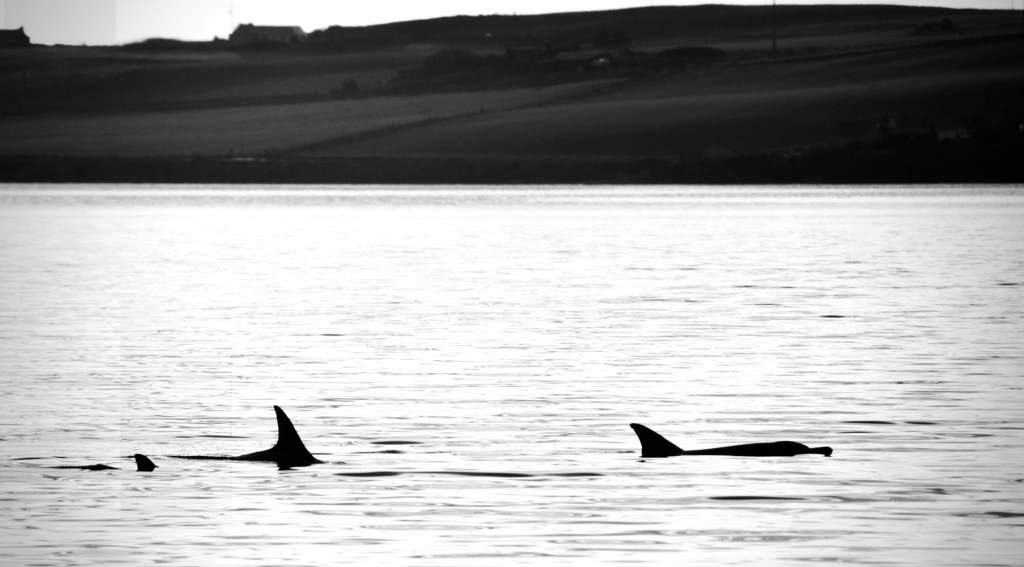
A male Hen Harrier was seen hunting the shore. A grey ghost of a bird floating a few feet above the low cliff, almost lost in the half light of dawn. Common Dolphins came into the bay, a pod of three coming close to the shore, the sound of blowhole breaths carrying across the water.


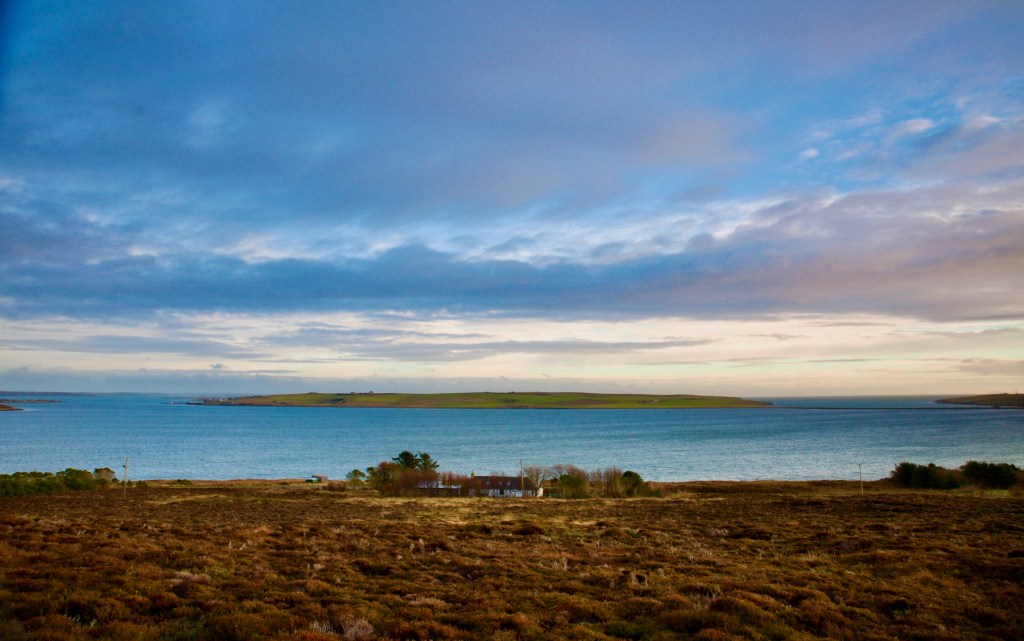

 A garden in Orkney