
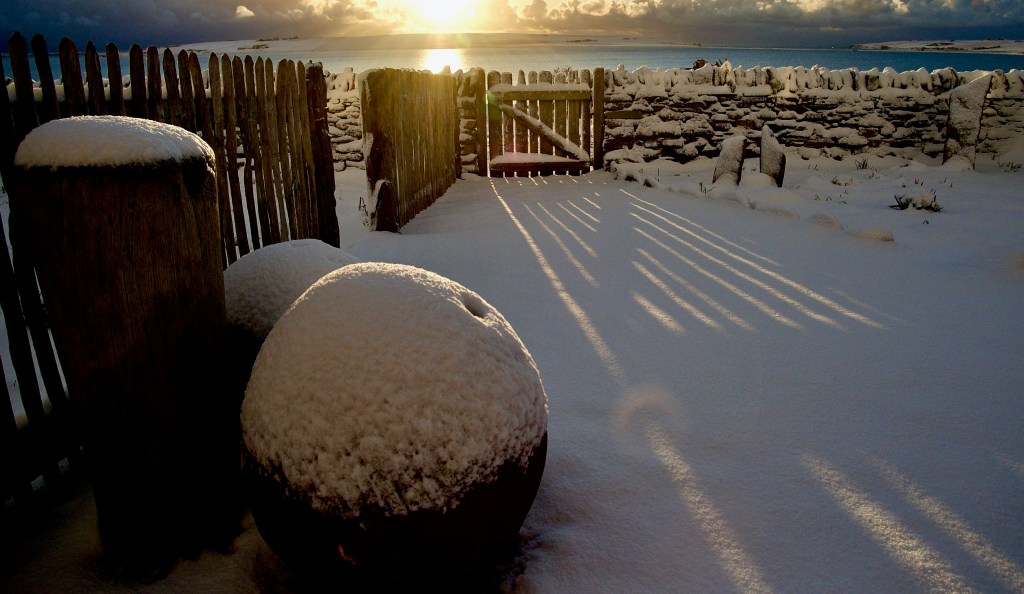
The past week brought bitter cold. A bright still day saw a rime of ice form on the bay below the meadow, a phenomenon seen only at slack tide on the calmest and coldest of days. Two burns that rush rainwater from the hills to the shore empty close by, a calm sea allows freshwater to float on heavier saltwater. Ice as thin and clear as polythene stretching out a dozen yards from the shore. Most days though brought grey skies, snow and northerly winds. The snow drifting in places and keeping the islands gritter wagon busy, each morning distant spinning orange cab top lights giving away his pre-dawn route.

Plans to thin out shelter belt Alders were put on hold, planted five years ago at a stride or two spacings the strongest are now shading out the weakest. The best as thick as your thigh, the worst thin as your wrist. They won’t be wasted, twiggy branches will be saved for summer plant supports, thinner witches broom brash tied in bundles will go in a stack at the edge of the trees, a new des res for woodlice and beetles. The thin arrow straight trunks will be saved for a simple garden edge criss cross fence, hung between salvaged from the shore driftwood posts.
The cold brought Fieldfares to the garden. A small flock of perhaps fifty birds quietly dropping into the Sycamores during a fall of snow. Half apples on rebar put out for Blackbirds proved to be Fieldfare magnets. With a single bird playing king of the castle more apples were offered, dropped at intervals along a garden path as if someone had walked past with a bag with a hole in it.
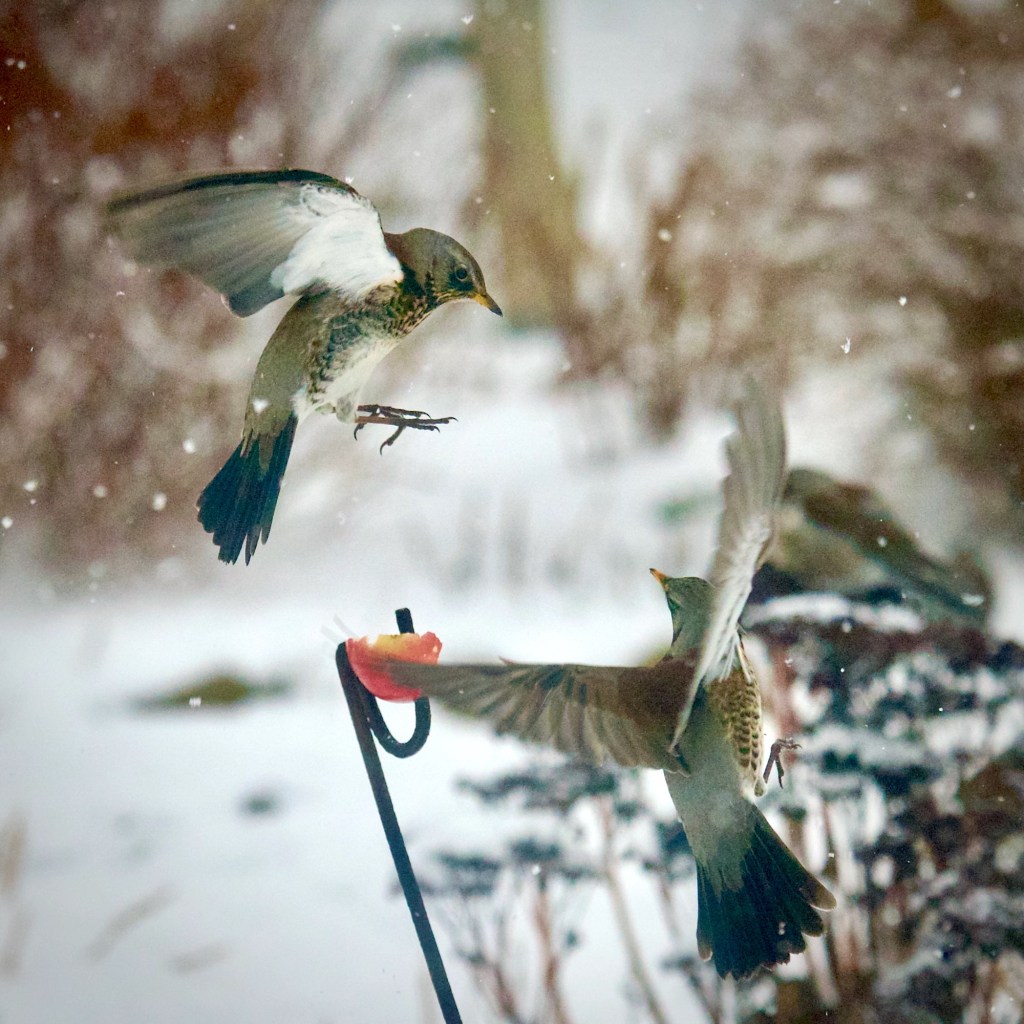
The thaw came yesterday. Milder air and rain carried in on strengthening south-westerlies. Harbingers of soon to arrive storm Isha. Snow slid in sheets off the skylights and roof. The garden turned back to dark earth. The ditch where garden meets moor is running the colour of strong tea, melting snow filtered through peat.
The Fieldfares left with the snow, back to their more usual haunts of pasture and coastal heath. Living up to their old anglo-saxon name, feldware, traveller of the fields.

 A garden in Orkney
Loving the photos.
LikeLiked by 1 person