
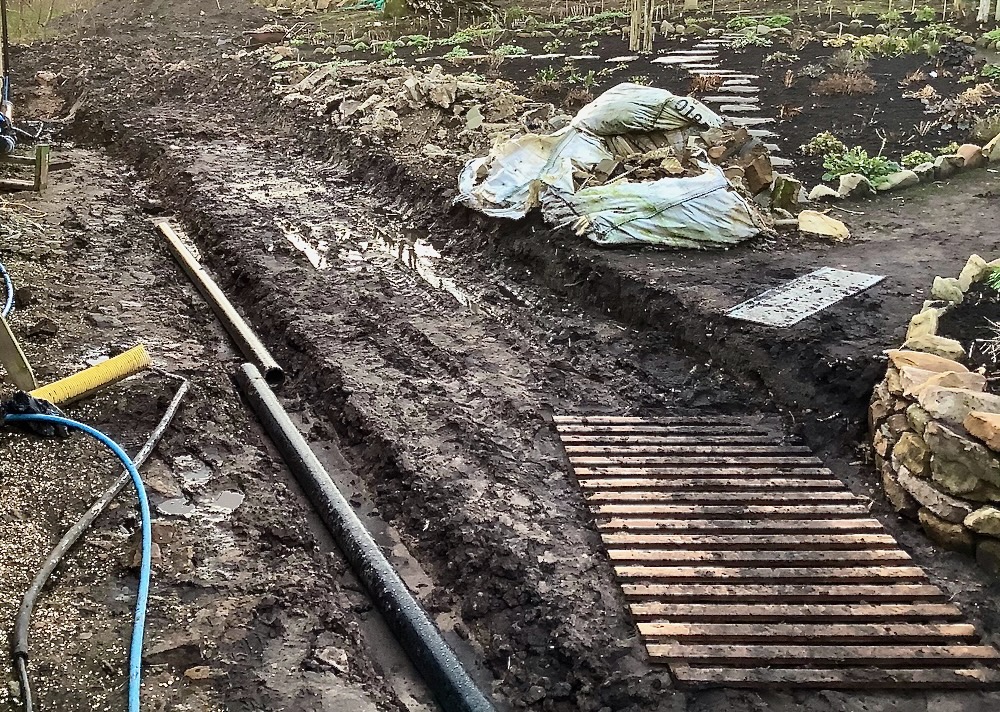
With shelter belt trees planted we started on the rear garden. Brambles, Docks and Osiers, a type of willow that in summer would grow to eight feet, only to scorch black in autumn gales, were cut back with a flail mower. After that the roots of the osiers and brambles, and of anything else planted by previous owners that had succumbed to salt laden gales, were grubbed up with a hired mini digger. All were pushed and pulled into a long mound at the edge of the moor. A low ugly bonfire perhaps ten paces deep and sixty long. We didn’t light it up and within a year or two mother nature had, as we had hoped, transformed it from bonfire to rich habitat. Honeysuckle and re-rooted bramble scramble over and through it, spikes of pink foxgloves stretch up for the light. Rotting roots sprout half a dozen colours of fungi. A spot for Starlings to rest and gossip and where visiting Woodcock quietly while away the daylight hours. A place for warblers and others to weave secret nests.
The ground slopes upwards away from the house, a simple curving wall of stone salvaged from the garden was built to give a terrace that softened the slope. Higher up the garden we planned a single curving path. This and the low wall would divide the garden into three, rising from east to west. A level area near the house, a large central border above the terrace wall and another long and narrow border between new path and shelter belt. The southern edge of the garden would become a shady border, courtesy of the sycamores. The path was roughly marked out with a hose. When we were happy with the shape, the hose stayed in place as a guide for more salvaged stone to be set for path edges. Paths themselves would be stone chips, quarried in Orkney and delivered in a single sixteen tonne bulk load, enough to leave a few tonnes spare for topping up as time goes on. Borders were to be as wide as possible, with stepping stones, either flat sea worn slabs or caithness slate, weaving through them and giving access. The following photographs show progress to the summer of 2023. With the exception of the load of stone chips all the materials for the garden were free, some salvaged, some from the garden, some from the shore.


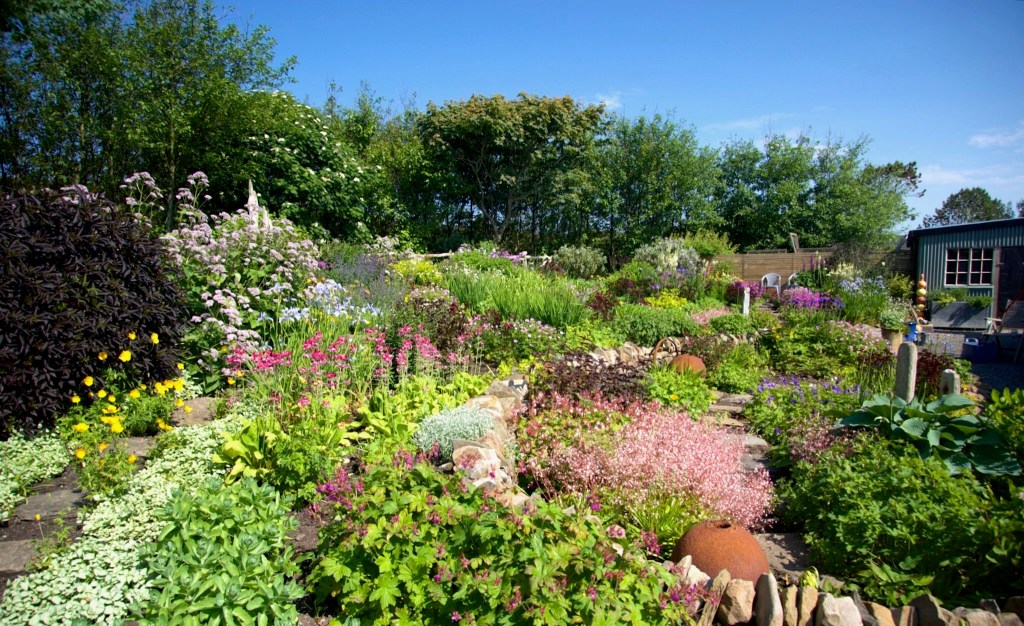
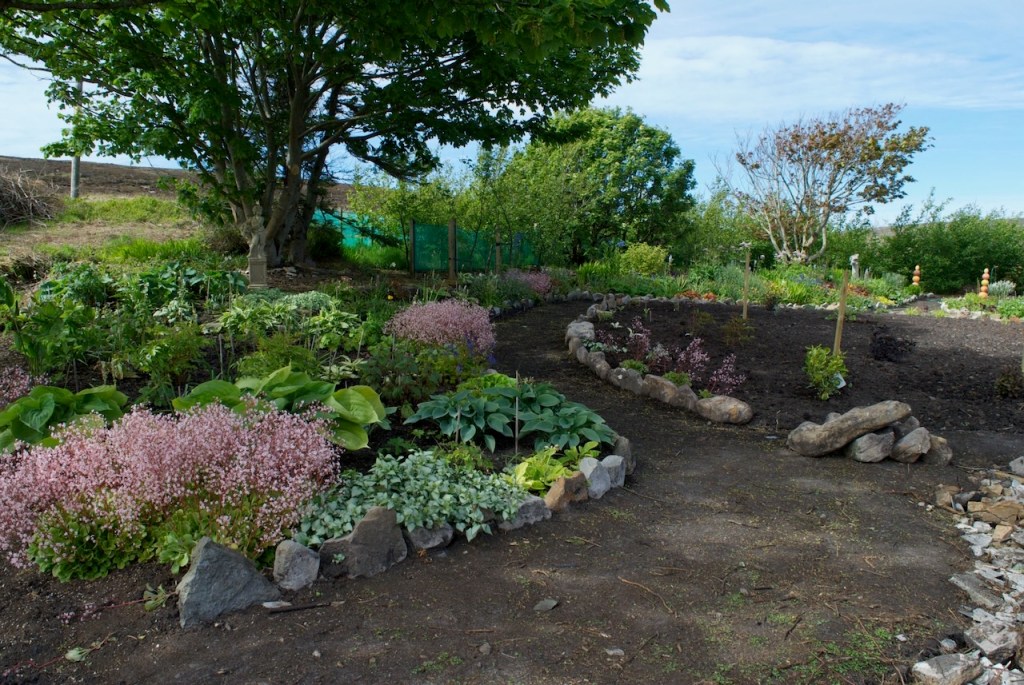
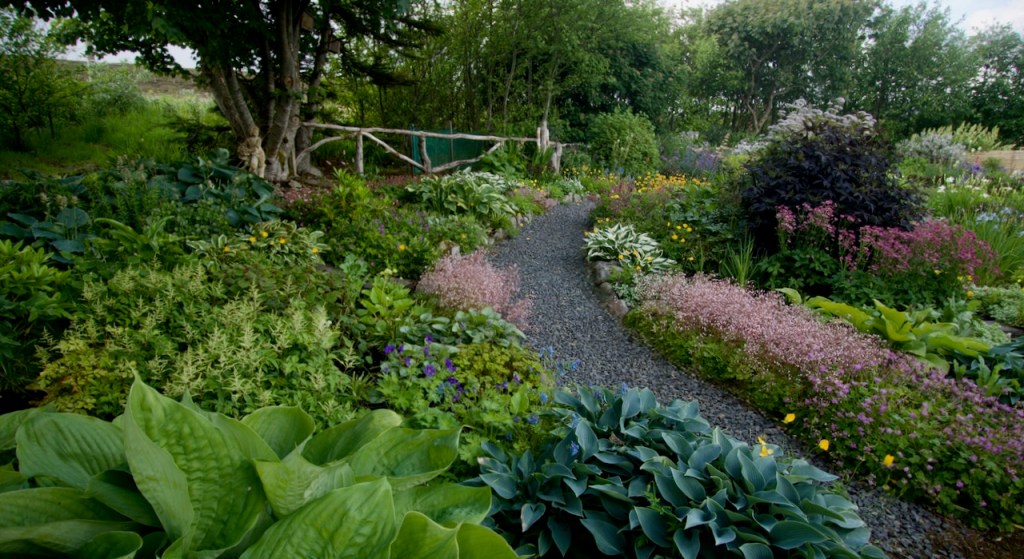


 A garden in Orkney
Stunning photos of your early work, Chippy. And even more stunning photos of the results. You should be rightly proud of what all your hard work has achieved.
LikeLike
Thank you Penny.
LikeLike