
On Sunday past we took ourselves off to Rackwick. From home, as the crow flies, less than seven miles, by winding, mostly single track road, closer to twenty. The Orcadian poet George Mackay Brown described Rackwick as a “hidden valley of light”, today more murk than light, a grey day with low cloud and a clinging mist.
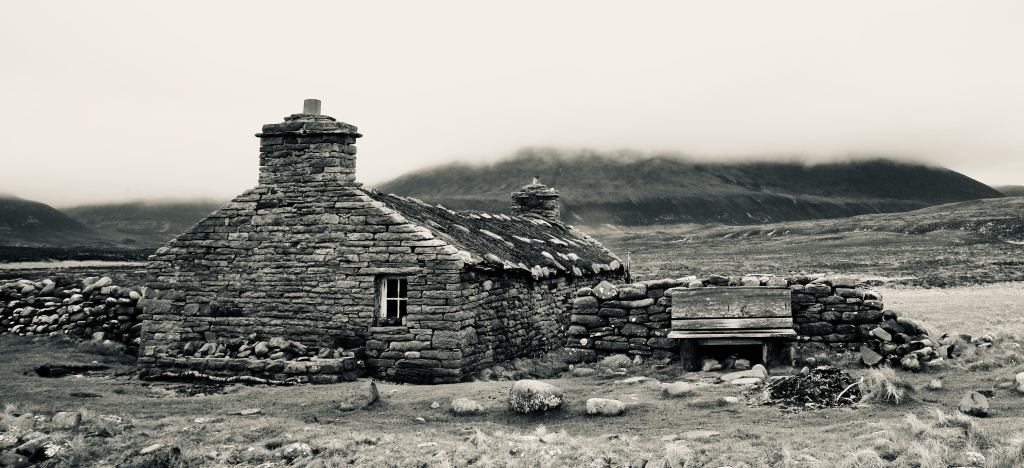
We are here to bag the bruck. A regular event, collecting man made rubbish cast onto the shore by rolling seas. We meet with around fifteen others at the Burnmouth, a heather thatched 19th century croft house that is now used as a bothy, offering shelter and basics to walkers and campers. The RSPB warden gives a briefing, gloves and bags are handed out along with a good humoured warning that lunch in the Bothy Kailyard, a low walled enclosure, is at 12.30, be there or be hungry.

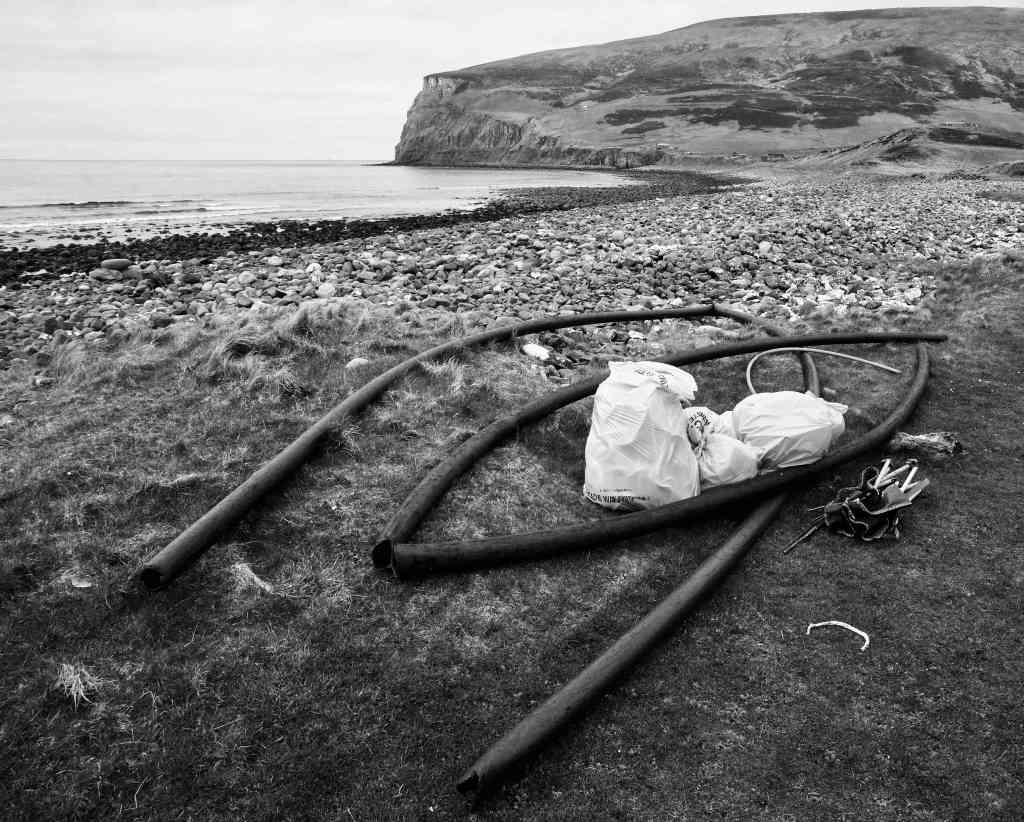
Rackwick comes from the Old Norse, rack is wreck or wreckage, wick an open bay. A remote and beautiful spot. The shore is ever changing, shaped by the moods of the tide. Stone dominates, a mix of car sized boulders through to fist sized cobbles, but to the south, at low tide, there’s also beach of smooth golden sand. It was once a thriving crofting community, with a population in 1851 of 101, now the permanent residents can be counted on the fingers of one hand. The volunteers split into small groups, we head to the north end of the bay, a beach of tumbled stone, and start to fill our bags. A bright orange glove, a yellow welly, rope and torn net. Long lengths of black aquaculture pipe, bent by the sea, have the look of a pair of giant fire blackened ribs. A dinghy, torn beyond repair, is hauled from the shore and stashed in a roofless byre. Plastic bottles are picked up by the dozen.

By mid afternoon the shore is cleaner than before, dozens of bags have been filled. Ankles are aching from walking on banks of sea thrown cobbles, they constantly move underfoot as you walk, one step forward and two steps back. As we leave we nip along to the roofless byre and pick up a couple of stashed bags, the dinghy, far too big to go in the car, is rolled up and weighed down with rocks.
 A garden in Orkney
Great job done you two! Lots of the dreaded plastic and wildlife hazards removed. I hope the dingy had been left unattended when it was punctured. What a lovely location, I’m not sure my ankles would take the strain. I fell over on Filey beach it took me 2 weeks to recover.
LikeLiked by 1 person
Morning Pauline, I once had to kneel on a half grown Seal and cut a garrotte of net from its neck with a penknife while Jacqui held a canvas shopping back over its head to stop it biting either of us, they have surprisingly big teeth! Literally a drop in the ocean but the more junk that is removed from the shore the better.
Filey, that brings back memories, as a child every holiday was either Filey or Primrose Valley, for Jacqui it was Barmston. We went to Barmston a few years ago and couldn’t believe how many houses had been lost to the sea, entire rows of chalet bungalows had disappeared.
Jacqui sends her love. The ankles have just about recovered.
LikeLike
Crikey it just gets better, I’d love to have seen Jaquie in action there. We go to Filey a lot it still retains its unspoilt charm. Looking forward to the next blog. 😀
LikeLiked by 1 person
I had to look up heather thatching – had never come across it while in the UK. I’m guessing your picture shows flat stones holding the thatch in place against the storm winds?
The orca calf made it out on her own Orca calf swims out of lagoon after being trapped for a month | CBC News She’s being shepherded towards the open ocean in hopes she can unite with her pod. All sailors asked to be on lookout and report sighting any pods of Bigg’s orcas on the west coast of Vancouver Island. Just so happens we’ll be on a boat there over the weekend, so the binoculars are packed already!
LikeLike
Hello Penny, heather thatching was once common here, often used on top of stone slates, for Hoy a free material that was literally on the doorstep. Simmens, rope made from heather or oat straw were also used. The stones you can see are to help hold the thatch, it is ready for renewing but I’m told traditional heather thatchers in Scotland can be counted on one hand, a red listed craft that in 2018 had only one person listed in full time employment as a traditional Scottish thatcher and three employed part time. I think plans to have it redone are in progress.
I saw on the news that the Orca calf had left the lagoon, good news, especially if he or she reunites with the pod, I hope you get to see some on your trip.
On the last photograph, in the distance, top center, you can just see a tiny house on the slope of the hill, Bunnertoon, for around forty years or so the home of PMD.
https://thatchinginfo.com/thatching-on-the-orkney-islands/
LikeLike