
As April has turned to May the weather here has at last improved. April was wet, a local weather station recording over a metre of rain for the month, a third more than the average. The last days of the month stayed true to form, bringing brief spells of sunshine followed by heavy showers. Since then the weather has settled, mostly blue skies and light winds with the occasional haar, a sea mist, rolling in from the east.

The garden is slowly but surely filling up with new growth. We garden in an exposed spot, sea to the front, open moor to three sides. At the back, beyond the thin shelter belt of trees, you can walk for miles and see nothing taller than fence stabs and stock wire. To the front are stone dykes, they sit well in this landscape and frame the garden without blocking the view, the protection they offer though is limited, easterly gales, straight from the sea, tend to spin straight over them, shredding all in their path.
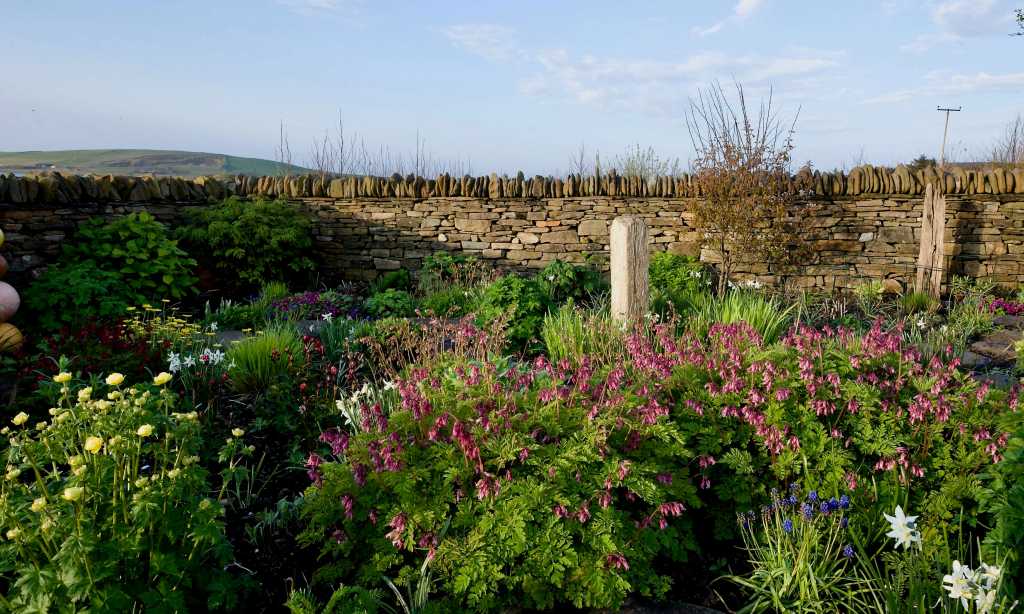
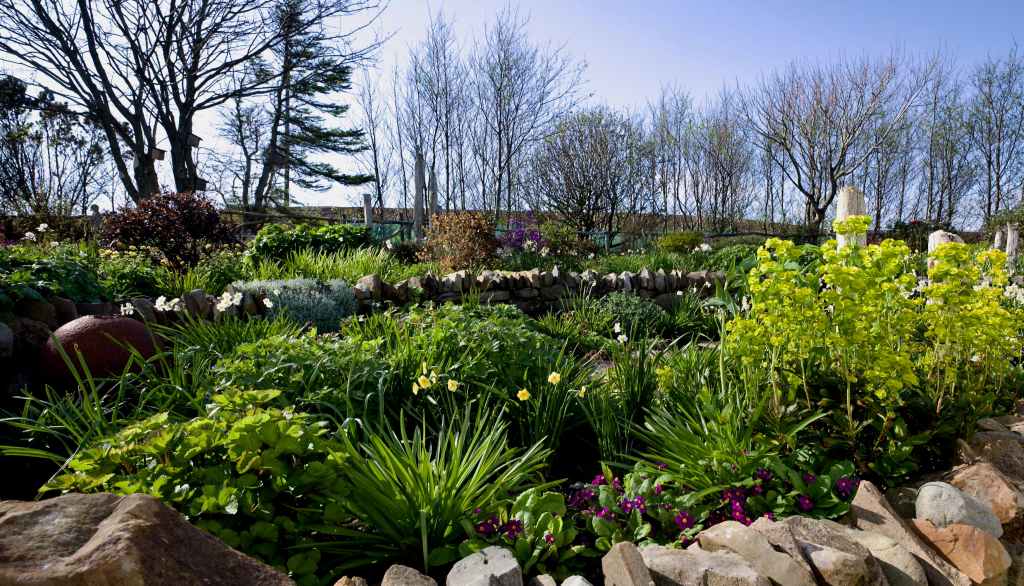
We embrace where we are, bulbs bring early colour but we garden here for late spring through to early autumn. At the moment perennials are up and forming clumps but most have yet to flower. Further south, in our old garden in Yorkshire, many of the plants that have yet to bud up would by now have been flowering for weeks. You learn to go with the flow, enjoy the garden while you can and when shelter belt trees lose their leaves and natures secateurs, the inevitable salt laden autumn gales, swing in and scorch everything black, cut back, dress the ground with muck and seaweed, and look forward to next year.
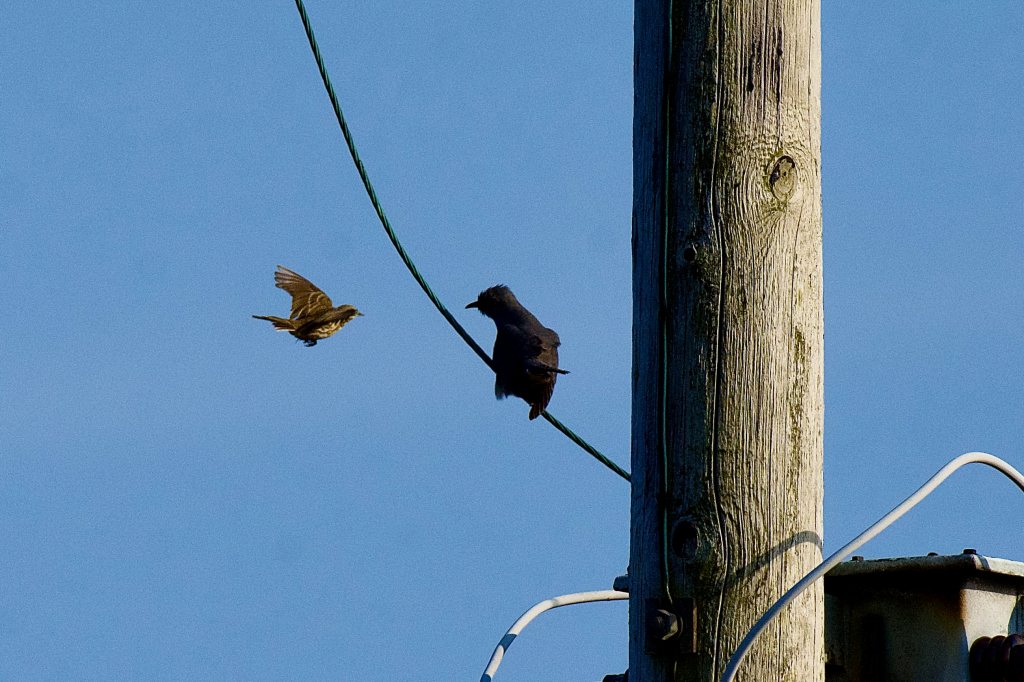
Along with better weather the first days of May also brought the first Cuckoos. They time their arrival to perfection. Meadow Pipits are a favourite host and for the last week or two, over the moor just beyond the rear garden, male Meadow Pipits have been performing their parachuting display flights, rising like Larks before fluttering slowly back to earth. As nests are built and clutches are laid, the Cuckoos, newly arrived from a winter in Africa, watch and wait from the wires that string across the moor and bring power to this house and the houses of our neighbours. The pipits, somehow recognising the threat, rise up from the moor and mob them.
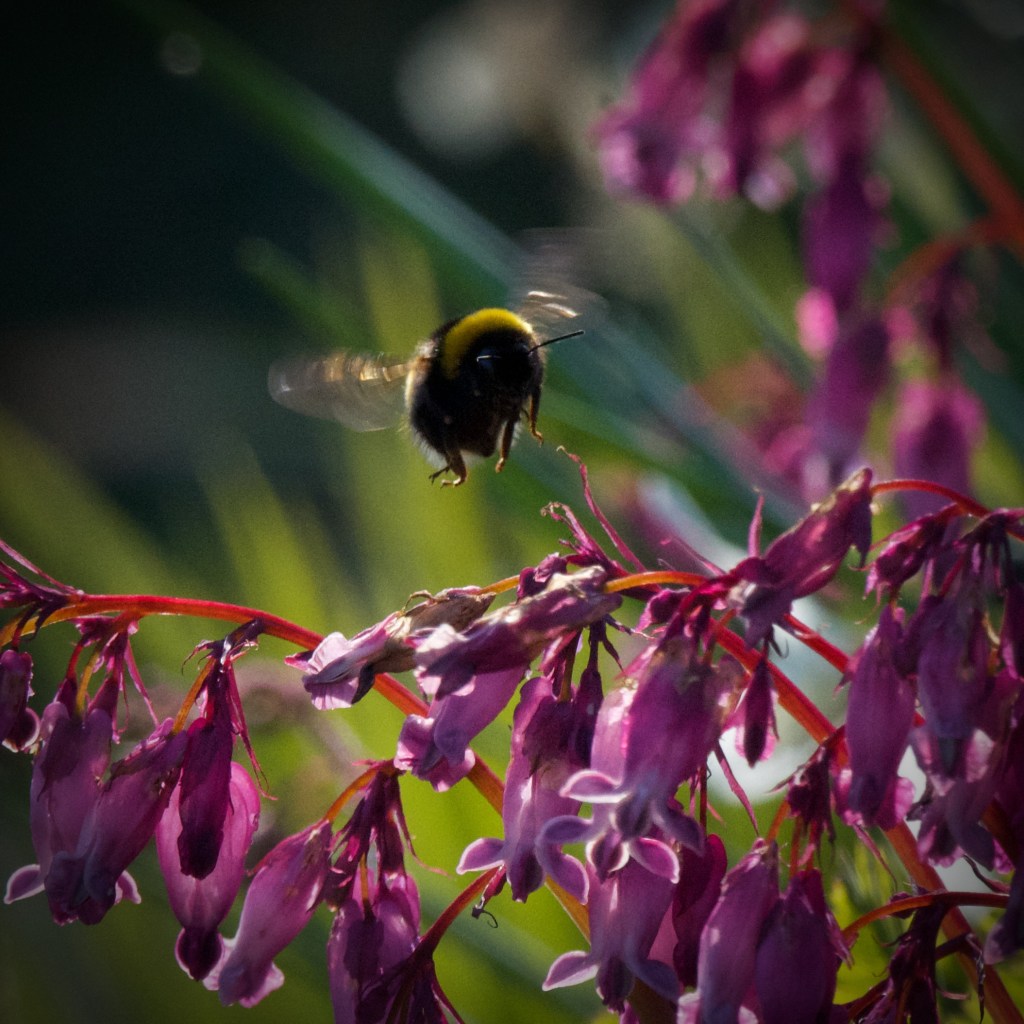
The better weather has brought more bumblebees to the garden, they’ve been seen on and off since march but only now are we seeing them in numbers. At the moment the flowers of bleeding hearts, dicentras, are a favourite. They’re one of the first plants to flower in the garden, some have been in bloom since early April, an essential food source for queen bees awakening from a winters hibernation.
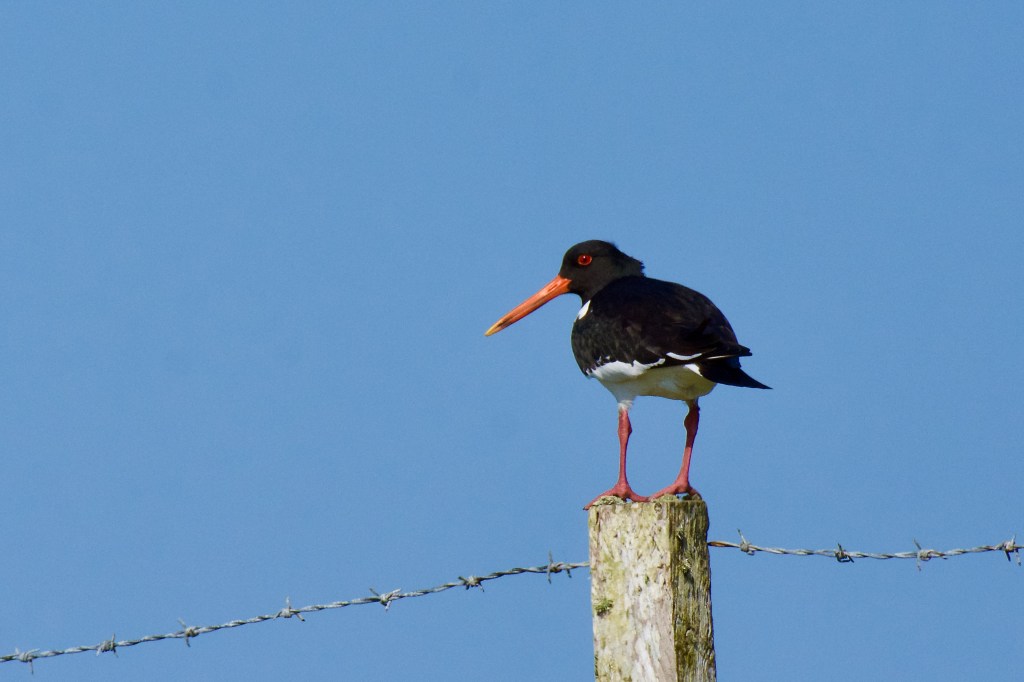
In the wider landscape, a Sand martin was a rare spot for here, there are colonies in Orkney but the first one we’ve seen close to home. Red throated divers, Loons, are back on the bay, in flight they remind me of bumblebees, their wings appearing too small for their bodies. A bird that looks awkward in the air and graceful on the water. With the grass in the meadow yet to start growing the short sward is proving a magnet for Oystercatchers, a handful are here most days, probing the turf with bright orange beaks.
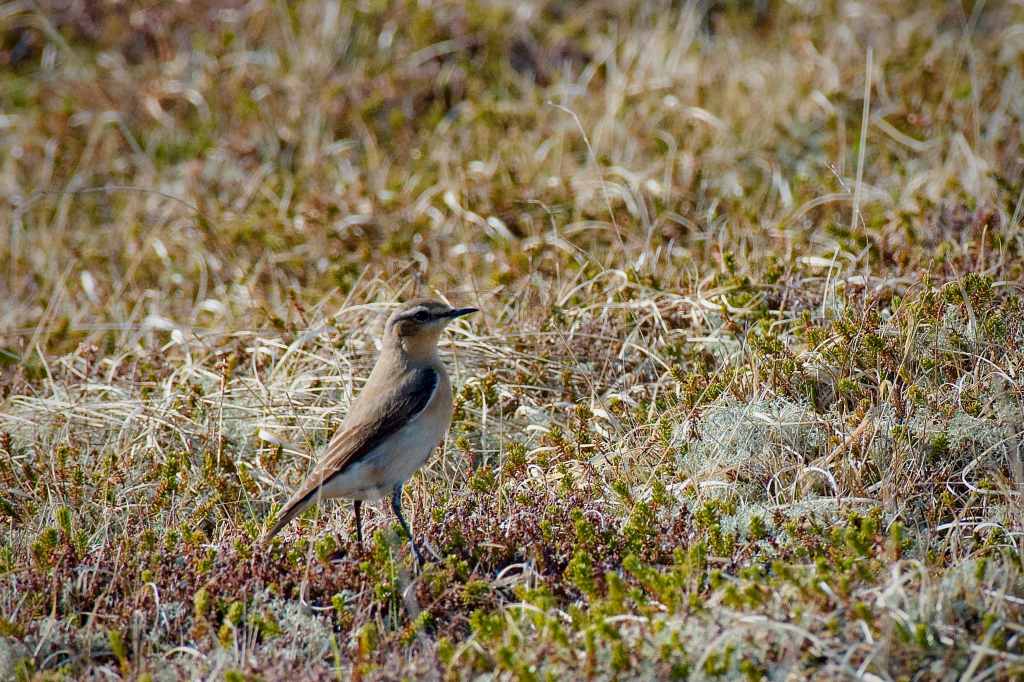
Along with the Cuckoos, other birds are also returning from a winter in Africa. Wheatears are once more a common sight on clifftop and coastal heath. They nest in stone walls or old rabbit holes and will often hop away from you rather than fly. When they do take to the wing they show the white rump that gives them their name, nothing to do with wheat or ears but a corruption from the Old English – white arse. The males are unmistakable, black wings with blue-grey backs along with a pale orange chest and a prominent eye stripe making them hard to miss. The females are softer in colour and much easier to miss, soft creams and buff browns with a pale flush of orange to cheeks and chest.
 A garden in Orkney
Your garden looks beautiful, Gary, that stone wall is lovely. Warmer here too, for a couple of days at least. Early evening drink by the harbour tonight, will be warm enough to sit by the quay.
Are you sure that’s a bumbly? Looks a bit like a bee-fly.
Holly blues and a red admiral, looking the worse for wear, in my garden!
Cheers, Margot
LikeLike
Hello Margot, all praise to Jacqui for the garden, a beautiful day here today but a past week of mostly grey days and haars. It is a bumbly, either white or buff tailed. I saw a very scruffy Tortoiseshell butterfly yesterday, very ragged wings but flying ok, a bit early for Red Admirals for us, up her we see them more in late summer and autumn.
LikeLike