
At the end of March I posted about a pair of Ravens and their nest. Each Spring, for the past four years, in a geo on the island of South Walls, I have watched them repair a winter wrecked nest of kelp stems and sheeps wool before laying a clutch of eggs.

The geo is on a favourite walk, a loop from the farm of Snelsetter, that first takes you out across an area of heath and then brings you back along the coast. The heath is wind cropped, a mix of ankle high heathers and grasses, cut here and there with shallow ditches. At this time of year the ground is dotted with cotton grass and orchids.
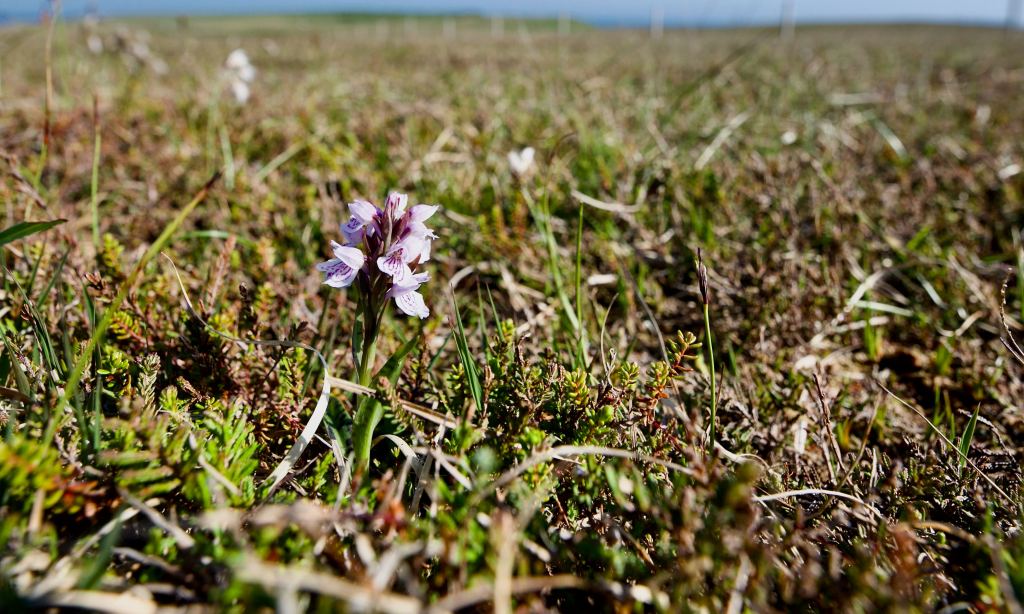
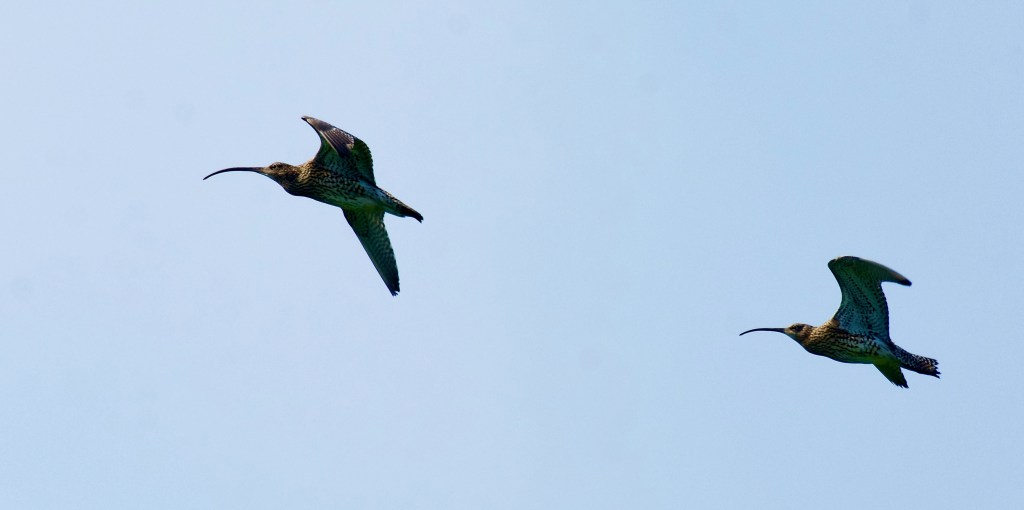
It’s a place where Curlews call and Lapwings tumble in display flight. A spot where, if you are lucky, you’ll catch sight of a Short eared owl quartering the ground. This time there are no Owls but Lapwings are seen and, right on cue, a pair of Curlew rise from a wet spot dusted white with cotton grass.
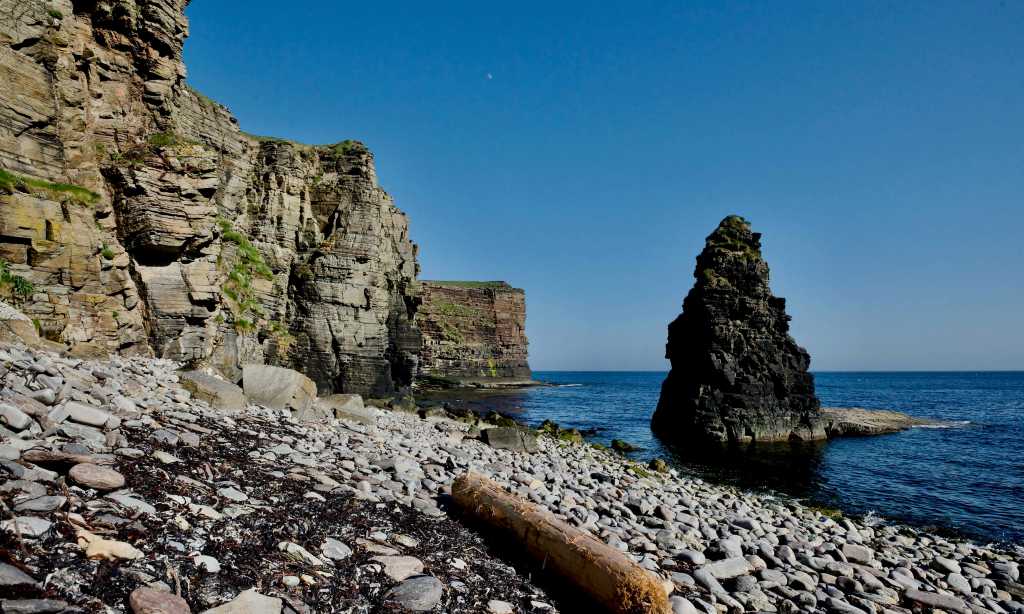
Eventually you come to a fence of silvered stabs and rusting wire, time to turn left and follow it to the coast. The nest is in Birsi geo, a wide bay with near vertical cliffs and a grey beach of sea worn stone. The geo may get its name from the Norn, a now lost language of the Northern Isles, bristle or bristly. A good spot for driftwood but getting your finds out is awkward, a steep zig-zag track, barely a boot step wide, taking you down to the shore and back.
It had been a few weeks since I’d walked close to the nest site and I wondered how the Ravens had fared. Had the eggs hatched, had the nest been lost to a storm. A quick scan with binoculars gave the answer, a distant group of six Ravens on a headland at one end of the geo, two adults and four youngsters. The collective noun for a group of Ravens is an unkindness. Today, with devoted parents watching over their brood, a kindness might be better.

As I got closer the birds moved on, lifting lazily away on the breeze before settling back down again, not too worried by my presence but keeping a distance, always wary. The exception came when I got close to the site of the now empty nest. One of the adults left the group, circling me and kronking a warning, coming so close I could hear the swish of the birds wings through the air.
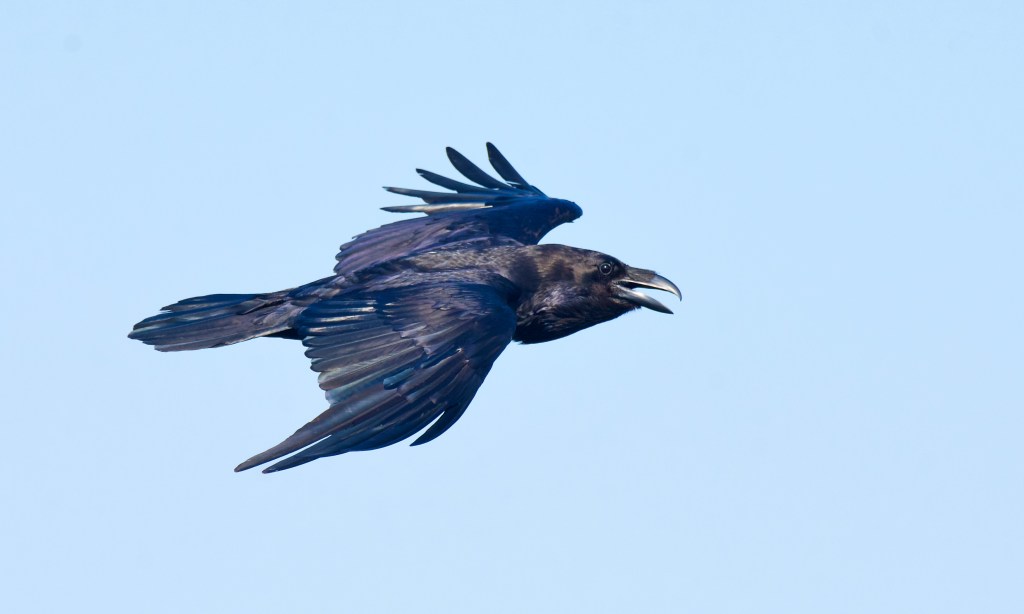
The birds are omnivorous, happy to take a young rabbit or to feed on berries. At this time of year, as seabirds return to the cliffs to breed, stolen eggs make up a large part of their diet. As I reached the spot where I first saw them I came across the egg of a Shag. Newly opened, the grass still wet with the remains of the yolk.

As a family the birds will stay together for the summer, after that the youngsters will leave and form loose flocks with the young from other nests. Four years from now they will find a mate, the start of a partnership that will last for the life of the birds.


Great photos of the birds and the orchid! Also very interesting to read about your raven pair and and their offspring. I got interested in why ‘unkindness of ravens’ (association with bad omens, being general troublemakers who like to pick fights with crows and don’t like change of any kind, apparently).
That lead me to looking up whether the ‘twa corbies’ of the old Scottish song were crows or ravens. The answer wasn’t very helpful:
‘A ‘corbie’ is a Scots word for raven, but it’s also common to call a crow a ‘corbie’.’
Are ravens called corbies on Hoy?
LikeLike
Hello Penny, on the island I’ve heard craa used for hooded crows and corbie for carrion crows and ravens. The blog of a local bird ringer tells that in Orkney a corbie is a rook but also a raven, a craa is indeed a hooded crow and that a raven can also be a hrafn. The crow family collectively tend to get tarred with the same brush, an unkindness of ravens, a murder of crows, a mischief of magpies, locally I’ve heard, but can’t find online, a cauldron of hooded crows, perhaps going back to tales of witchcraft.
http://orkneyringer.blogspot.com/p/orkney-bird-names.html
LikeLike
That’s very interesting – thanks! I’d no idea you had so many corvids and had completely forgotten the UK rooks.
LikeLiked by 1 person