
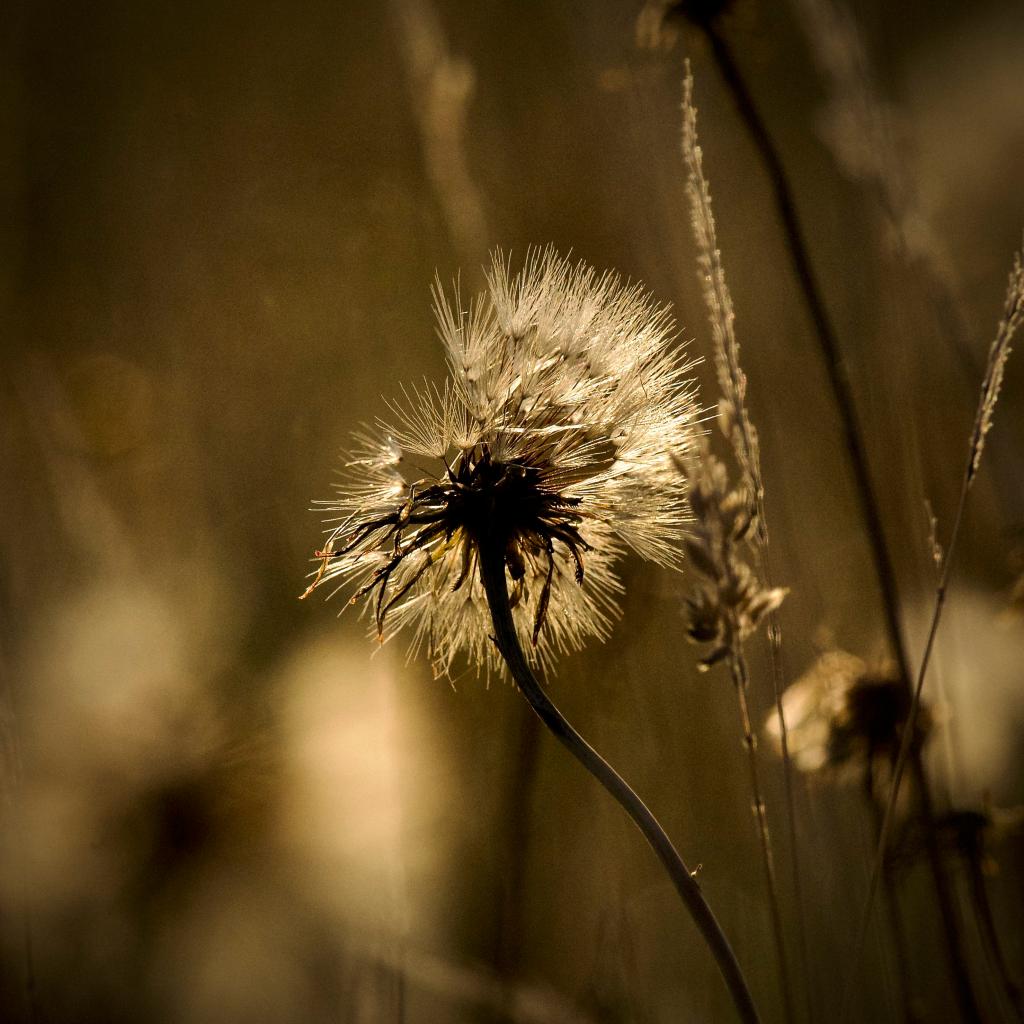
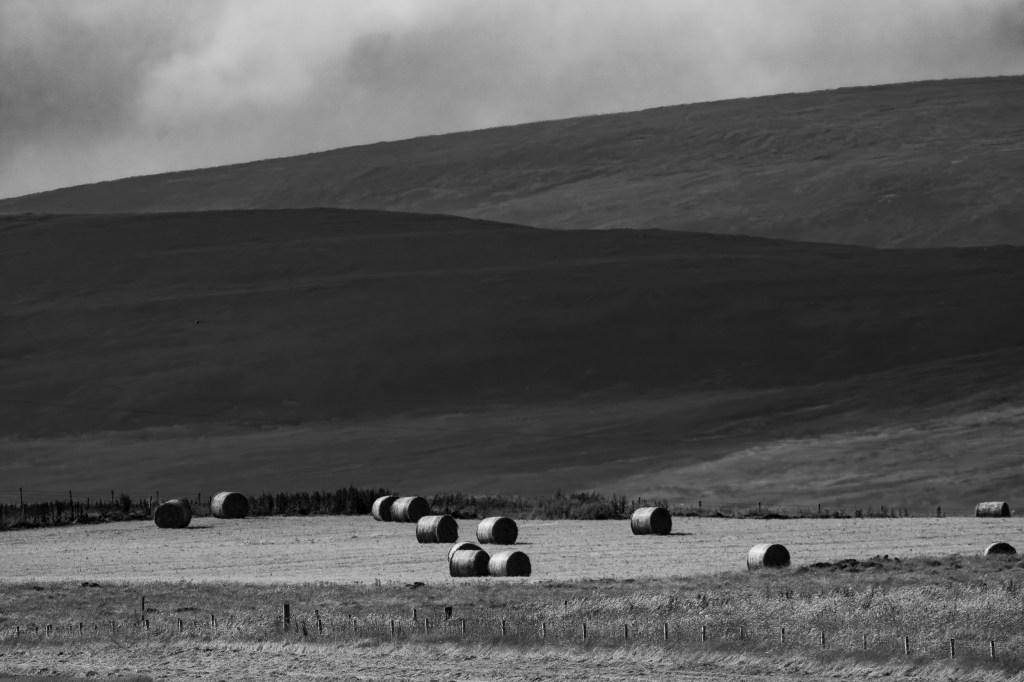
September ended as it began. A settled month of mostly dry and bright days. Throughout the month late summer storms were noticed by their absence. The first days of October have followed suit, bright days and clear nights, a bonus for this time of year. Next week though is all change, rain and midweek gales. Farmers are cutting the last of the Barley, racing to beat the weather. The landscape dotted with bales of winter feed and bedding.
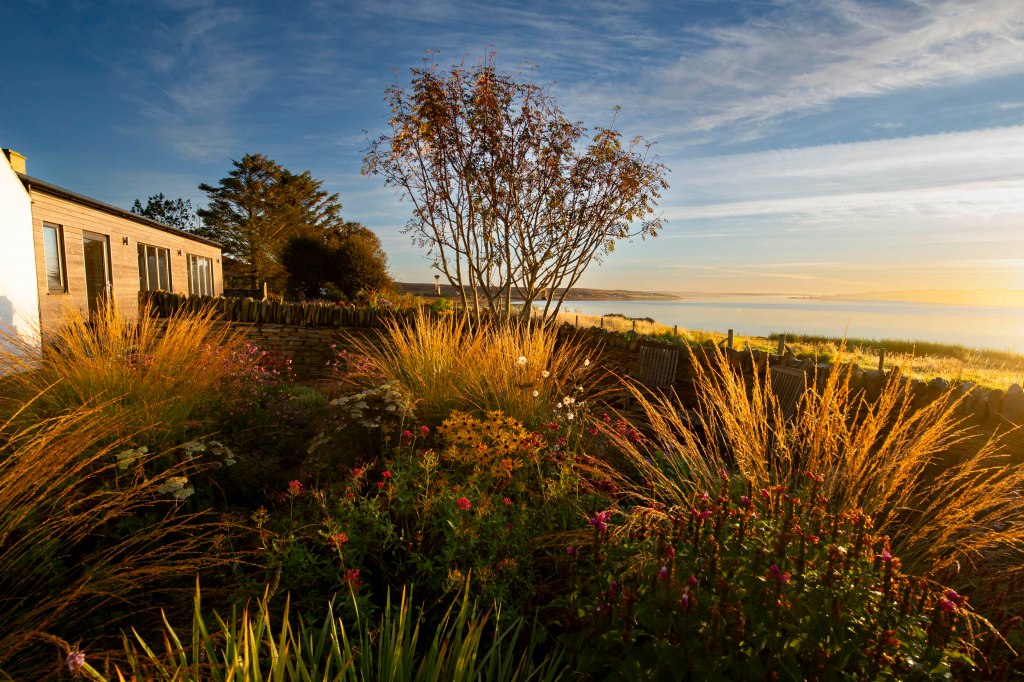
In the kaleyard garden, Molinia’s are putting on a show. For most of the year they’re almost invisible, low mounds of green that are easily overlooked. They’re a close relative of the native moor grass and, as with the moor grasses up on the hill behind the house, at this time of year they come into their own, throwing out starburst seed heads that, in early morning or late afternoon light, look stunning, especially when given life by a passing breeze.
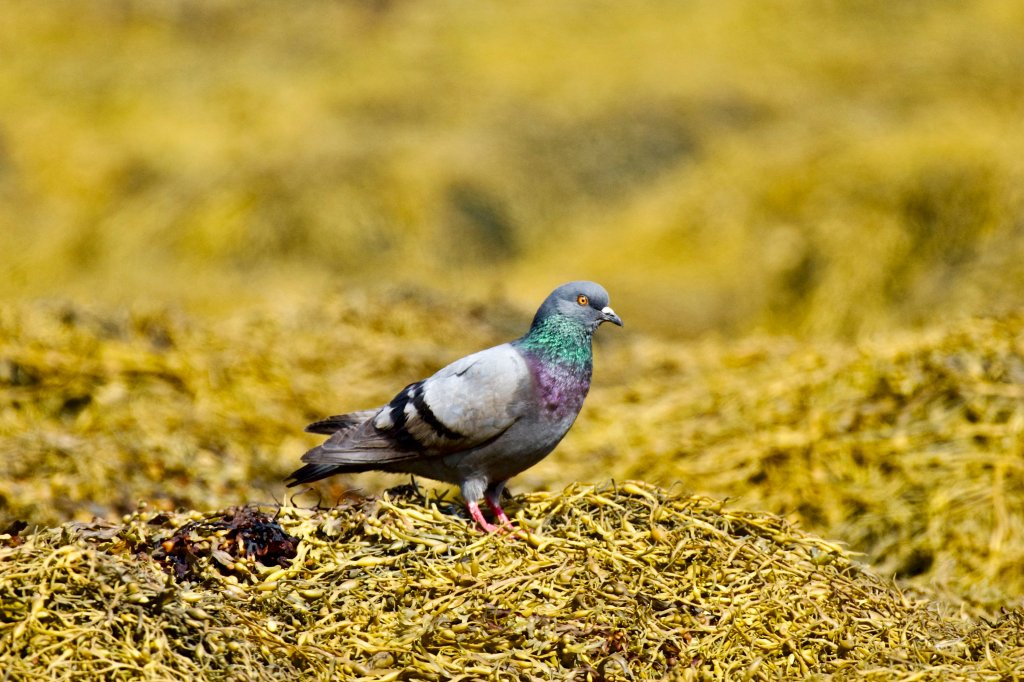
As plants go over, Jacqui has continued cutting them back, splitting and replanting and potting on the spares. At this time of year compost bins are usually being filled, seaweed from the shore along with cut back foliage and muck from a neighbours Shetland pony lawnmowers. At the moment though seaweed pickings are thin, a settled month means most is still anchored to the shore, yet to be torn free by wild seas. Next weeks gales will bring a bounty, bladderwrack and kelp rolled up on the strand line.
Wrens are busy in the garden, checking out nooks and crannies in dry-stone dykes, a hunt for unlucky Spiders. Earlier in the year a pair of Stonechats raised a brood in a briar filled boundary ditch. At least three youngsters have survived, yet to get their adult plumage they spend their days among Willow coppice close to the shore, occasionally rising skywards, giving chase to an unseen insect.


In the wider landscape, some birds are leaving as others arrive. Swallows have been absent now for over a week, ditto Wheatears, both on a journey back to Africa. Terns have left for the winter, as have most of the smaller Gulls, Black-headed gulls have been absent locally for a while. Common gulls, who in summer breed here in numbers, are now few and far between. Their bigger cousins will stay, Herring gulls and Black-backs, finding easy pickings along the shore, the bodies of Seals and Sea birds that fall victim to winters storms. Geese numbers are rising, skeins of Greylags are back from a summer in Iceland. Boosting the numbers of the resident population. Ears are cocked now for the yapping calls of Barnacle Geese, beautiful black and white birds, returning from Greenland. Harbingers of Winter.


The past week brought clear moonless nights. On Thursday, just after midnight, I took the track up to Heldale, home to a natural reservoir that gives the island its drinking water. Drive along the road for half a mile, hook a left and clatter over a cattle grid, follow a stone track up into the moors until the reservoir appears. At night a long silver shape in a dark fold in the hills. A half dozen Mountain Hares were seen, each lolloping along in the headlight beam, stopping when I stopped, moving when I moved, confused by the light, only when I stopped and flicked off the lights did they leave the track. Snipe were seen in trackside ditches, a gleam of an eye and a glimpse of a long bill. A hedgehog was slowly driven around, a rolled up urchin of spines. The plan had been to photograph the milky way reflecting in the water. Flat calm when I set off, but a breeze picking up from the sea was enough to spoil plans and blur reflections. The aurora gave a plan B, appearing on the Northern horizon, bright enough for a picture to be taken.
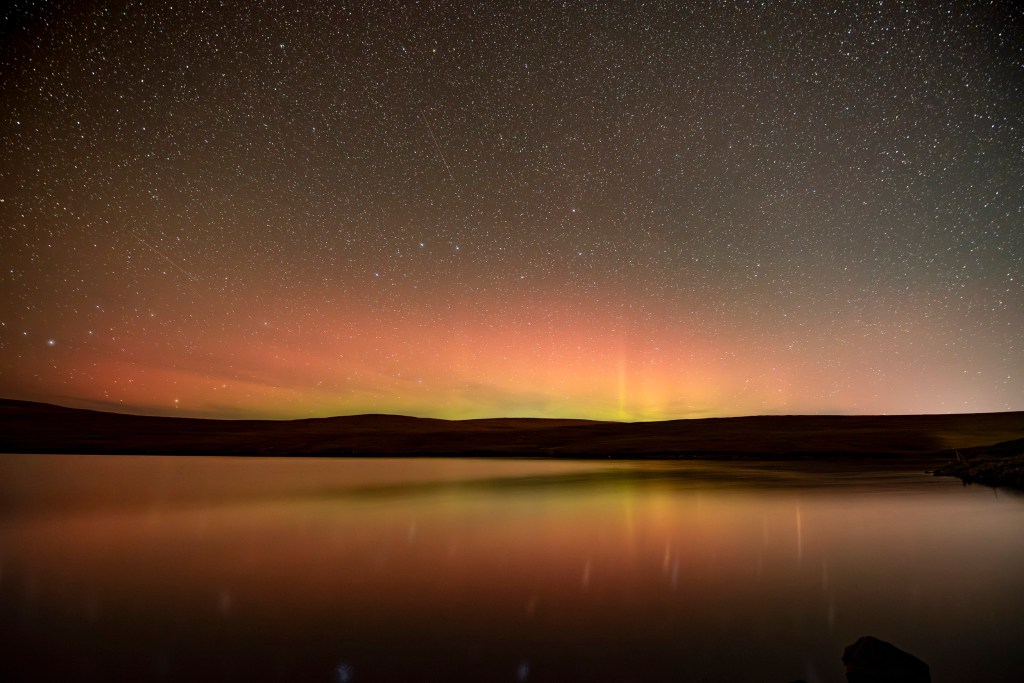
I stayed for a couple of hours. The utter silence broken only by the splash of an unseen Otter and the calls of passing skeins of Pink-footed geese. The birds were high overhead, missing out Orkney, heading South to Scotland and beyond. The aurora ebbed and flowed, bright one minute, fading the next. I’d taken two cameras, one with an ultra wide lens that has a 180 degree angle of view. I used it for the image below, capturing the Northern and Western horizons in the same frame. To the North is the aurora, the mirrie dancers, and rising high to the West, is the Milky Way.

 A garden in Orkney
Morning Chippy – I love Molinia. I have Black Arrows, Strahlenquelle, and another variety I’ve lost the label for. Superb performers in the border and I think I prefer them to the popular grasses like Calamagrostis made trendy by prairie designs. They’re light and airy, and work well with the likes of Echinacea ‘White Swan’, Rudbeckia ‘Goldsturm’ and the taller Geums like ‘Firestarter’. Have a great week – Ssb
LikeLiked by 1 person
Hello Bob, the Molinia’s along with a variegated Canary reed grass are about the only grasses that we have had success with here, the reed grass is supposed to be invasive but up here never runs, staying put in well behaved clumps, we’ve tried other grasses but not with good results. The perennials you mention also do well here although Echinacea’s are new for this year so time will tell if they’ll suit this plot.
Enjoy Bute.
LikeLike
Hi Bob, do you have a blog?
Have recommended a book to Gary, that I’m sure you’d like! x Margot
LikeLiked by 1 person
Hi Margot, Bobs blog
https://seasonsshift.co.uk/
LikeLike
Gary, how I envy you that silence and that sky. Fabulous both. In the Summer I get up very early, 5.30ish and it’s the only time you get silence in my neck of the woods. Just me and the birds. All too soon the noisy day starts though.
Rain and gales promised here, think we are getting the tail end of some hurricane or other….with love from the USofA!. I’m slowly pruning but leaving lots of cover/shelter for the birds, I love my untidy garden.
I’m reading Rory Stewart’s “Politics on the Edge.” I disagree with him politically but he is certainly one of the “good” guys. And Parliament, even then, seems one of the most shockingly dysfunctional places to work. Really recommend for those long Winter nights.
Have a good week, both you and J. Margot
LikeLiked by 1 person
Hello Margot, I love the silence of the moors, I was chasing the dancers again in the early hours of this morning, just past midnight to 3am. I went to a spot that has allegedly one of the loneliest graves in the UK, it’s a tragic and sad story, links below. There’s a lochan a few dozen yards from the grave, I’d planned for reflections of the dancers but the promised break in the clouds never came.
https://hoyorkney.com/attractions/hoy-history/betty-corrigalls-grave/
https://en.wikipedia.org/wiki/Betty_Corrigall
Like you we like to be up early in the summer, the best part of the day. Now that our days are rapidly shortening though I’ve noticed that 7.30 has become the new 6am 🙂
A real change in the weather here as well, grey wet and breezy for the rest of the week, September was beautiful, I think October will rapidly bring an end to our gardening year.
If I could choose a leader of the opposition, Rory Stewart would be the one. I don’t agree with all his views but as you say, one of the good guys. I’ll seek the book out.
Have a good week.
LikeLike
Great aurora shots, Gary. We were told that last night would be such strong aurora activity you’d be able to see it in Vancouver. Of course last night was cloudy, so all was hidden!
BTW wrote to the Guardian a couple of days back to complain about the comments section under their only gardening column on Friday (indeed the only one all week) was closed by the time I’d got back from my early morning swim. Haven’t heard back. I probably mistake those i/c such stuff in the Guardian for people who give a
LikeLiked by 1 person
Hi Penny, the same here, a promise of a spectacular show. I spent just after midnight to 3am this morning waiting for the clouds to break, as the forecast had promised, never happened. I was at a very remote spot with a sad story to it, see the links on my reply to Margot.
I think the Guardian column is dying a death, only 8 replies when I looked on Friday, so far I’m finding it difficult to interact with, more “how to do it” whereas Allans was “what have you done”.
One of the best years for aurora spotting, fingers crossed you get a display.
Have a good week.
LikeLiked by 1 person
That story could be straight out of Dickens. How sad.
LikeLiked by 1 person
Desperately so.
LikeLike
I commented at 11:10, which was 10 minutes after it appeared. I couldn’t believe how quickly it was closed. Maybe we should all complain and they might take note.
LikeLiked by 1 person
Amazing photos Gary from the small details to the vast heavens. During the week here there were several very large geese formations, or the same ones going around and over our Firth again. There are plenty of gulls here, plus curlews and oyster catchers and they love our relatively shallow bay in front of the house. Your grasses looked fabulous in the autumn light. I have two beautiful Miscanthus on the south side of the house. They start to make flower stems in September and are now getting a head of steam so we will soon have the fluffy white tops. They give us a great show when we sit out in the sun with a hot drink all the way to Christmas. We have no views north as we are protected by Ord Hill, but I know that there are great viewing points north at Ardersier and on the Black Isle. It is time we went out to find the aurora when the forecast is favourable.
LikeLiked by 1 person
Doubt writing the The Guardian would make any difference, Gerald. After all, don’t you Brits have a fine history of repression of upstart gardeners like Gerrard Winstanley’s Diggers who challenged the status quo?
LikeLiked by 1 person
Morning Geraldine, I do wonder if you see the geese we hear, we don’t get many pink-foots on Hoy but hear them regularly as they move South. Larger Miscanthus would get shredded here in winter but we should really try some of the others, we’ve got a sheltered yet to do area that’s currently being used as tree nursery that may well suit lower growing varieties of grasses. The biggest issue would be Winter wet.
You sound to have a similar set up to us, in our case no views to the west and the bay is to the east.
We must have driven over the Kessock Bridge and past Ord Hill dozens of times over the years. There’s an app for aurora alerts, the Glendale App, you add your location and it will tell you the odds of seeing the aurora. There’s also a simple graphic on the app, if it goes below -200 it means here in Orkney we have a visible aurora, last night it was -800, a spectacular show had we not had thick cloud and rain!
I would think the Nairn coast looking North towards Cromarty and Tain would give you great views of the lights.
Have a good week.
LikeLiked by 1 person
Morning Gary, I’ll try and get a look at these geese flocks on the ground and see which species. One year, there were hundreds of them down at Redcastle, just along our shore towards Beauly, but haven’t seen them there since. The Miscanthus are in a gravel bed in front of the house and are exposed to all the winds that pass up and down our Firth. In fact the only winds that don’t bother them are north easterlies which are blocked by Ord Hill. They have been there six years and are growing well and rooting out across the gravel. They don’t get shredded so i am grateful that our wind speeds are less than those on Orkney.
I’ll try and keep a better watch on the aurora forecasts. I would love to watch them from the Tarbet Ness lighthouse point beyond Portmahomack. That would be a wonderful position!
LikeLiked by 1 person