
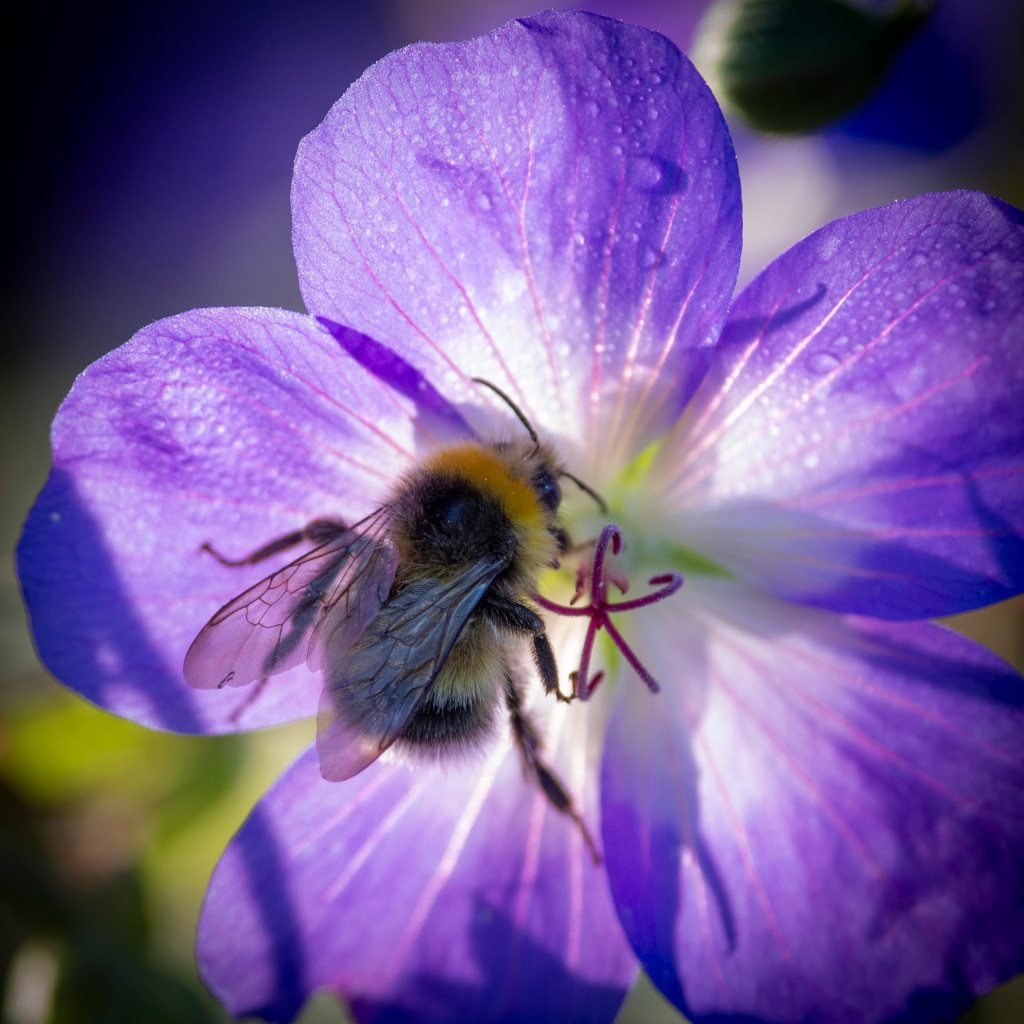
November has, so far, gifted much kinder weather than expected. The past week brought mostly blue skies and sunshine. The days of course are still getting shorter, the light fading rapidly now by 3.30 in the afternoon but for a month where gales and rain are expected to dominate, the past days have been a welcome and unexpected bonus.
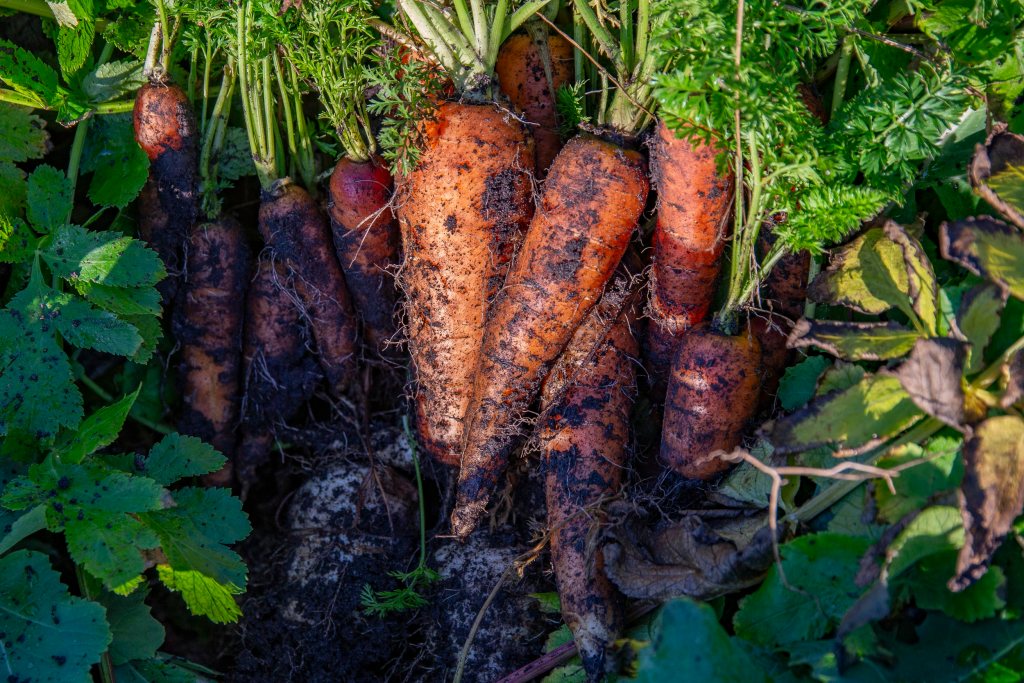
Jacqui has continued putting the garden to bed. Getting in her ten thousand steps between borders and compost bins, ferrying barrow loads of cut back stems and greenery in one direction and returning in the other with last years well rotted compost. The last sowings of veg are being lifted. All that remains are a few strides of Carrots and Parsnips and a couple of square yards of Neeps. This is the last year that we’ll grow veg here. Carrots have been swapped for kilowatts, a solar system, panels and batteries, has recently been installed, part of an island carbon neutral scheme, funded by the island trust and the Scottish government. We’ve grown veg all our gardening lives but the plot won’t be missed, a wet and stony edge of moor site that often couldn’t be tilled until May.

With a couple of dry and bright days on the cards, it was decided that as well as the garden, the meadow would also be put to bed. In past times this would have been a job for June or early July, the people who worked this land anxious to catch the grasses before they went to seed and lost their feed value. With no stock to worry about we leave the cutting as late as we can, leaving it be until the last of the wildflowers have faded to seed. We cut the meadow with a power scythe, a twenty odd year old machine that probably has a list of previous owners as long as your arm. The upsides are that it sips red diesel and it cost a couple of hundred pounds, (a new one is seven and a half thousand pounds). The downside is that it cost a couple of hundred pounds….

I started cutting on Thursday, a bright and flat calm day. Three passes in, a loud crack announced the shearing of a stud that holds the cutter bar to the machine. I took it to the islands mend anything man, the diagnosis was a new stud and reinforcement with weld, “pick it up tonight”. Friday brought attempt number two, dry and bright, a carbon copy of Thursday. I managed a single pass before the drive on the cutter bar failed, back into the van, back round to the man, “pick it up tonight”. A swear box hung on a fence post would have filled in no time. Saturday brought third time lucky, the machine behaving itself, the grasses and flower stems falling like nine pins to the chattering blade.

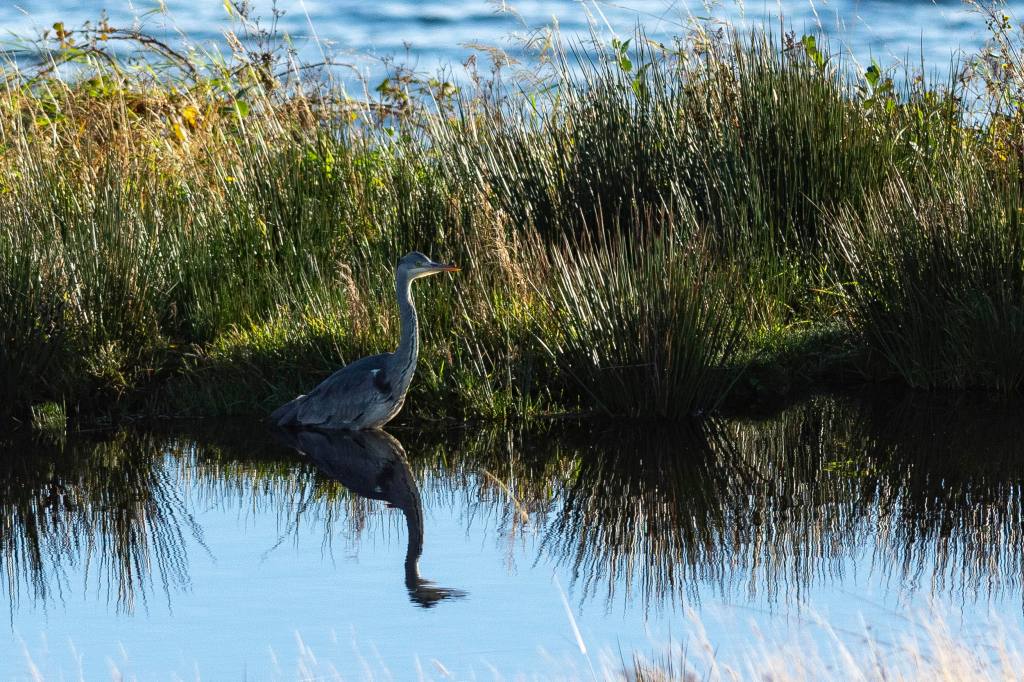
As I walked the mower across the meadow, a woodcock was flushed from a wet spot that in summer is lit pink with ragged robin, silently jinking away, a second lifted just as quietly from beneath a small copse of young alders. At the edge of one of the ponds, a Heron, intent on catching unlucky frogs, stayed as long as it dared, eventually leaving, as the mower got closer, with a harsh and complaining “kark-kark’.
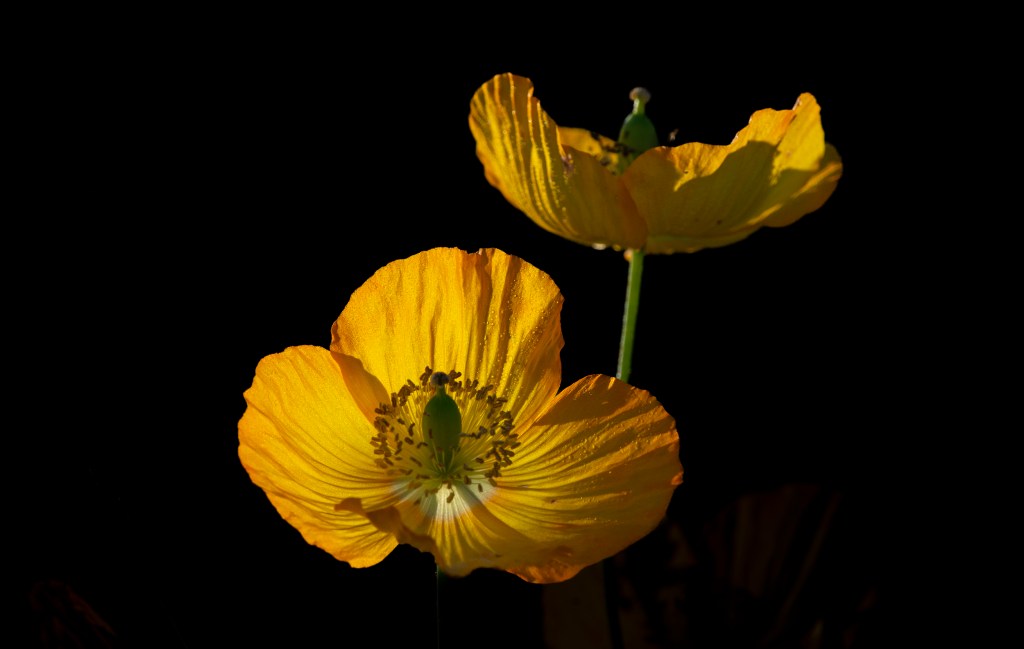
Despite the garden being cut back hard, care is being taken to leave fuel for late flying bumblebees. A favourite geranium, pretty much bomb proof late summer flowering rozanne, is a late flying bumblebee magnet, an oasis of blue. In places Welsh Poppies, another Bee favourite, are also putting on a very much out of season second show.

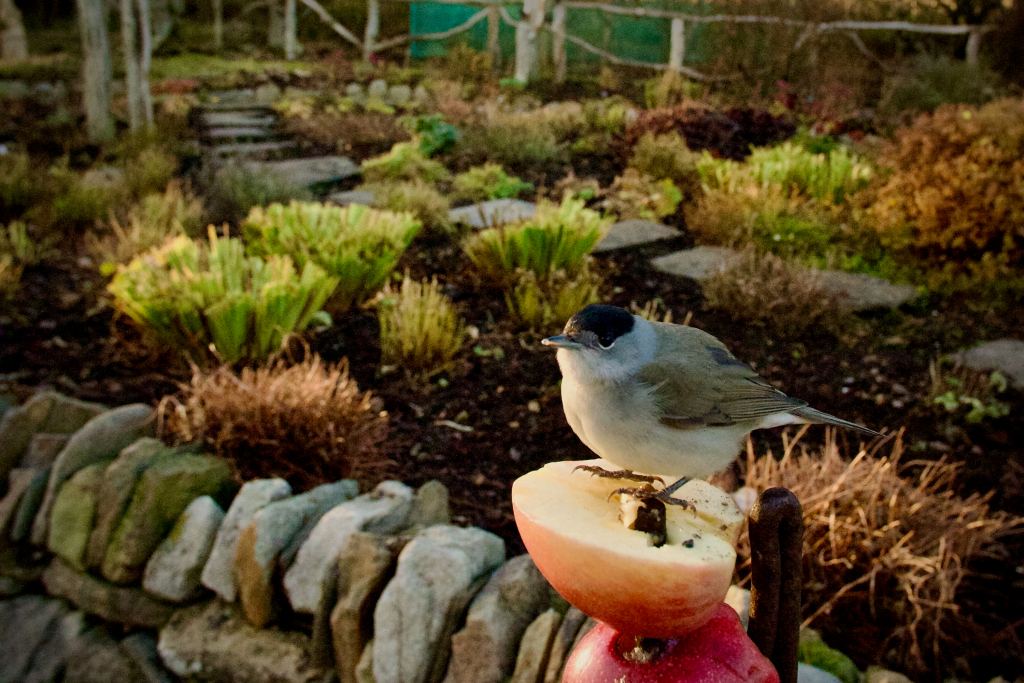
Garden birds are coming and going. Goldfinch numbers are rising, chaffinch numbers falling. Blackbirds are being counted in tens. In cahoots with redwings they’ve stripped garden rowans bare of berries. Blackcaps are being seen again, small Scandinavian visitors that are drawn to apples like a magnet to iron.
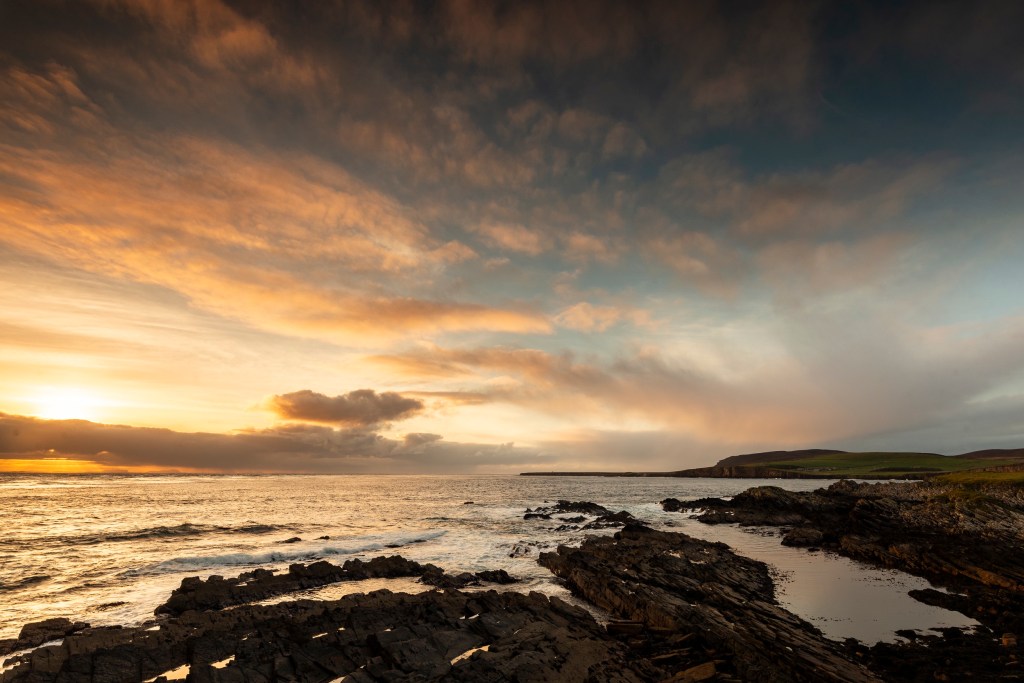
Clouds permitting, the mirrie dancers are still putting on a show. Thursday brought clear skies and the promise, according to an app, of a good display. I took a camera to Osmundwall, a small sheltered beach on the narrow headland of Cantick, where, according to legend, in 995ad Earl Sigurd the Pagan, who fought under a black raven banner, was converted to christianity at the point of King Olaf Tryggvesson of Norways sword.
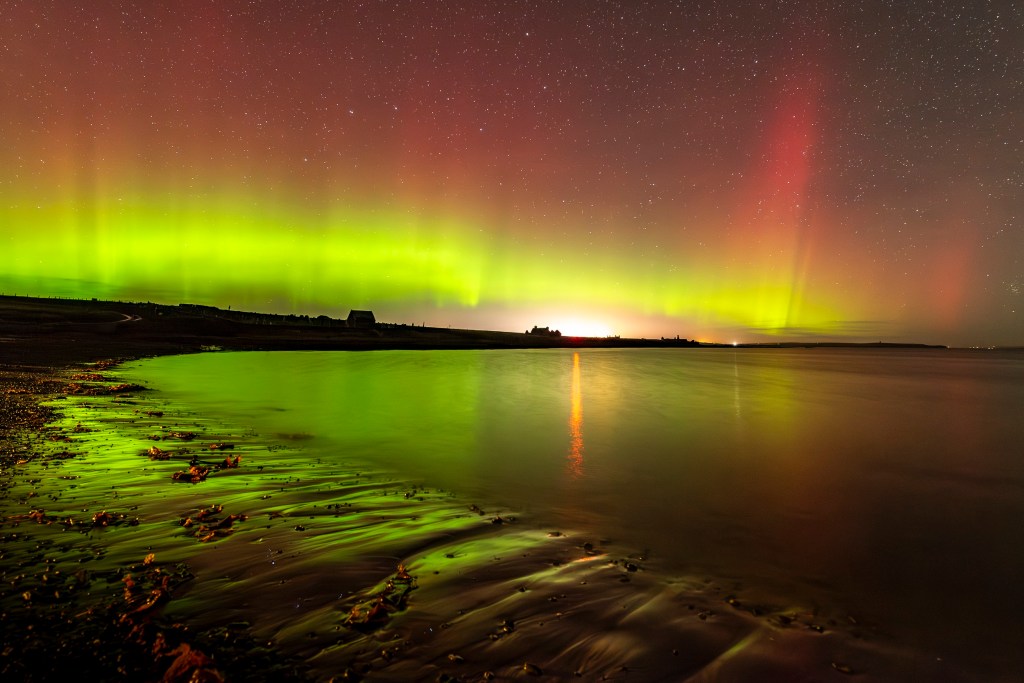
There’s a saying that if you put a spade in the ground in Orkney, you’ll dig up history. A short walk from the beach there’s the bump of a neolithic chambered tomb, flat topped and almost certainly first excavated by Sigurd or Olaf or some other Viking hoping for grave goods. It’s another good spot for a photograph. The picture needed a figure for a sense of scale, so I set up the camera, tripped the self timer and by the light of a head torch ran up the bump to get into the frame. When the dancers had finished their show, I cut across a field and walked back to the van via the opposite coast, listening to the crash of waves on a hidden by darkness shore. My route took me over one piece of history, a Bronze age settlement, hidden beneath wind cropped turf, and past another, the remains of a Broch at Hesti Geo. Despite being long collapsed, in daylight, at its base, beautifully coursed stonework is still visible, as tight as the day it was laid.

 A garden in Orkney
Lovely thank you! Sue
LikeLiked by 1 person
I don’t know Gary, bragging about sunshine when we’ve been clothed in for ever grey skies! On Radio 4 they were talking about it, apparently it has a special name which alas, I have forgotten. Better and colder weather coming up, so “they” say………….. Gorgeous picture of a black cap, I’ve had a female feeding on the Pyracantha in the Winter. How she loves those berries. Went birdwatching with my group and we had fab close sightings of an osprey sweeping over the water and eventually catching a fish. Beautiful. Have a lovely week. xx
LikeLiked by 2 people
Great pictures as ever, Gary, but especially the dancers over the headland.
Can you give me a idea of the size of your solar array please? Just interested in the physics of light/electricity at your latitude. Watched a documentary about an Inuit family in Okpik, Northwest Territory (68N compared to your 58N) installing solar and wanted to compare. They’re very close to the Beaufort Sea, but suspect they get clearer skies (when the sun is above the horizon).
There’s a new person joined the walking group I go out with every week, who’s from Stornaway originally. I knew from her accent that she was some kind of Scot, but had to ask where, as I couldn’t place it at all – never heard an Orcadian before. We had a fascinating conversation about life on the islands and I told her all about your blog.
LikeLike
Morning Penny, 16 x 4kw panels and 2x 7.5kw batteries, it’s expected that they will meet most of our needs apart from the months of November – January. It was bright but not sunny here yesterday and I noticed that we weren’t pulling power from the grid with the washing machine on. For short winter days the system, if needed, is set up to automatically top up the batteries overnight with off peak electricity, 13p instead of 31p, and release it at peak rate times, so theres a still a saving in costs even on shortest dullest days. I think that batteries are the key for solar, you need to be able to store the power generated during daylight hours and release it at a time that suits the homeowner.
If the lady has spent most of her life in Stornaway she’ll have likely gained some Western Isles accent and lost some of her Orkney accent, you might enjoy some of the pieces on here https://hoyheritage.wordpress.com/ click on “tales o hoy”
Have a good week.
LikeLiked by 1 person