
April so far, is following the trend set by March, unseasonably dry and warm days with little in the way of rain. Trees in pots awaiting new homes are being checked and watered almost daily. A sack of wild garlic, brought home from a garden where it grows thick as grass, has been scattered and planted beneath the Red alders that shelter the rear garden from the worst of the westerlies. The ground was like dust, once planted, a hose at full stretch with the jet at full power, just managed to reach them.

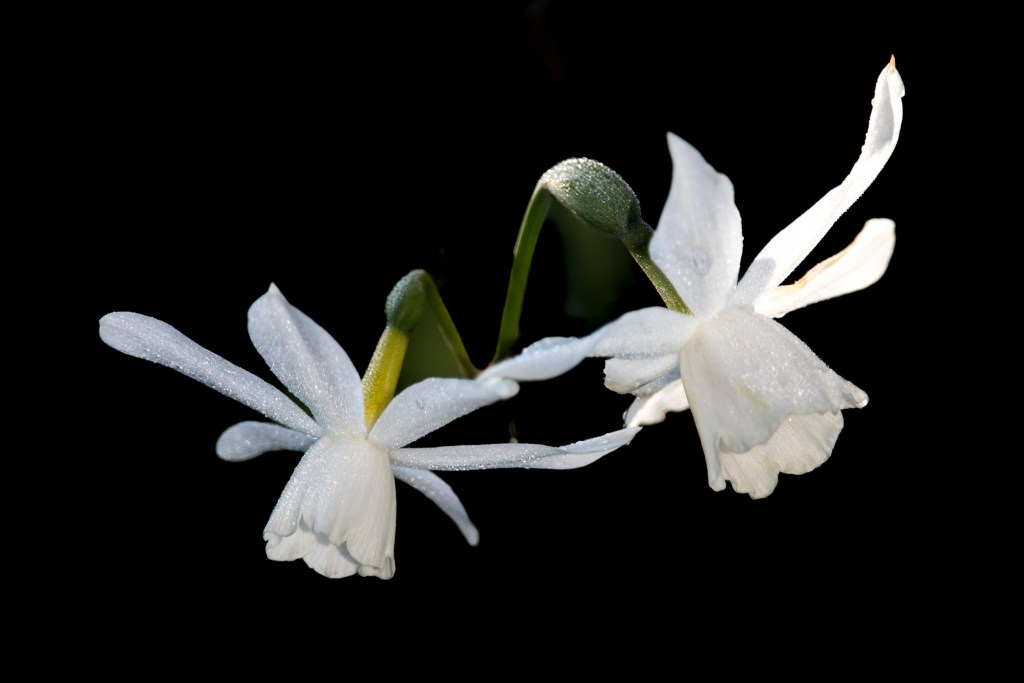
Despite the warmth, gardening here is a slow burn start, in the rear garden we’re still on phase two of the daffodils, ‘Tête-à-tête’ have gone over, double headed Thalia has opened, but a week or two yet before phase three, Pheasants eye, the last of our daffs, will start to unfurl and flower. A new addition to the garden is a delicate pale blue Muscari, valerie finnis, definitely a keeper.

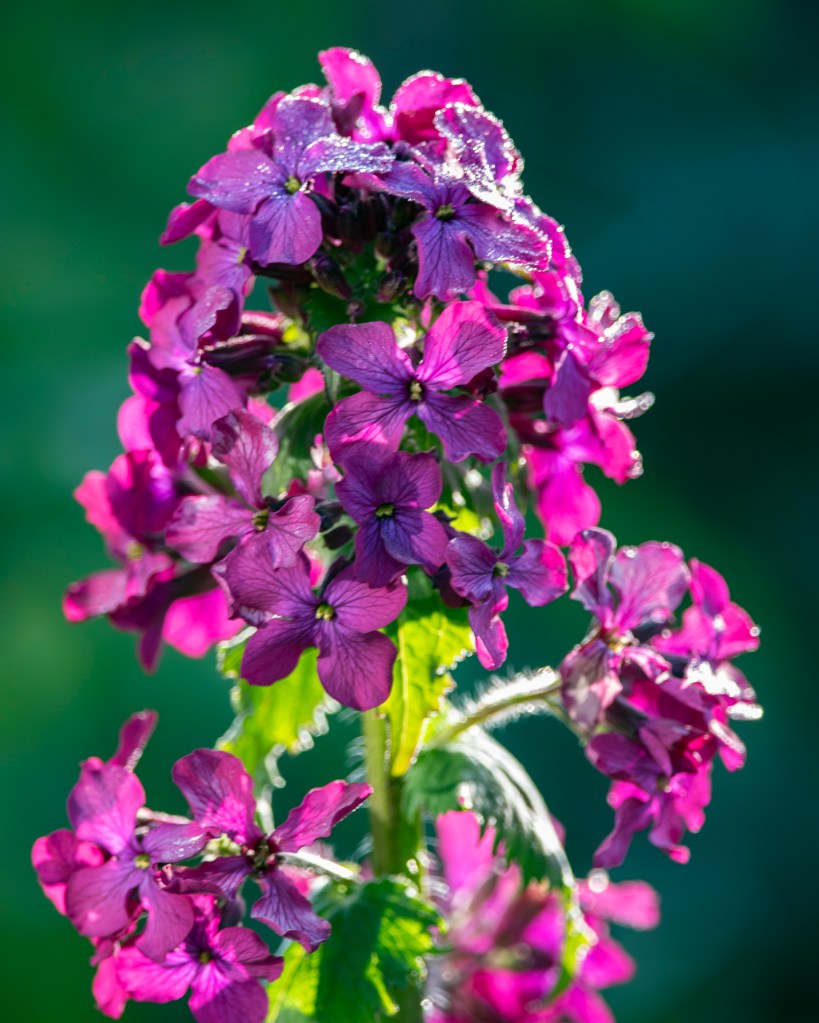
In the front gardens perennials are starting to clump up. With no trees to shade it, the front catches the most sunlight. When we laid out the garden the decision was made to create three small areas, each bounded by stone dykes, rather than have one long and narrow space. With the sea only a couple of stone throws away it has worked well, the dykes giving shelter and just as importantly, trapping warmth. Of the plants we grow there, first out of the blocks is a Bleeding heart, dicentra formosa, a magnet for early flying bees, not far behind is Honesty, lunaria annua (pictured top), a useful pollinator that is left to self sow, popping up wherever it wants.


While the sun shone a pleasant task was to walk a mower over the meadow, not to cut the grass, that at this time of year has still yet to turn green, but to top off the rushes. They’re a lover of damp places and we’re lucky here to have a mix of soils. The meadow faces east, sloping gently to the shore, but the ground also undulates north to south, rising and falling like a gentle swell on the sea. High spots tend to be dry, low spots wet. The upside is that you can grow a wide variety of wildflowers, the downside is that the rushes, if left unchecked in the damper spots, will swamp out everything else. When I started to mow a pair of Greylags were grazing the yet to turn green grass. They tolerated me at first, walking away, head to one side, keeping an eye on me just in case I was following. As the mower got closer nerves got the better of them, taking to the wing and settling at the edge of the moor, honking and chuntering at the inconvenience of it all.

At the bottom of the meadow, where the ground levels out before falling to the shore, it is permanently wet, squelchy in even the driest of years. We planted a long thin coppice of grey leaved willow and with an excavator, also dug four ponds, three for ourselves, plus another for a like minded neighbour. At this time of year the willows are a picture, yet to come into leaf they’re clothed in yellow-green catkins.

The ponds are slowly starting to naturalise, well worth the worry and crossed fingers, that the sunk to its belly excavator, wouldn’t get stuck. As hoped, they’ve proved to be a draw for wildlife. Last week saw Curlew and Oystercatchers probing the muddy edges, the first Swallow was seen this week, soon they’ll skim the water, blue darts, drinking and hawking for insects. In the rough and never mown ground between the ponds and the shore, a pair of Mallards are nesting, ditto the Greylags who last year hatched a half dozen goslings. Herons are regular visitors but the highlight this week was a brief visit from a pair of Teal, the uk’s smallest native duck. A bird that gave its name to a shade of green.

Clear skies brought the mirrie dancers, they also brought moonlight and the moon will wash out all but the brightest aurora. An app that pings of a possible display also comes with the caveat of a rising moon spoiling the show. Most nights brought a faint glow of green and nothing else, but one night stood out, the aurora streaking high into the sky above the house. It’s impossible to correctly expose both the moon and an aurora in the same frame. One needs a fraction of a second exposure, the other many full seconds. In the photograph below the starburst top left is the moon. Setting a small aperture on the lens gave the starburst, the overexposed moon did the rest.

 A garden in Orkney
It’s lovely to read about your garden and its many different areas – I’m a new reader to your blog. Looking lovely and your photos are breathtaking! I am also lucky to have different habitats in my plot, although not as large as yours it seems. Here, only the first Tête-à-Tête has opened.
Saila, from a Finnish arhipelago
LikeLiked by 2 people
Thank you Saila. Tête-à-Tête are a favourite. Yes we are lucky have a plot with a good mix of wildlife friendly habitats, all in a relatively small area. The main thing now is to continue to plant more trees, especially on the moor, downy birch, rowan, alder and aspen, trees that I think you will be familiar with? Have a good week.
LikeLike
Good morning Gary, Yes its been very dry and cold here with a nasty drying wind. But lots of bird, bee and flower activity. And, at last, some rain.
However, Spring has brought me an unwelcome invasion of Cluster Flies! I went into my bathroom and there were about 50 of them! It felt like a Hitchcock movie! I had no idea what or why but google is my friend. They have a weird life cycle involving earth worms….eeeuck, hibernate in lofts and emerge in Spring, At least there weren’t dead bodies and maggots in my loft, which I was really scared of. My nice neighbour went up and sorted them out. Wild life is absolutely fine…..outside!
Love your pictures of the mirrie. How wonderful to have that to look at.
There was a murder mystery on TV shot far up on Orkney and beyond and I;m afraid to this soft Southerner the land looked so bleak.
Have a good week, with some rain for you too. xx
LikeLiked by 2 people
Morning Margot, I also had to google cluster flies, an interesting life cycle but as you say better out than in!
Still very mild and settled here, a bit more changeable this week but little in the way of rain. I was prepping some ground in a garden yesterday with a view to planting a windbreak screen of grey willow, the soil was so dry, I’ll cut the willows today, plant them tomorrow and if we don’t get rain they’ll need to be soaked with a hose everyday.
We’ve seen our first butterflies and the first swallow, lots of queen bumblebees on the wing.
It can be bleak, especially in winter, I find there’s a beauty here in all seasons but important to have trees and to be close to the sea, the moors have a beauty but I couldn’t live among them and not have sight of the sea.
Have a good week x
LikeLiked by 2 people
Sorry, joining in late here.
Beautiful picture of the northern lights, Gary! And a shot right over your place too – makes it look like a warm glow shining from your house.
Your flower garden is looking wonderfully spring-like. Did you have to wait long for a sunny day to bathe it in light like that? Those thalias and Dicentra look lovely together.
Lots going on here in the garden and in politics, so I’ve been very busy and have been remiss in catching up on all things Hoy. We’ve been under a loop of the polar vortex for several weeks which means starting everything in the cold frame. We now have cold nights (3-7C) but warm sunny days so a lot of day time watering is followed by covering everything in fleece or cloches every night.
And of course we’ve started early voting for the federal election, having only just finished the municipal by-election. Huge line ups for both of those – young people have suddenly become very engaged by politics . I’m delighted!
LikeLiked by 2 people
Hi Penny, all credit to Jacqui for the flower garden, it changes daily now, so much growth in the space of a week or two.The dicentras do well here, far better than they did in our Yorkshire garden. The weather is still unseasonably bright and dry, I didn’t have to wait for the sunshine!
We aren’t getting any frost but there’s still a nip to the night air. Cold frames are full here as well, wildflowers and a mix of foxgloves. Like you we’re having to water most days, very odd for this neck of the woods. For the first time in forty odd years we haven’t sown any veg, the solar panels that took the plot over are doing well though, most days, even if it’s cloudy, there’s a zero, or more often, a minus on the systems meter, which means we’re drawing nothing from the grid, and with a minus, generating more than we can use.
Good to hear that the next generation are engaged and voting, more power to them.
LikeLiked by 2 people
Great news about your solar panels! And you’re feeding power back into the Hoy grid sometimes too – excellent.
Tell Jacqui her flower garden is beautiful and I look forward to seeing the seasonal changes in it. She certainly has an eye for design.
LikeLiked by 2 people