

Beyond the low hills at the back of the house, Hoglinns Water lies in a shallow valley. From home, as the crow flies, it’s a couple of pathless miles of tangled heather and soft bog, in reality more a squelch and a stumble than a walk. A longer, but much more sensible route is via Heldale, following for the most part a favourite walk into the hills that has been mentioned on here before.

I went there a while ago, on a day that started dry and bright and ended with rain pattering the hood of my coat. I took the sensible route, first a stone track that leads into the hills, then along the shore of Heldale Water, the islands natural reservoir. As can be seen from the photograph above, it’s an open and ancient landscape, cleared by the stone axes of Neolithic man. What once was scrub and low growing trees had by 3500BC become pretty much the landscape we see now. It’s not devoid of life, nature doesn’t do vacuums but it pays to look down, rather than up as you might do in a woodland. As I walked a flitter of sulphur caught my eye, a pale leaf carried low on the breeze, I walked to where it had settled – a female Northern Eggar moth. She looked the worse for wear, tattered and faded, coming to the end of her brief few weeks of adult life.

Brighter coloured Magpie moths were also seen, a relatively new species to Orkney, arriving around four decades ago. The bright colours are a warning to predators, it’s said that they are so distasteful that spiders will cut them from their webs rather than eat them. Their caterpillars are one of the easiest to identify, they wear the same colours as the adults, in bright body length stripes, and look as if someone has squeezed them toothpaste-style from a tube.

At the margins of Heldale water, Sticklebacks can be seen, small pot-bellied submarine flotillas that bask in the warmth of the shallows. They’d be an easy meal for a patient Heron but for whatever reason, on Hoy at least, the Heron is a bird of the coast. Heldale was also once the home of a much rarer fish, the Orkney Char, a relative of the Salmon and known only from specimens caught in Heldale itself, not seen since 1908 it was officially recorded as extinct in 2024.

As you reach the end of the Water, where shore turns to marsh, there’s a manmade abutment, cast concrete and driven piles. Built to stop water being lost to the surrounding low lying bog. A handy spot to pause for a bite and a drink and also a great way to avoid wet boots, a lichen spattered walkway that takes you over the rushes rather than through them.

A bird I’d hoped to see was the Arctic Skua, a slender cousin of the commoner and much more thickset “Bonxie”, the Great Skua. As with the Bonxie they’re a bird of Northern summers and Orkney is about at the edge of their breeding range. An alternative name is the Parasitic Skua, a moniker that they live up to. They’re often seen in pursuit of Terns – a brief twisting dogfight ensues, an aerial ballet that usually ends with the pursuer getting a free meal, a prize of fish or sand eels, either dropped or literally coughed up by the pursued. In the end I saw a half dozen. They come in two forms, dark phase and pale phase, the former is dusky brown, the latter is two tone, cream below and mocha above.

From the abutment it’s a short walk to Hoglinns, up over a low hill and back down into a valley. The ubiquitous Skua in Orkney is the already mentioned bonxie. The size of a Herring Gull on steroids they’re known as the Pirate of the seas. It’s almost a given here that if you’re walking in the hills a bonxie will take umbrage at your presence and buzz you for the sake of it. Sure enough as I crested the hill to walk down to Hoglinns there was a whoosh of wings as a bonxie, sneaking up from behind, applied the air brakes and passed within a couple of feet of my shoulder, returning for a second head-on pass a few seconds later. It’s not an attack of course, just a bluff where no contact is made. Stand still and the bird will veer off at the last second but that whoosh of wings and passing shadow is enough, when it suddenly interrupts the silence of your thoughts, to give a quick heart skip.
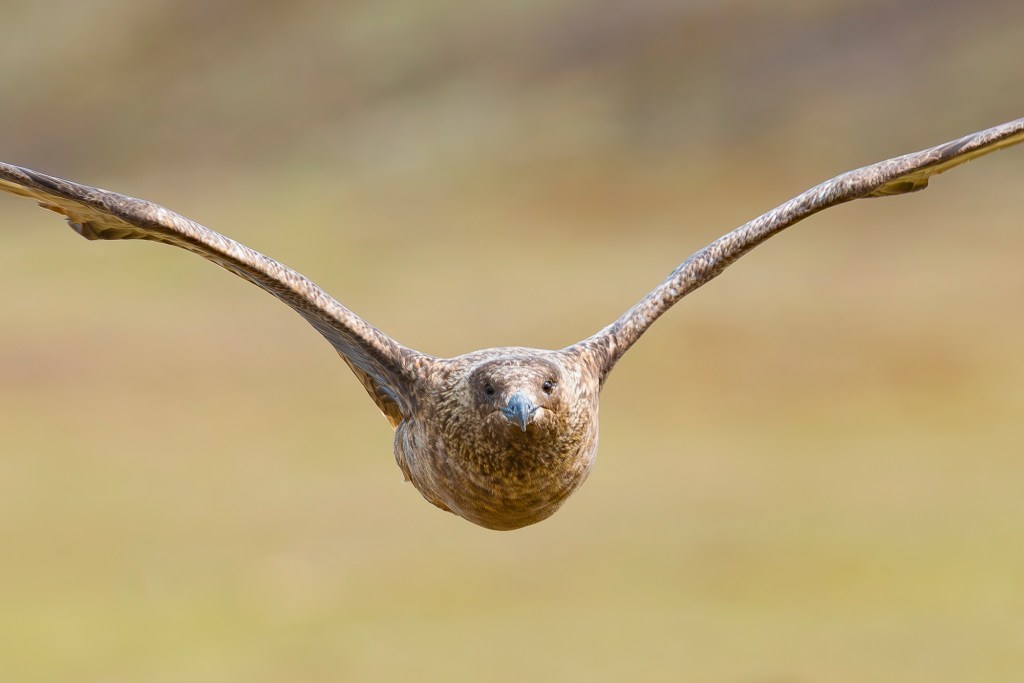
Hoglinns itself is a pool of peat-dark water, cupped in the hands of the surrounding hills, ringed by ferns and grasses that shiver on the breeze. I stayed for a while but as is often the case the journey is better than the destination. The origin of its name seems to be lost to the mists of time, in Orkney many place names derive from the Norse and the Norsemen who settled these islands and the best I could find was “Hoaglin”, a woodcutter or farmer. Definitely not the former, Neolithic man had beaten him to it, but perhaps the latter.
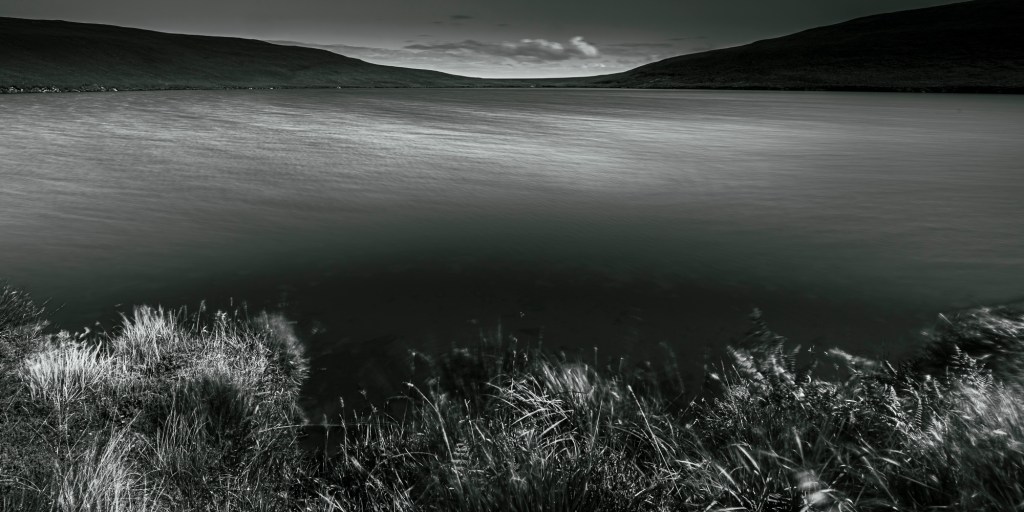
From Hoglinns the sea isn’t too many stone throws away, around a half mile or so to the West. Before turning for home I walked to a headland. Gannets were fishing offshore, cruising over a silver swell. Occasionally they would dive for a meal, half-folding their wings and falling vertically, like head shot geese.
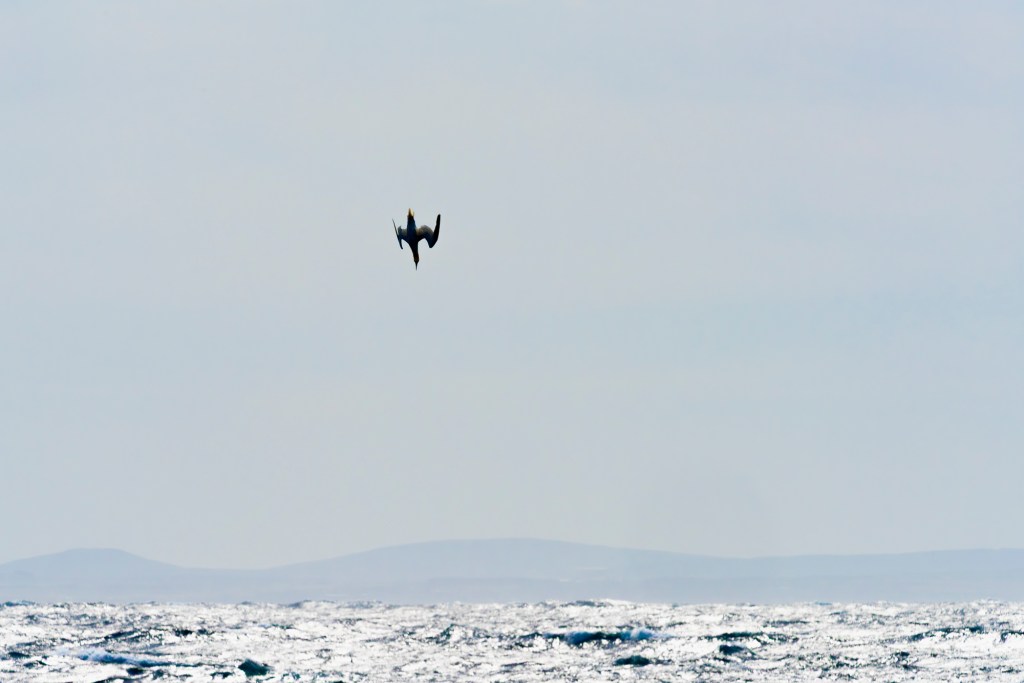
The walk home brought sight of a Common sandpiper (pictured top) and a good number of Mountain Hares. The Sandpiper scolded me with a warning as it bobbed up and down, as Sandpipers do, on its fence stab vantage point. Like the Skuas it will leave soon for a Winter in Africa. The Hares were clad in their summer coats, blue-tinged brown, soon they’ll moult to white, camouflage for snow that in Orkney rarely arrives.


Great gannet action shot! Did you have to wait long to catch that?
You must have a sixth sense about the questions your readers would ask. I was just wondering how big a skua is when you answered that, then wondering what Hoglinns might be named for…
LikeLiked by 1 person
Hi Penny, not too long, I use a long lens which is heavy to hold at eye level for a prolonged period, the first rule of using a weighty lens is that when you take the camera from your eye to give your arm a rest your subject will instantly do what you were waiting for, I missed a few before this one obliged!
Another option for Hoglinns is linn – old Scots for a pool of water, add in Hogg for sheep and it may be Sheep water or something along those lines, it would unusual though to have a Scottish place name in Orkney, I’m still erring to the Norse 🙂
LikeLiked by 1 person
Gorgeous, all of it.
LikeLiked by 1 person
Thank you Joanna.
LikeLike
Good morning Gary, Big temperature drop here but lovely blue skies as well, so “proper” Autumn weather.
I keep reading “Hoglinns” as “Hobgoblins” and really hoping you have a sighting!
I don’t think I’ve ever seen that Magpie moth, looks amazing, but I did find a big fat Hawkeye moth on my Willow this Summmer, which was very pleasing and a big shout out for my untidy gardening style! An oasis amongst the decking and general tidiness of where I live. And don’t get me started on the paved front gardens now turned into parking!
Have a good week. Margot x
LikeLiked by 2 people
Morning Margot. Yes, very cold here as well, our first week of needing a coat everyday. Although saying that the next three or four days are supposed to be bright and clear, allegedly!!
In Orkney they’re “brownie’s’ or “broonies”, mischievous spirits that I’ll blame for me ending up on all fours at Hoglinns, a bit of old fence wire lost in the heather, possibly a snare set by a broonie 🙂
We had some sort of Hawkmoth in the garden last week, gone as quickly as it arrived and no ID, the Magpies remind me a little bit of the Garden tiger, a moth that’s said to be quite widespread in Orkney although we’ve yet to see one here.
Tidiness is overrated 😉
Have a good week
LikeLike
Hi Gary, sent you a longishn reply, which seems to have vanished! in the hope it’ll turn up I wont rewrite! Have a good weeek. Margot x
LikeLiked by 1 person
Hi Margot, wordpress is sometimes a bit like btl at the Grauniad, you post a comment, it disappears, post again and both turn up! Have a good week.
LikeLike
Hooray! Its appeared, as you said, bit of a delay.
LikeLiked by 1 person