
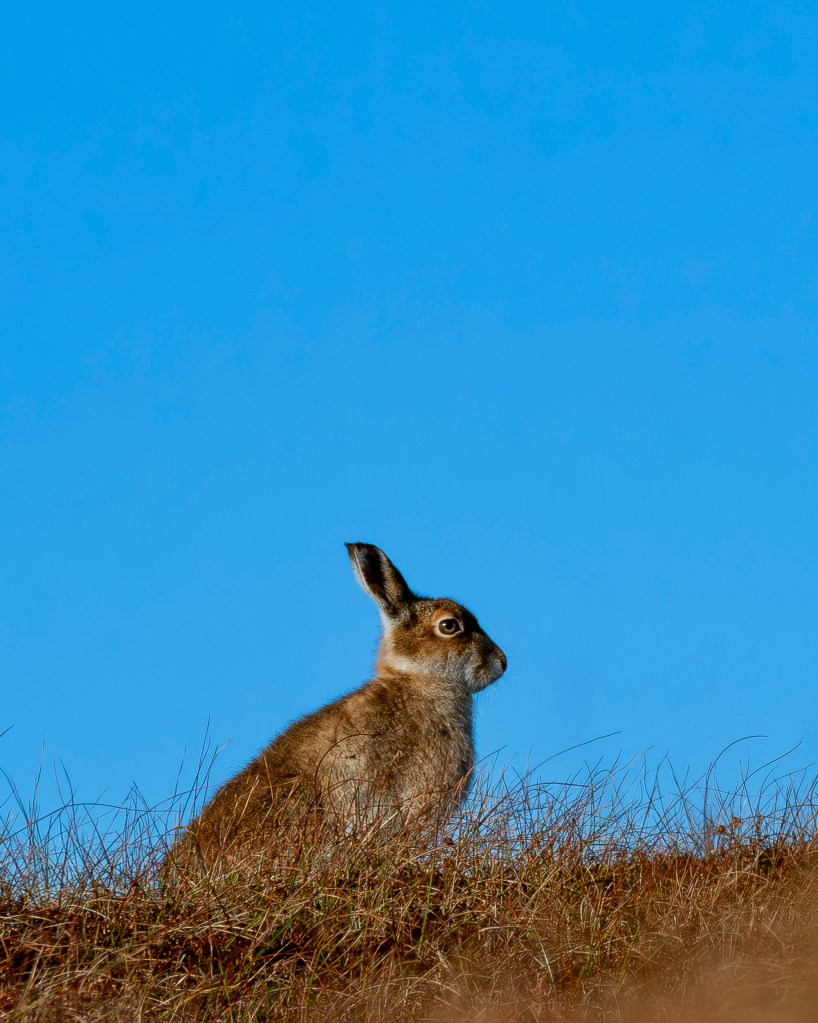
Over the past couple of months, on moor and shore, we’ve watched two of the islands mammals, Mountain hares and the pups of Grey seals, change their coats. For both it’s a means of survival, for the Hares supposed winter camouflage, for the Seals a chance of independence, to leave the shores that have bound them since birth.
In Orkney, Mountain hares are found only on Hoy, and were likely introduced by the Lairds for sport. They’re a creature of open moors and low hills, places where trees lost in Neolithic times will seemingly never regain a foothold. They share their open and sometimes bleak habitat with many others, from their nemesis, the White-tailed eagle, through to low flying moths and butterflies, that seemingly live a life governed solely by the direction of the winds.
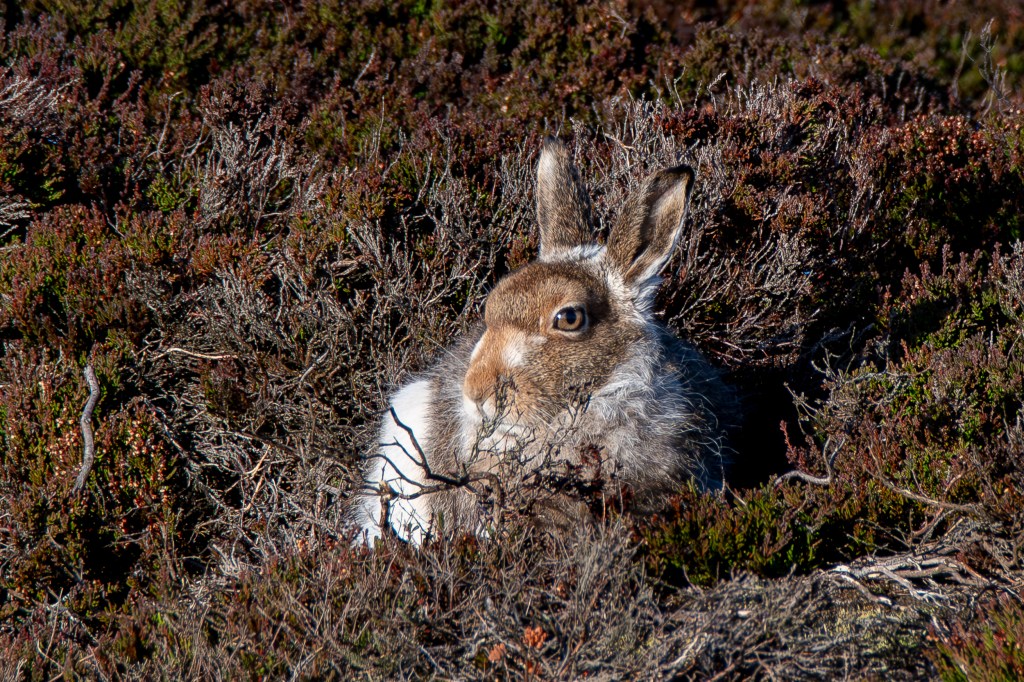
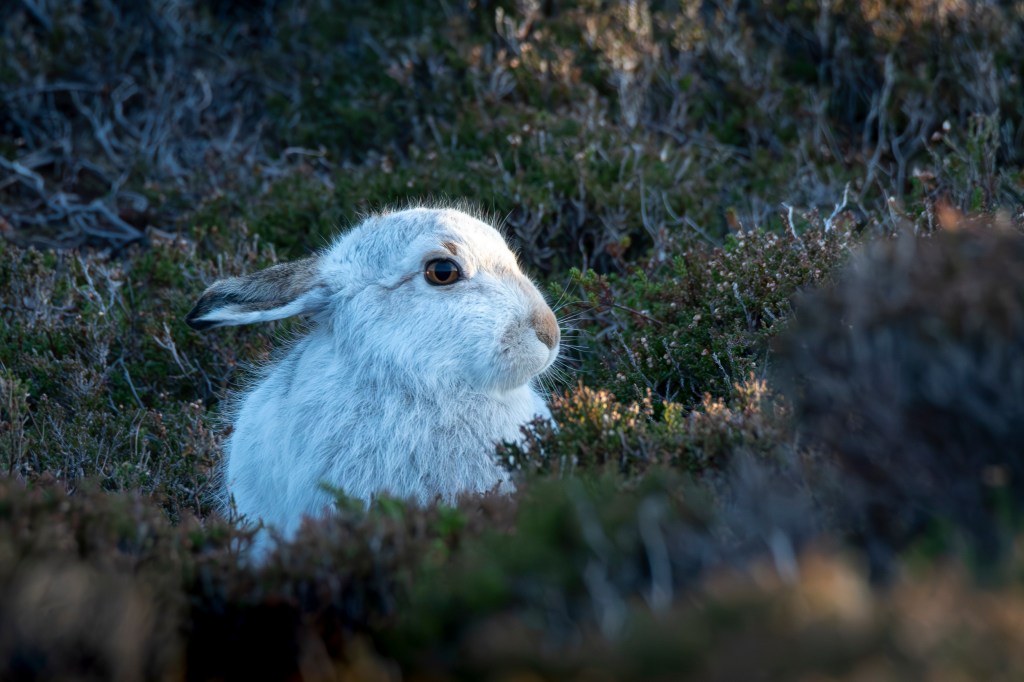
They start to shed their blue-brown summer coats in October, a process that sees them, as per the photo above, at first turn piebald, and then, to a not quite fresh from the wash, white. The change is genetic, wired into their DNA and in a warming climate, a serious disadvantage. Despite the dump of post New Year snow that we have just had, in winter the moors and hills here are, for the most part, soft shades of russets and browns. As can be seen by the photograph, piebald is a good early Winter camouflage, after that, as the moors fade and their coats whiten, they literally do stand out like the proverbial sore thumb.
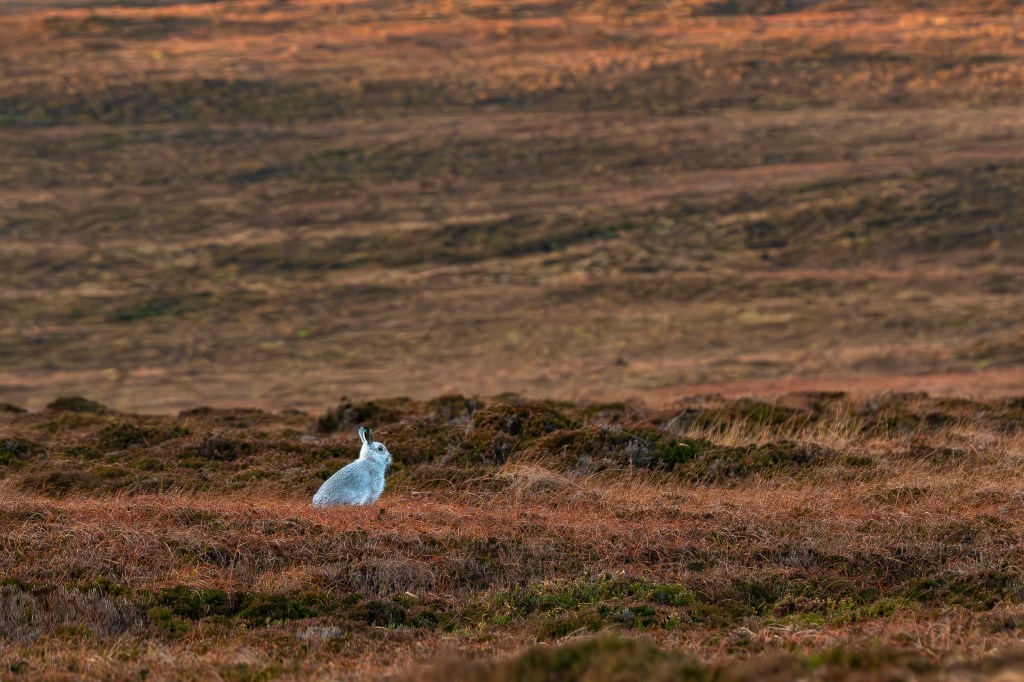
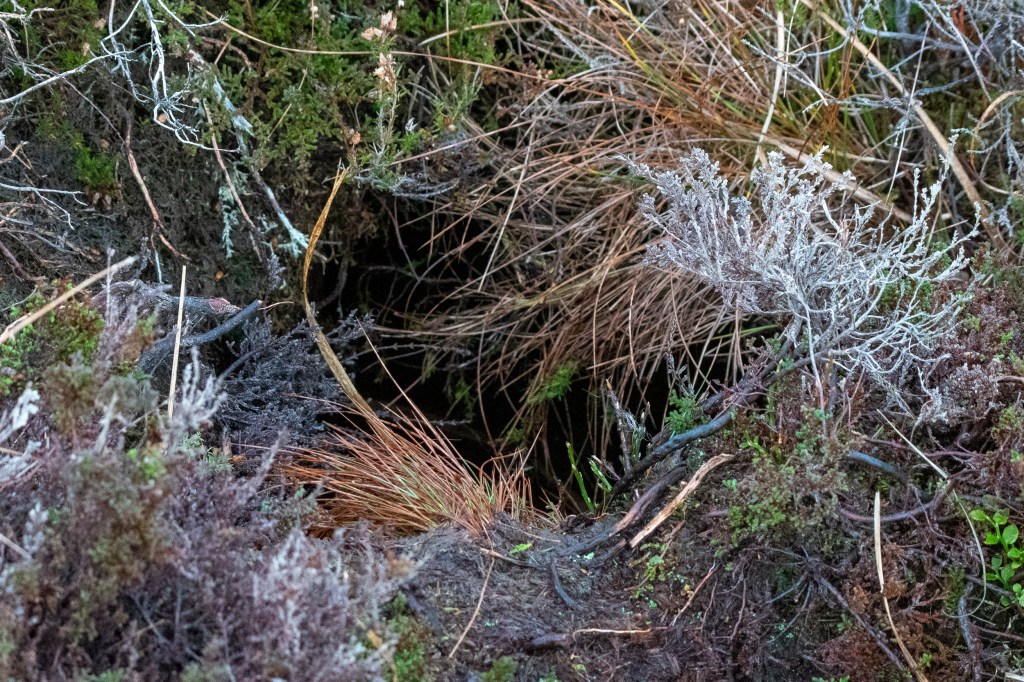
The hares though have a survival trick. Whatever the time of year, with the wind behind you they’re nigh on impossible to stalk, but put the wind on your face and walk quietly towards likely dips and hollows and it’s possible to get within a few feet of a hare sat tight in a form. In summer, if the hares nerve breaks, it will run, covering a hundred metres or so before pausing to look back, its warm weather coat blending perfectly with the heathers and grasses. In winter though I’ve seen a different trick, a quick leap to one side and, as if through an invisible portal, they’re gone. A closer inspection will show not some Leporid sorcery, but a short burrow, curtained by grasses and heathers, that at a distance is almost invisible to the eye. A mere foot or two long but enough to give safety from a swooping Eagle (or a nosy human with a camera).
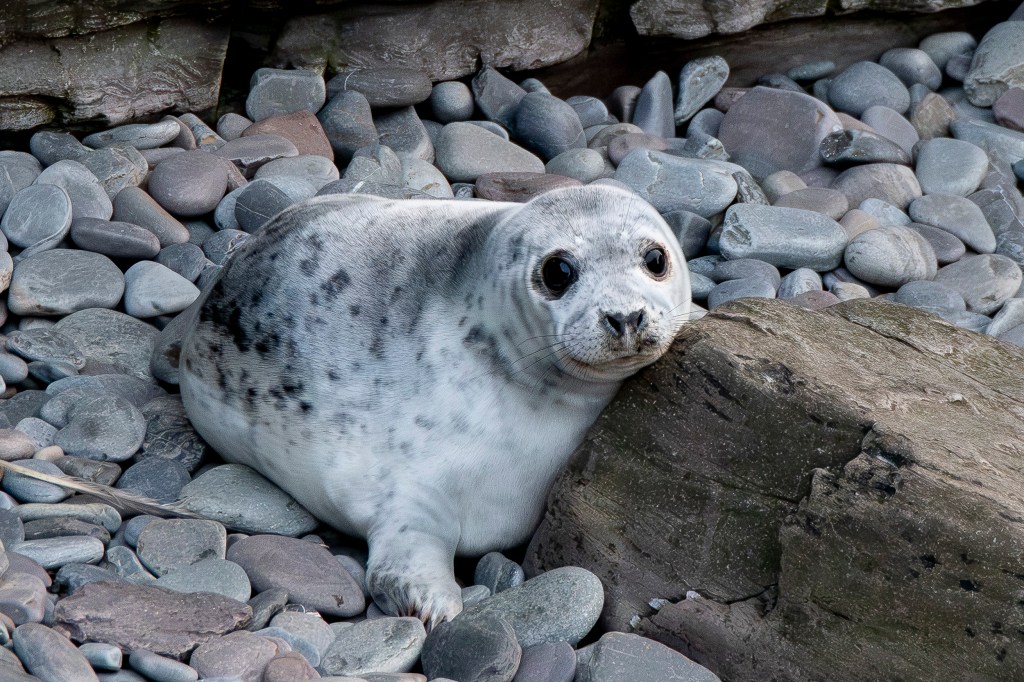
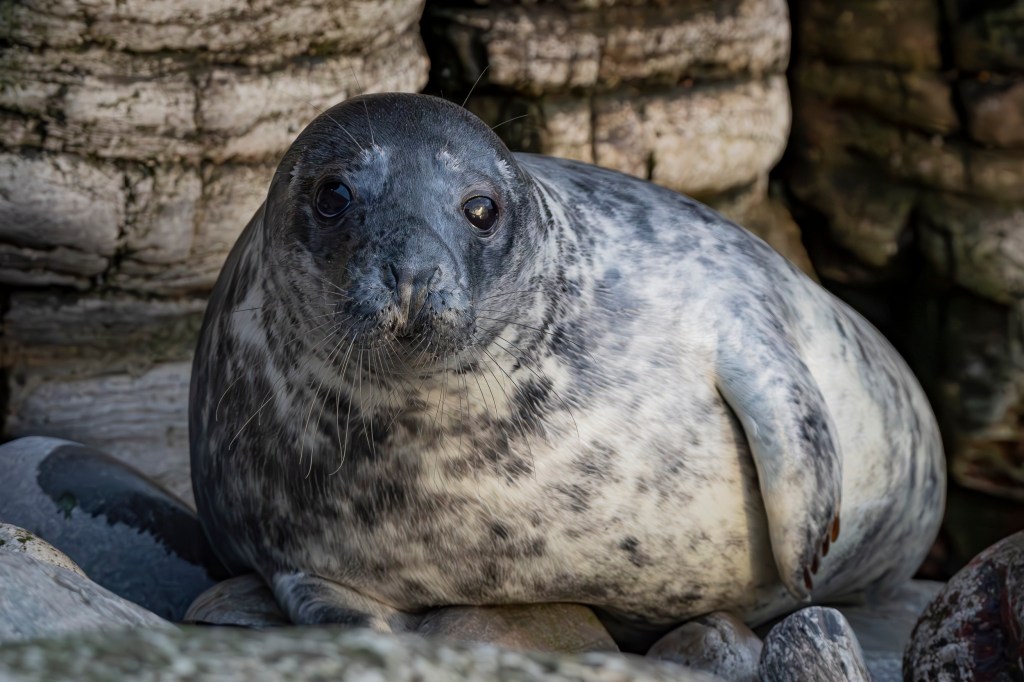
Grey seal pups are born from mid October through November here. The Geo’s of South Walls, with their beaches of sea-smoothed cobbles, are a favourite spot for mothers to haul out and give birth to creamy-white pups. The pups for their first month of life are shore-bound, covered in Lanugo, a sheepskin-like coat of white fur that keeps them warm but not truly waterproof. Every year some are lost when a storm driven tide pulls them to an early death. Many more survive though and it’s fair to say that those puppy dog eyes make it impossible to pass by without raising a camera to your eye. To avoid disturbance a long lens, in this case 600mm, is essential.


At a month or so old they shed their fur and develop their adult waterproof skin, turning from white to shades of grey, blue and black. Beneath the skin, after weeks gorging on their mothers high fat milk, lies a thick layer of insulating blubber, they’re ready at last to answer the call of the sea. A danger with this rapid growth is entanglement, twice we’ve seen half grown seals with an ever tightening garrotte around their necks, one seal got lucky, after a bit of a wrestle we cut the net from its neck, the other not so much, seen in the water, out of reach. An unwritten beach-combing rule is to drag rope and old net out of the tides way, stick a rock on it and let the grass grow through it.
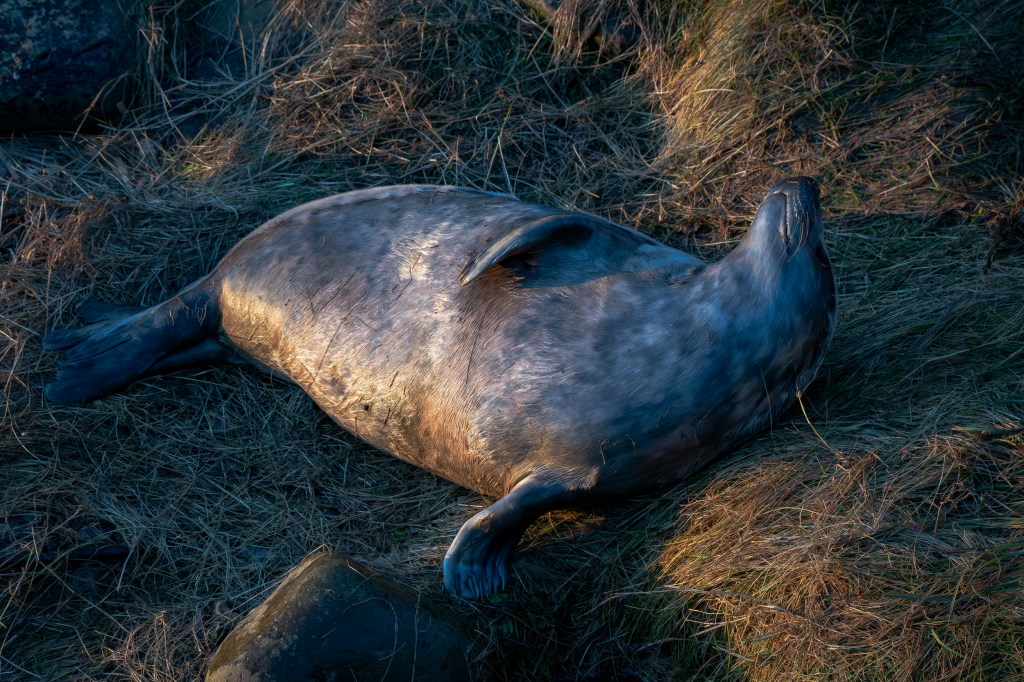
My favourite shot is the one below, a well grown pup catching the last rays of a winter sun. Swim, feed, sleep and repeat, a tough life 🙂
 A garden in Orkney
Lovely photos and stories! Here in Finland the white hares are well camouflaged now – the whole country is covered with snow, including all islands.
LikeLiked by 1 person
Hi Saila, thank you! Our Snow has left us, we have bright sunshine and gales today. The snow was a pain, it brought the island to a halt, but it did look beautiful while it lasted.
LikeLike
Hi Gary, Hares are such beautiful, iconic creatures, the thought of hunting them makes me feel sick.
Yes, that last pic of the seal is simply adorable. I’ve seen them really close up on the Farne Islands.
My nasturtiums have finally given up after that freezing weather we’ve had and are a slimy green mess, awiting a visit to my compost heap. I’ve now got TWO blooming Robins in the garden, not fighting each other so must be in a relationship….my poor Sparrows don’t stand a chance, they like to hang around and feed so get driven off all too easily, whereas the tits are smash and grab merchants and are quickly away from the feeders.
And, I know I shouldn’t really because of global warming, but I’m so pleased it’s warmer!
Have a good week. Margot x
LikeLiked by 2 people
Morning Margot
Yes I agree, so wise looking, fortunately they have a lot of protection now, although they can still be culled under licence, sadly there’s always a loophole 😦
Many moons since we went to the Farnes, my strongest memory is being mobbed,and pecked,by Arctic terns. We’ve got some friends here who live down a track, in Summer to get to their postbox, they have to run a gauntlet of Terns, blood has been drawn more than once!
The snow and cold took the last of our Hesperantha’s, they had flowered right up to the New Year, you may need to have words with those Robins.
Same here, the snow looked beautiful but brought the island literally to a stop. The winds have swung away from the North, we’re back to our usual 5 or 6 degrees, so much nicer. Good to be outdoors again.
Best wishes
x
LikeLike
Hi Margot,
Greetings from Vancouver where we’ve had the second of a coming week’s worth of sunny 13C days. Lovely, but presages a very hot summer ahead according to our government’s Environmental Department weather forecast…
When I read about your robin(s) being aggressive in the garden, I had a picture in my mind of our robin – really a big red breasted thrush species. It wasn’t until this week when the CBC had a story of the first time a European robin has been ever spotted in Canada, that I remembered your robins are actually tiny cute little things. Can they really bully sparrows? Surely they’re the same size or smaller?
LikeLiked by 1 person
Hi Penny, how are you.
Blooming Robins can ideed bully my dear Sparrows. Kind of the same but chunkier and far more aggressive. They launch themselves at the Sparrows like an assassin! I’ve seen one on the bird feeder, hello Robin you are a ground feeder remember, swivelling its head to check that no Sparrows are sneaking in. Its also seen off a flock of long tailed tits. It’s a monster! x
LikeLiked by 2 people
That hare seems to be looking you right in the eye, Gary! I assume it must have been aware of you but judged you too far away to be a risk at that stage.
The seal pup is very endearing – are seals and selkies the same thing? Is selkie just the local name for a seal (even if the name has magical overtones?
In North West Territory last summer, a wildlife specialist took the group to see caribou up close. He asked if we knew the one difference between caribou and reindeer. Answer was, reindeer can fly 😉
LikeLiked by 1 person
Hi Penny, it was aware, if flushed, after stopping to look back after a hundred yards or so, the next look back is often as they crest a ridge, as this one did. They follow a pattern, if they see, hear or smell you first, they tend to run while you’re still hundreds of yards away, if you can stalk them by using dips in the ground it’s possible to walk quietly to within a few feet of them, there’s a point, usually a few tens of yards, where the hare seemingly decides sitting motionless is safer than running.
It has since occurred to me that it seems to be the younger hares that use burrows, of the dozen or so photos that I had to choose from, the three hares that did a disappearing trick were the smallest. With no ground predators I wonder if this is a survival trick until they build up stamina, hide rather than try to out run an attack from the sky.
The Selkies are seals in human form, most of the folklore here tells of men stealing the skin of a female selkie when she has secretly come ashore with other selkies to dance, she sheds her skin and turns into her human form. The man steals the skin and takes her for his wife, without her skin she can’t return to the sea. Occasionally it’s reversed, a selkie female takes a human male as her partner. They walk among us 😁
I’m stealing that, to make it UK friendly I’ll swap Caribou for Red deer 🙃
LikeLiked by 1 person