
The last days of May brought fine and settled weather. Days of blue skies and light winds. We spent long spells in the garden, Jacqui catching up with weeding and boxing up plants for customers on mainland while I got on with a new project, replacing a front garden bed with a cobble lined pond. We never get the heat that other parts of the UK sometimes have to endure but even with an ever present breeze off the sea, it was T-shirt weather, warm enough to cast a clout*.
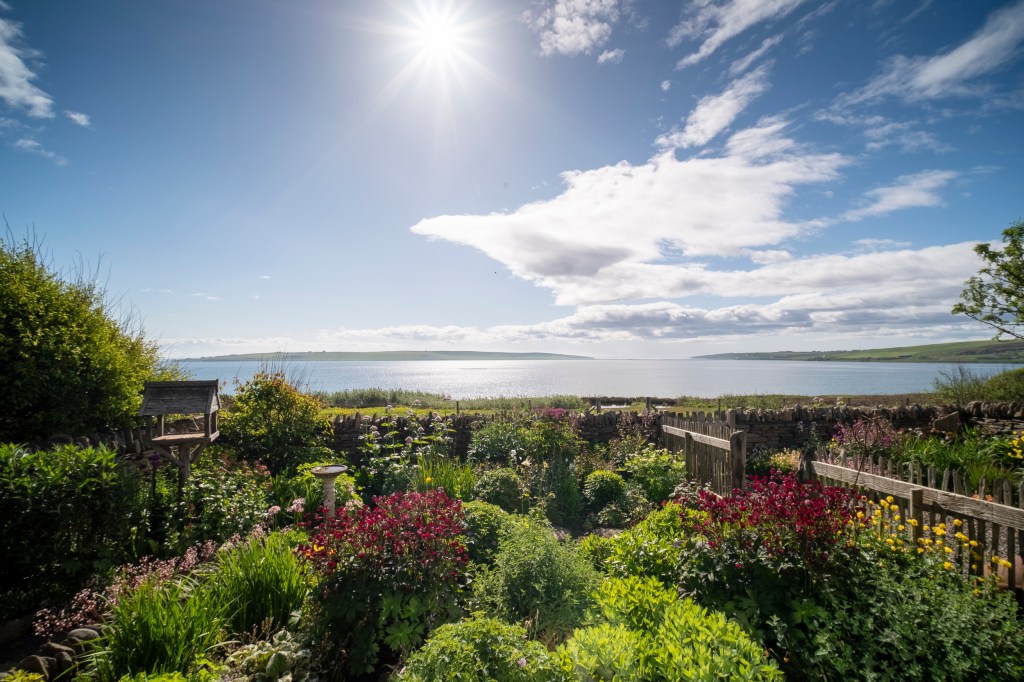
In the garden it seems that new flowers are appearing almost hourly. At this time of year it’s truly hard to keep up. A plant that does really well here is valeriana pyrenaica, the Capons tail grass or Pyrenean valerian, one of those fuss free plants that is happy in sun or shade, either damp or dry. All it needs, because of its height and spread, is a couple of discreet stakes.
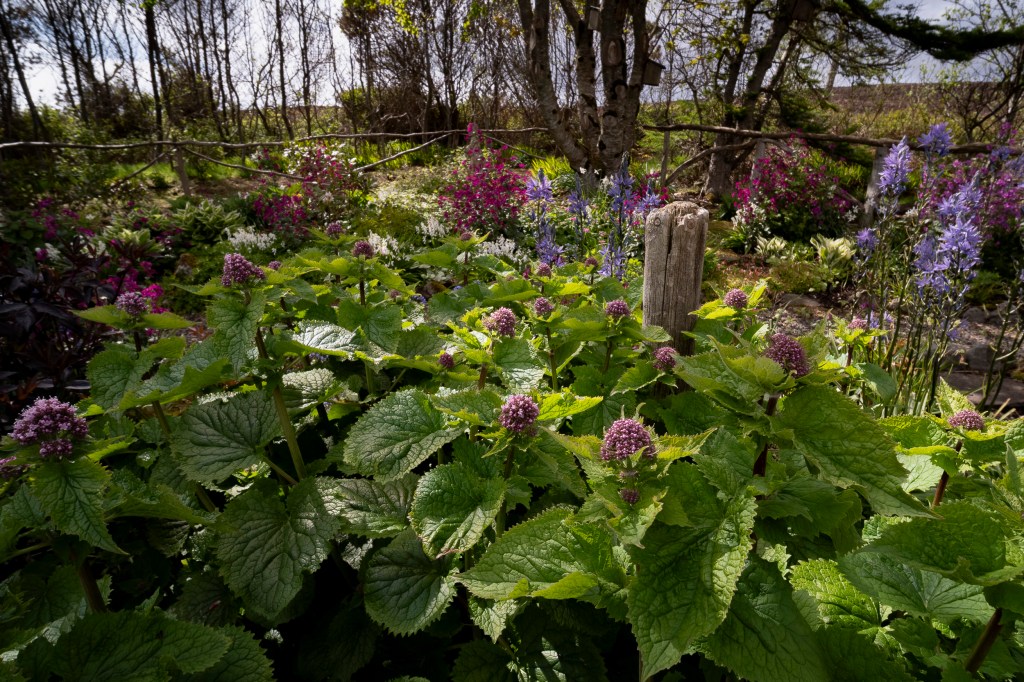
In a shady spot, beneath two sycamores, a valeriana grows alongside spires of blue Cammasia, a member of the asparagus family. Cammasia’s hail from North America and in the wild they’re a native of damp meadows. They need a moist but free draining soil and although they aren’t quite as forgiving of location as the valeriana, they’re still a perfect fit for this neck of the woods. Their flowers are short lived, lasting a week or two at the most and are always worth the wait.
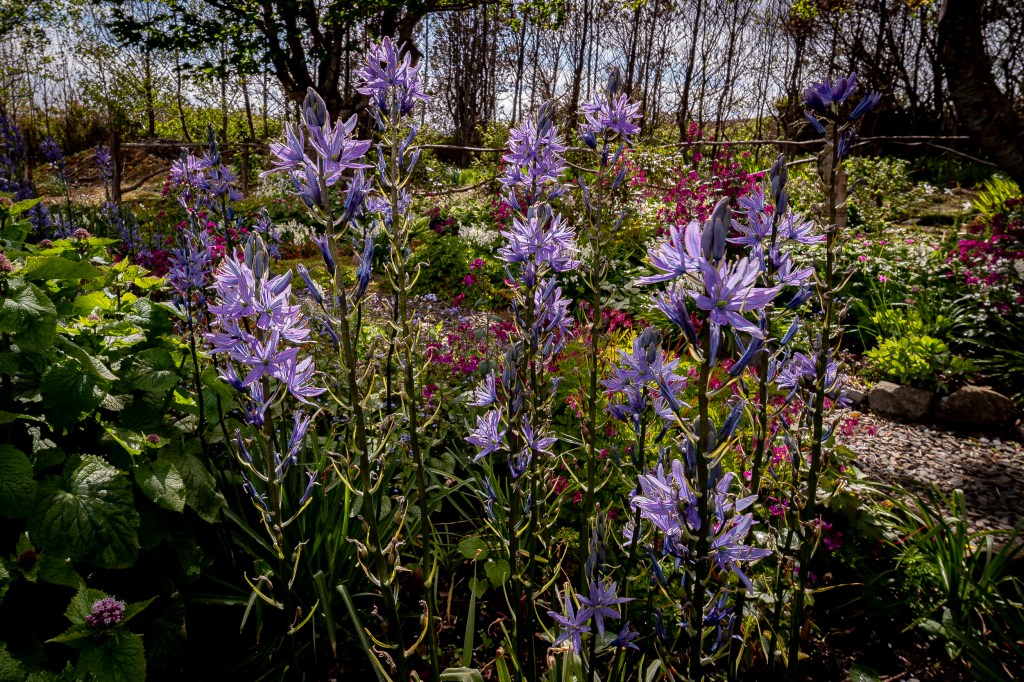
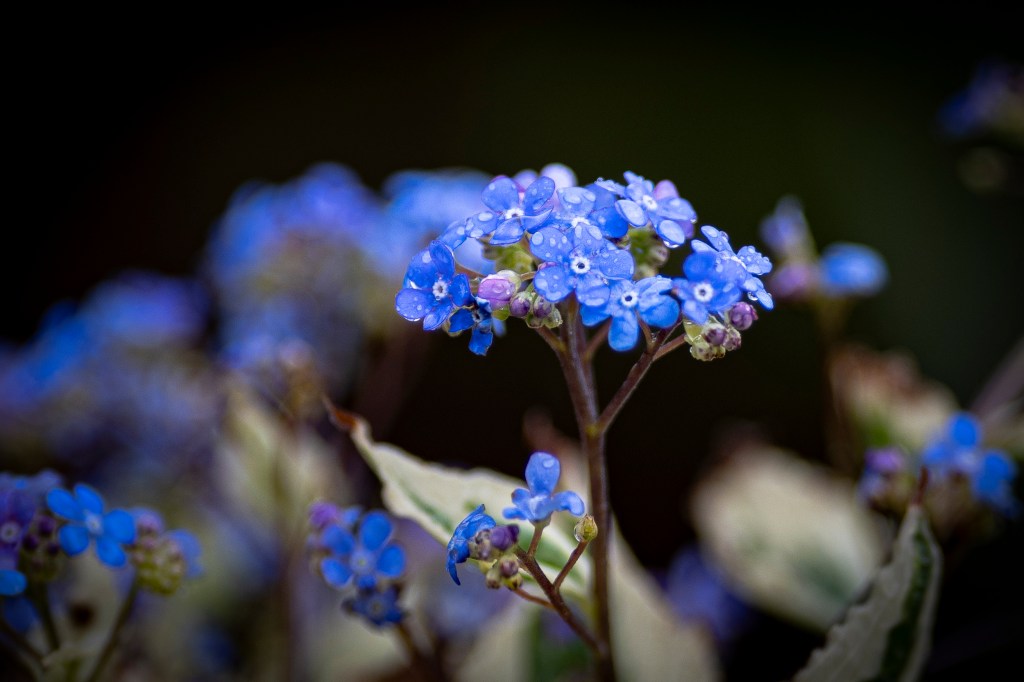
For me, at this time of year blue is a favourite colour, along with the cammasia’s the blues in the garden come mostly from catmints and siberian iris, the latter is yet another damp lover, but there’s also an easily overlooked blue, the forget-me-not like flowers of Brunnera silver heart, a plant that is really grown for its foliage and whose tiny flowers are perhaps a little bit under appreciated.
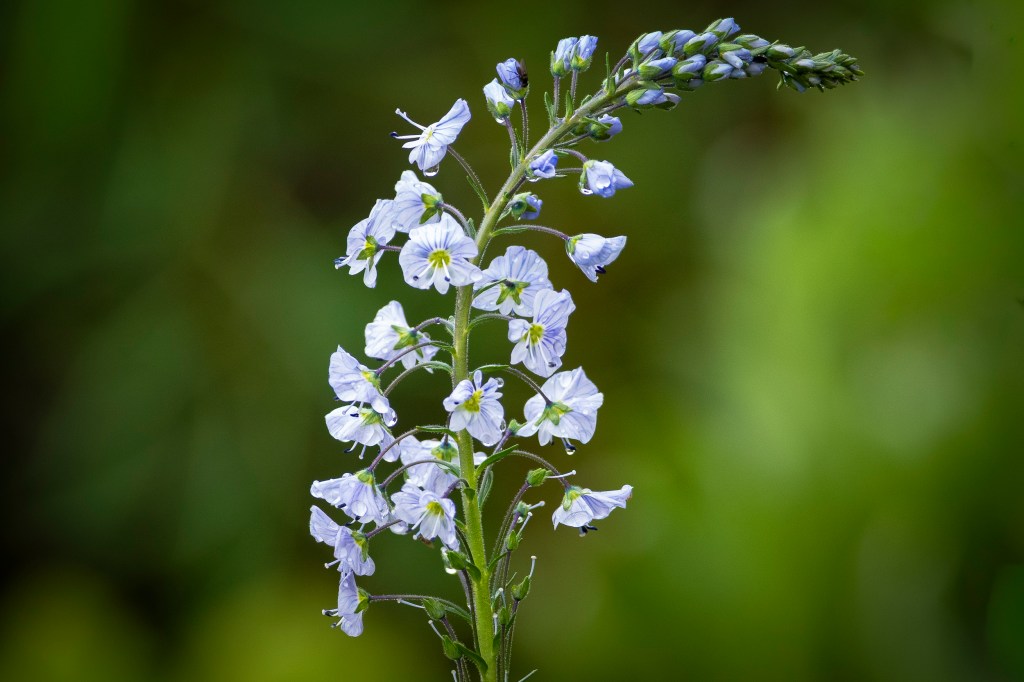
Another blue, that has taken a few years to get established, is veronica gentianoides, the Gentian speedwell. A lover of damp free draining soil, it really should have raced away here but is only now starting thicken and spread. Its spires of pale flowers are the colour of bleached denim, they bow to the rain and are unforgiving of the wind, perhaps Orkney is too harsh for it but now it’s established, it’s definitely a keeper.
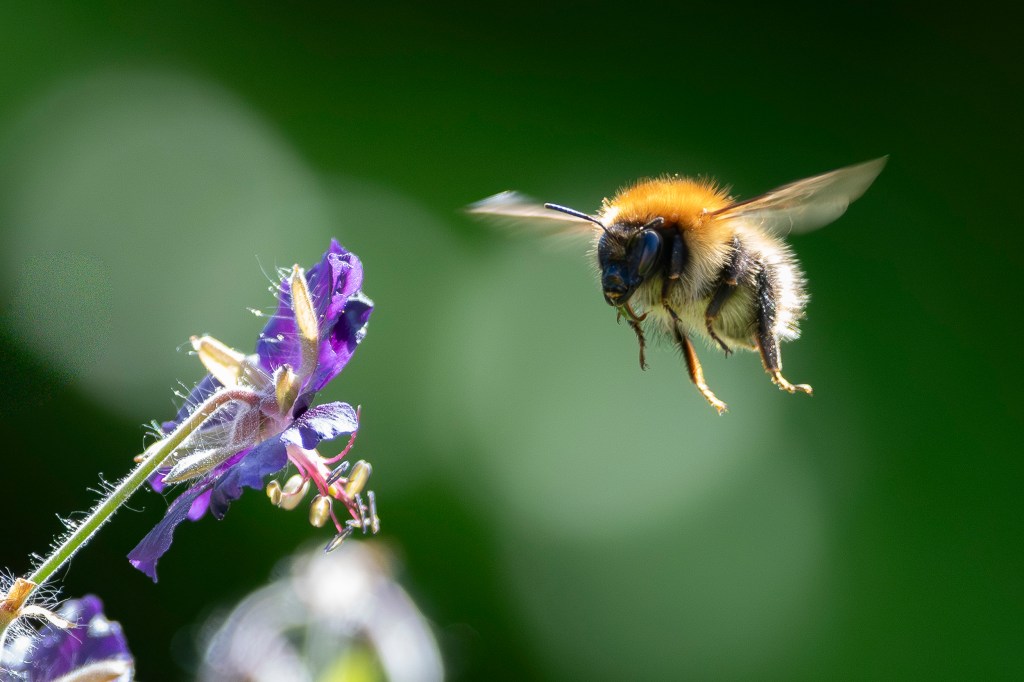
As would be hoped for at this time of year, the garden is abuzz with bees. Of the species we have in Orkney, one of the most seen is the aptly named Common carder, a ginger yellow fur-ball of a bumblebee that nests on the ground amongst thick vegetation. In the wild clovers and vetches are a favourite food source, in the garden, for this week at least, their top of the menu choice is Geranium phaeum.
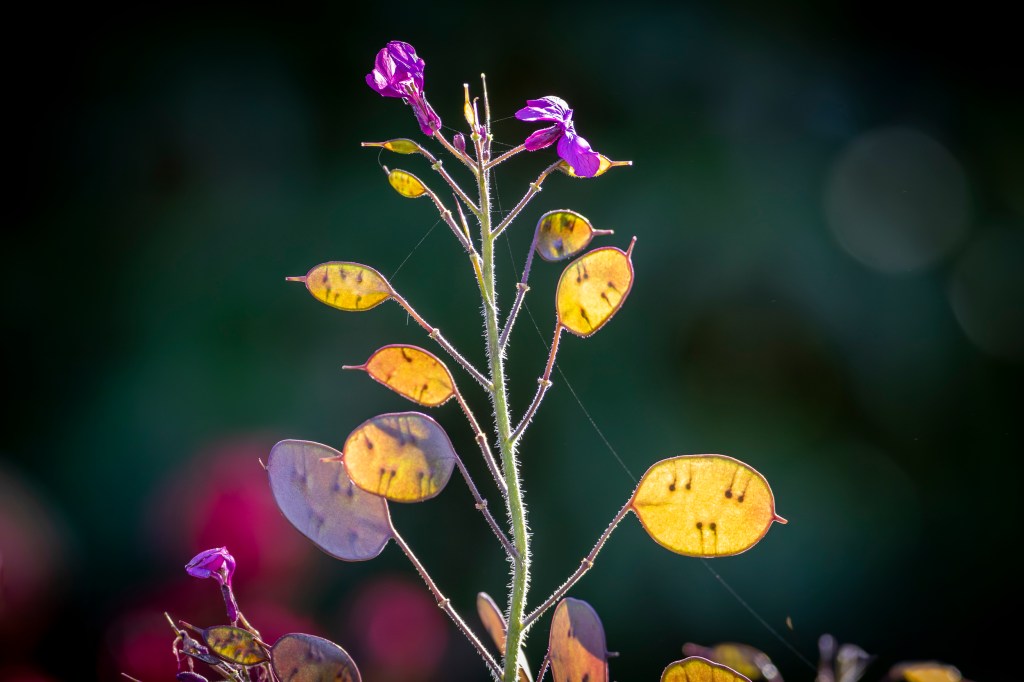
As some plants are flowering other are already starting to fade. The flowers of honesty, at their best a few weeks ago, are already turning to seed. Like their flowers, the seed pods are best when backlit by a low sun, translucent and gold with each seed a tadpole silhouette. By autumn the pods will be silver-white and paper dry, the silver dollars that give the plant its common name.
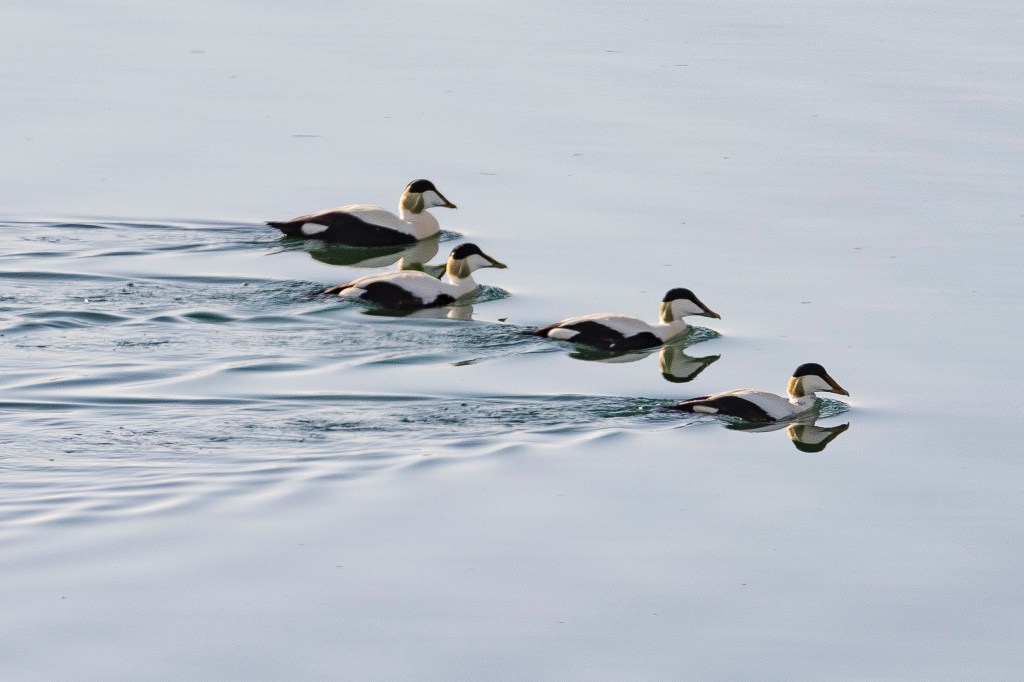
Beyond the garden, out on the bay, small groups of Eider drakes are being seen, a sure sign that females are incubating hidden clutches of eggs. Their job over for the year, the boys leave the girls to it and pass the time motoring around on the water, a month or two ago they’d be driving each other away, fired up with the desire to find a mate, now they’re all bonhomie, past disputes forgotten, at least until next spring.
In June, on the shore of the bay, harbour seals will start to pup. Unlike their larger grey seal cousins their pups can swim at a day old, an advantage for colonies that pup on sandbanks, where twice a day the nursery is covered with water. At home they pup at the base of the low cliff that falls away from the meadow. At high tide, when the water laps at the base of the short, but vertical cliff, adults and pups alike will often stay put, bending like bananas, keeping heads and flippers out of the shallow water. They do this to regulate their body temperature – thermoregulation. Until I googled it one day I’d always assumed that they had just got comfy, and being quite laid back animals, really couldn’t be bothered to move, high tide or not.
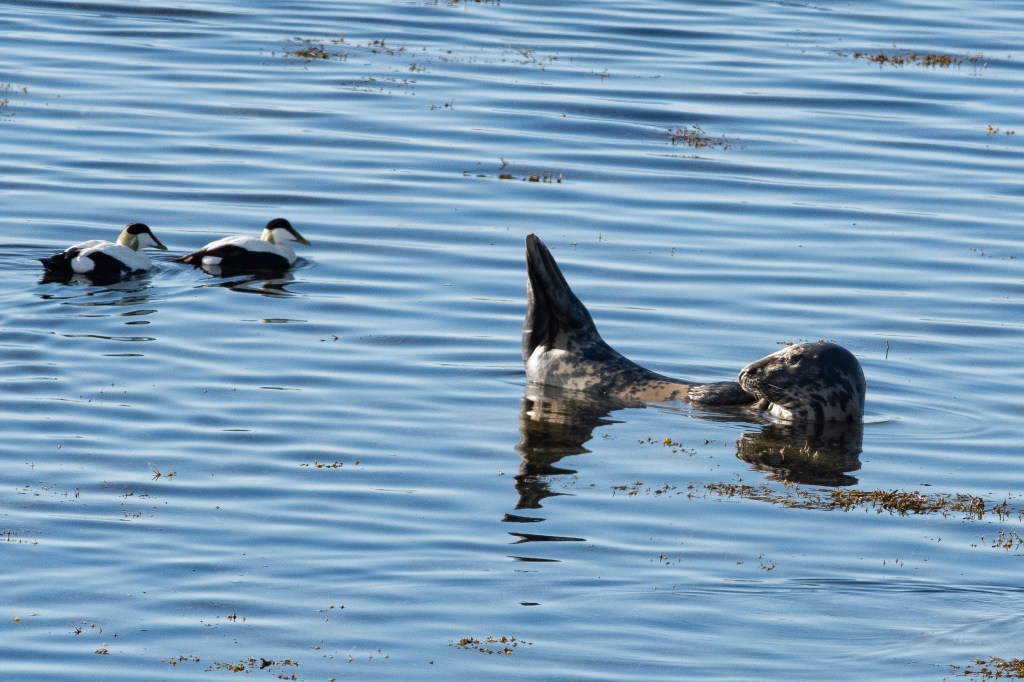
* “Ne’er cast a clout ’till May be out”, slang from my home county of Yorkshire, “Don’t put away your coat before the month of May is over” 🙂


Oh my!! 💚 loved seeing gentle seals swimming near shore while visiting Scotland 🏴 as if they found us people on the beach interesting to watch. We got closest to them on a trek to
Iona where they played in the sun and floated amongst waving seaweed in the clear blue waves.
LikeLiked by 1 person
They’re very inquisitive, in Orkney there are folk stories of Seals taking human form, Selkies, once human they’re said to be helpful or vengeful depending on how we treat them. I think with kindness, just in case 😉
Haven’t visited Iona but did spend a month on Skye years ago, the West coast is beautiful.
LikeLike
Hi Gary, Sent you a long reply via word press and it has disappeared into the ether. That hasn’t happened for ages! I love blue flowers too, have blue geraniums, currently flowering, and also, strangely named, green alkanet. A weed to some but not to me, flowers early and is loved by the bees. We’ve just had some proper rain at long last and everything looks so refreshed and for the first time forever I didn’t have to any blooming watering! Had such a good holiday in France. How I love France, beautiful countryside, fab food and so few people compared with main land UK. Vultures in the Verdon were a good spot. Do you watch “Digging for Britain?” I love Alice and co. So interesting what they’ve found on Orkney, one site obviously such an important trading post. Have a good week. xx
LikeLiked by 1 person
Hi Margot
It does throw the occasional strop, I sometimes can’t reply to a comment for some unknown reason, try the next day and it’s fine.
The green alkanet reminds me of the brunnera that we grow here, huge leaves and tiny flowers, I think both are related, pretty sure both are part of the borage family. Blue iris sibirica are just starting to open, ditto catmints, the longest day is rushing towards us!
Glad you enjoyed France, unfortunately the only Vultures we see here inhabit the square mile 😉
We love digging for Britain, especially when they are on the doorstep, usually have to catch up on iplayer though due to having a memory like a sieve.
Grey, mild and flat calm here, so far a week of haars
xx
LikeLike
Indeed what a splendid time of year this is. Lovely seal picture and very interesting information about their temperature regulation.
LikeLiked by 1 person
Hi Saila, the two passing Eiders were a stroke of luck. As I mentioned to Penny, I assumed head up to look around and see what is going on, tail up for balance!
LikeLike
Well I’ve now learned two new things from you, Gary. I didn’t know that cammasias are now part of the asparagus family, or that seals put their heads and tails up that way to regulate their temperature.
I hadn’t realised taxonomists reassigned cammasias from the lily family. I know this kind of reassignment is much more common these days as genetic testing becomes quicker and cheaper. I grow them in my garden too, but not as successfully as you, as the summer can be dry. It’s so dry this year that stage three watering restrictions start next weekend – only hand watering of fruit/veg allowed. No car washing allowed either, so my raspberries that rely heavily on my neighbour’s car wash routine, won’t be as plump this year.
And I’d always assumed seals like to see what’s going on around them, but also dislike having cold tails – probably just me anthropomorphising because I feel that way about ocean swimming 😉
LikeLiked by 1 person
Hi Penny
It’s hard to keep up with new plant classification and naming, it’s all good but old dogs and new tricks mean that pretty much everything in the garden keeps its old name. The same is happening with birds, albeit in smaller numbers, off the top of my head I can only think of a couple for the UK, Bearded tit became Bearded Reedling and I think Herring Gulls have been divide up by location, ditto Whimbrels.
We had a very dry April, but May is back to normal, grey this week (so far) and quite a bit of rain in the forecast, the garden is just lush, foliage is so green in the overcast light. I remember the droughts down in Yorkshire, on sandy soil things would wither in days, especially in the veg plot, very frustrating. To help with potential future droughts in Orkney I deliberately avoid washing my van, I think I’ve washed it twice since we moved here, if you want to see pictures of a vehicle with lichen growing on the bodywork, I have them 😁 On a serious note, I hope you get some rain soon.
I always thought the seal were just chilling, I suppose thats still true but in a different way. My assumption, before I googled it, was head up to see what’s going on, tail up for balance!
Enjoy that ocean swimming!
LikeLiked by 1 person
I especially love your picture of the bee flying ❤
LikeLiked by 1 person
Thank you!
LikeLike
Gary What an amazing change the seasons create for you, the garden looks amazing. The Veronica you praise is a great favourite of mine – I was passed a piece by a friend and relocate it as it spreads. It doesn’t like the hot sun which you have reminded me – I must move some into wetter shade and see how it responds. Thank you. Sue
LikeLiked by 1 person
Hi Sue, it’s as if someone flicks a switch, a winter-dormant plot and then suddenly an explosion of growth, almost overnight you suddenly have a garden again – patience is definitely a virtue in this neck of the woods. It’s a short growing season and in Winter you just have to let the sky & wider landscape become the garden, a different mindset when compared to our old south facing and sheltered garden in Yorkshire. I’ll pass your kind compliments on to the head gardener 🙂
That veronica is a lovely plant, a great colour, for us it’s quite marginal, it’s healthy now it has finally got established but for this garden not a split and spread about plant. I hope yours thrives in its new cooler and wetter home.
Best wishes
LikeLike