
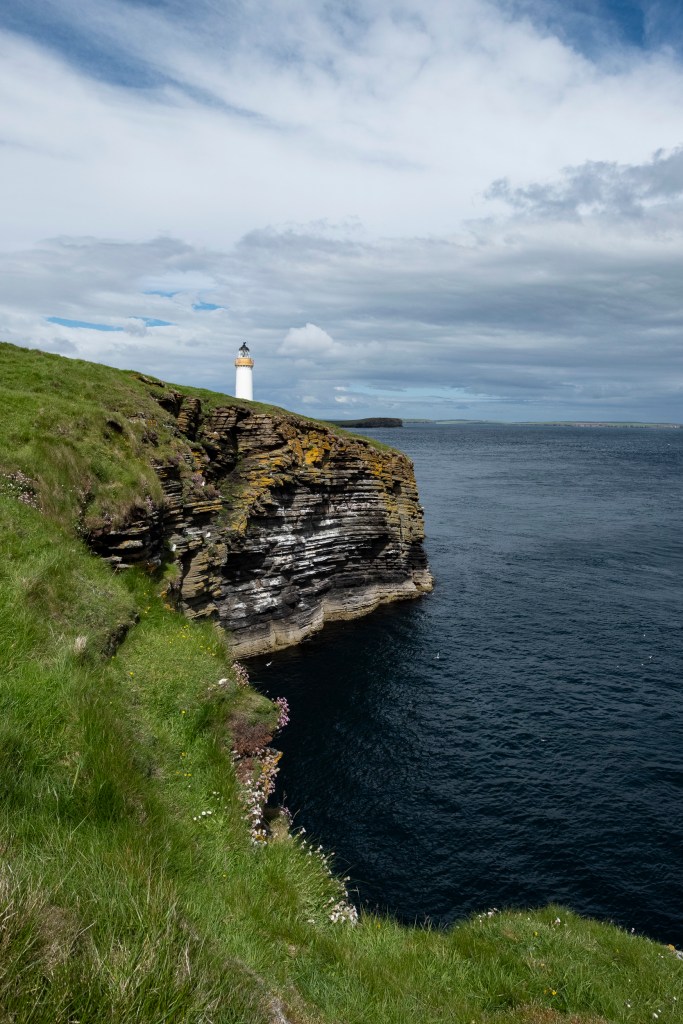
For gardeners, June in Orkney, has been pretty much perfect. We’ve had a steady warmth with both dry and wet days and thankfully, no curve ball gales. The past week was an amalgamation of the month, a mix of rain & sun and on Friday, just for good measure, a haar that shrunk the visible world to a few dozens of yards.
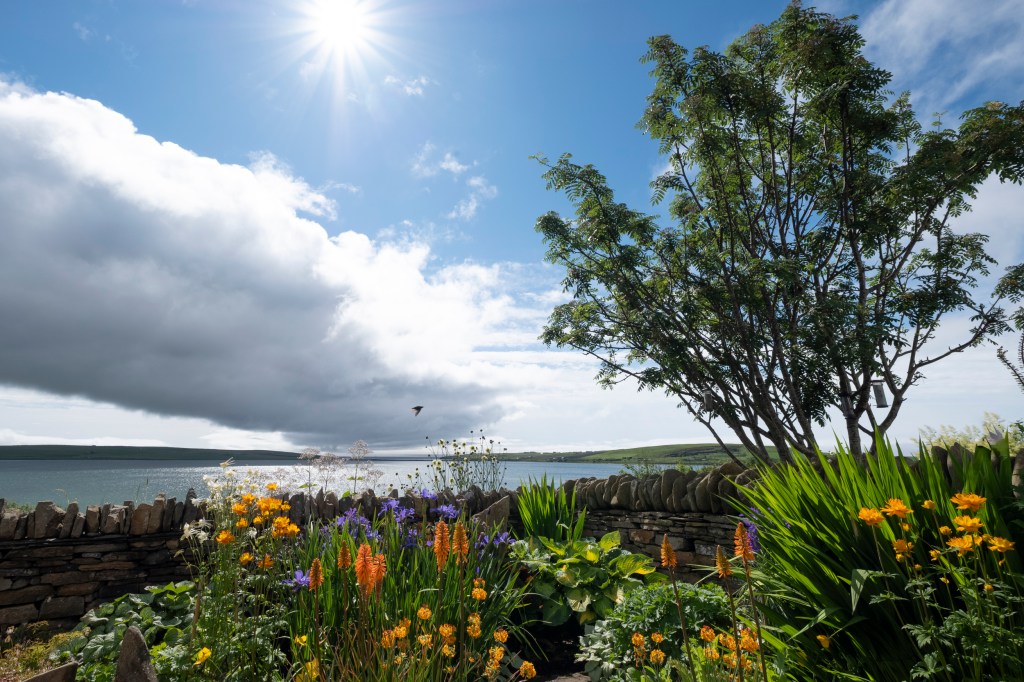
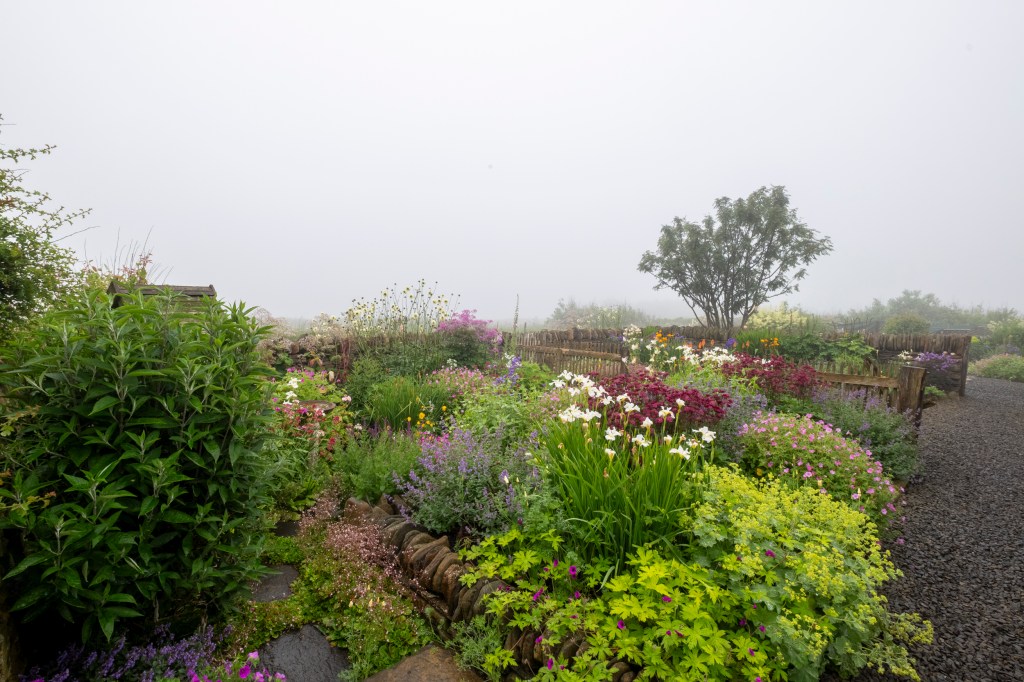
The solstice was a little grey but bright. I had planned to get up early and photograph the Sun as it rose in the North-east, a last minute bedtime check of Sundays cloud cover forecast, brought a lay in instead.

On the day of the solstice, we had a visit from a mainland gardening club. Thirty or so folk, many of whom had visited a couple of years back, when the garden in some places was still very much a work in progress. The pressure was on to show that we had actually made good on plans since their last visit. They reminded us, more than once, of what was new, sometimes you get so used to seeing the garden that you forget the changes that you’ve made. Jacqui held a plant sale that went down a storm, dozens of old favourites left for pastures new – we hope they thrive.
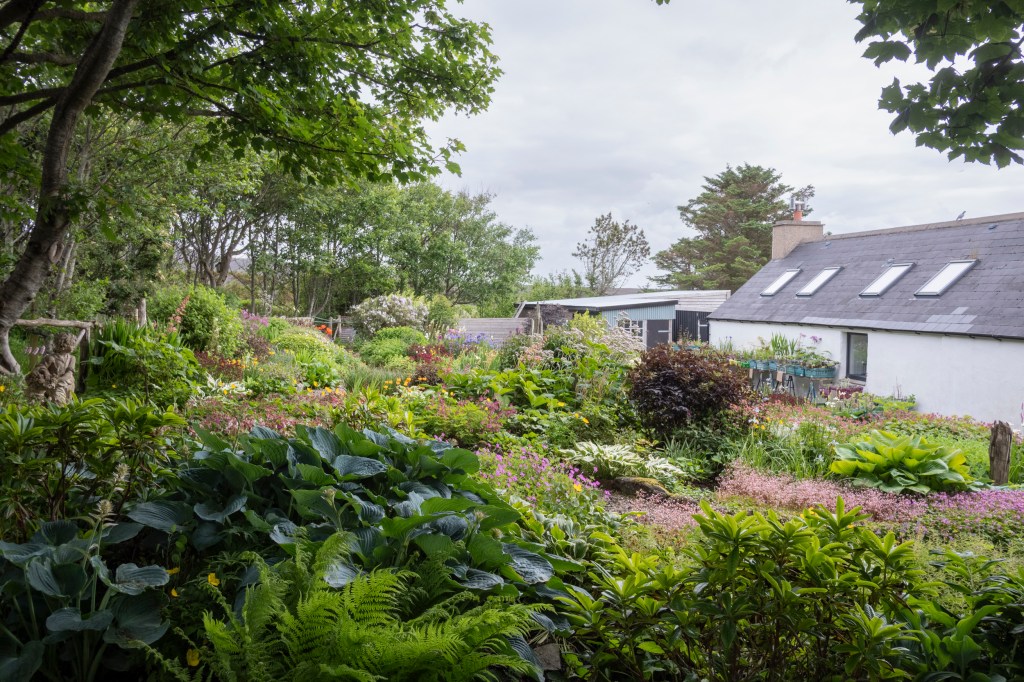
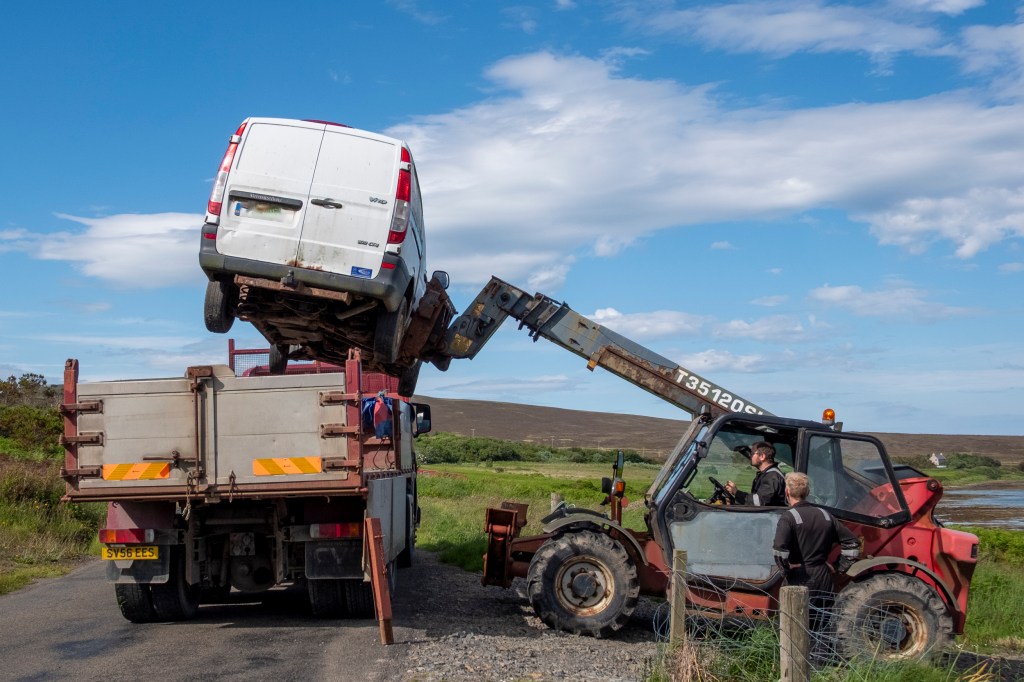
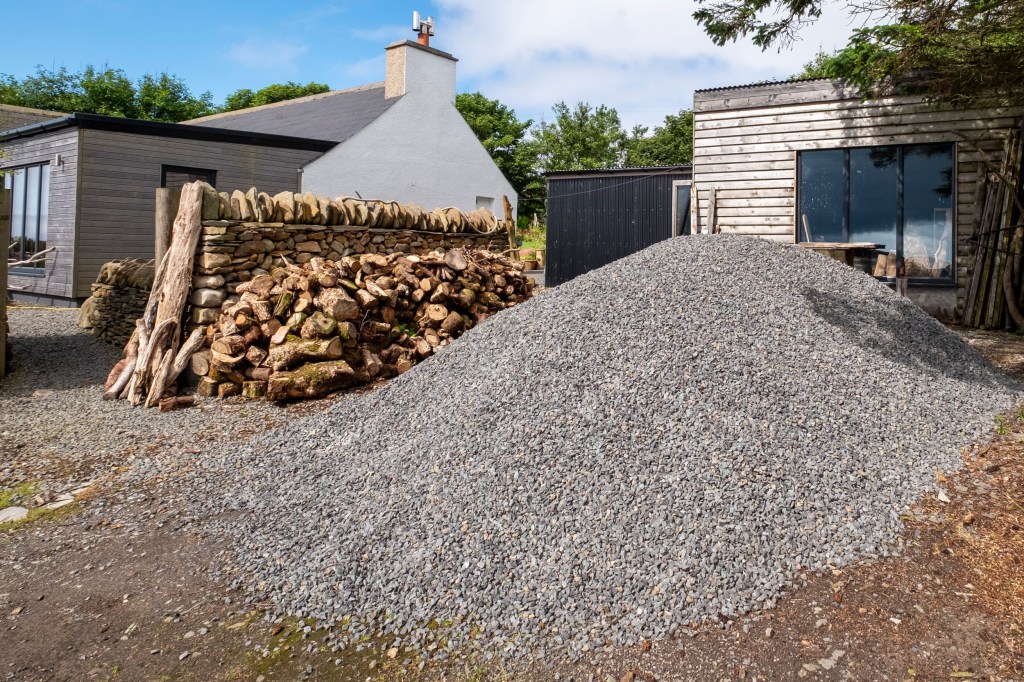
A job we never got around to was chipping where we park, as well as a parking spot it’s also a bit of a dumping ground, leftovers from house renovations together with “one day that will be useful” finds from the shore. The plan had been to tidy and chip it last month, then my van/shed on wheels died. It had been terminal for a while, 19 years old with moon and back mileage and more warning lights on the dash than Apollo 13. The final straw was a failed ignition, sooner or later sea air kills vehicle electrics. Transport costs are high here so we killed two birds with one stone, a loadall arrived, picked up the van and took it along the road. With the van out of the way next to arrive was a bulk load of chips from a *mainland quarry, to be dumped on the now clear drive, after which the van was loaded onto the tipper for its last journey to a mainland scrapyard. As the tipper drove into the distance I fought the urge to shed a tear and wave a hankie 🙂
*Mainland is the largest island in Orkney, home to Kirkwall and Stromness. In Orkney, the UK mainland is simply “South” or “Sooth”
In the wider landscape, on a walk to Cantick head (pictured top of the page), that lies at the south-eastern tip of the linked island of South walls, seabirds were watched on the low cliffs that sit at the highest point of the headland. On Hoy, we live in a landscape dominated by heather moor, at Cantick, and indeed on South walls itself, it’s more pastoral, a greener island – old wet meadows and coastal heath. Like Hoy it’s mostly untouched by the plough or the mower. Only on the islands west facing side, the side that we see from home, where gently sloping ground is warmed by summers long days, is there a mixed landscape of both pasture and arable.

Despite the mere seven miles distance, I watched birds at Cantick that at home are a rare sight. Kittiwakes and European shags were nesting on the vertical faces of the cliffs, despite living a couple of stone throws from a bay, I’ve yet to see the former at home, the latter is seen now and then, always at a distance.
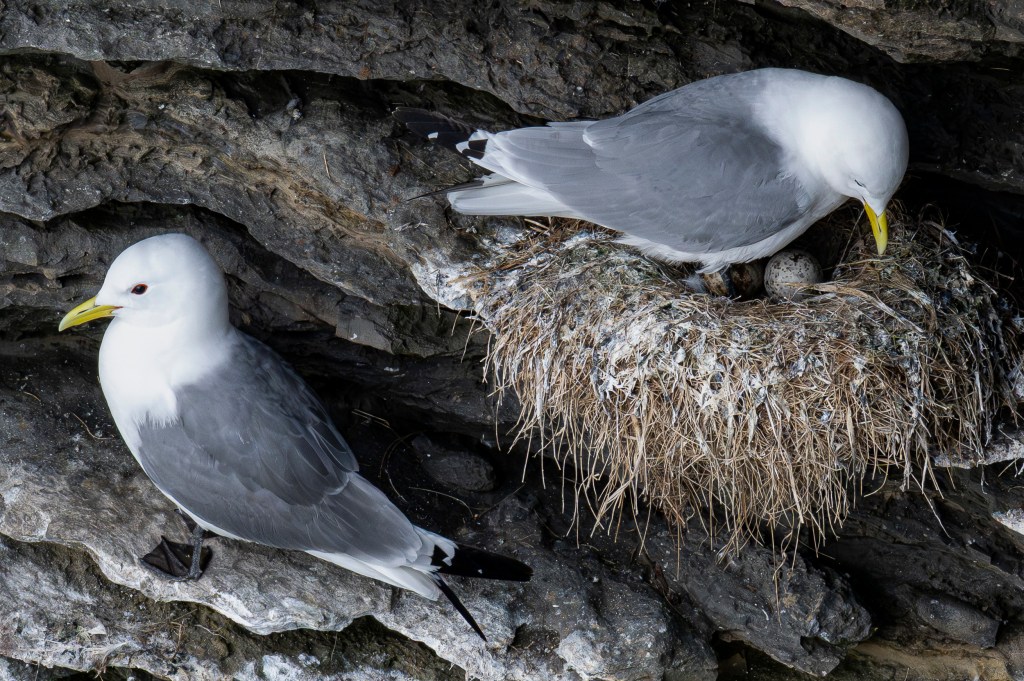
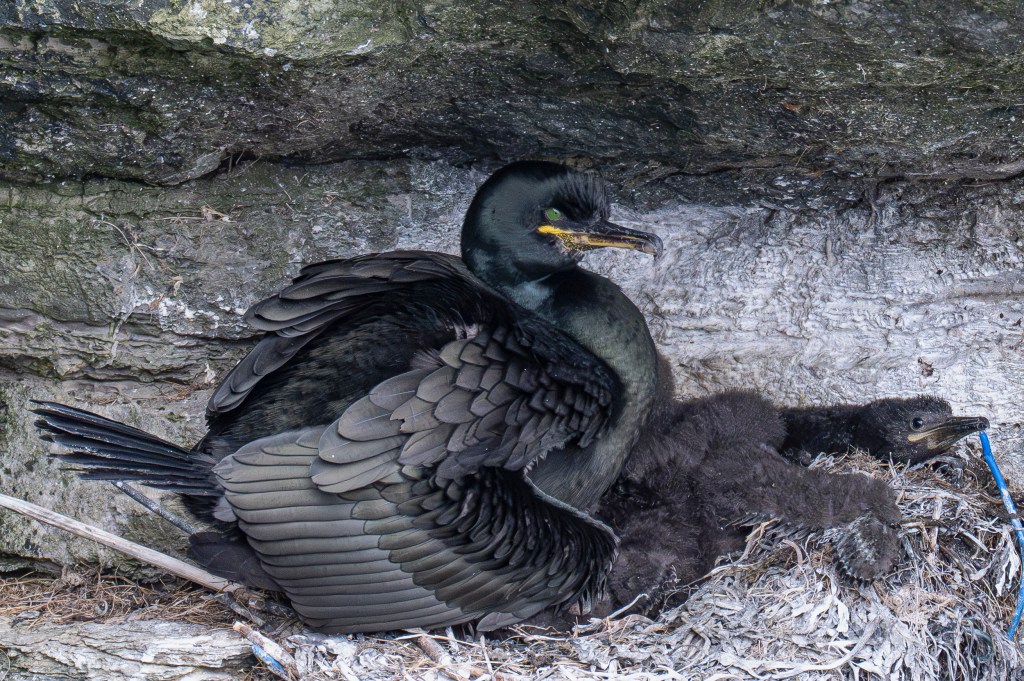
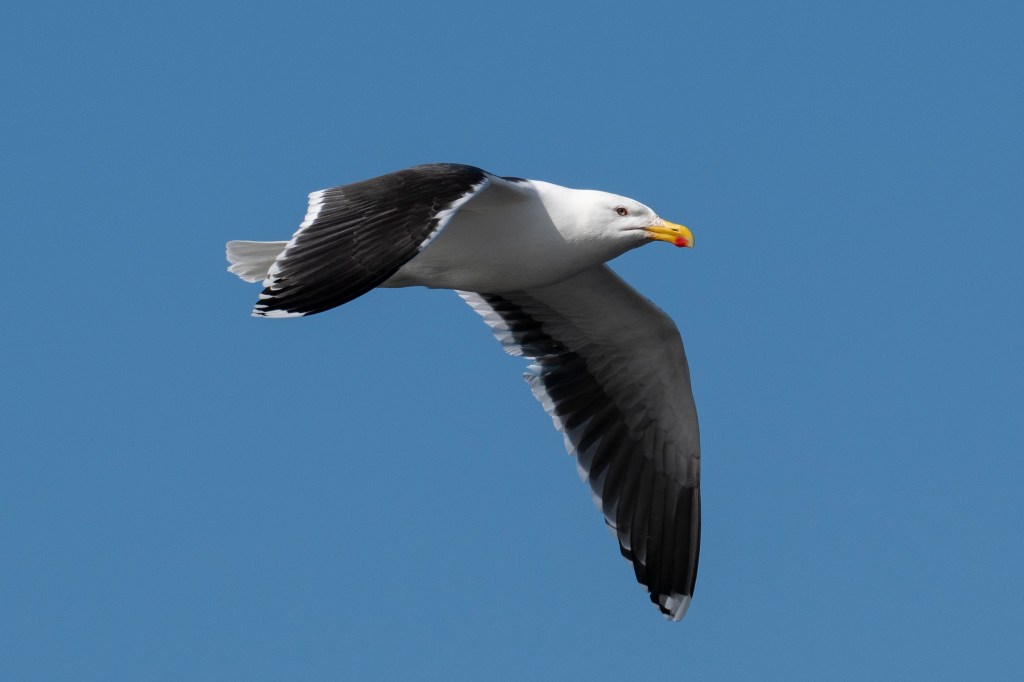
Where there are eggs and chicks you’ll also have egg and chick thieves. Great black-backed gulls were constantly on patrol, thickset birds, riding the thermals on broad wings. On a permanent lookout for an easy meal.
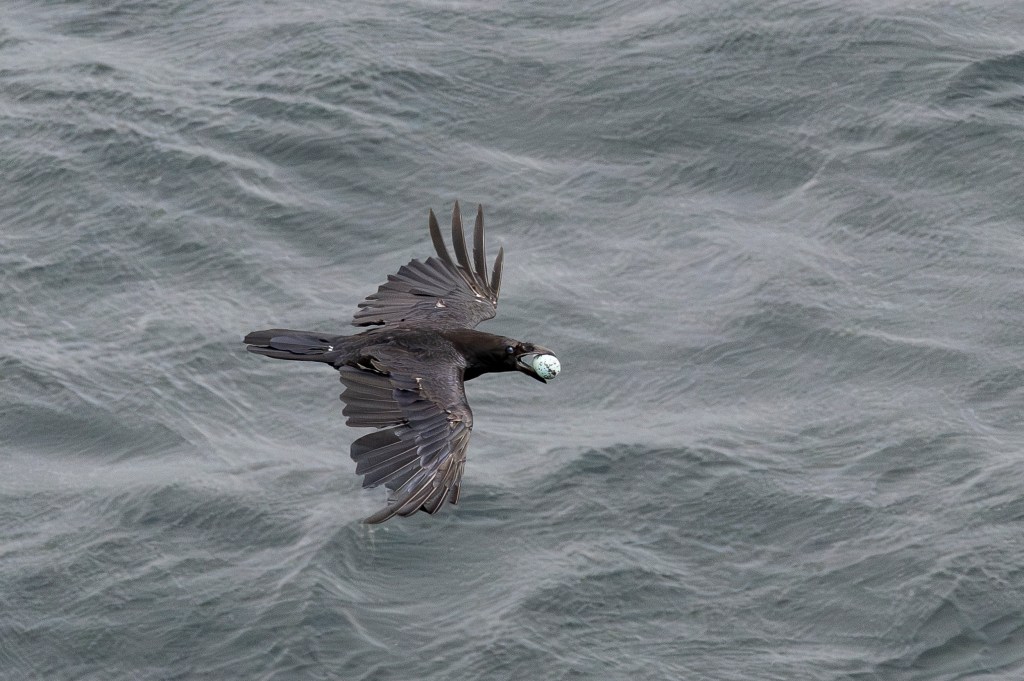
A partner in crime Raven, whose tatty feathers showed that he or she was ready for an autumn moult, sneaked away below the cliffs. A guillemots egg held firmly in its beak.
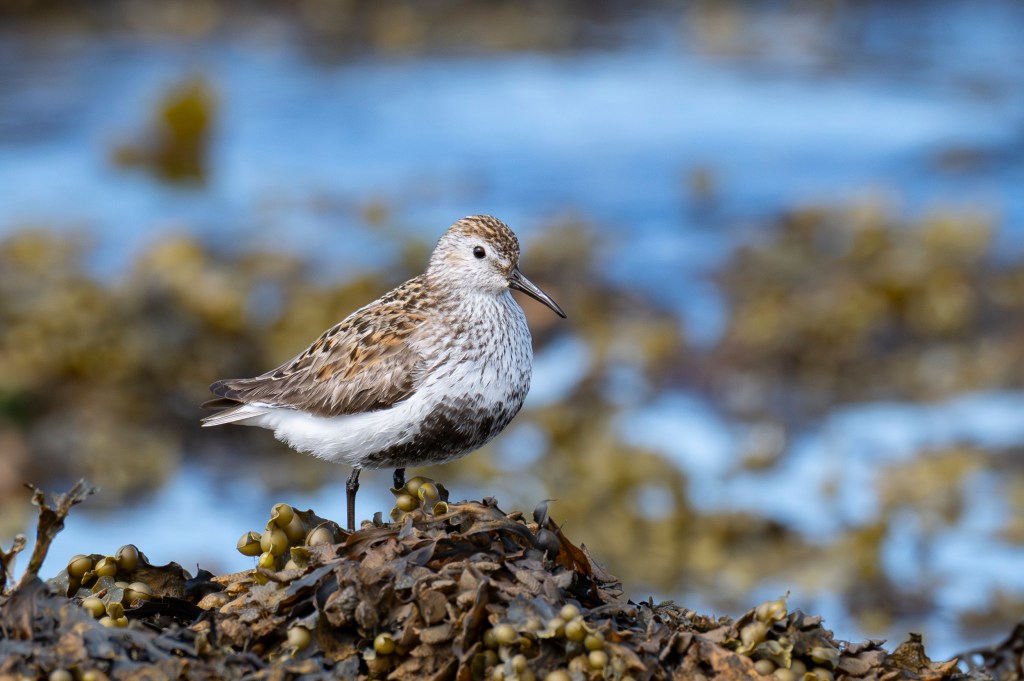
I walked home along the opposite shore of the headland, in contrast to the cliffs it’s an area of low lying shingle that skirts the bay of Osmundwall, shallow and sheltered – it was once a home to Viking fleets. Dunlin were feeding amongst the bladderwrack, they’re a small Starling sized bird that also has the name of the “plovers page”, given for their habit of mixing in with wintering flocks of Golden plover.
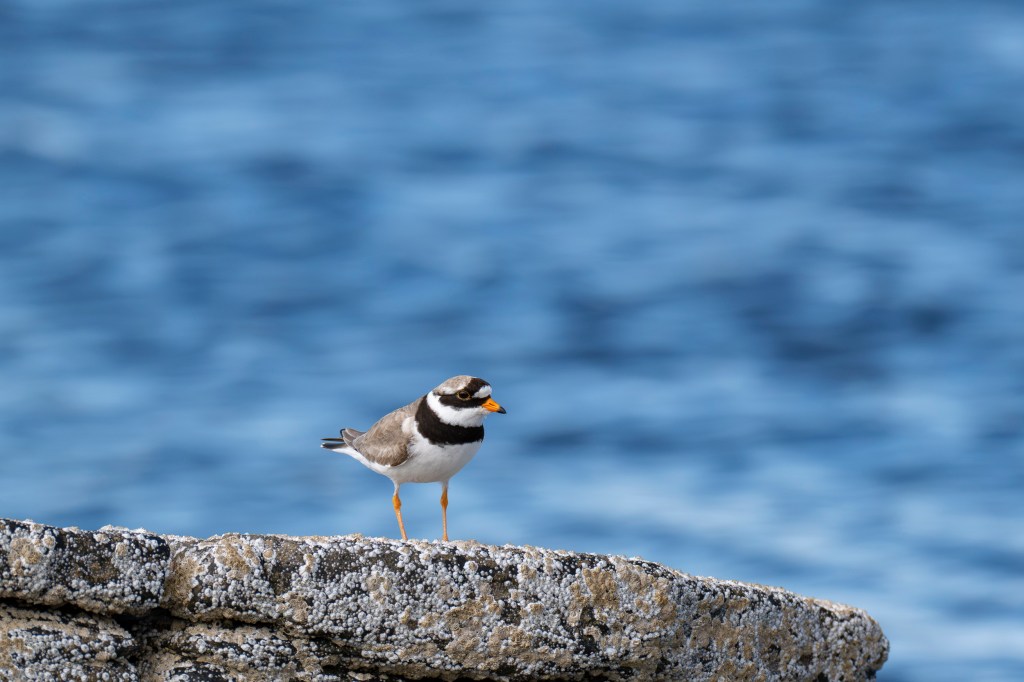
There were no Golden plovers that day but Ringed plovers were in abundance, they nest on the shingle and, as I walked along a track that services the lighthouse, they constantly pleeped warnings to hidden chicks.
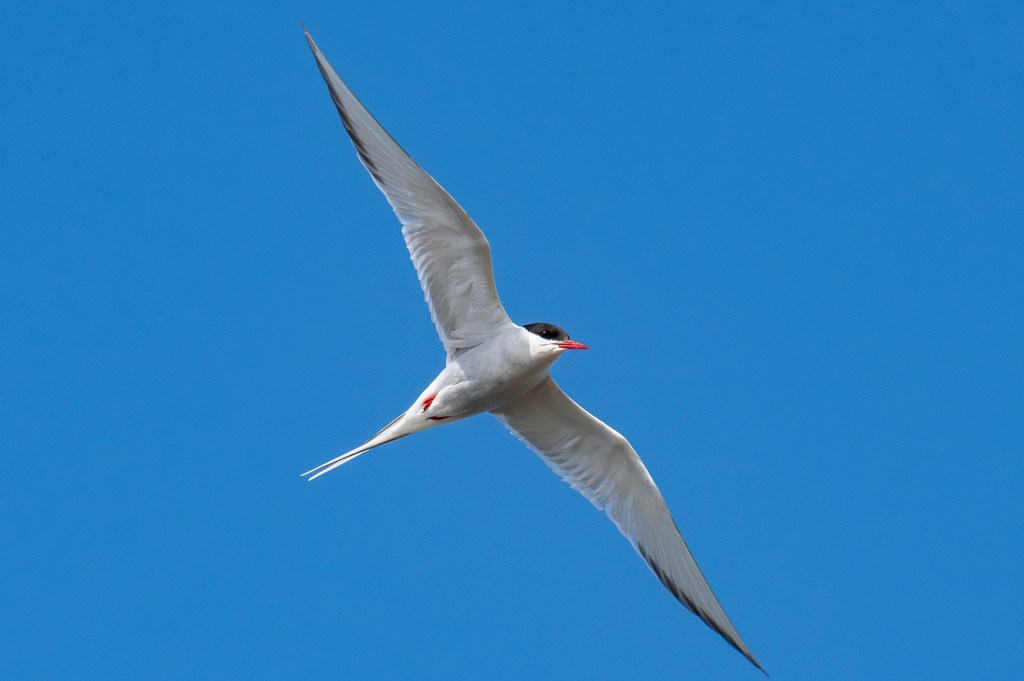
As the plovers pleeped from the shore, another species scolded me from the air, the Arctic tern. A bird that every year migrates from european and arctic breeding grounds to the antarctic, a round trip, depending on the start point, of between 45000 and 59000 miles, all from a bird that weighs in at around 110 grams. Unlike the plovers they weren’t ticking me off for being close to their nests, their colony was a good half mile away. It’s close to the house of friends, who every summer have to run a gauntlet to collect their post from the end of the track that leads to their home. Dive bombing terns, with their sharp red beaks, have more than once drawn blood from unprotected scalps and foreheads. In my case they were just terns being terns, nests or no nests they seem to be wired to be permanently waspy, breaking off from their route home just to squawk at me for the sake of it.
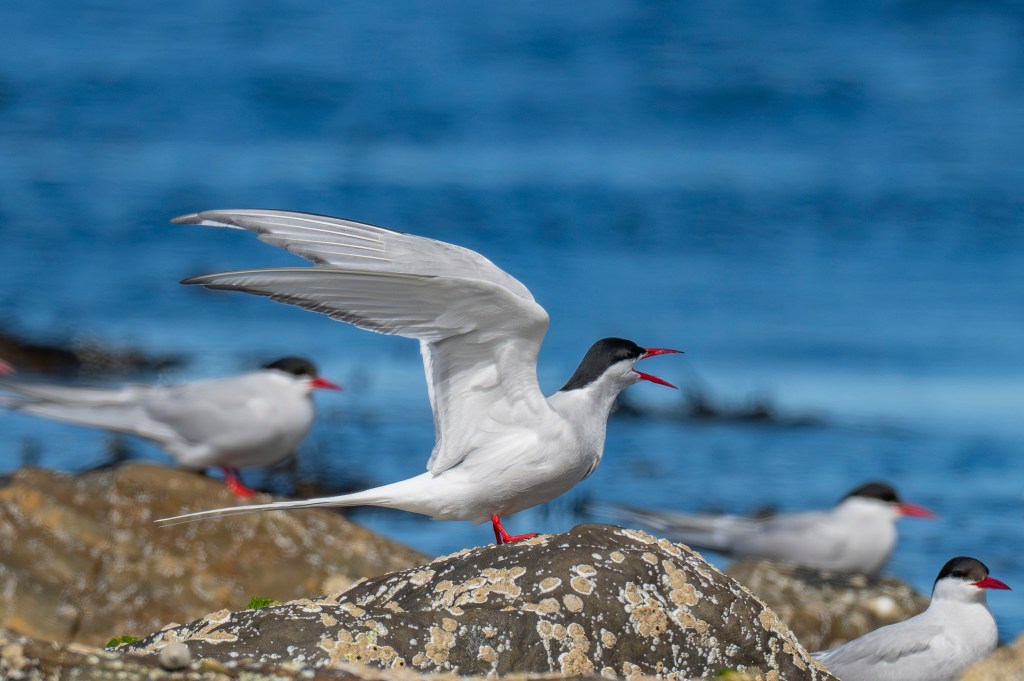
Their latin name is Sterna paradisaea, the Swallow of Paradise. The first part of the name comes from their flight pattern, quick and Swallow like, the second from their long tail streamers, thought by the 18th century Danish zoologist who named them, to be similar to the plumage of a Bird of Paradise.


What a privilege to be so intimate with your fellow creatures, and to know their ways, and interactions with each other. You also subject yourself to their sometimes unfriendly personalities, it sounds like!
Thank you for all these beautiful photographs; your gardens are incredible.
LikeLiked by 2 people
Hi Gretchen, the terns can be a bit grumpy but yes it’s lovely to see nature close up, thank you for your comments on the photo’s and the garden.
It’s flat calm today but Thursdays forecast is for one of our summer gales, it looks like Wednesday will be spent checking stakes and plant supports 🙂
Have a good week.
LikeLike
Orkney in June looks idyllic. You have a vast array of birdlife and beautiful photos. A shame about the egg stealers. Raising chicks is not easy. There have been several days of haar here too. I refer to it as a sea fret, but I love the word haar. Lovely to see your garden looking so colourful.
LikeLiked by 1 person
Hi Jude, it’s a beautiful month, the time of the “simmer dim” when the sun barely dips below the horizon before rising again, we get a few hours of twilight but no night to speak of. They were sea frets down in Yorkshire as well, I think haar comes from the Norse, as do most of the place names here.
It’s nature but yes, I always feel a twinge of sadness when I see an egg, or especially a chick, get taken.
LikeLiked by 1 person
Hi Gary, still here! Having probs with word press, still! Envying your rain, so dry and hot here, very dispiriting! Sedum and lavender, salvia and semi wild flowers like ox-eye daisies and scabius for me! 2 watering cans on veggies and 🤞 Best wishes x
LikeLiked by 2 people
Hi Margot
Yes WP is a pain somedays, at the moment I can reply to comments on both iPad and laptop but can only write/edit posts on my laptop 🤬
A real mixed bag in this neck of the woods, biblical rain on Wednesday followed by a gale on Thursday, no ferry for most of the day, fortunately a westerly so no damage done to taller plants.
Our sedums are just starting to get going but a while yet before they flower, ditto salvias. Ox-eyes are out, we only have devils bit scabious, an autumn flowerer for here.
Breezy again today but bright and sunny, I hope you get some rain soon, we need an 800 mile long hosepipe 😉
xx
LikeLike
What a great collection of photos you’ve shared with us. I love the one of raven stealing an egg. Heard that it happens, but never seen it before. Was it a chance photo or were you waiting to catch it flying away with its meal?
Those terns are so elegant in their streamlining. I try, but can’t imagine what they must see during their epic journeys. I sit in my garden watching the birds over head and am quite jealous of their ability to fly off at will and the views they must have on route.
Hope the shovelling hasn’t been too taxing and you now have a new-to-you vehicle to replace the van.
LikeLiked by 1 person
Hi Penny
The Raven was pure chance but it’s something that I’ve witnessed quite a few times, their rate of attrition on seabird nests must be quite high, in early Summer there are place on the clifftops here where you can count emptied egg shells by the dozen, Shags seem to be particularly vulnerable.
What a gift that would be, to see what the birds see, another one would be x-ray vision, to see the stuff hidden beneath our feet. I can’t quite get my head around the miles that the terns cover, in both size and flight pattern they just don’t look like they could do the distance.
Shovelling is a work in progress 🙂, we got more than we initially needed, 16 tonnes delivered when 6 would have been enough for now, but six tonnes would have cost almost the same as a full load, in fact it would have cost more if we had gone down the 6x 1 tonne bulk bag route. All the garden paths are chips so sooner or later it will all get used up.
No replacement vehicle yet, I’m car sharing with J on strict instruction not to fill her small hatchback with drift wood and junk/treasures from the shore. I am scouring the local media pages, when something pops up the first thing to do is a check of the reg against online MOT history, it seems for every good car there are ten that have the line “corroded chassis/subframe” in their recent history, best avoided! I think I’ll end up either buying a very cheap stopgap with a years MOT or I’ll get something from further South. No need for a van anymore but something with space for treasures would be nice 😉, also needs to be old enough for our islands “mend anything man” to keep on the road when the time comes.
LikeLiked by 1 person
Please tell the Head Gardener how wonderful the garden is looking. I’m not surprised the visitors left with so many of her potted up excess plants.
And I hope her Gardener trainee soon finds himself a suitable ‘island vehicle’ (as they’re call those very old but serviceable specimens here). Otherwise I’m pretty sure he’ll find something irresistible but unsuitable to put in her car at some point.
LikeLike
Hi Penny
I’ll pass your comments onto the Head Gardener. J has also been doing fortnightly deliveries to mainland on supermarket shop days, on its outward journey the car looks like a mobile greenhouse. It’s genuinely difficult to get hold of unusual hardy perennials in Orkney.
Irresistible and unsuitable – It’s only a matter of time 😁
I have my eye on a 15 year old 7 seat mpv, remove 5 of the 7 seats = lots of space for treasures
LikeLiked by 1 person