

After June’s bumper crop of sunshine, July has brought a bit of a reset, grey and occasionally very wet, at one point last week it rained nonstop for 48 hours, a truly biblical downpour that saw low cloud cling to the land like thick grey smoke. Next week though it’s all change again, to quote the late, great Caroline Aherne, it will allegedly be “Scorchio”, a high pressure weather system is promising settled days and bright skies.
Although it should be said that scorchio in this neck of the woods is around 18 degrees C.

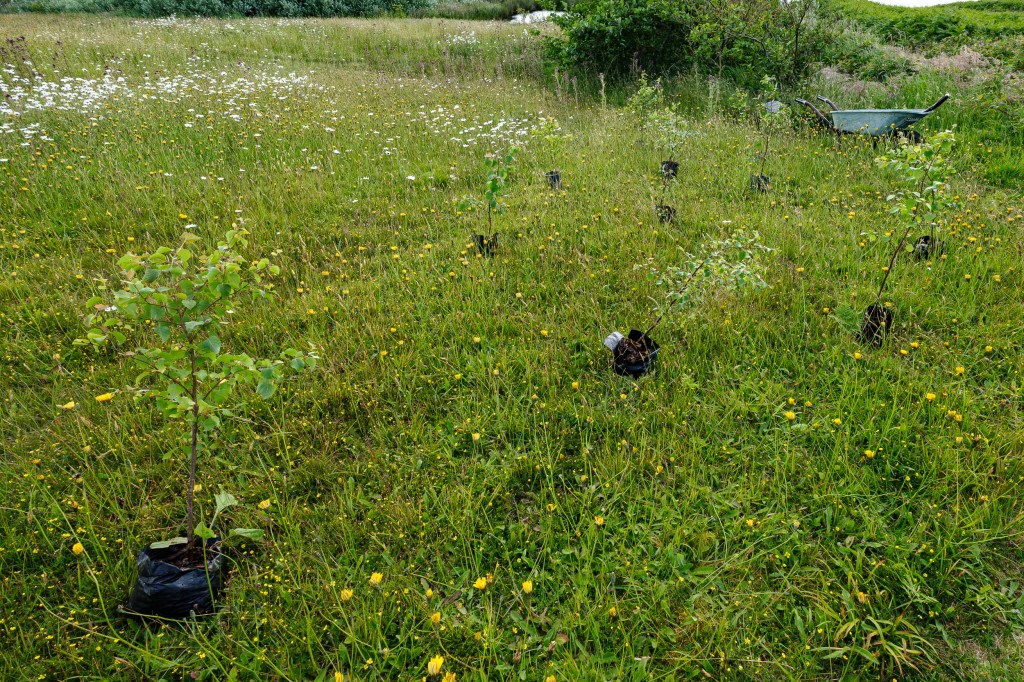
With rain forecast for pretty much every day through early July, we grabbed the opportunity to plant more trees. Hoy can lay claim to having the uk’s most northerly ancient woodland, it lies close to Rackwick at the north end of the island and is a remnant of the scrubby woodlands that would once have covered much of Orkney. A mix, among others, of Rowan, Downy birch, Aspen, and Willow. I’d managed to lay my hands on trees grown from Berriedale’s native stock, and it was these that we planted. They’re available in very limited quantities and for the edge of the meadow between house and sea, I had a grand total of six Aspens and a dozen Downy birch. The aspens especially are hard to get, they rarely set seed in Orkney and spread by suckering from the parent plant, the downy birch are easier but there’s rightly a limit to how much seed is collected each year. The very salt tolerant aspens went the closest to the sea, near a pond that we dug a few years ago. The birch went halfway between house and shore, in a spot dotted yellow with the flowers of Cats-ear and Tormentil.
I also had a good number of Rowans, a mix of both Berriedale stock and trees grown from seed collected in a remote valley, a wild and beautiful spot that is overlooked by Ward Hill, the highest point in Orkney. Planting the aspens and birch was easy, not so the rowans, they were destined for the patch of moor that rises away behind the garden. There’s no path, nor would I want to make one, so you load up the barrow, push it as far as you can get and then load up a plastic shellfish basket salvaged from the shore and walk, or rather stumble, your way up the slope, dropping to your knees every now and then when your foot catches a hidden snick, a narrow channel, formed by rainwater rushing from moor to sea.

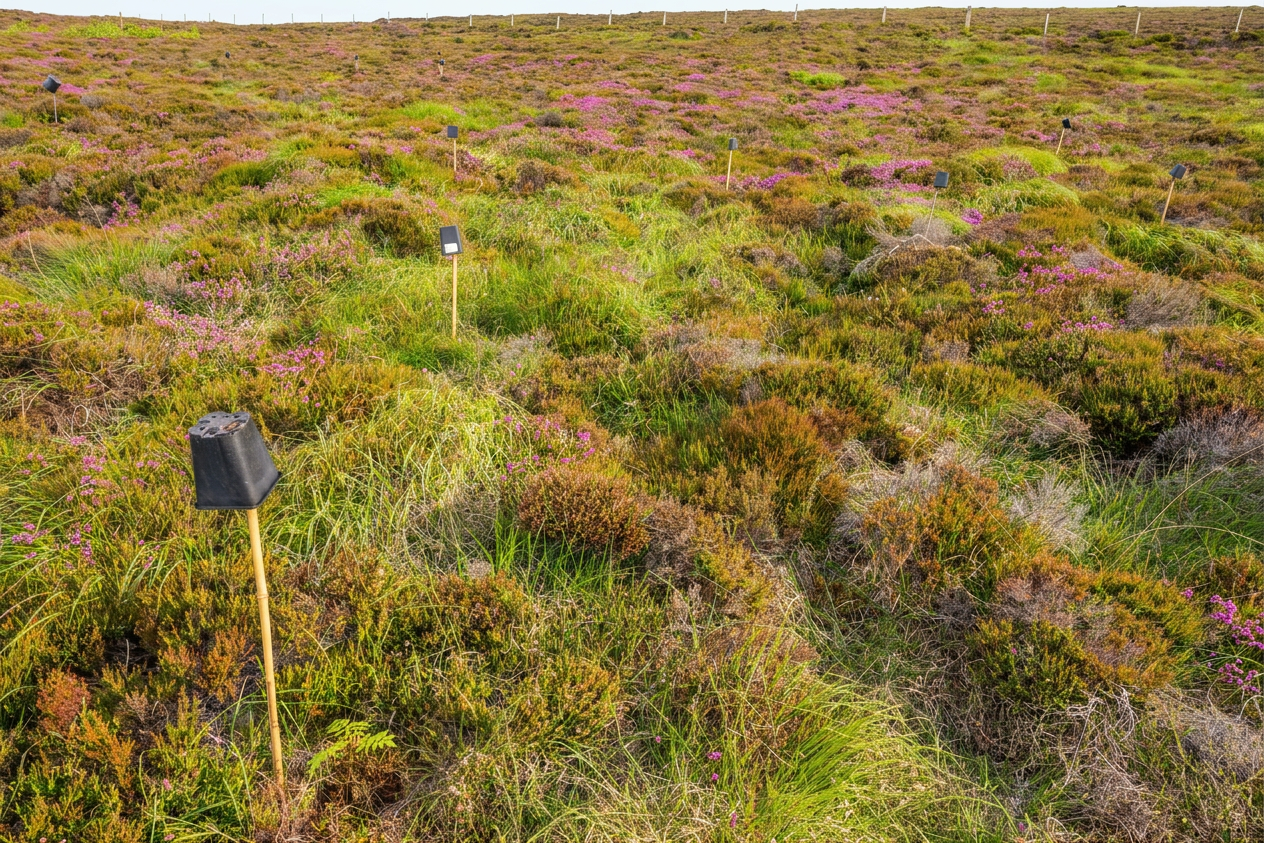
The ground is terrible, in places stone with a hint of soil, so before planting goes ahead you walk the area with a length of sharpened rebar in hand, if it can be pushed in more than a foot, mark the spot with a cane and carry on. In the end I planted sixty-six rowans, keeping track of where I had been by topping each cane with a now empty plant pot. The pots were collected but the canes will stay, with the rowans barely peeping above the wind cropped heathers, the canes, for a year or two at least, will be a helpful guide to where I have actually planted them.
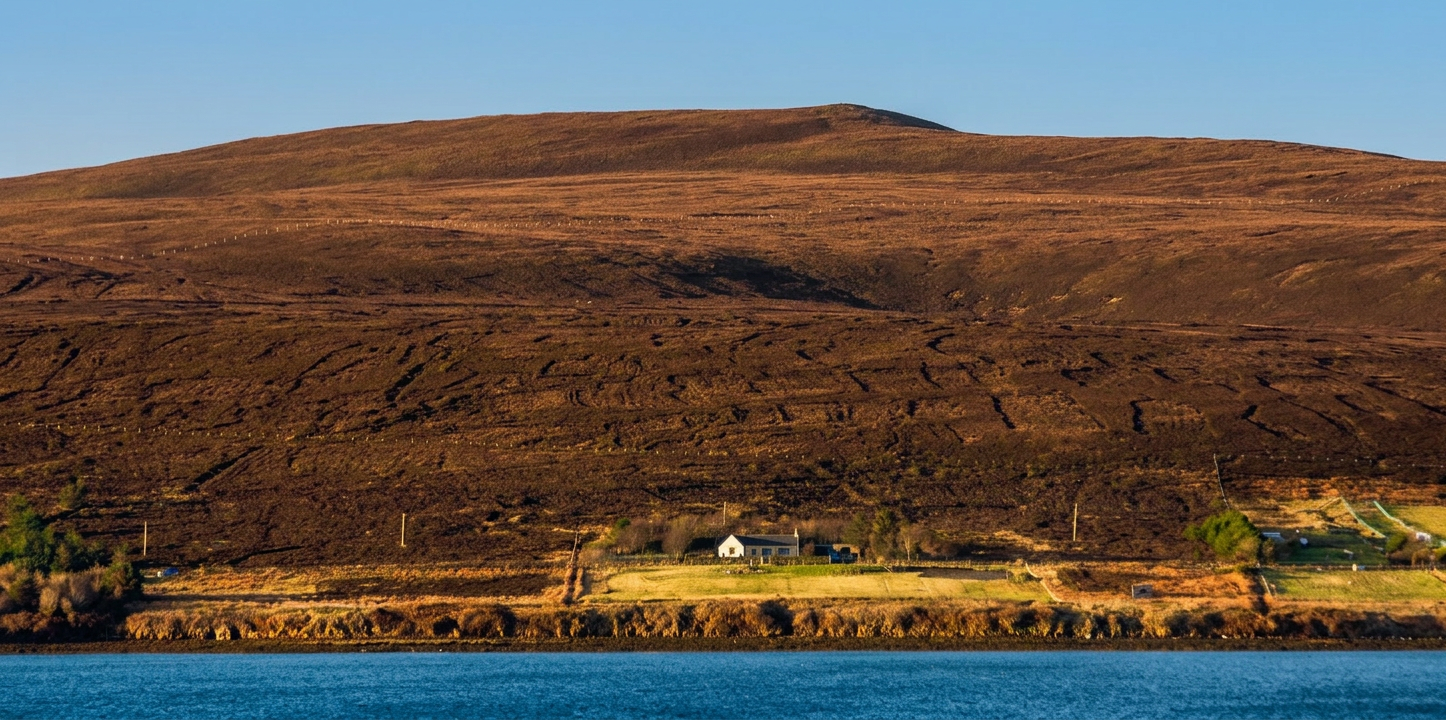
After planting the rowans I went for a walk to the old peat cuts, go over the boundary fence and after a few hundred yards you’re amongst them. They’re silent now, reclaimed by nature, if it wasn’t for the wide sunken areas, some many multiple tennis courts in size – the ‘cuts’ left behind when the peat was taken for fuel, you would have no idea that generations of men and women had spent countless Summers there, cutting earth for their hearths.
A bird that is ubiquitous up on the moors is the bonxie, the Great skua. The size of a herring gull on steroids they’re a bird seemingly made for aggression, not quite gull, not quite bird of prey. They take on all comers, up to and including fully grown Greylag geese. As I walked through the cuts a pair watched from a favourite vantage point, a spot that like the peat cutters, may go back many generations, a small bump of green where the heathers grow brighter, enriched by a build up of the birds guano.
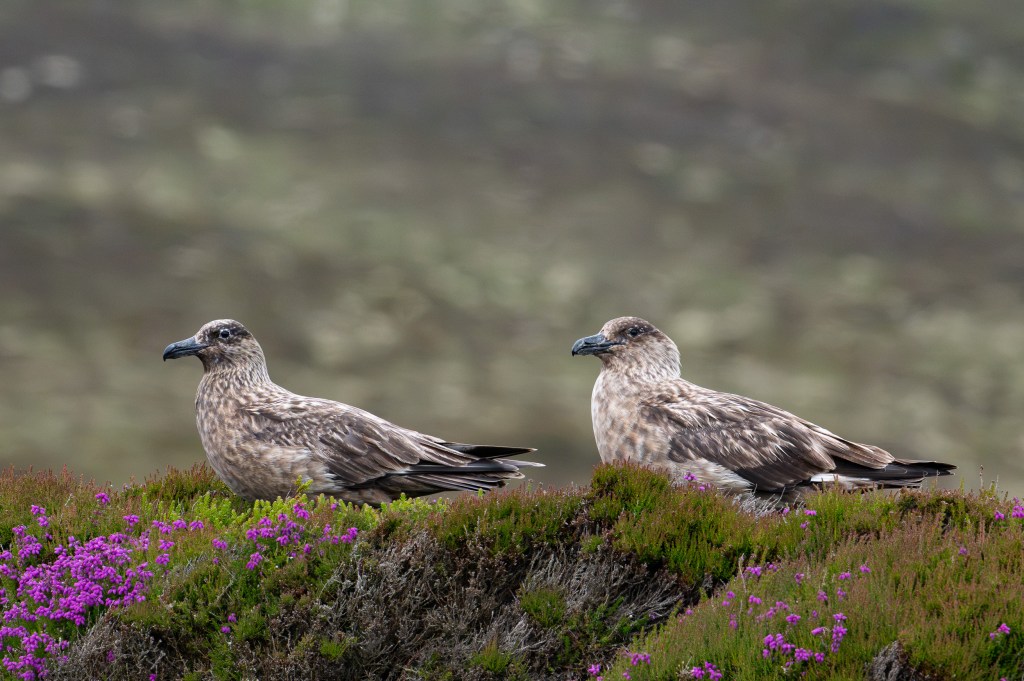
It was inevitable that the birds would take umbrage at my presence and sure enough they couldn’t help themselves, one coming in at knee height, the other preferring an in your face bluff, veering away at the last second, passing your shoulder with a whoosh of wings. This went on for a few hundred yards, they had no nests or young to defend, just bonxies being bonxies.

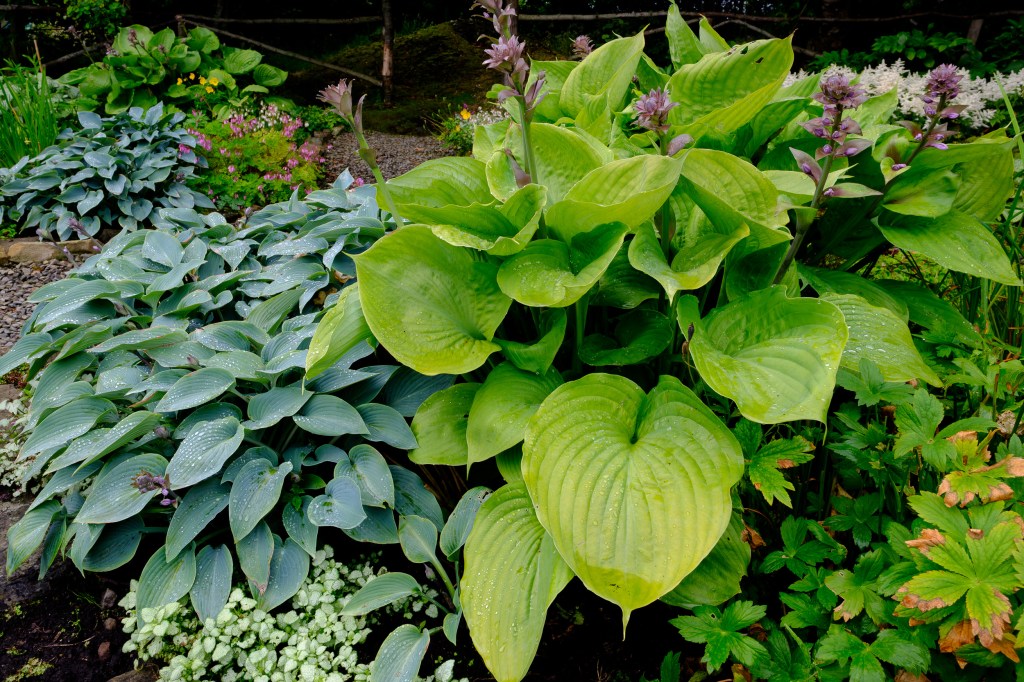
Back in the garden, another upside of the rain is that Hosta’s are suddenly playing centre stage. They’re a plant that does well here, this year is seemingly a slug and snail year but despite that, for whatever reason, we have seen very little gastropod damage, a nibble here and there and that’s about it. The two hosta’s in the picture are Halcyon and Sum & substance, little and large.
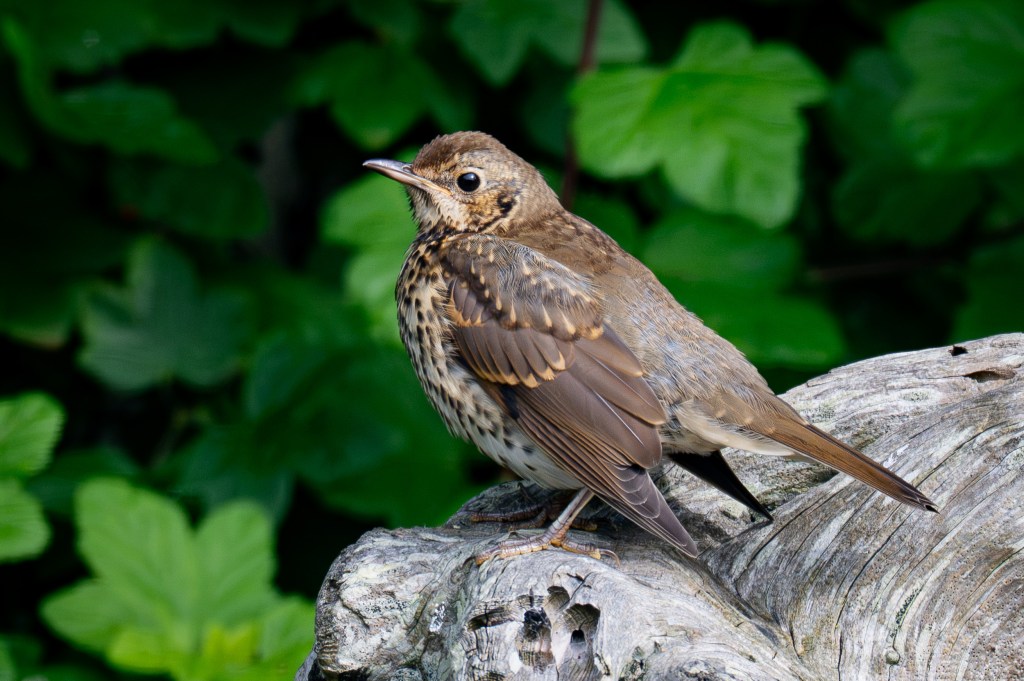
In the fight against slugs and snails we do have allies, frogs and toads and the occasional visiting hedgehog. The favourite allies of all though are Song thrushes, they arrive each Spring, building hidden nests delicately lined with mud and hatching youngsters from pale blue eggs that are the colour of a summer morning sky. For weeks the parents have been backwards and forwards, snails in beaks, now we’re seeing the youngsters, three yesterday, learning the ropes from their worn out parents.
 A garden in Orkney
Gary, Your photo of the Bonxie is slightly terrifying! I loved the slow formation of landscape recorded by your acutely observant eye: ‘As I walked through the cuts a pair watched from a favourite vantage point ……….. a small bump of green where the heathers grow brighter, enriched by a build up of the birds guano.’ The idea of rain sounds delicious……. Sue
LikeLiked by 2 people
Hi Sue, you do occasionally think they’re not going to swerve at the last second, it would be an unusual way of ending up in A&E!
There’s a remote valley a few miles into the moors where the valley floor is dotted with what looks, at a distance, like green anthills. It’s where the bonxies have a nesting colony, I would love to know how many generations of birds, and years, it has taken for the mounds to build up.
Hope you get rain soon.
LikeLike
Ah such joy from the power of observation!
LikeLiked by 1 person
Morning Gary, What forsooth is this “rain” of which you speak? My garden is like a blooming desert with many plants in a sorry state. So depressing. Even my persicaria, which is as tough as old boot was looking so dry and sad I had to put the hose on it, no ban yet I hasten to add! Sedum, salvia and the med herbs like rosemary and lavender from now on, I suppose, and wild flowers like my ox-eye daisy which has done so well. I was at Wimbledon on Monday, gave you a wave😉 Centre court, friend got free tickets, good tennis but scorching hot and no cover for the plebs anywhere. Ridiculous. And the crowds and queues, even to go in the shops. Wimbledon has become a behemoth. I’ve been going for years and years but, after this, doubt if I’ll go again. Just going to complain! Fat lot of use that will do me. Best wishes to you and J. x
LikeLiked by 2 people
Hi Margot
I think we got the entire countries rain, it just never eased up for two days. Given the choice though I have to say I will take rain over heat, it seems these dry spells in the South are rapidly becoming the new normal, farmers must be pulling their hair out.
Watching the tennis in the heat must be bad enough, I can’t imagine having to play in it, we watched the Djokovic match, five hours!
I think you are doing the right thing, mediterranean style gardens are going to be the way to go for so many people, it seems that gardening, in the many parts of the uk will soon be going into new and uncharted territories.
On that slightly depressing note, have a good week 😀
x
LikeLike
Thank you
LikeLiked by 1 person
Loved the picture of your disconsolate little robin in the rain, Gary.
So interesting to see the picture of where the old peat cuts were. I’m betting you had to get the light just right to make that show up so well. I’d never considered the long term effect on the landscape before.
There’s a quote from a long dead Manitoba farmer about the work of planting trees under whose shade you don’t expect to sit, and you embody that sentiment – planting for future generations. So heartening to read about what you’re doing. I sent this latest post of yours to a friend who spent many years making a living in tree planting camps in the wilds of Canada, because I knew your description of tripping, falling on your knees and using a piece of rebar to find deep enough soil would sound very familiar to him!
LikeLike
Hi Penny
That Robin definitely looked a little bit miffed.
Going by the colour of the moor, and the fact that I can just make out that the meadow has been cut 🙂 that photo will be late in the year, as you say you would want low angled light and that time of year gives it all day. Late autumn is a really good time of year for photography, you can work all day. When I did it for a living, in summer I used to start at around 3am, and have to pack in at around 8am, after that the light gets harsh and too high so you start again at around five pm. I used to have a little touring caravan, as I went to bed everyone else was just getting up, the people on the other pitches must have thought “that guys a bit weird, he never comes out of his van” 🙂
I love tree planting, it wouldn’t be a bad epitath, next are some red alders for lower down near the house and native willow which I’ll take as cuttings in autumn, from a nearby valley in Heldale. I have more Rowans coming on for a year or two’s time. That quote hits the nail on the head.
Best wishes to your friend, what a landscape he must have seen and lived in.
LikeLiked by 1 person
I received an email from WordPress this morning telling me that you had recommended my blog and being the cynic I am would ordinarily have deleted it as unwanted marketing material. Something stayed my itchy finger, some instinct at work, and I am so glad it did.
I visited Hoy in the summer of 1976 with three college friends. I left with one of them after a couple of weeks, the other two stayed on a bit longer. We camped atop the cliffs on the west side of the island, down toward the southern end. There was a steep gully leading down to the sea which I tackled on a number of occasions.
Well do I remember the bonxies, quite a hazard when attending the call of nature. They came from behind, in pairs, one from 45 degrees one way, then the other from 45 degrees the other. Parted my hair more than once. Equally vivid is my memory of fulmar chicks, exquisite puffs of pure white down that when you came within range spat foul yellow bile at you.
Two other things come back to me. We got off the ferry and started walking and after a while a small car came along. Andy, the joker, put out his thumb and the car stopped and the woman driving loaded four adult males and four large rucksacks into the car somehow, to take us somewhere. Andy, the joker, spotted the RNLI sign in the windscreen and said (in his broad Yorkshire accent) “which of you’s in the lifeboats then, you or your husband”. To which she replied that he had been lost in the Penlee lifeboat disaster. We went the rest of the way in excruciating silence.
Andy, the hunting, shooting, fishing one, had brought a few snares which he set to catch rabbits but not being an early riser it fell to me to check them in the morning. The last meat I ate was a very small, throat catching bit of one I found still alive and killed. I’ve been vegetarian these past 50 years.
I never went back though I went to the west coast of Scotland quite a number of times. I haven’t exactly travelled the world but I’ve yet to see the west coast scenery surpassed.
Thanks for recommending my blog, I will try to find out how you do that and reciprocate. I look forward to following yours.
LikeLiked by 1 person
Hello Jim
I’m pleased you paused that finger! I’ve been trying to work out whereabouts on Hoy you camped, going by your description of the deep gulley I wonder if it was around Little Rackwick, a remote and very beautiful area, one of my favourite spots, much less well known than its bigger and often visited namesake of Rackwick Bay that lies at the North end of the island.
Hoy sadly also had its own lifeboat tragedy https://rnli.org/magazine/magazine-featured-list/2019/march/1969-disaster-at-longhope
Lots of rabbits here, two have recently made the garden a home, we’re hoping they are both males.
If I’m walking the moors in Summer and don’t get buzzed by at least one bonxie I almost miss that sudden whoosh of wings 🙂. I made the mistake once of picking up a fulmar that had landed on the road, I think the youngsters mistake grey road for grey sea, once landed they can’t get enough uplift to take off again. My good turn was repaid with an oily vomit that went the full length of my bare arm. I still pick them up and put them back on the sea but have learnt to throw an old towel over them first…
Thank you for the recommendation, an email popped up this morning.
LikeLike
It must in fact have been the Longhope disaster that she lost her husband in. It makes more sense, but in any case Penlee didn’t happen until 1981, I have just discovered. The treacherous waters of memory.
LikeLiked by 1 person