
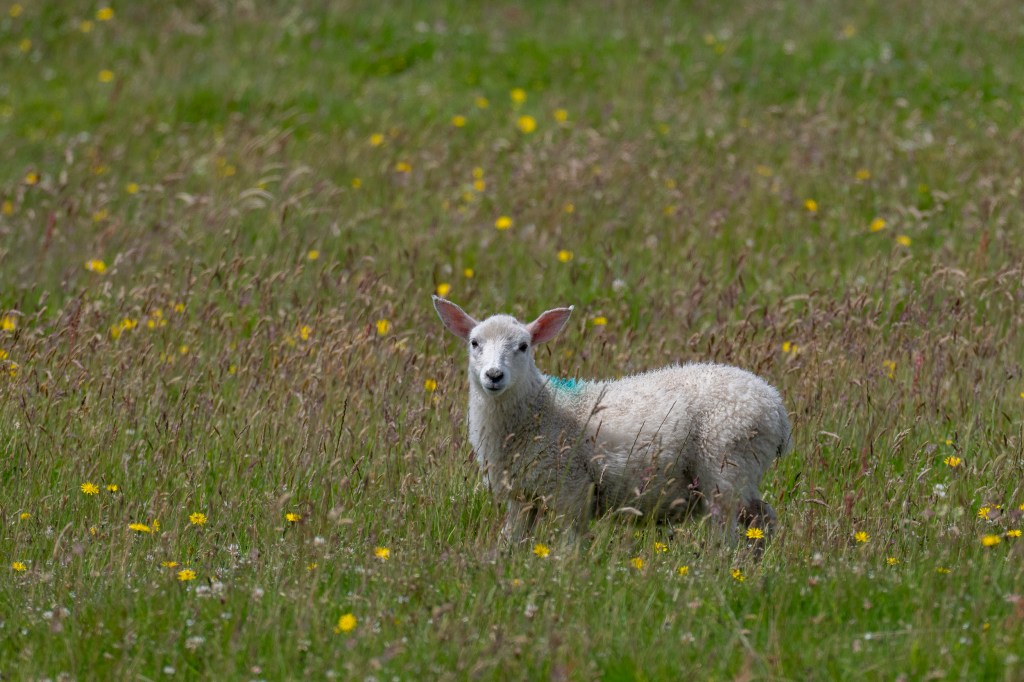
One of my favourite places to walk lies at the Southern tip of Hoy. On OS maps it has the name of Rotten loch which I assumed, like most places here, would be a corruption of old norse. It seems not and as there’s no loch to be seen, perhaps it has silted up, I’m going to lay the rotten part on the fetid black water that in places oozes up from your boot steps. It’s a low and undulating landscape of coastal grassland and wide shallow Geo’s and it’s a real haven for wildlife. The ground is wet in winter, wettish in summer and like much of this island, with its thin soil and tractor unfriendly gradients, it can’t be mown or tilled. A few sheep and a herd of semi-feral cattle wander here and there, keeping the sward short and wildflower rich.
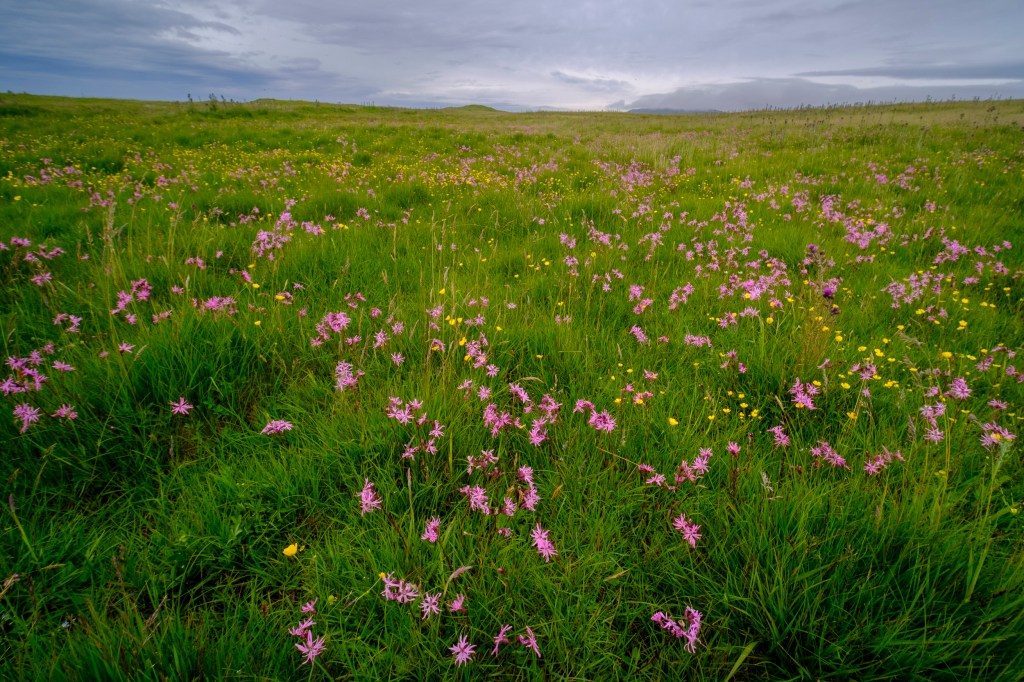
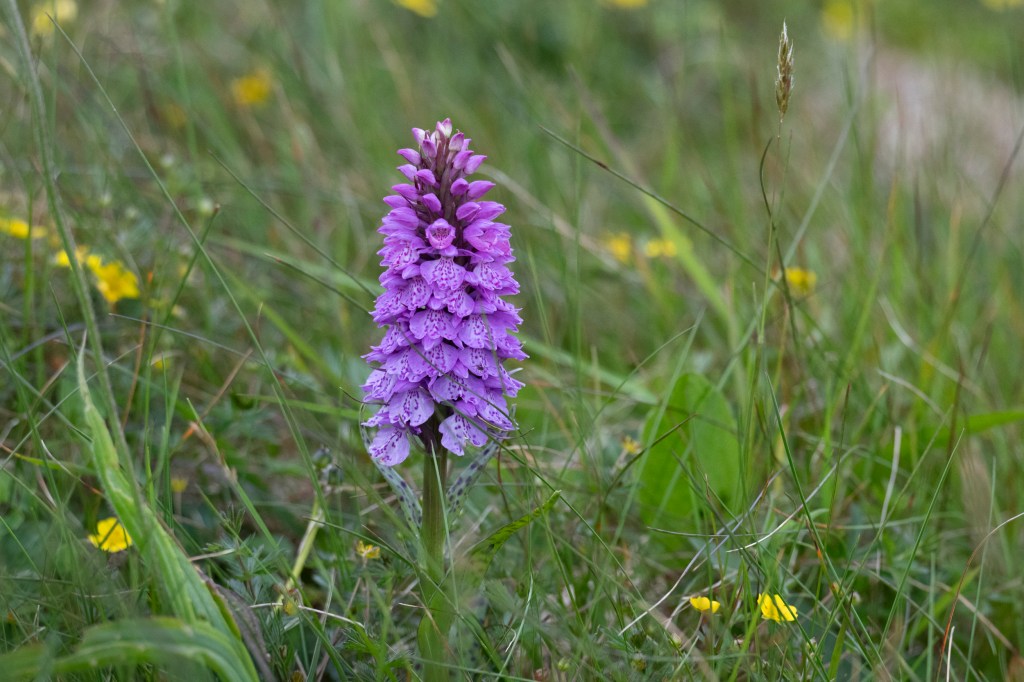
In places, at this time of year, the land wears a confetti of pink, if you had the time (or inclination) Heath-spotted orchids could be counted by the thousand. In really wet spots, where even in summer every footstep is a squelch, Orchids are replaced by Ragged robin, a close cousin of Red campion whose torn and tattered looking flowers give the impression that they have been shredded by the easterlies that regularly whip in from the sea.
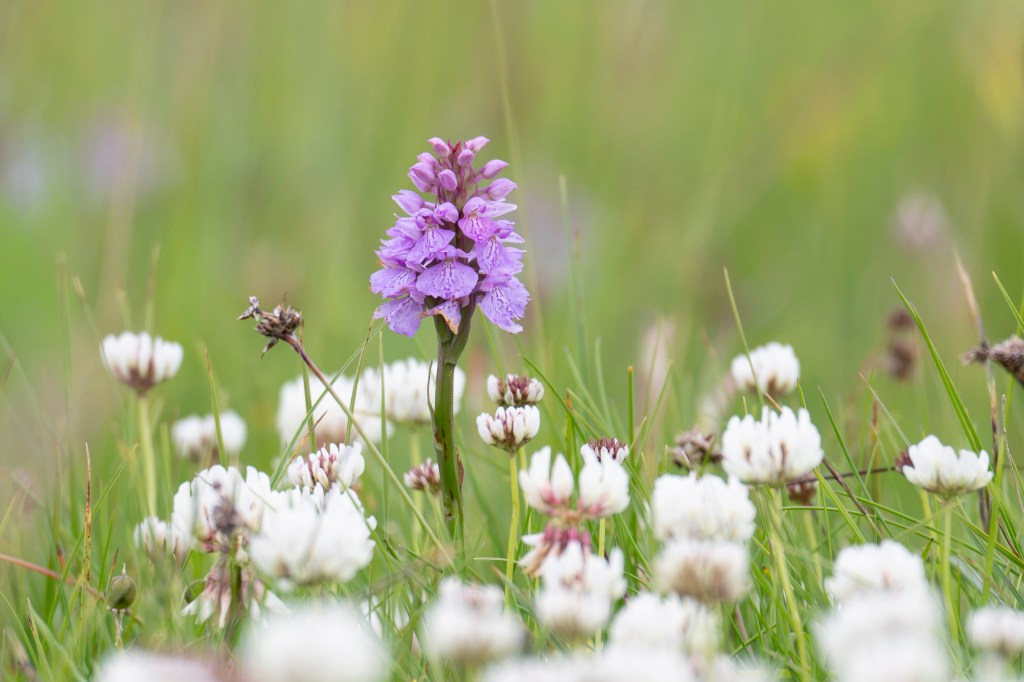
Locally Heath-spotted orchids are “Eve’s”. Northern-marsh orchids, that also grow here in abundance, are “Adams”
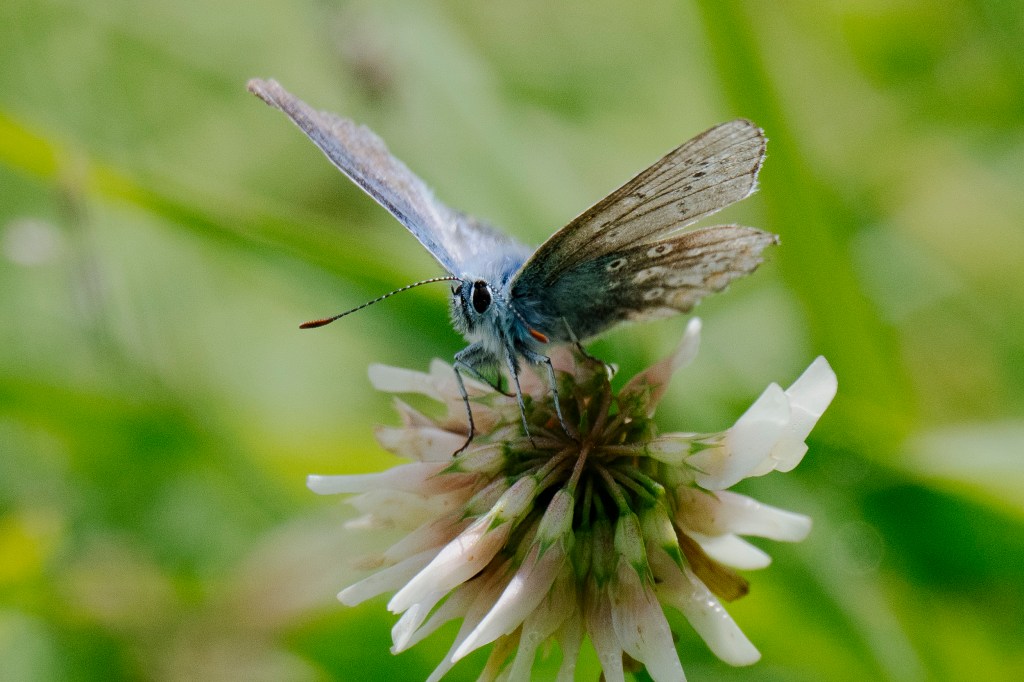
It’s generally agreed that Orkney has seven species of butterfly, rising to nine or ten when you count summer migrants. This year, with an influx of Painted ladies, it’s ten, next year the ladies may be shy and we may drop back down to nine. Of the ones I see at Rotten loch, my favourite is the Common blue, a resident species. They’re the Kingfisher of the butterfly world, a brief flash of violet-blue wings and they’re gone, flitting from clover to clover.
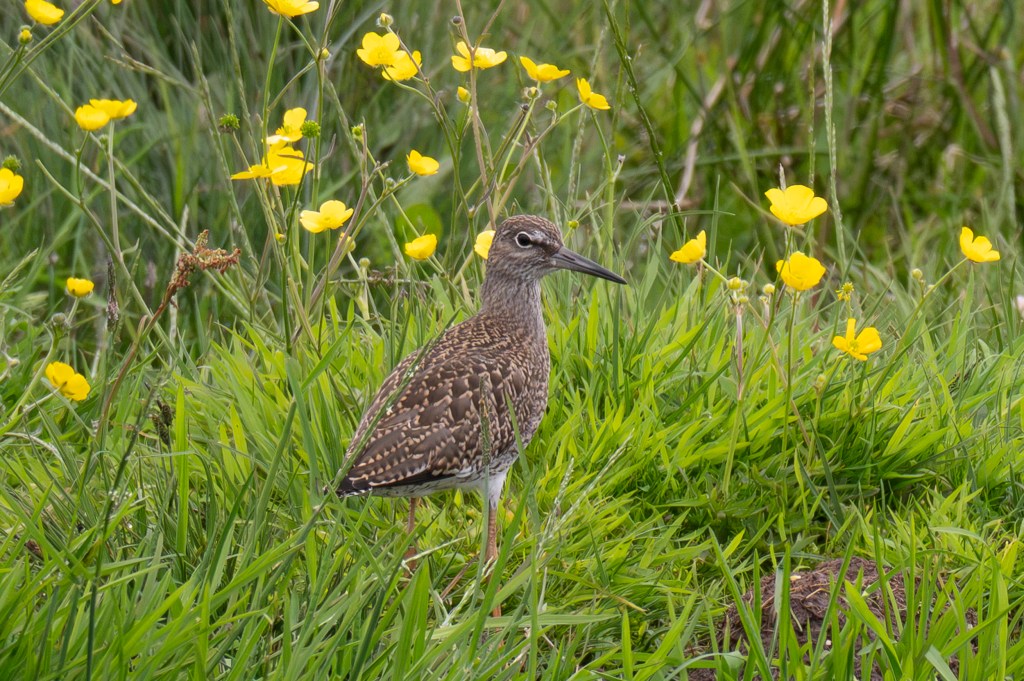
In winter the background noise comes from the rolling crash of surf. In summer there’s still the crash of water on stone – the land rolls down to shore of the rarely calm waters of the Pentland Firth, but at this time of year the seas rumbling and endless battle with terra firma is overshadowed by the call of birds. It’s a breeding ground for many species, from Skylarks through to Black-backed gulls. As you walk the birds give a running commentary, warning fledgelings of a two legged interloper. Most vocal are carrot billed Oystercatchers and bright legged Redshanks, as you walk they follow you, their calls repeated on a high pitched loop. Either species would be a great tone for an alarm clock, impossible to sleep through.
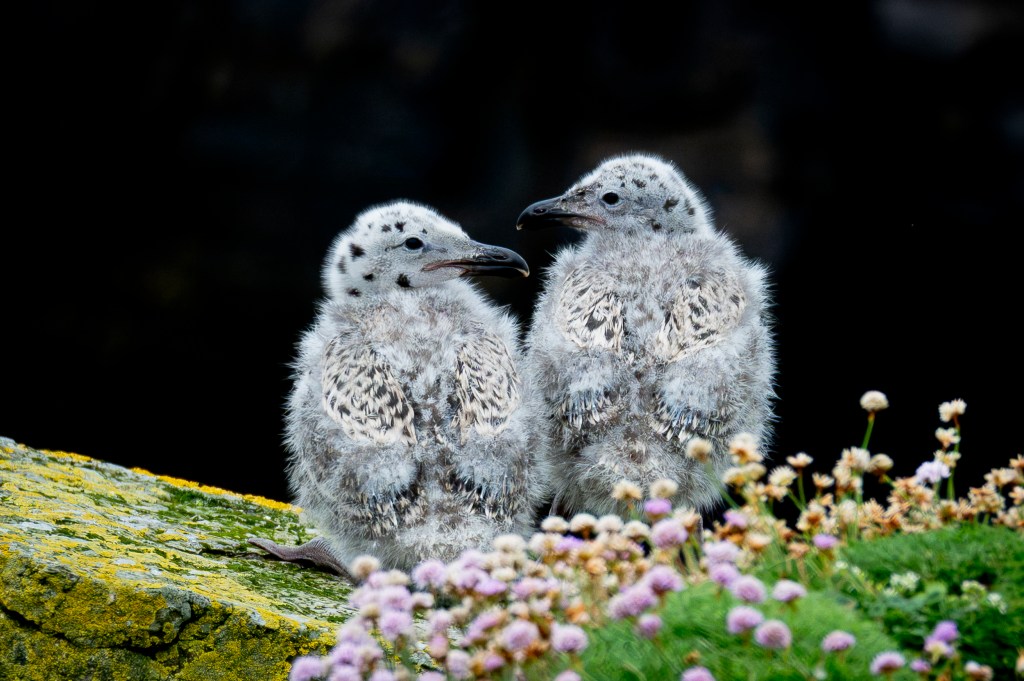
Above your head Lesser-blacked gulls follow and circle, warning fledgelings with a nasal “Khow-khow”. The fledglings meanwhile just watch you pass by, wondering what all the fuss is about.
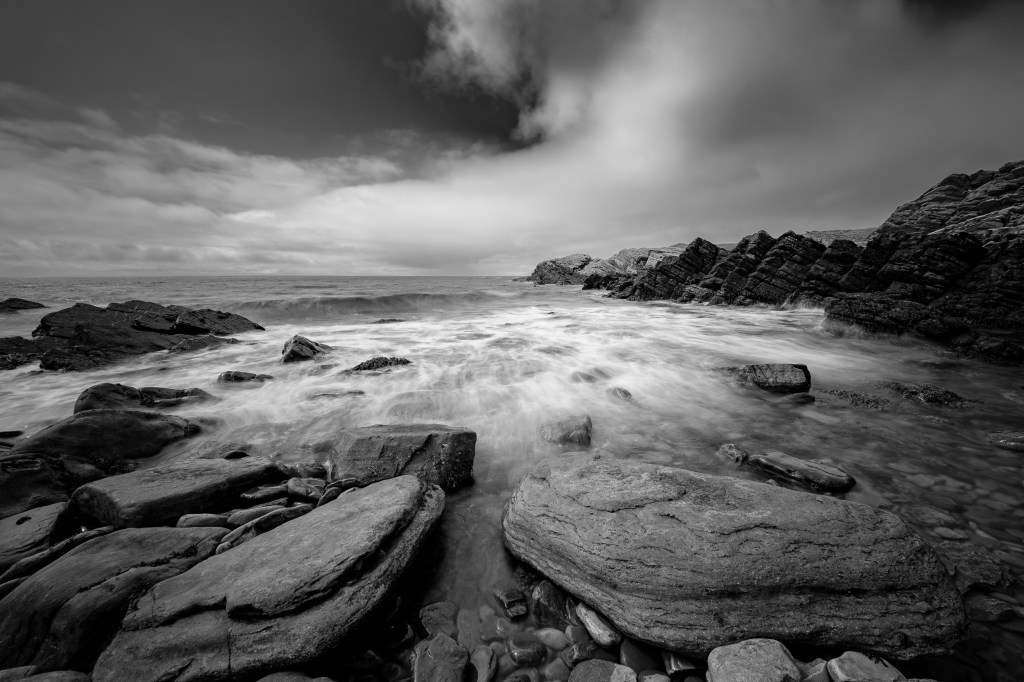
The shoreline is ragged, cut by the tides. A favourite spot to sit is a geo that lies close to the site of a long lost Broch. Wide and shallow it must once have been perfect for the men who built Brochs to launch their boats from, vessels that likely wore a skin of seal hide over a skeleton of willow. There are two large flat boulders, sea smoothed and backside friendly. I sat for a while and when the tide lapped my boots and pushed me away, I took a photograph with a deliberate long exposure, just enough to blur time and water.
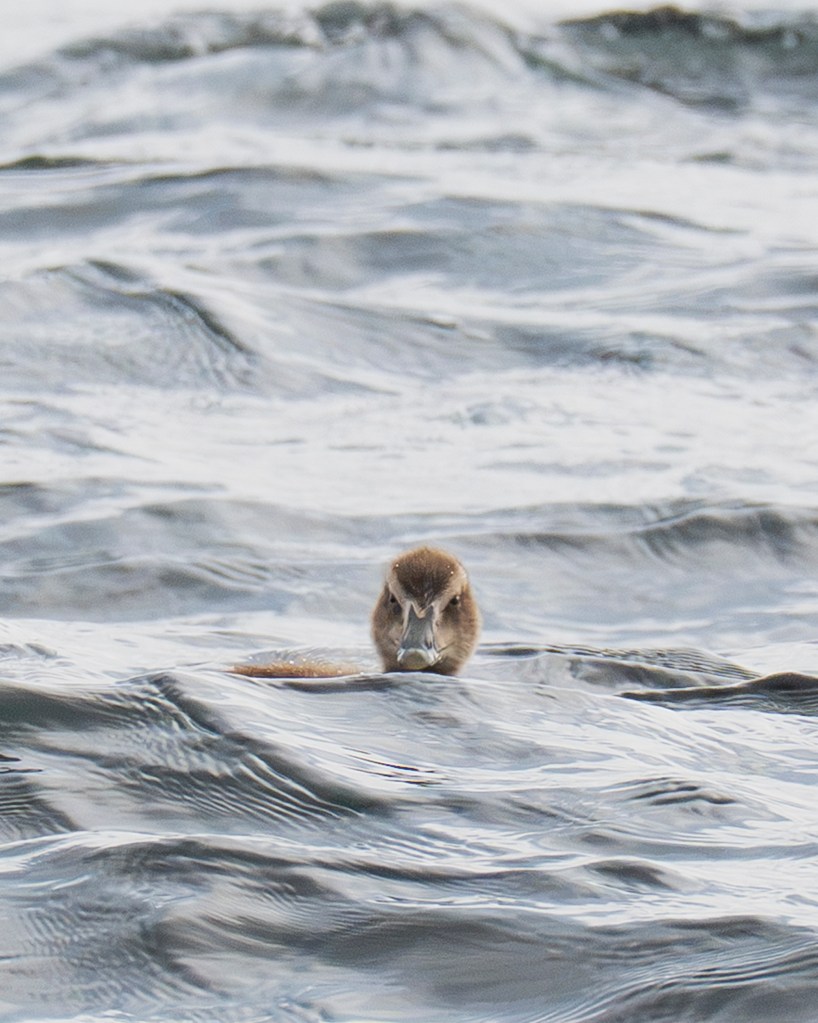
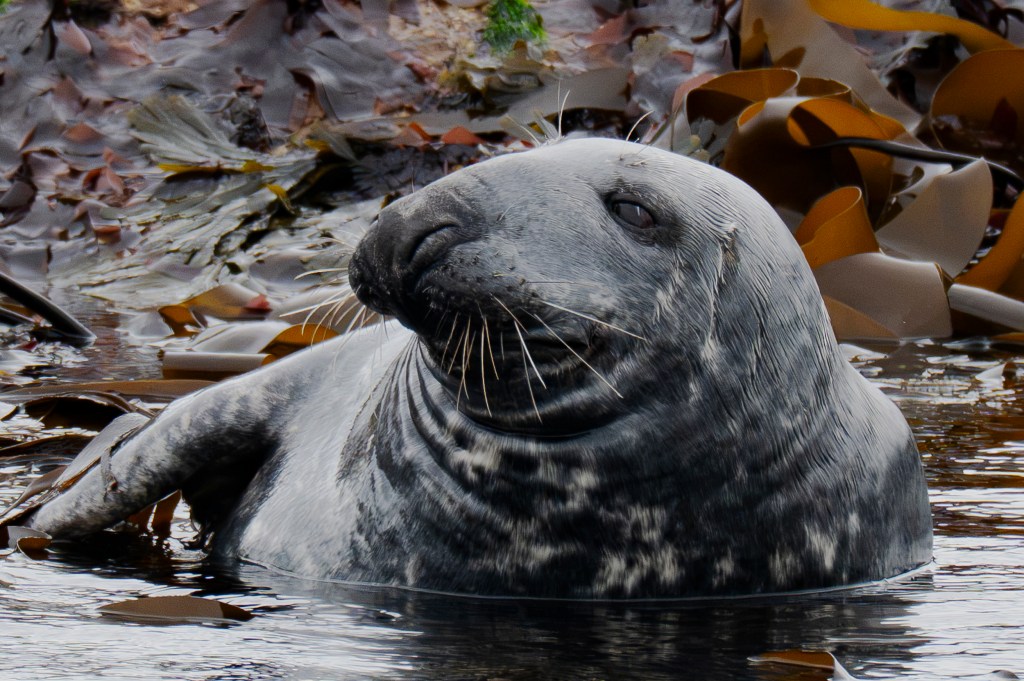
As I set up the tripod, a bull Grey seal whose ancestors skins may once have become Iron Age boats, eyed proceedings from a reef of black rock, occasionally shifting his weight as the incoming tide threatened to lift him from his berth. In the shallows of the reef an Eider and her ducklings were diving for molluscs. The ducklings were in their element, buoyant as corks, briefly popping to the surface before quickly diving again. I got lucky with the duckling at the top of the page, a fleeting eye to eye contact before he or she upended and disappeared, joining mum and siblings for a hunt amongst the kelp.
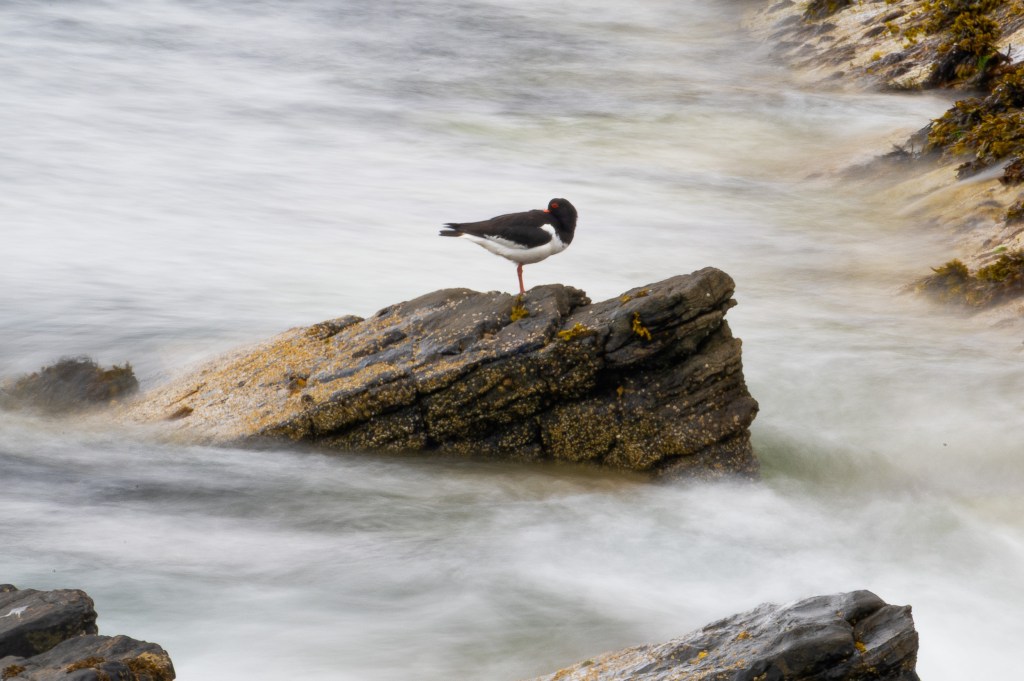
An oystercatcher dozed on a rock, probably exhausted after a serious pleep at the human session. As with the shot of the geo I wanted to use a long exposure, blurred sea around a sharp oystercatcher. The foldaway tripod that I usually carry is great for my little fuji camera that gets used for landscapes and the like, but with legs like Bambi it’s not so good for the camera and long lens combo that gets used for wildlife. Rather than put the best part of 4kg on a 1kg tripod I sat down, balanced elbow on knee and with the camera and lens in the crook of my arm, set a two second exposure. The sea blurred as expected but rock and oystercatcher aren’t quite sharp. Knee, elbow and crook clearly don’t make a very good tripod but I quite like the painterly effect. To be tried again with a heavier tripod, or maybe a lighter camera 🙂
 A garden in Orkney
Value this writing, relationship VBW
LikeLiked by 1 person
Thanks Allan, I hope all is well and you are enjoying some long Scandi summer days.
LikeLike
Love reading this, it gives the feeling of the place so vividly that I can imagine being there myself. Thank you so much for this minitrip!
LikeLiked by 2 people
Thank you Saila, much appreciated, I hope you are having a good Summer.
LikeLike
You have a wonderful way with words and photos, I really enjoyed this post.
LikeLiked by 1 person
Thank you Jude, that’s genuinely appreciated.
LikeLiked by 1 person
Hi Gary, Well I’m washing up once a day and putting the grey water on the garden, flushing the toilet as infrequently as possible, yes I get few visitors…., and showering at the swimming pool. Yes, you’ve guessed, no rain. However, insects are really enjoying the heat and the butterflies have been amazing. I did the butterfly count one morning and on my buddleia I counted 8 painted ladies, 3 red admirals, 1 hummingbird hawk moth, a gatekeeper and a passing large white. Outside of the time, resting in the sun, was a garden tiger. Apparently the heat wave and favourable winds have brought this influx of PLs.. At the bottom of my garden is a silver willow which gets a particularly unpleasant HUGE willow black fly, but they’ve bought in hoards of predators, little hoverfles of all shapes and sizes mainly, some wasps, ladybirds etc. Apparently it’ll be worse next year because of el ninio, so must think how to prepare, plenty of gin and olive oil I think for starters! Also, unfortunately for you, I’ve read hundreds of ex pats from Spain will soon be heading for Orkney to escape the heat, only half joking….. Rotten loch looks properly spooky, does it get misty too, or is it too windy? I love spooky places, once saw McBeth performed in a church yard as part of the Edinburgh Fringe. Ace. Oystercatchers are one of my favourite birds, love their wonderful pink beaks and legs and that iconic haunting cry. Had a baby robin bathing in my bird bath today. It was so cute but, as you and Penny know I’m ambivalent about robins so I expect it’ll turn into the garden bully come the Autumn. Have a good week, send the rain South, please. xx
LikeLiked by 2 people
Hi Margot, I really wish I could send you some rain, I’ve been watching the fires in france and spain, and closer to home in the Cairngorms, so much destruction.
We’re getting our usual mix, sunny yesterday, raining as I type this. I haven’t noticed much change here in insect populations but we have had the Painted ladies, in a normal year they’re quite scarce here. I’ve yet to see a ladybird in Orkney but in the 13 years we have lived here we see more hover-flies and wasps. Our budleja is just about to flower!
With parts of the Uk matching Spanish temperatures an influx of ex-pats wouldn’t be that surprising 😀 I’m sure more people will move away from relentlessly hot summers if they can, I know SSB of the btl Grauniad is heading to Bute. Neither J or myself are lovers of heat and would hate it down South now, our old patch of East yorkshire is regularly in the 30’s, I would get nothing done outdoors.
If you’ve seen the old film The Fog – when there’s a thick haar at RL you can almost imagine that old sailing ship full of long dead sailors emerging through the mist and bumping against the shore. I have to say though I do like to walk in a haar, every sound is amplified. (Including the creaking of ships timbers) 😄
The best description of an Oystercatcher I’ve ever heard is “a Puffin eating a carrot”. When you walk the shores here their calls literally are on a loop, beautiful birds.
It sounds like your Robins might need anger management classes, we’ll blame it on the heat!
Hope you get some rain soon x
LikeLike
Wonderful description of an oystercatcher. Yes, I have seen The Fog…verrry creepy… Thanks for the rain wish. When Wales, the land of my foremothers and fathers, has wild fires, we are in deep trouble. M.
LikeLiked by 1 person
Spectacular pictures, as ever, Gary.
I particularly love the ones of Eve and Adam spotted orchids. I admire your seemingly infinite patience in getting the pictures of the less static wildlife in complicated places. You must have very steady hands (or arms) too!
On the subject of infinite patience, I watched this movie about a man’s 50 years of research on black guillemots in the arctic yesterday. It seems to be available on YouTube – not sure you if you can access it. I know you have black guillemots on Hoy too so might find it interesting.
🎉 Winner: 2026 Canadian Screen Awards | The Birdman of Cooper Island | TVO Original
LikeLiked by 1 person
Hi Penny, for flower photos I break the rules a little bit and usually use a long lens, at least 600mm, you a get depth of field or sharpness that can sometimes only be measured in millimetres but if you get the focus right it gives quite a bit of isolation to the flower, or orchid in this case, I’m not a fan of the everything in the photo must be sharp school of thought🙃
The link doesn’t work, I really wanted it to! I think though I’ve found a link that allows me to view it in the Uk as a rental, time to open my wallet and brush the dead moths from my credit card, one for J and myself on a rainy Sunday afternoon.
We do get black guillemots, “Tysties”, in winter it’s the only Auk that we regularly see, they’re not as as easy spot on the water in winter, they mostly lose the gloss black and turn a mix of grey and white.
LikeLiked by 1 person
Your description of this place is poetic and peaceful, and then the accompanying photos really bring it to life. It makes me want to visit such a special place. Thank you so much for sharing!
LikeLiked by 1 person
Hi Beth, thank you for reading and for your kind comments. They’re genuinely appreciated.
LikeLiked by 1 person