
This weeks six on Saturday is a selection of birds. It’s a hard pick so I’ve gone for three whose company in the garden we cherish and three whose arrival we look forward to each Spring. All the birds in the photographs are fledglings, hatched this year either in the garden or on its margins, and one of the six, for Orkney at least, is a very rare bird indeed.
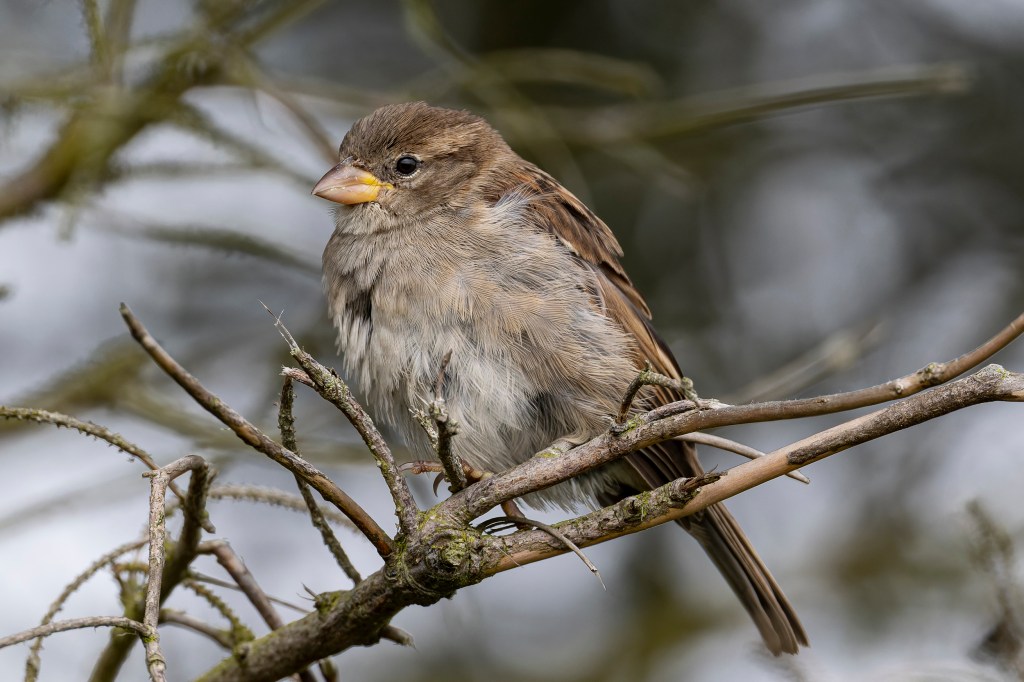
First up has to be the House sparrow. A bird that for centuries has lived alongside man. We saw none when we first started a garden here and this wee house, now renovated to modern regs standards, has no space for them, nowhere to hide nests beneath loose roof slates or facias. It didn’t take much though to bring them back, offcuts of ply were fashioned into des-res nest boxes and as they’re sociable birds, fastened in clusters to suitable trees, Sycamore cul-de-sacs for sparrows. Since then we’ve gone from zero to eight breeding pairs, with as many as forty birds in the garden in Winter. They are gregarious birds, happiest in a flock and in this garden raise two broods a year, further South three broods a year is the norm.
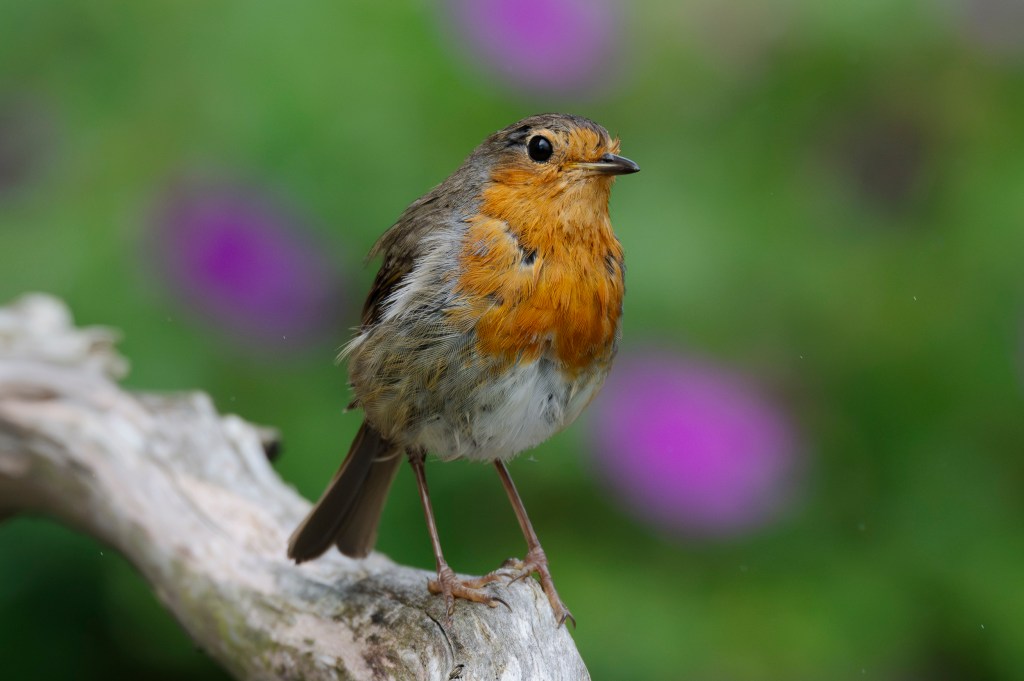
Next up has to be the Robin, unlike the Sparrows when it comes to their own kind they’re far from sociable, fiercely defending their territory against other red-breasted trespassers. At home it seems the uneasy border of the two pairs that nest here runs North – South splitting the garden, and the house which also runs north south, neatly in half. North pair nested in an open fronted box pinned a half dozen feet up the trunk of a Larch while South pair, ignoring a nest box that I’d fixed to the trunk of an ancient Rowan, nested instead in a nearby moorland edge pile of bramble and brash – maybe they didn’t like the curtains. The bird in the picture has yet to moult into its true red breast, he or she is still sporting the buff waistcoat that splits adult from youngster.
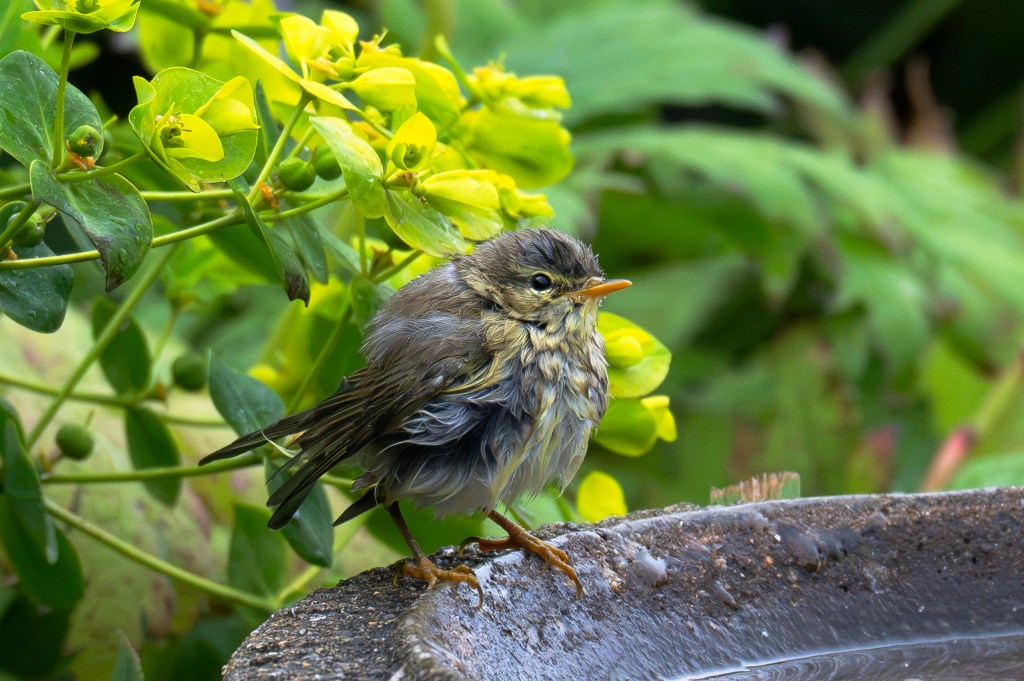
Next is a Summer visitor, the Willow warbler. Like South pair robins they also hide their nests in briars and thick vegetation, often nesting directly on the ground. The garden itself would be too busy for them but between garden and moor there’s an area that is pretty much left to do its own thing, the ground thick with bramble and feral honeysuckle. It’s a deliberately untamed patch, a place where warblers and pipits quietly weave nests and where cuckoos call and lurk – hoping to sneak an egg into an unguarded clutch. The bird in the picture was caught having a bath, normally they’re glimpsed in tree tops rather than seen out in the open. They leave us in early September and by now he or she will be well on the way to sub-saharan Africa.
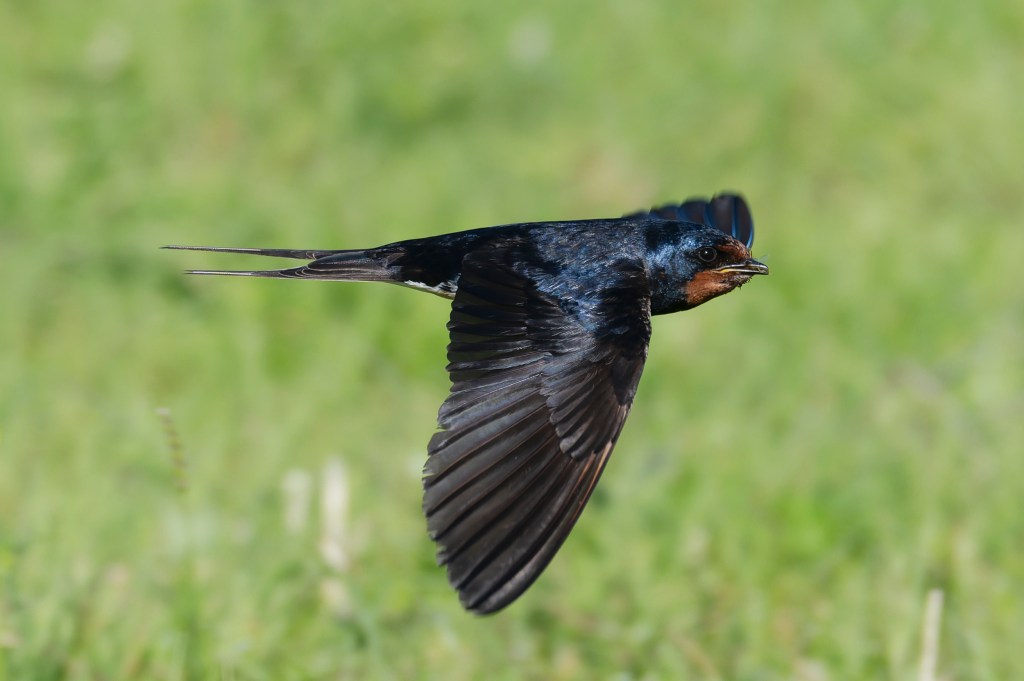
Next up is another summer visitor, the Swallow. I can’t imagine a summer without them. For us they’re the garden harbinger, a bringer of Spring and Autumn. At the moment they’re still here, soon like the warbler above, they’ll leave for Africa. In the confines of the back garden, enclosed on three sides by trees and on the fourth by the house, they’re Big-top performers, looping the loop and flying tight figures of eight. In the wider landscape they skim the grasses of the meadow and soar high above the moor. If money were no object I’d build a small open barn at the edge of the meadow, just for them, somewhere to nest and roost. The bird in the photo would have hatched early in Summer, it (almost) has its adult-bird tail streamers but the giveaway that it’s a juvenile is the soft and wrinkly custard yellow gape at the base of its beak.
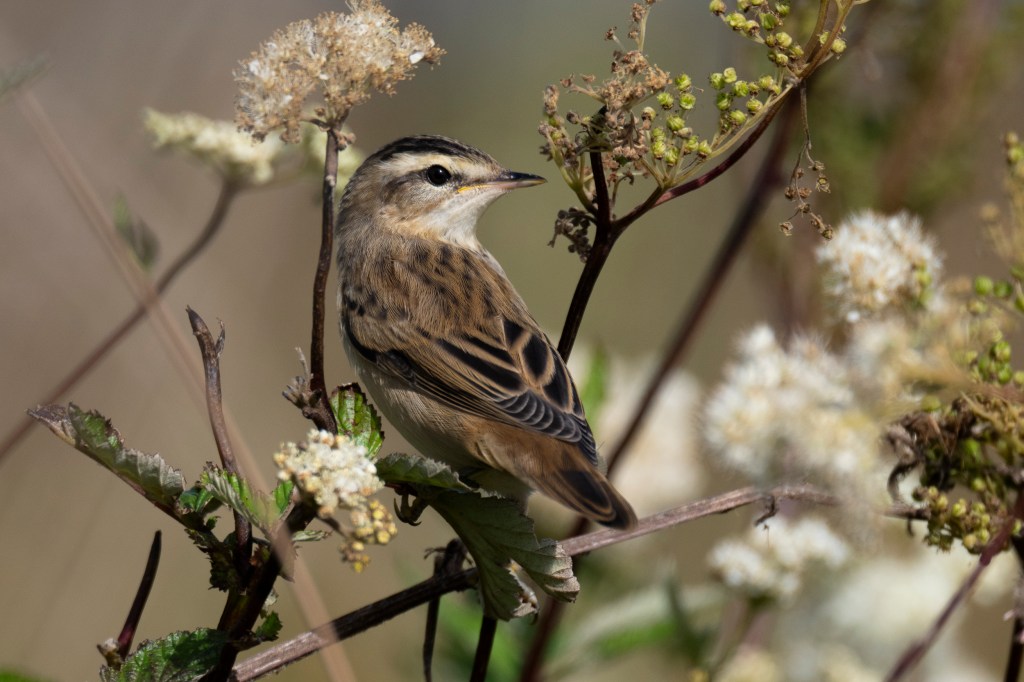
Number five is another warbler. When we moved here the aim was, and is, to make this small patch of land as diverse for wildlife as we could. Money for projects is always tight so there are some things that will likely never be done (a swallow barn) and other things that have cost so little and made such a difference. One of those projects lies at the bottom of the meadow, in a place where the ground flattens out just before falling into the bay. It’s permanently wet, was thick with a monoculture of Rush and was the perfect spot to dig ponds and plant a willow coppice. The ponds were dug by excavator, a half day and they were done, broomstick thick willow cuttings went in by the hundred and slowly but surely the area has gone from Rush monoculture to a mini wetland habitat. This year, for the first time, Sedge warblers were seen, I thought they were passing through but a few weeks later saw an adult with food in its beak. They’re a shy bird and it took a while before juveniles were spotted, their habit of staying deep in cover and constantly flitting from branch to branch makes it hard to get a photo but this one, already sporting adult plumage but with the giveaway yellow gape, played ball, posing for a few seconds amongst a stand of fading Meadow sweet.
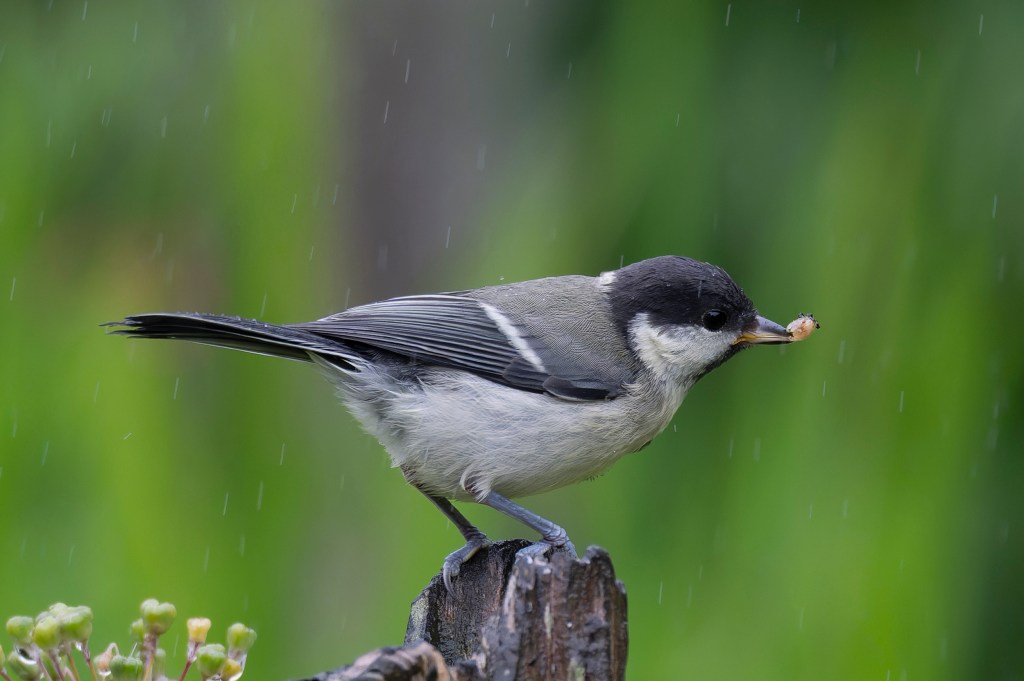
Last but definitely not least comes the Great tit. It’s estimated that in the UK there are some 2.5 million breeding pairs. Come North, beyond Caithness & Sutherland though and that figure drops to zero. In Orkney they’re a rare and very brief visitor, so rare that in 2025, when a male turned up in the garden in the Spring and subsequently stayed for the year, both the RSPB warden and the county bird recorder took a note of his presence. He took over a spare House sparrow nest box and lived the summer as a hopeful bachelor boy. Fast forward to this year and two birds were seen, a male and female. Prompted by the bachelor boy we had already installed Great tit friendly boxes in the winter – to keep out chunkier house sparrow squatters, they just need a smaller 30mm entrance hole. For the next few weeks they kept us on tenterhooks, checking out different nest boxes but never seemingly making a decision on whether to settle. In the end the winter nest box building was in vain. They chose an empty House sparrow box instead, one of five on a Sycamore cul-de-sac. After that the tenterhooks really kicked in, would the clutch fail? Would a Sparrow hawk catch one of them? Would we disturb them? In early June they started to feed chicks and on June the 21st the nest went dead, no life, no adults to be seen. That was it, the nest had failed, the adults had left . A week later, from the Kitchen window we saw an adult, alongside him a paler bird, then two, then three. They had been hiding in plain sight and it felt like Christmas. In the end they reared six young, the photo below is the one that made the local paper. The county bird recorder did his due diligence and after trawling through records dating back centuries declared it to be the first breeding record for the county of Orkney. They’re still in the garden and down in the willow coppice we’ve seen a second adult male. Hopefully he too will find a mate. Small pioneers who made our gardening year.
For more Six on Saturdays from gardens worldwide head over to Cornwall and Jims blog.


Such wonderful, diverse birdlife and the rich habitats that support them!
LikeLiked by 2 people
Thank you, the hard work has been worth it.
LikeLike
Marvellous birding and pics 😎🤗🙌🏼
LikeLiked by 1 person
Thank you ❤️
LikeLike