
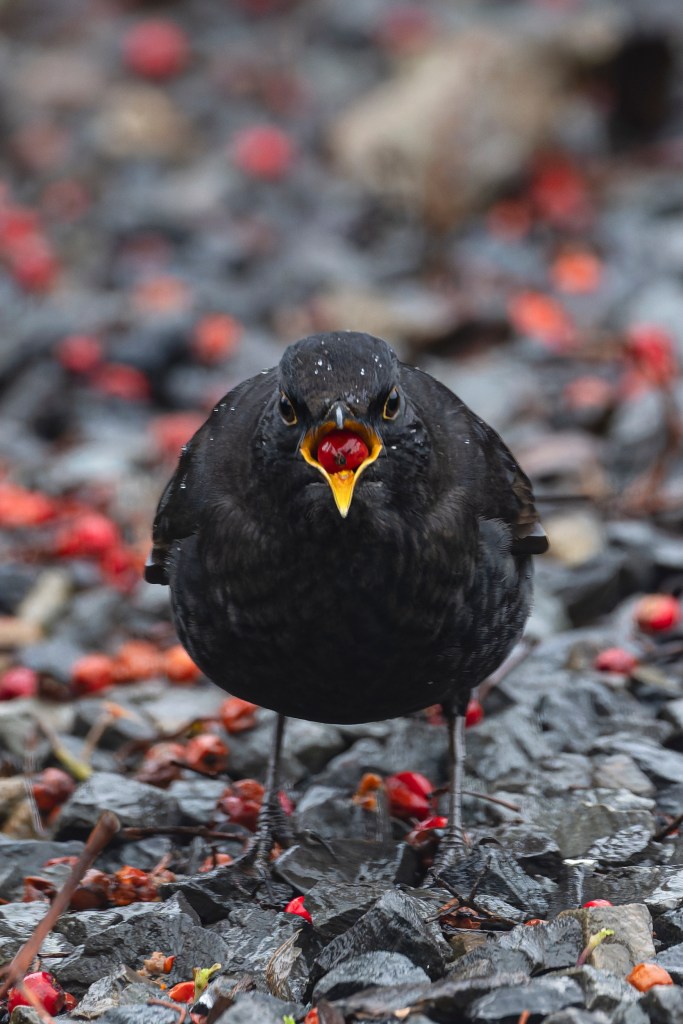
In last weeks blog I mentioned how November in Orkney had been unusually calm and settled, this was of course the kiss of death. Since then we’ve had gales pretty much every day, with more to come in the week ahead. With wild weather and short days thoughts at this time of year naturally turn to Spring, so with that in mind this weeks SOS is seed heads and berries, bringers of new life.
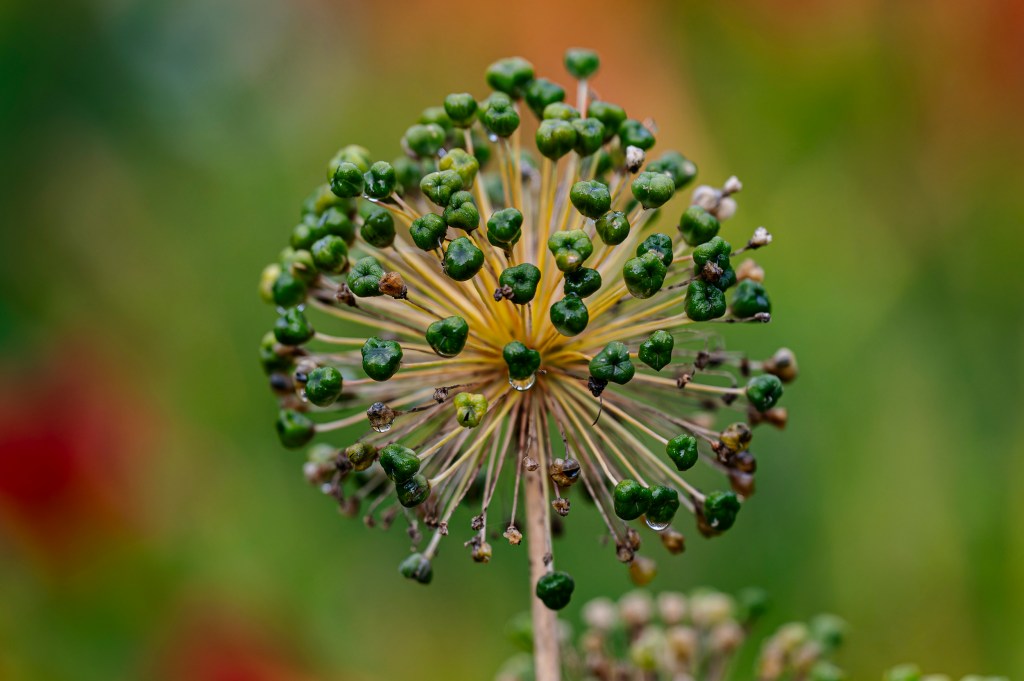
First up is an Allium, the photo is from earlier in the year – any starburst seed heads that didn’t end up hanging from a shed rafter to dry are now long since scattered by the elements. They’re a bulb that does well here, gardening lore says they shouldn’t, they’re not fans of wet feet, but so far so good. Jacqui adds a few more every year, dotting them here and there as she clears and cuts back the garden. The success of a plant that perhaps shouldn’t thrive eggs you on to try others and, as mentioned last week, as more alliums were planted the bulbs of a tall fritillary also went in, Fritillaria persica, it’s one of the few fritillaries that prefers drier soils so they got a leg up, a handful of gravel beneath each bulb to help with drainage. Time will tell if they’re a good fit for here.
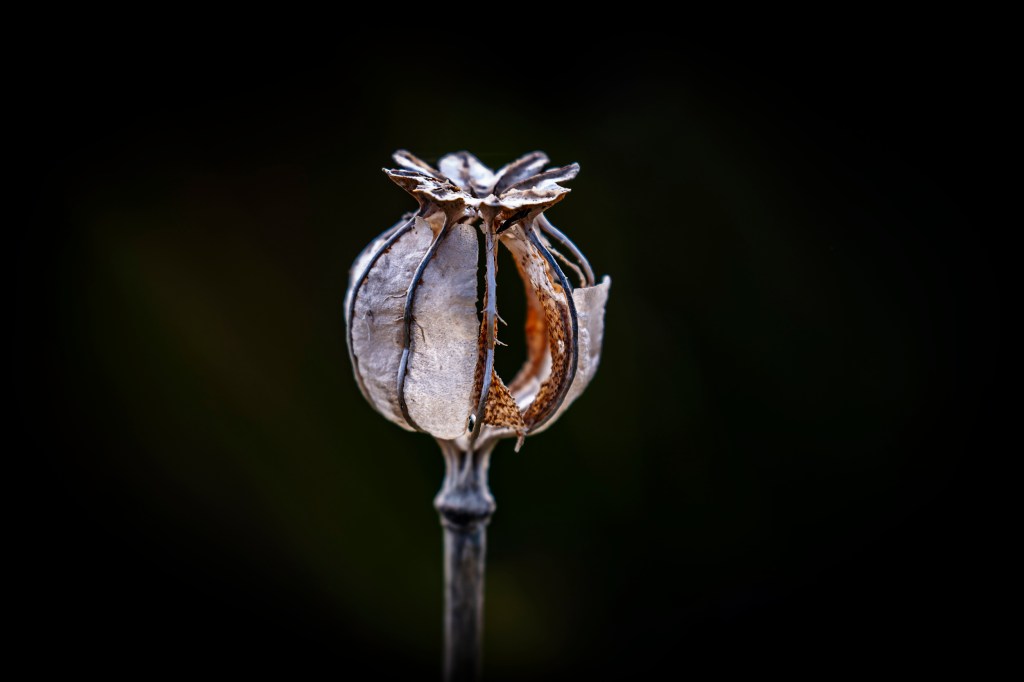
Next comes a poppy, variety unknown. This one has already seen the worst of our weather. Ripe poppy seed is scattered in various ways, usually the plant does it for us but oftentimes we’ll collect it, storing the seed until Spring in up-cycled junk mail envelopes, option three is to add stems and seed heads to the compost bin. Our bins get turned just the once and they never generate enough heat to kill seeds, providing you want it back in the garden, anything in seed that goes in the bin does so in the sure knowledge that in Spring, when the garden is given a dressing of compost, it is being resown. A method that works well with Honesty.
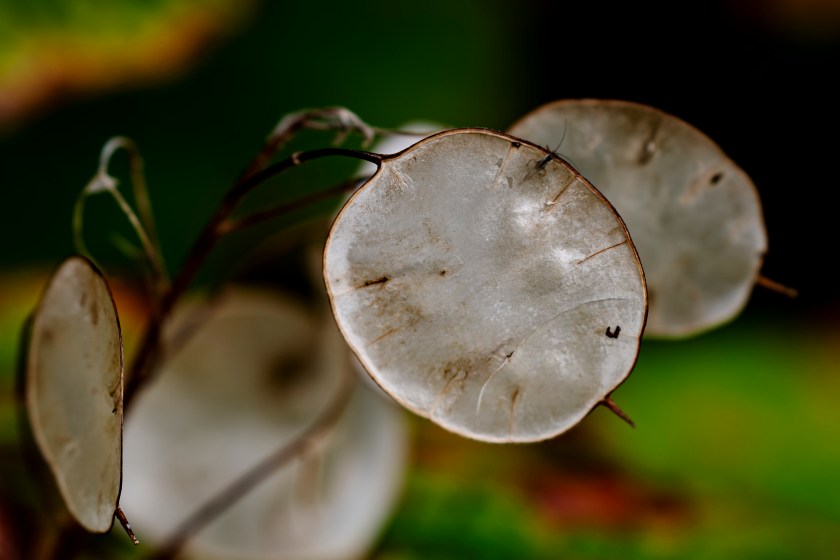
Third is the above mentioned Honesty, lunaria annua, the moonwort. As mentioned above once composted these pop up all over, they’re also prolific self seeders and will thrive pretty much anywhere with the exception of deep shade, where they’ll grow but will struggle to flower. The seed heads have various names- silver dollars, silver pennies, satin pods, my favourite is “moon pennies”, the giver of lunaria in the plants latin name.
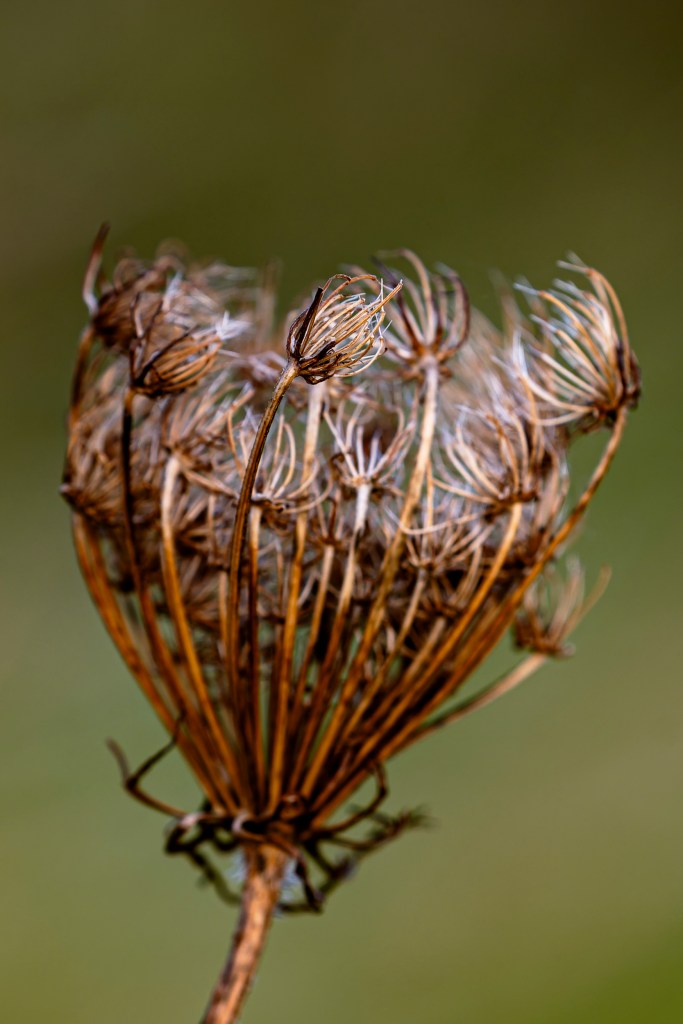
Fourth is Wild carrot. I mentioned in a blog a while ago that after sowing them as part of a meadow mix they carpeted an area of ground with a froth of creamy flower heads. It was a one off show and since then they’ve disappeared from the meadow and have gone nomadic, popping up wherever they choose. An alternative name is Queen Anne’s lace and I’m pretty sure that if plant sellers advertised them as such everyone would be planting them in their garden, it’s a great late summer biennial.
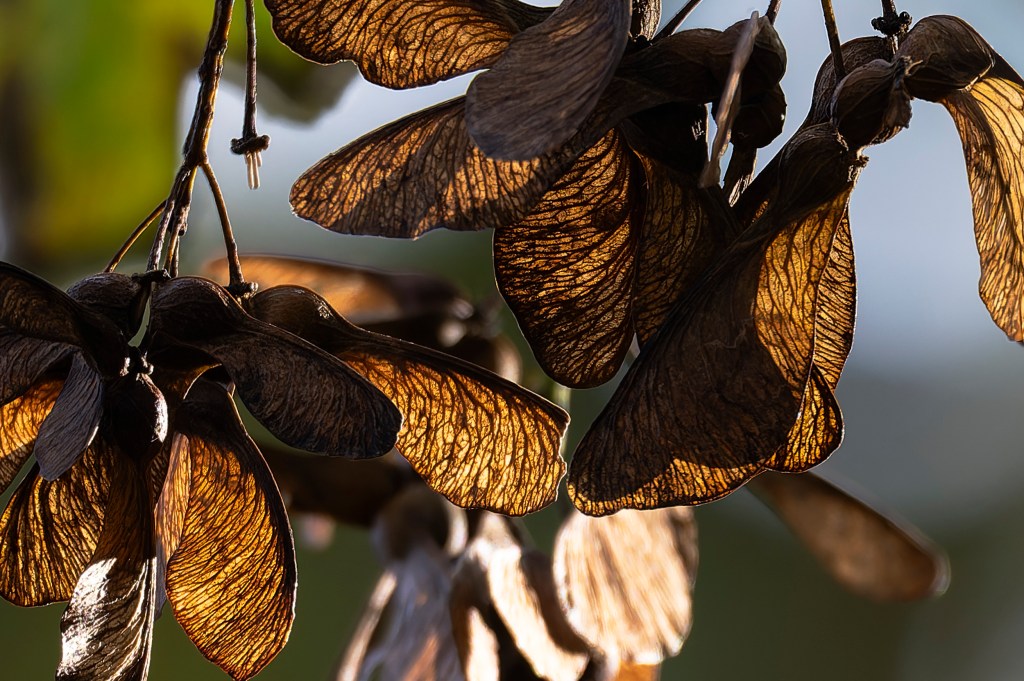
Next are the seeds of a tree, the Sycamore. We have two very old (by Orkney standards) Sycamore trees growing here, at some point in the past both have been coppiced, probably by man but potentially in very early life by an escapee sheep. These two, along with an old Rowan, are the trees we couldn’t bear to lose. As a kid the seed keys were helicopters, we’d pick them up and throw them in the air just to watch them spin down again. At home, on bare soil or on gravel paths, the cast seeds can grow almost as thick as grass, most fall under the hoe but some are potted on. The shelter belt here is quick growing Red alder and its one downfall is a short lifespan, 80 years or so. With that in mind a few sycamores have been left to grow amongst them and others have been planted on the western edge of the garden, we won’t see them mature but eventually, for someone else, they’ll be part of shelter belt Mark II.
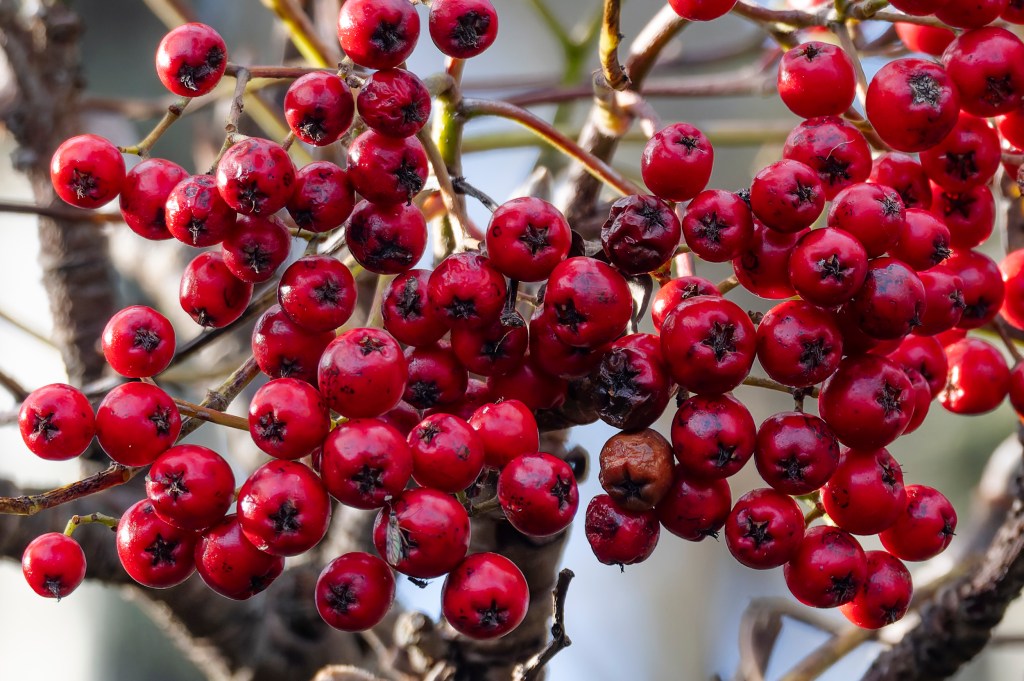
Last but not least comes the Rowan, as with the two sycamores mentioned above our old Rowan is a tree we would hate to lose. It’s gnarled and squat, has canker and at some point in the past, has been blown over, the first eight feet of its trunk lie horizontal with the ground. The roots threw up new shoots and the branches on the trunk simply turned ninety degrees back to the light, a real survivor. Every year, without fail, on hands and knees we search the ground beneath it, looking for its seedlings, potting them on for an eventual new life out on the moor. Birds have long since stripped it of berries, the photograph below is from a few weeks ago, taken just before Scandinavian and Icelandic Thrushes and Blackbirds arrived and ate the tree bare in a matter of days.
We don’t collect all of its seedlings, a few are deliberately left to grow on – someone, perhaps not yet born, will one day in the future have a home here with a shelter belt not of Red alder but of Sycamore and Rowan.
For more Six on Saturdays, from gardens worldwide, pop over to Cornwall and Jims blog.


Lovely blog, Gary. Our Rowan was stripped in a week by blackbirds alone. They wait for the precise moment and gorge on them.
Martin Tayler Martin’s bird and nature blog: http://martinsbirdblog.com/
LikeLiked by 1 person
Thanks Martin, yes there’s definitely no hanging back when it comes to Rowan berries and the Thrush family, we were starting to think that they had passed us by and then suddenly they were here, the tree had no chance :-). We’ve got a couple of Waxwings here at the moment, feeding on apples that we put out for Blackcaps, reports are coming in of birds being seen throughout Orkney, it looks like it may well be an irruption year, fingers crossed!
LikeLiked by 1 person
Send them our way please!
Martin Tayler
Martin’s bird and nature blog: http://martinsbirdblog.com/
LikeLiked by 1 person
Such stunning photographs. I’m so happy that I’ve planted all four of those flowers, so I should have lots of stunning seedheads next year. Your compost sowing method is interesting – I’m sure ours will be the same as it doesn’t heat up very much.
LikeLiked by 1 person
Thanks Kathrin, the only time we’ve ever had ‘hot’ compost bins is when we lived down in Yorkshire and used to add loads of free cow or horse muck to them, the catch 22 now though is that if the cattle or horses have been fed on hay made from pasture that has been treated with a certain type of selective weedkiller, the weedkiller passes through them with the hay and ends up in your compost bin, allegedly once its inadvertently added to your garden it can stay active for a year or more, not worth the risk so cold bins it is 🙂
In the first year here the compost sowing was a happy accident, just really glad that we hadn’t filled the bins with Docks and Creeping buttercup!
LikeLiked by 1 person
Oh, that’s interesting. I had to look this up because we’re about to order a lot of horse manure for the garden. But apparently the risk of poisoning our garden with chemicals is very low since the manure we’re getting has been rotted down for 18 months already. So that’s good to know!
LikeLiked by 1 person
From what I’ve read after a year or so the risk is very low indeed, the chemicals are broken down by bacteria.
LikeLiked by 1 person
Such a great blackbird photo, Gary! Was that taken from your bird hide?
Your comment about Honesty gave me an ironic smile – ‘will thrive pretty much anywhere’. Tried it all over the place in every garden I’ve ever had and it’s never survived beyond year one.
I’m also a big fan of wild carrot -isn’t it the plant they call ‘kecks’ in Yorkshire? I loved the white froth you talk about and even did a little embroidery picture of kecks in front of West Burton power station stacks. I used to call West Burton the ‘cloud factory’, but in wild carrot season it looked like the clouds came down to earth 🙂
LikeLike
Hi Penny, in every garden that we have had, it has grown like a weed!
I think Kecks are Cow parsley, same family and very similar in looks. I’ve got a few Cow parsley seedling here, I’ll plant them next Spring in the ex veg/now solar plot and hope that they grow and naturalise. You got me thinking about West Burton, as a plate layer in the 80’s I worked a few weekend shifts there, they were always midnight starts 😦
A loose connection to WB is that around the same time, early 80’s, we nearly bought a house close to a village called Amcotts, like WB it too sat on the river Trent, you literally walked out of the back door and onto the riverbank, a complete wreck in a huge plot but the killer turned out to be the cost of getting power to it, more than the price of the house.
I like “clouds came down to earth”!
The hide is brilliant but the Blackbird was taken through the bedroom window 🙂
LikeLiked by 1 person
I think you dodged a bullet on the Amcotts house, Gary.
For a short while in the mid 80s, I used to own a three story Victorian semi on Old Trent Road, Beckingham. It had a wonderful greenhouse, lovely orchard, pig sty and other brick outhouses. The ‘ground’ floor was raised up on 2m high foundations of engineering bricks, so the view of WB from the bedroom was spectacular. However, the Trent flooded at least once every year and the garden developed many spontaneous ponds of huge dimensions.
LikeLiked by 1 person
I’m sure we did Penny, with hindsight in times of flood I doubt we would have slept easy in a house that sat lower than the flood bank. The attraction of being there was probably sown by childhood memories of living close to the banks of the river Aire on my Stepfathers smallholding, in the then tiny village of Temple Hirst. That too came with a power station view, Eggborough was a couple of miles away.
LikeLike
I look forward to your photos every week as much as I enjoy reading about your garden. The blackbird swallowing the berry is priceless. You are creating a wonderful garden for the future, I hope there will be someone who will appreciate all your work.
LikeLiked by 2 people
Thanks Jude, I’m sure in time someone else will put there own stamp on it with different ideas to ours, but if they leave the trees or better still, add more, I’d be a happy man. Ditto with J in the garden, if it’s loved it matters not how the next person chooses to plant it.
Until I caught it on camera I’d always assumed that they crushed the berries in their beaks before eating them 🙂
LikeLiked by 1 person
What a great picture of the blackbird with a berry in its gape ready to be swallowed: a fine start to some beautiful descriptions of your garden and its shelter belt of old trees at the end of November. I very much enjoyed reading your post.
LikeLiked by 2 people
Thank you Noelle, it didn’t take them long to clear the garden of every berry, not surprising when you see how quickly they can swallow them down!
LikeLike
Great late autumn images, especially like the sleepy Queen Anne’s Lace, Rowan berries, and the blackbird. Whew, hoping the wild gales will quiet down a bit.
LikeLiked by 1 person
Quieter at the end of next week, allegedly 😀
LikeLiked by 1 person
I’m with you on the seedheads and berries! They’re so beautiful in their own ways. I especially enjoyed your images of Wild Carrot, Sycamore, and Poppy.
LikeLiked by 1 person
Thanks Beth, from now until late April, for this garden at least, it will be the small details that count 🙂
LikeLike
Your seed-head theme really suited a windswept Orkney November, and the idea of seed heads and berries as bringers of new life gave the whole post a hopeful shape despite the gales and the short days. I was struck by the honesty that came back through your compost, since a heap turned only once never gets hot enough to kill seeds, and the way those silver-dollar seed cases now appear wherever the compost has been spread. The rowan story stayed with me too: a tree blown over, its first eight feet lying horizontal, then branches turning ninety degrees and fruiting again while thrushes strip the berries within days. Planting Fritillaria persica with gravel for drainage was a practical detail I will remember.
LikeLiked by 1 person