Hardheads and Cuckoo spit.

Our early June ‘normal service is resumed’ weather reset has continued. The past two weeks brought a true mixed bag, sunshine and showers, occasional gales, and on Friday through Saturday, almost biblical rain. One of the first, and best, things that we did when we started to make a garden here, was to dig a ditch to pick up the water running off the moor at the back and divert it around the garden. At the moment, after the weekends rain, it’s a mini river, rushing peaty brown water from moor to sea. After a three month dry spell an upside of the rain, combined with summers warmth, is that it has brought the meadow to life.

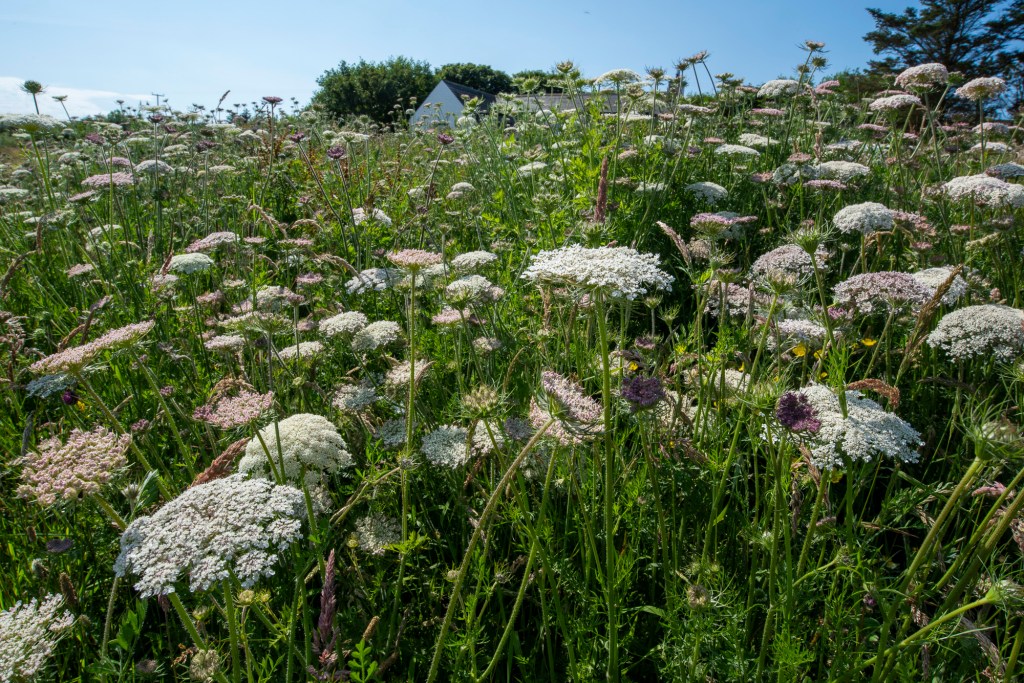
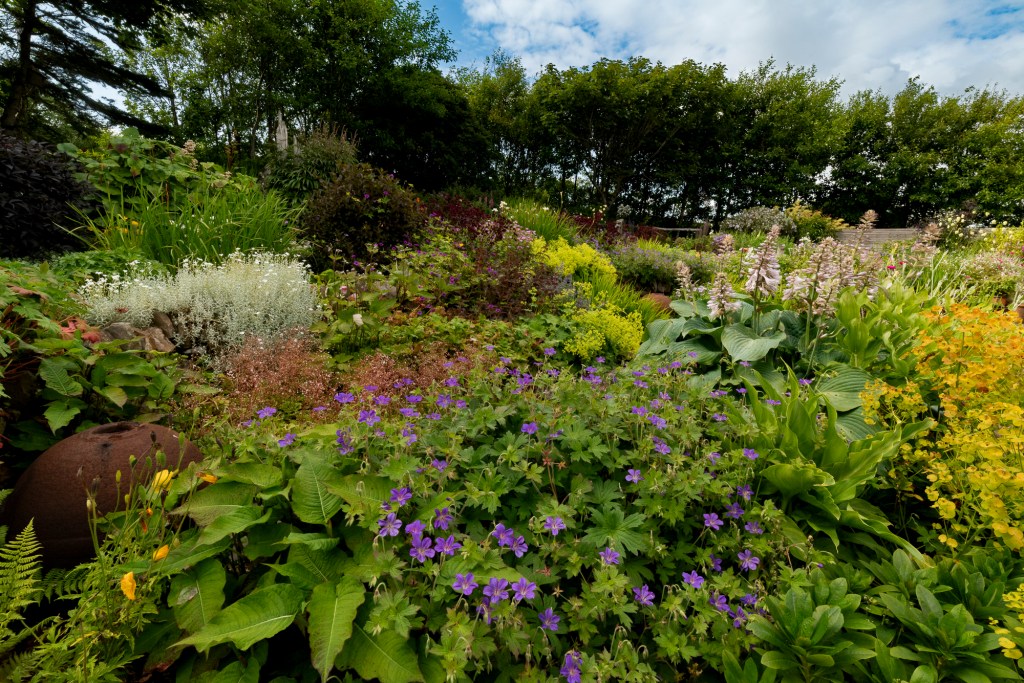
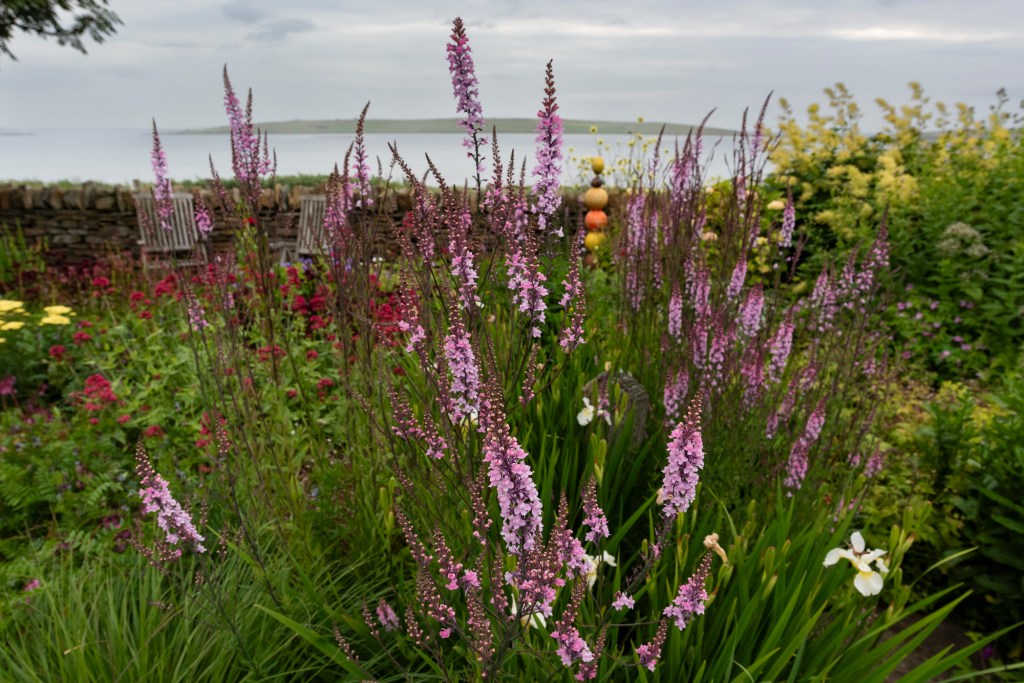
Most of the ground that came with this wee ex-croft house is moor but to the front, between house and sea, there’s a small field that had once been pasture. Not grazed or mown within living memory, it was thick with Soft rush and waist high grasses but potentially ripe for meadow making. For a perennial meadow, the field turned out to be pretty much perfect, dry in some places, wet in others, and topped with poor and thin soil. Once the ground was cleared we mowed hard in Spring and Autumn, adding home grown plugs of native plants that should have been here but weren’t.

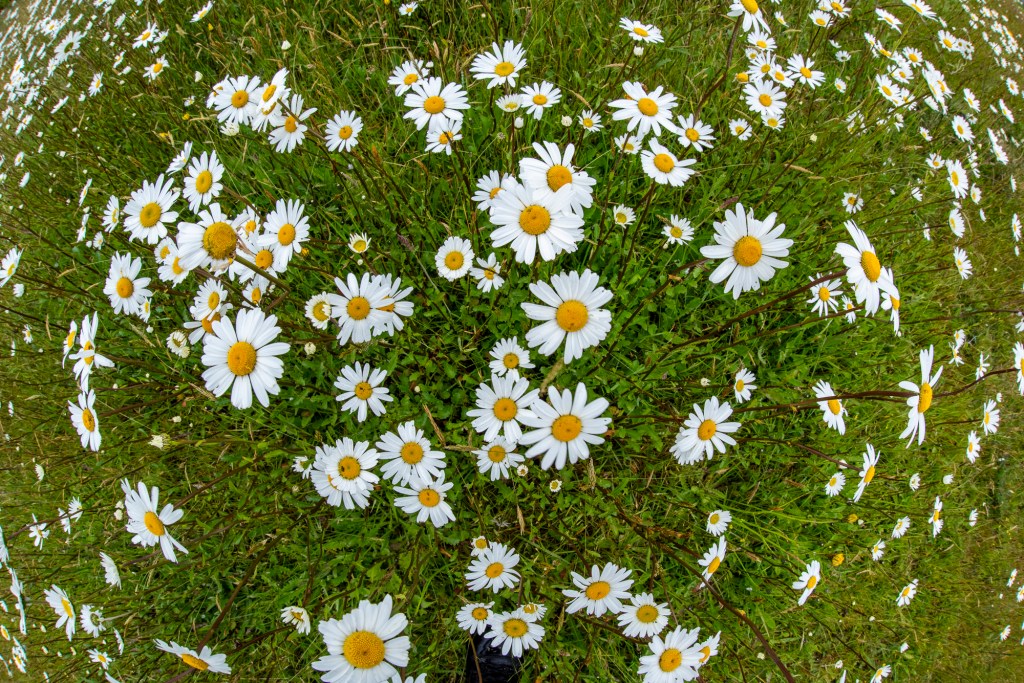
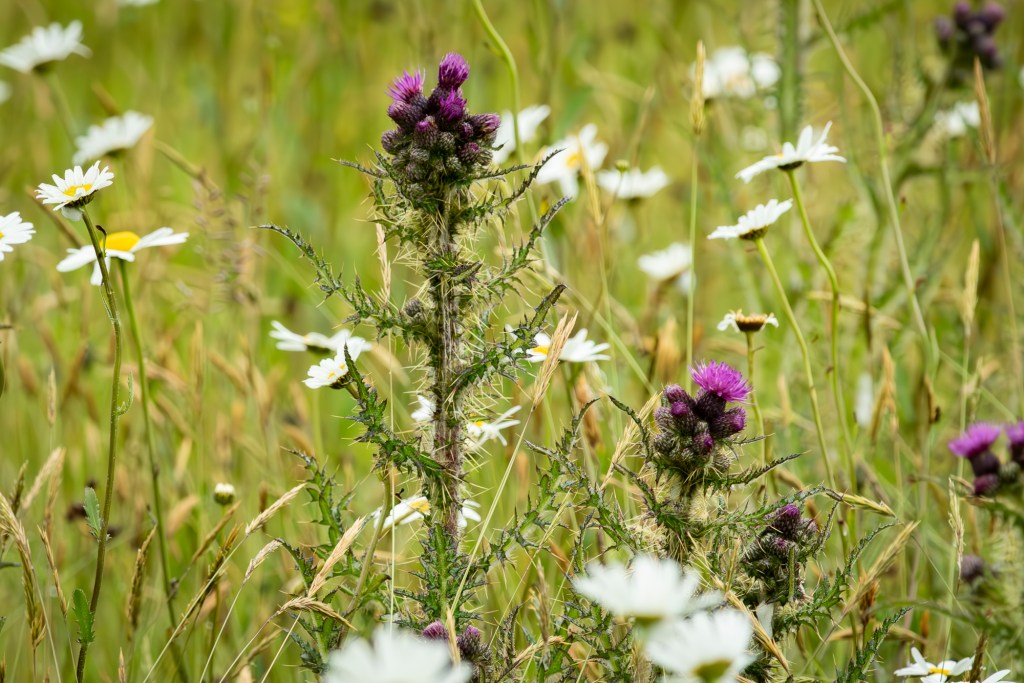
Ox-eye daisies.

An area thick with damp loving rush got plugs of Ragged robin, a plant that likes to keep its feet wet. The rush is still there of course but the regime of mowing weakens the rush and allows the ragged robin to hold its own, freely self seeding and spreading.

Ragged robin.

A member of the silene genus, its flowers have a look of closely related Red campion, albeit on a bad hair day.

A bad hair day…

A friends house along the way takes its name from the daisies that once grew along the verges here, so for drier spots Ox-eyes were a given. They’re a doddle from seed and once planted self sow easily. The picture below was taken with a fisheye lens, the deliberate millefleur paperweight look might have been better without my boot toe, bottom centre 🙂

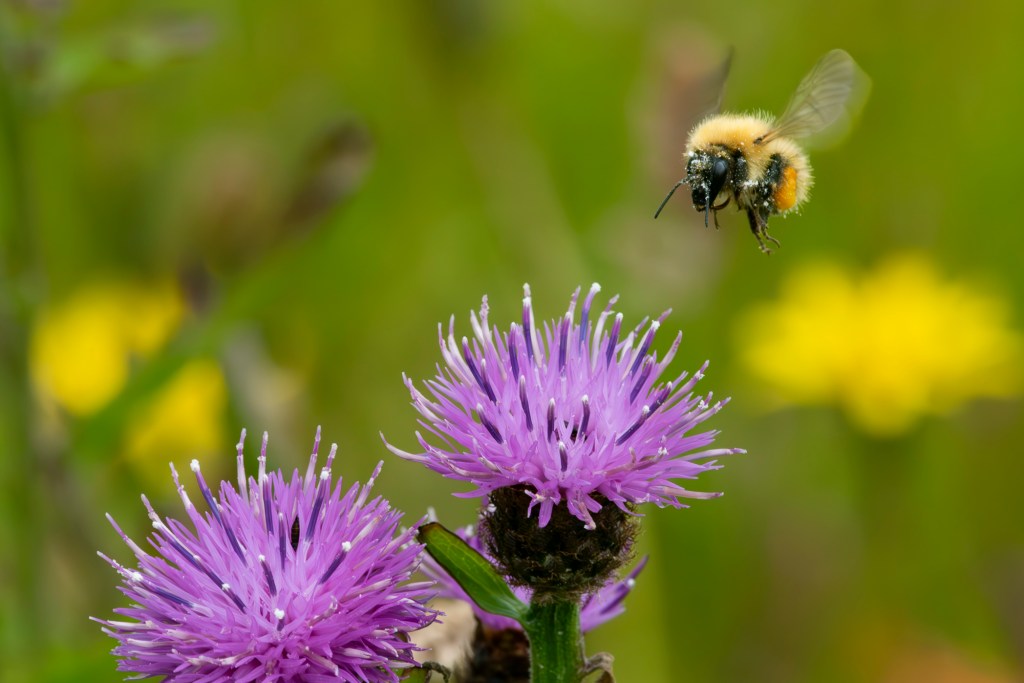
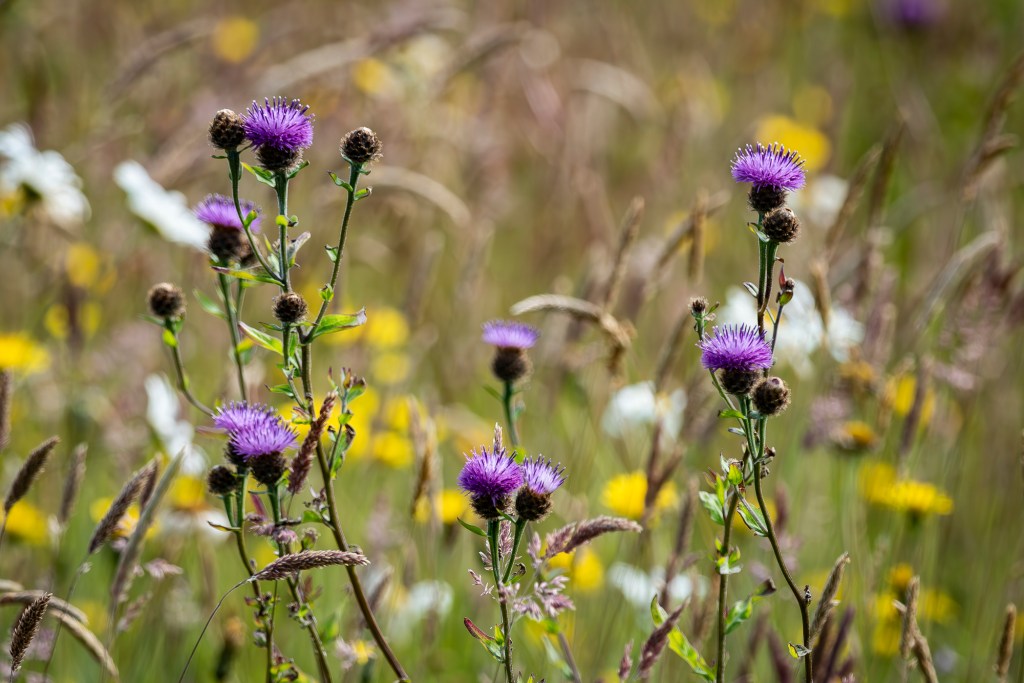
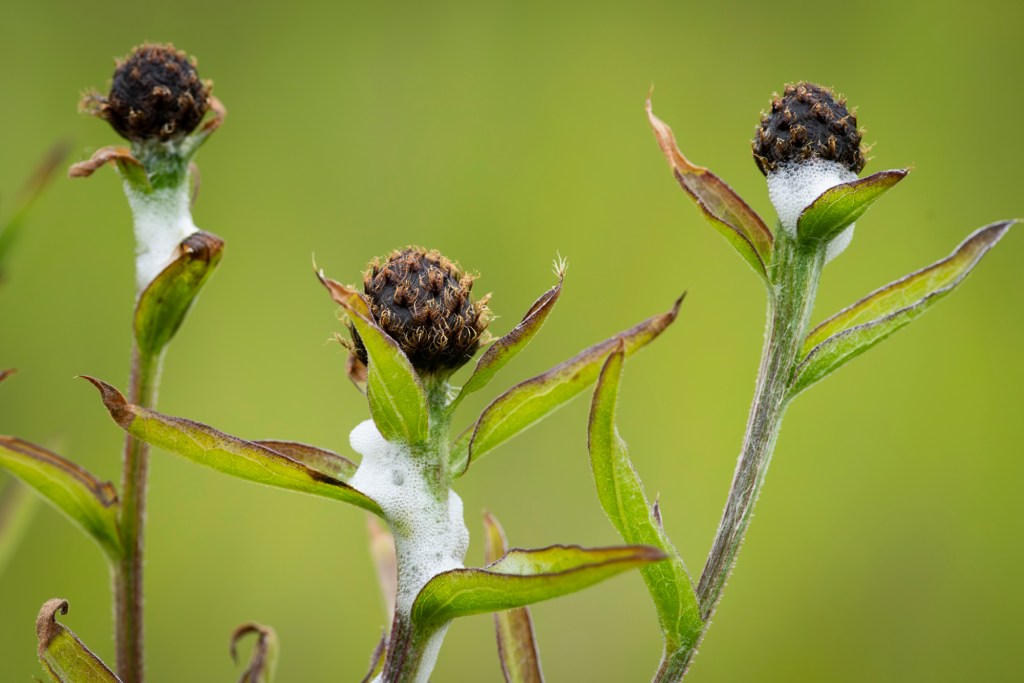
Plugs of other species have also been added, Common knapweed and Yarrow have both established well. The knapweeds are a favourite food plant of the appropriately named spittlebug, a tiny sap sucking nymph of the Common froghopper that hides itself from predators in a foam of bubbles – Cuckoo spit. This year it seems that every knapweed has them, each yet to open ‘hardhead’ bud that gives the plant its alternative name, has a side dressing of soapy froth.

Hardheads & Cuckoo spit.

As some plants were being reintroduced many others returned without help, either from the fields own seed bank, woken by warmth and light, or carried here by the winds. Wind borne biennial Marsh thistles arrived in year two, they can be invasive but are perfect bee and insect food, like the yet to flower Scotch thistles that have also turned up, they’ll be thinned only if they get out of hand. Both are covered in long sharp spines that show no respect for gloves, the porcupines of the meadow.

Marsh thistle

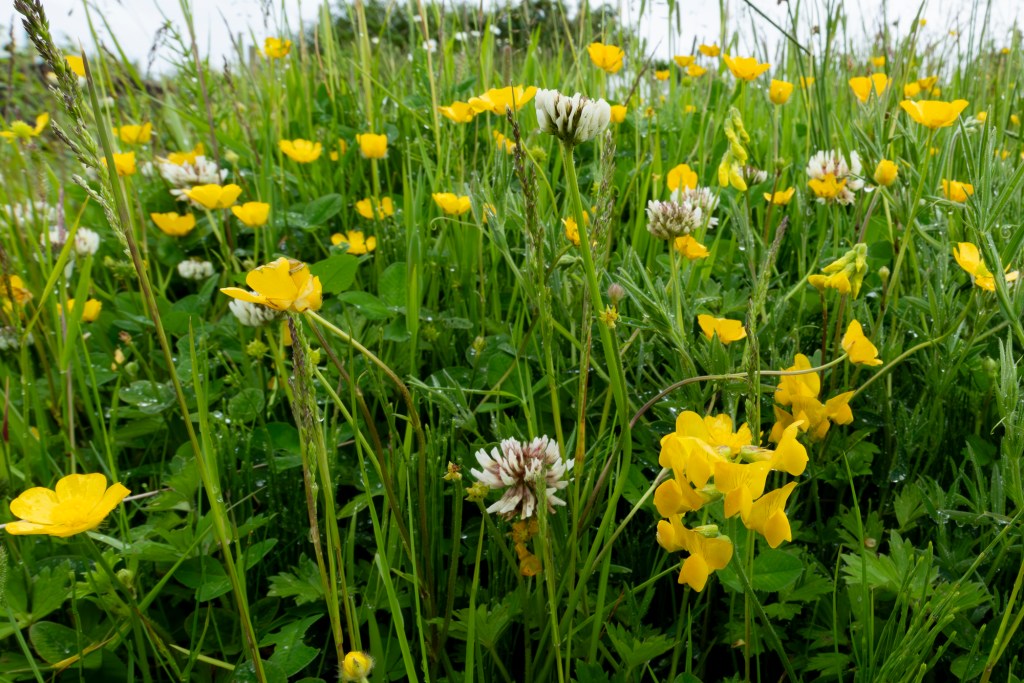
While most plants stretch upwards, showing off their wares to passing bees and butterflies there are also low level lurkers. A home made mix of native grasses with added ground hugging white clover and birds foot trefoil seeds, sown on a bare bank, has grown well. As with the rest of the meadow Creeping buttercup has inevitably introduced itself to the mix, an invasive plant that is a pain in the garden but welcome elsewhere.

Creeping buttercup, clover and (centre right) Birds foot trefoil.

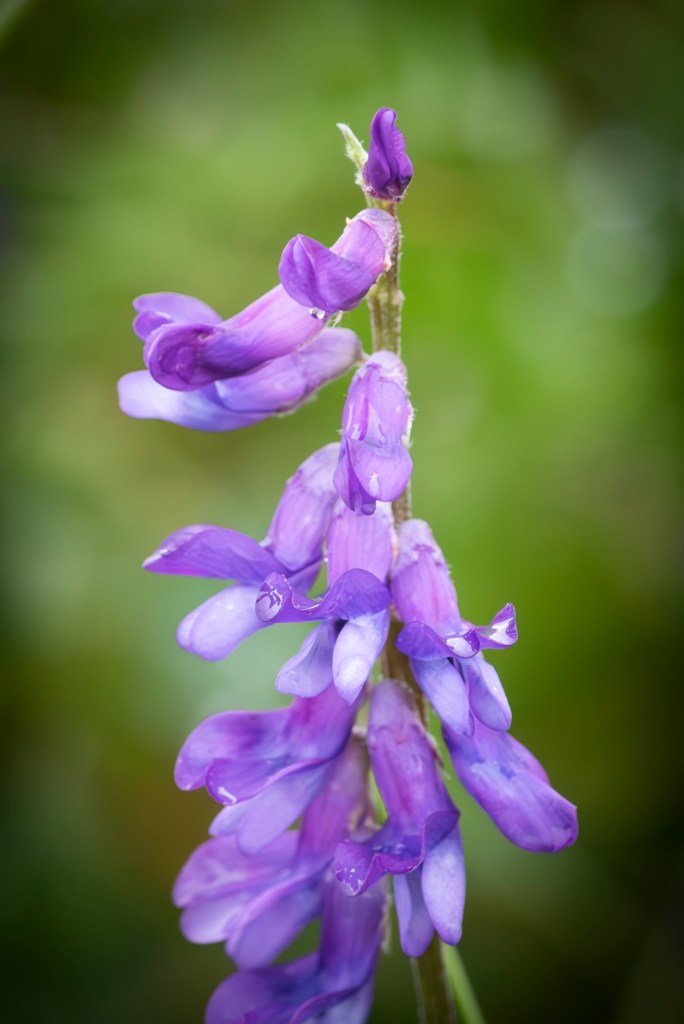
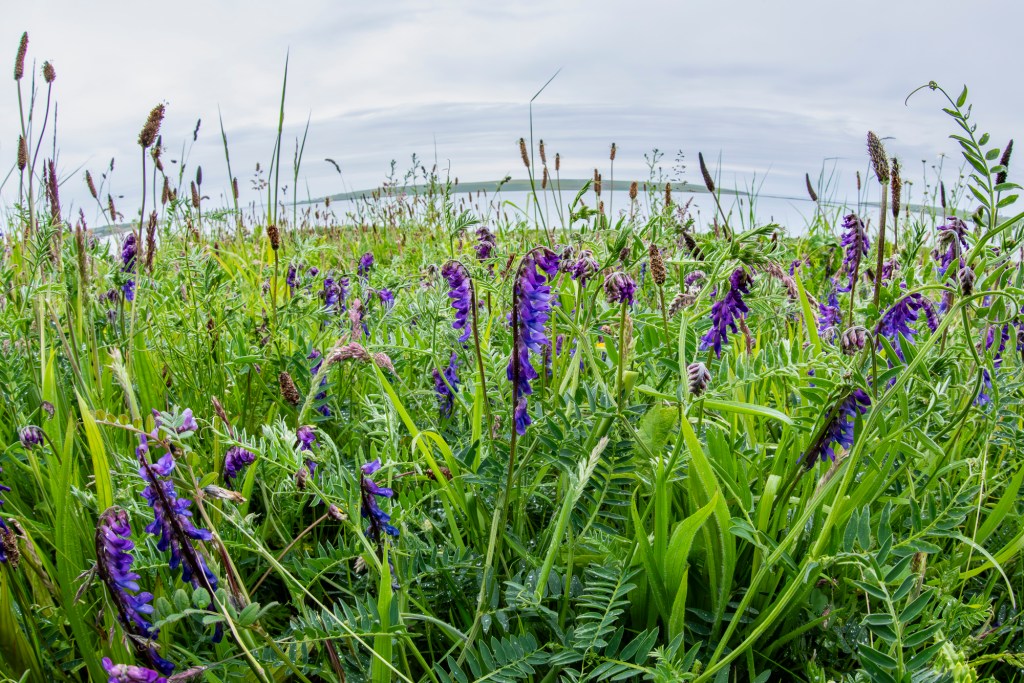
A wildflower that is equally happy at both ground or eye level, although for the latter it needs a handy shrub or fence to climb, is tufted vetch. A member of the pea and bean family that spreads by seeds cast from tiny black pods. Also known as the Cow vetch. It was believed in the 19th century that a cow grazed on vetch would be more easily wooed by the bulls advances.

Tufted vetch.

A surprise arrival for this year is Common cotton grass, as its name suggests it’s not a rare plant, at this time of year the moors here are dusted white with countless seed-heads, bobbing and swaying in the breeze and giving movement to the land. There are three species of Cotton grass in Orkney and the surprise is where it’s growing. The common variety likes the wettest spots, happy in standing water. In the meadow it has popped up, after one of the driest Springs on record, in what is probably the driest part of the meadow. As with most of the plants pictured here, I photographed it just after rain. Once used for stuffing pillows its normally fluffy seed heads were sodden but still beautiful. I hope it spreads.

Cotton grass.

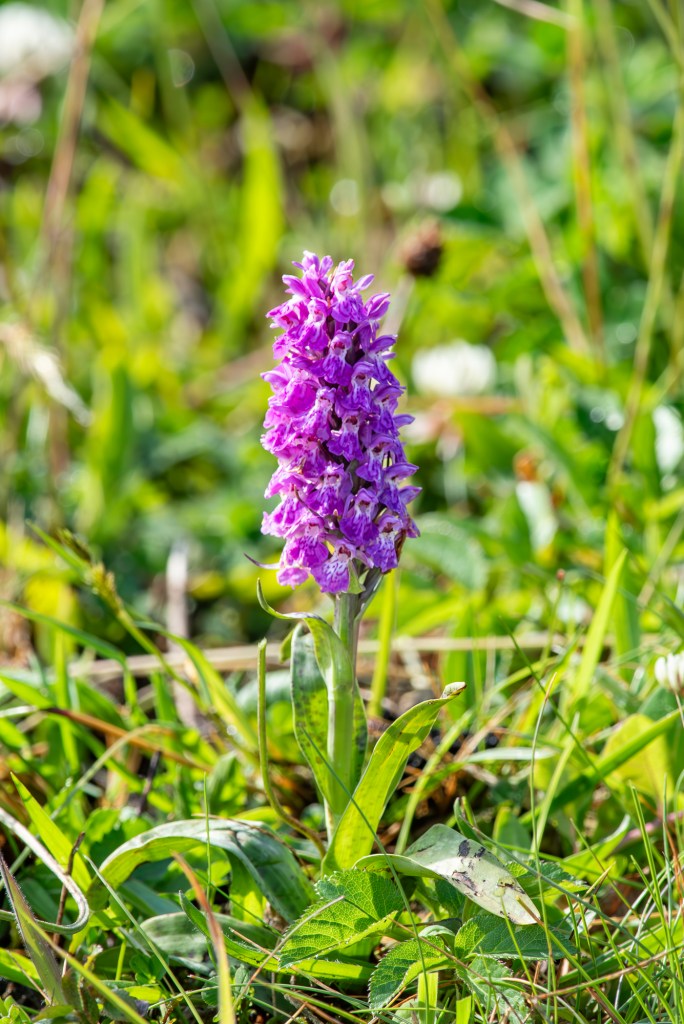
The one species we really hoped would appear, is the Orchid. A plant that is almost impossible to introduce unless specific fungi, with which they form a symbiotic relationship that allows seeds to germinate, and then seedlings to develop, are already present. Last year a single Northern marsh orchid appeared, this year there are three, from seed to flowering takes three to five years, the new meadow is four summers old. With 21 species of orchid in Orkney, fingers are crossed that others will pop up as time goes on.

Rain.

Our dry spell came to an end on the weekend past. After weeks of barely a drop of rain, a period that has seen burns run dry and ponds shrink to a third of their size, the heavens finally opened. The Saturday was dreich, one of those days when the cloud clung grey and heavy, hard to tell where sea ended and sky began. A day to be inside looking out. The early hours of Sunday brought a slight change. High winds with accompanying rain, blattering against windows and skylights, loud enough to disturb your sleep.

A dreich day – indoors looking out.

Since then normal Orkney service has resumed, bright days and showery days, much more akin to a summer in the far North of Scotland. In the garden it also continues to be all change. The last of our camassias are fading to seed. The blues went over first, a later flowering cream variety whose name is long forgotten, is just about done, only a handful of spires have tight, yet to open, buds.

Camassia

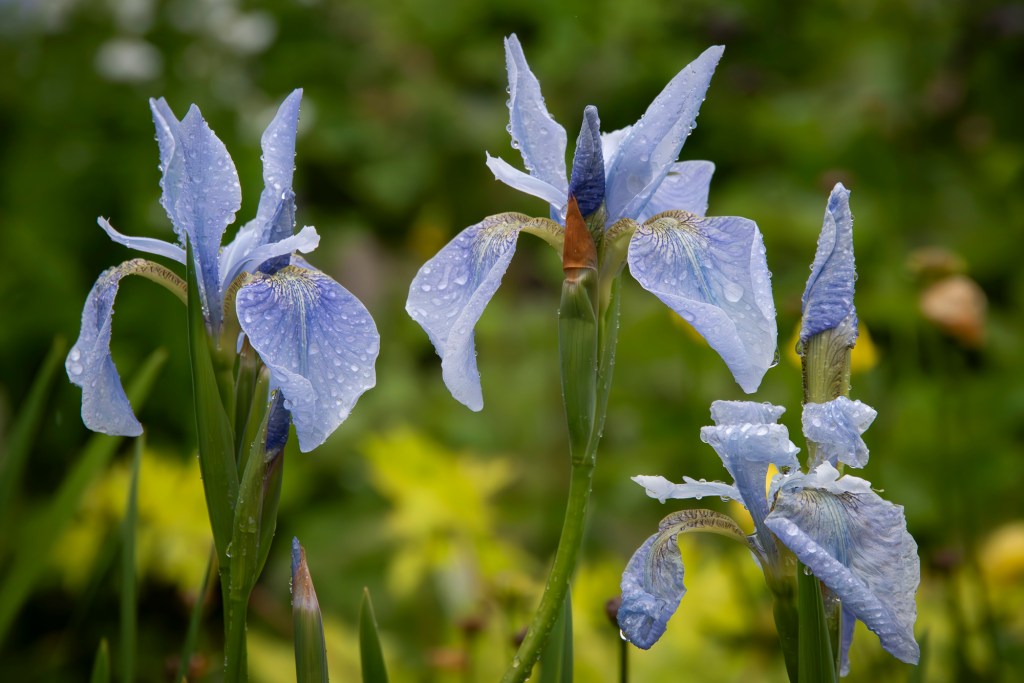
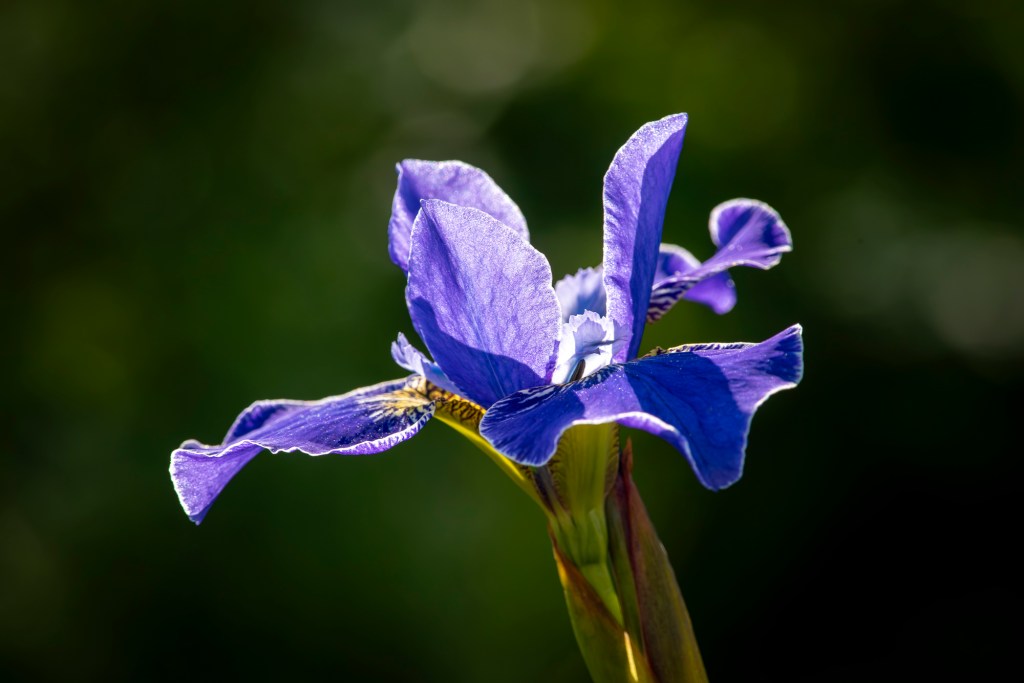
As the camassias fade others take their place. Spears of iris sibirica have unfurled this week, once open, their broad egg shaped sepals make perfect wide landing strips for bumblebees. As with the camassias the blues open first, of the half dozen varieties we grow silver edge and paler perry’s blue, (pictured top) are probably equal favourites.

Silver edge

The first bottle brush spikes of red hot poker fiery fred are lighting up the rear garden.It seems a little bit early for them, for us they’re a plant that is more associated with late summers hotter colours, crocosmia’s and day lilies and the like. Perhaps it’s down to our dry spell.  

Fiery fred

A plant that doesn’t need bright colours to make a statement is euphorbia robbiae, the wood spurge. A perennial that as its common name suggests, is a lover of shade. The individual flowers are nothing to write home about but as a clump, it’s a different story. Dozens of small lime green flowers that are held above darker foliage come into their own, a plant that every garden should have. Saying that, for us it has proved to be temperamental, thriving in the back garden only in the shade cast by this low slung house. Jacqui, ever the patient gardener, has persevered and a second, this time front garden clump, that has been planted in the shade of a dry-stone dyke, is very slowly but very surely, establishing itself.

Rainy day euphorbia robbiae

Hostas do well here and despite a healthy population of slugs, they remain pretty much hole free. The largest we grow is sum & substance, a variety that for us, grown in the shade of a couple of sycamore trees, by summers end will comfortably reach waist height. Each individual leaf, of bright yellow-green, measures perhaps eighteen inches in length and at this time of year, when backlit by a late evening sun, shows off a simplicity of curves and lines that any sculptor would be proud to emulate.

Sum & substance

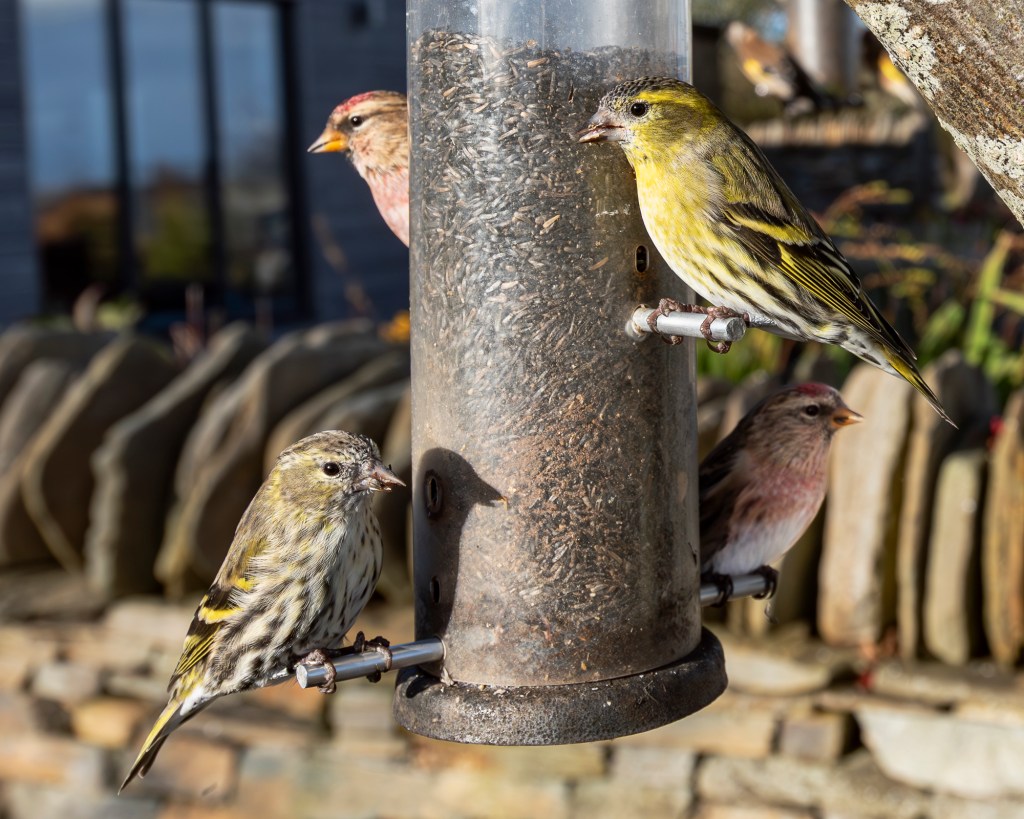
Sticking to the yellow-green theme, but this time with wings not roots, Siskins, a bird that when we moved to this garden was a rarity, but has since become a common summer visitor, have young in their nests. We’ve yet to see a youngster out and about but the parents are on invisible zip wires now, from feeder to nest, nest to feeder, rinse and repeat. A sisyphean task. Tame is the wrong word but they’re very tolerant of people, while Greenfinches and Goldfinches scatter if you stray too close to the feeder, the Siskins will pause, give you a glance, and then carry on as before. Sometimes, as feeders are topped up, they’ll sit a few feet away. A Siskin thought bubble would probably read “come on get on with it, there are hungry mouths to feed”.

Checking out the human…..

May the 19th.

Hosta patriot.

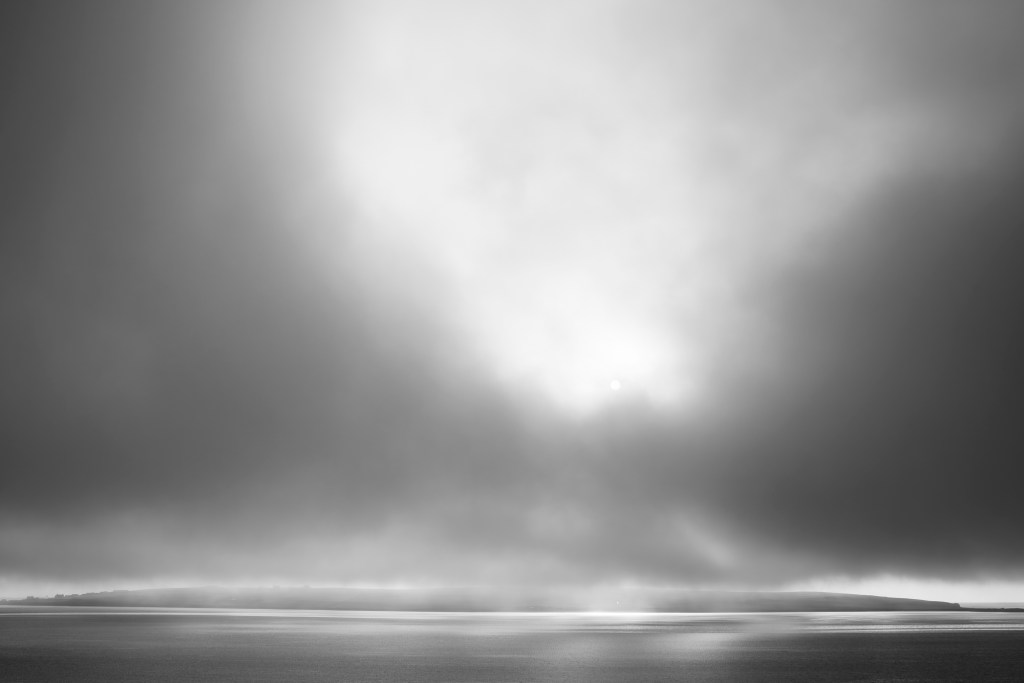
Our spell of dry weather is continuing. May so far has brought barely a drop of rain. Most days have been sunny, those that haven’t came without threat of even the lightest of showers. A  camera I owned as a child had an exposure setting of ‘cloudy bright’, a perfect description for those rare days when Sol has hidden his face. Despite the sunshine what we haven’t had are many haars, thick sea fogs that usually roll in like clockwork after a couple of days of warmth, so far, for May, just the one. The island of South Walls, just across the bay and linked to Hoy by a now permanent causeway, drifted in and out of focus as the haar thickened and thinned, eventually coming second to the sun, burning off in the heat of the day.

South Walls haar.

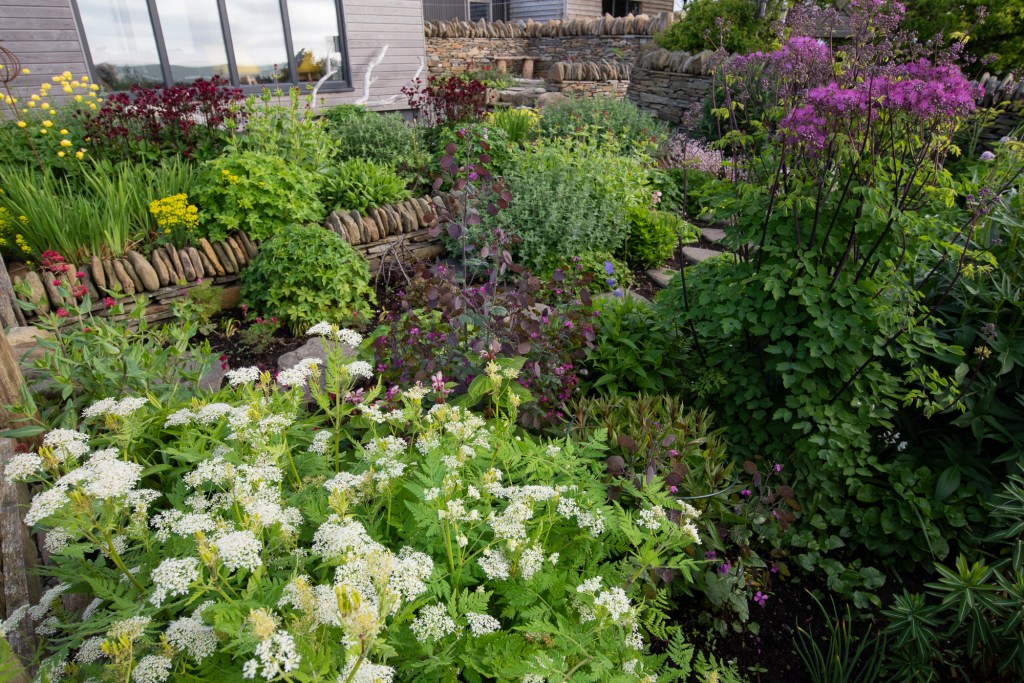
Although there are still a lot of plants that have yet to come into flower, it feels as if the front gardens especially, are on speed. With an occasional evening watering you can almost hear the plants growing. As others grow, a sweet cicely, myrrhis odorata , a gift from a garden on South Walls, is already fading, rushing to set seed before summers end.

Sweet Cicely, lower left.

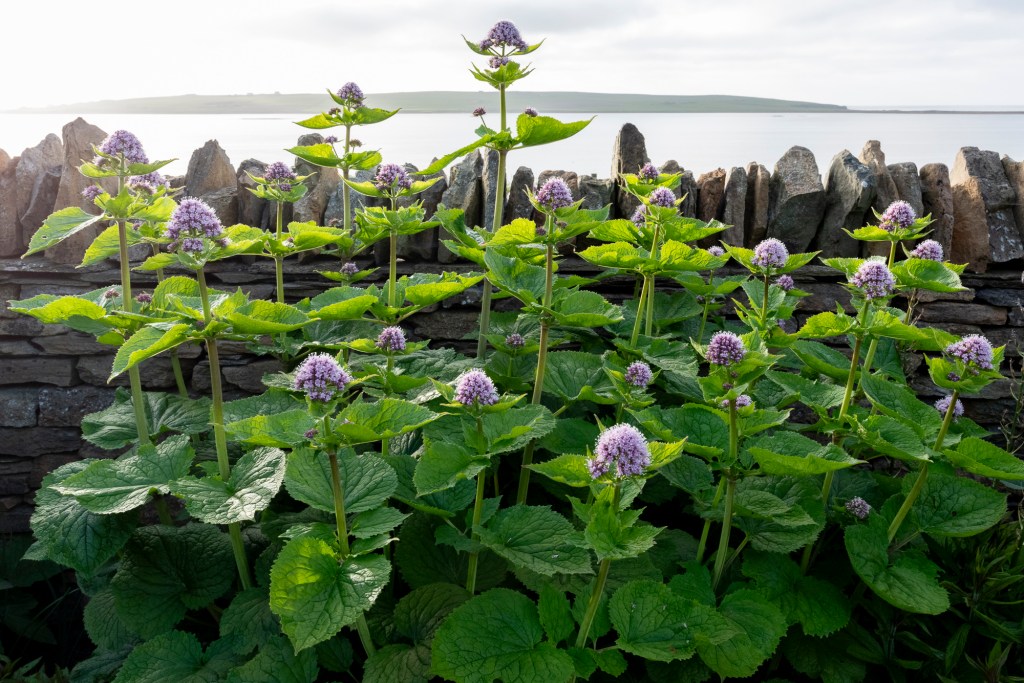
A front, and to be fair, back garden favourite, is the Capons tail grass, valeriana pyrenaica, despite our coastal aspect and often wild climate, it shrugs off salt laden summer gales and despite its height, needs minimal staking. It also looks nothing like a grass. One of those “will it grow here” plants that came from much softer climes, a plant stall on a lavender farm, that has proved to be bomb proof. 

Valeriana pyrenaica.

Another front garden good doer is the Leopard plant, ligularia othello, grown just as much for its large greeny-bronze leaves as it is for its late summer flowers. Unlike its hosta companion it suffers the occasional slug bite. Why our hostas, which down in Yorkshire often looked like lace curtains, are now ignored by slugs up here, is still a bit of a very welcome mystery.

Ligularia othello.

If a camera is to hand, a bulb that can’t be walked past without a photograph being taken, is the allium. A close relative of the onion and a bumblebee magnet. They’re a great cottage, or in our case, croft garden favourite, taking up minimum space and giving maximum impact. The books say they need a dry and well drained soil and in a normal year our soil is anything but that. Despite this they thrive and spread and clearly like it here. It’s a good thing that plants can’t read.

Allium purple sensation.

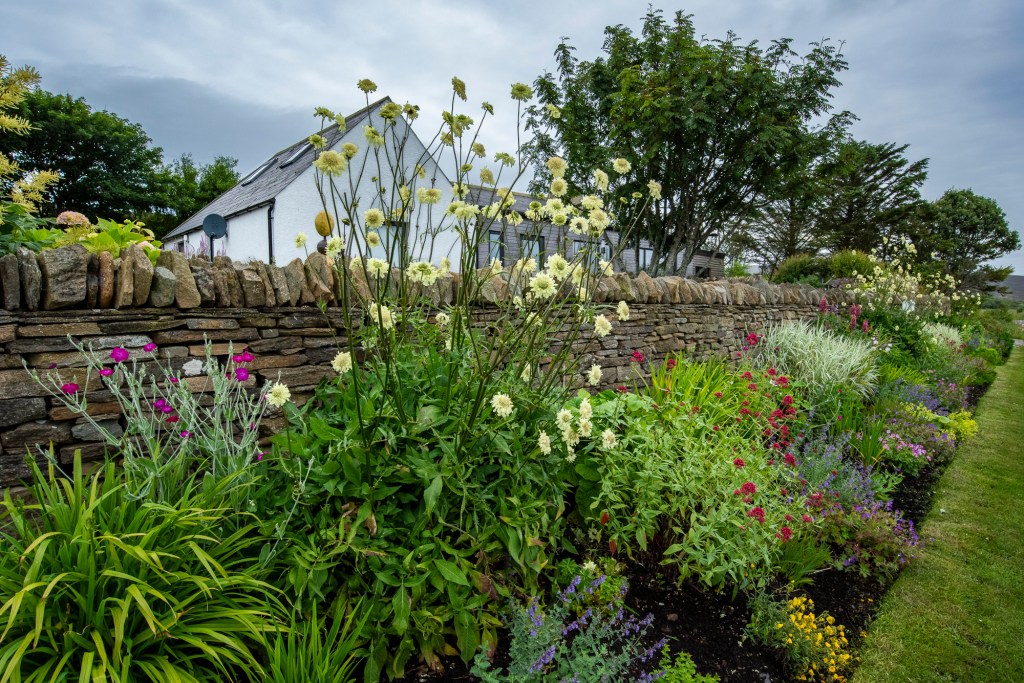
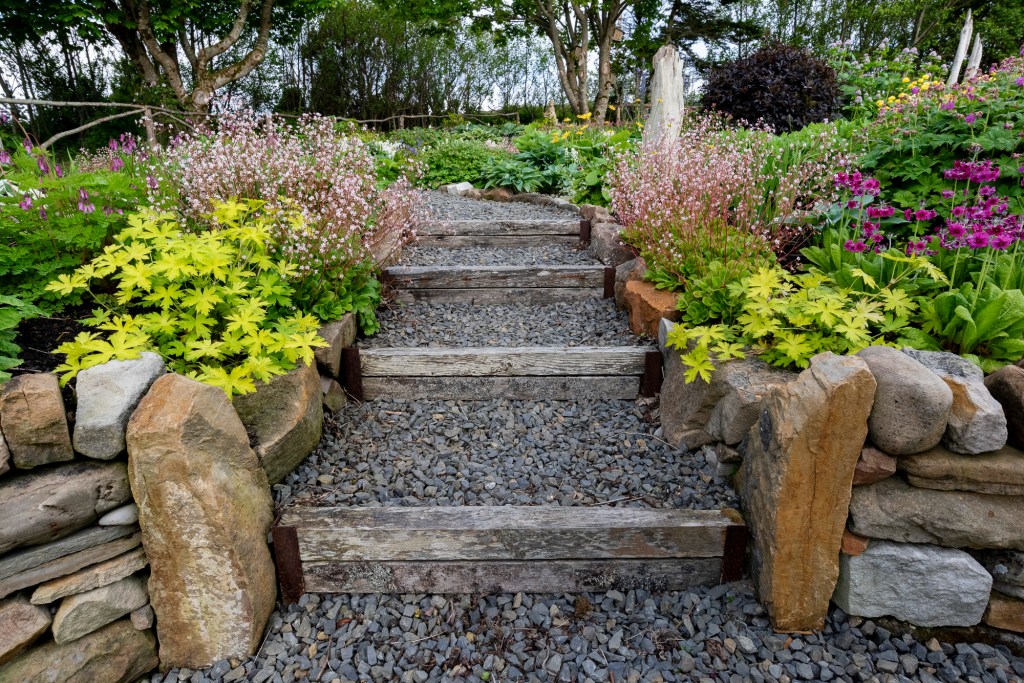
They say a garden is never finished and we’ve certainly got a few yet to start projects. Money is always tight and even if it wasn’t there’s a real pleasure in up-cycling or reusing. Our favourite shop is the shore, a place to find the ‘pennies’ (top stones) for dykes, sea worn slabs for stepping-stone paths and driftwood for fences. In winter past, a back garden slope that really needed a few steps, finally got them. As is usually the case, no expense was spent, the steps are old fence stabs, rescued from a steep sided geo, the supports are angle iron from an old bed frame that I found when we first cleared the garden with a mini digger. I can lay out the bones, construct a skeleton of drystone dykes and paths, but Jacqui is the one that adds the flesh and gives the garden life and love. A half year on, the steps with J’s planting and attention, look like they’ve been there for years.

In summer the best times of day here are either early morning or late evening. The light is angled, flowers and foliage are backlit, details are revealed that are lost to a harsh midday sun. On a morning, when the birds are just awakening, there’s the call of a cuckoo and the pleep of Oystercatchers starting to go about their business. In contrast, on an evening there’s a growing silence, a settling down, the sun dipping low, the light filtered by the trees before being lost to the hills to the west. It’s a close call but at this time of year at least, evening light just wins out.

Late evening.

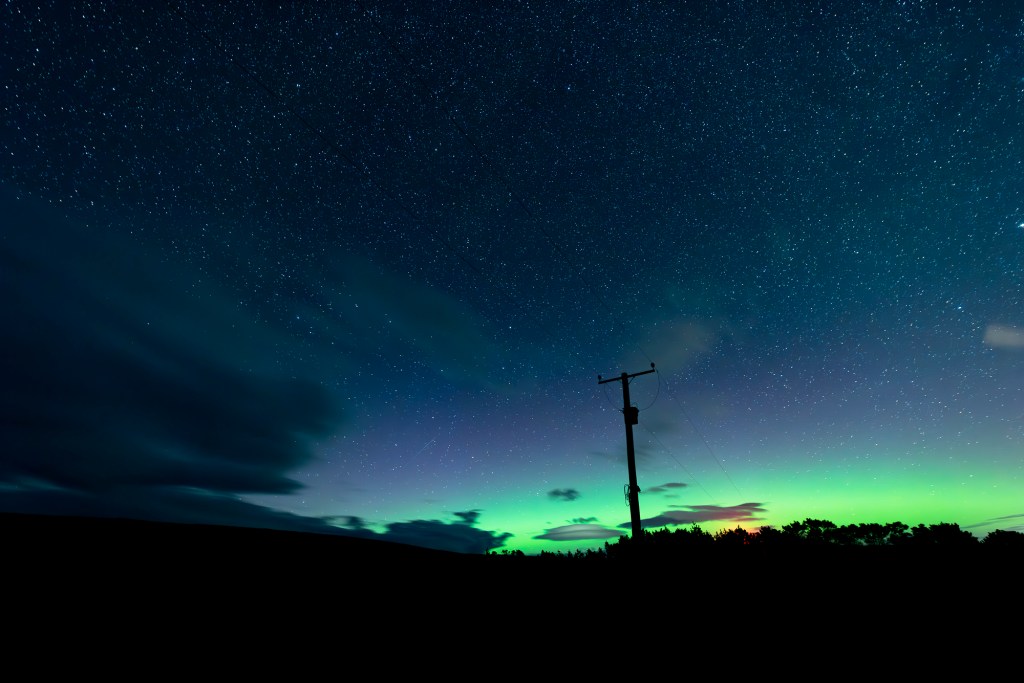
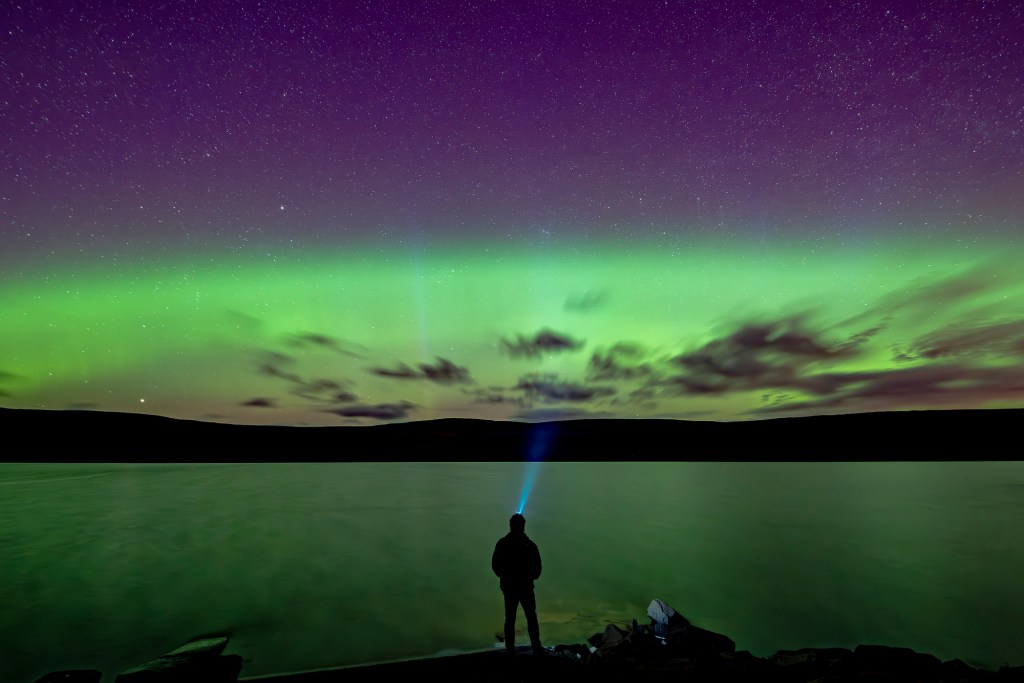
We’re rapidly approaching the longest day, we’re in the ‘simmer dim’, a time when the sun will barely dip below the horizon before quickly rising again. There isn’t really a darkness to the night now, just a few hours of twilight. At this time of year, before you hit the sack, the last thing to do is walk around the garden or down to the shore, it’s a magical time. It’s also the time of year when we say goodbye to the the mirrie dancers, the northern lights. An app still pings of strong displays but they’re lost now to the twilight. More than once this past couple of weeks, when you got your eye in, there has been the softest of green glows to the North, like the faint street lights of some faraway town hidden way over the horizon. We’ll see them again in winter, at a  time where the sun rises and sets within six or seven hours. Days that at the moment, with our seemingly endless summer, feel like they’re a million miles away.

Early May, watching the dancers finale. Heldale.

May the 5th.

April ended as it began, bright days with little in the way of rain, occasionally made cold by a breeze off the sea. As with February and March, a local weather station recorded the driest April in almost forty years. The first days of May have brought showers and the Lambing winds, a gale or two, whitecaps on the bay and a sea rough enough to see the lifeline ferry, that runs from Scrabster to  Stromness, seek shelter by cutting a detour through the quieter waters of Scapa Flow.

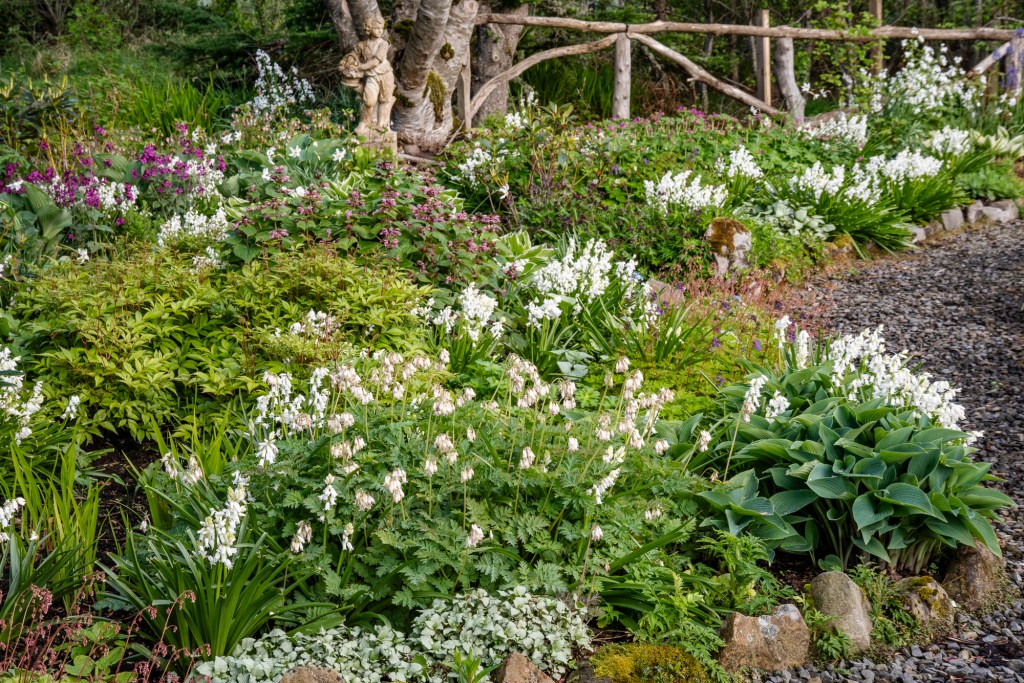
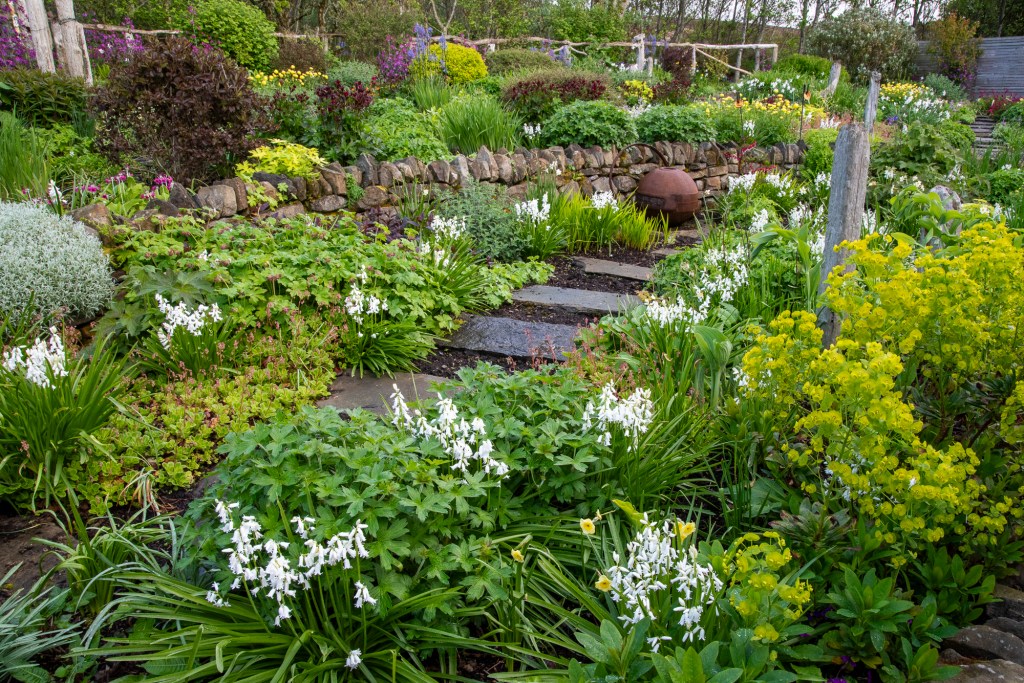
The winds didn’t last and in the garden, where Spring and Summer curveball gales are a fact of life, no harm was done. Anything that is leggy or thin stemmed, has, depending on the plant, either a discrete stake or a couple of hoops or for the likes of Catmints and Geraniums, a supporting corset of Alder twigs. At this time of year changes are rapid, this week the back garden is suddenly white, the last of our Daffs, creamy white pheasants eye, have opened, ditto an inherited white form of the Spanish bluebell. The latter aren’t something you might willingly introduce, especially where the native Bluebell grows, but they’re good for insects, were here already, and at dusk or on a dull day, they bring a brightness to the garden. They get a free pass.

Rear garden whitebells

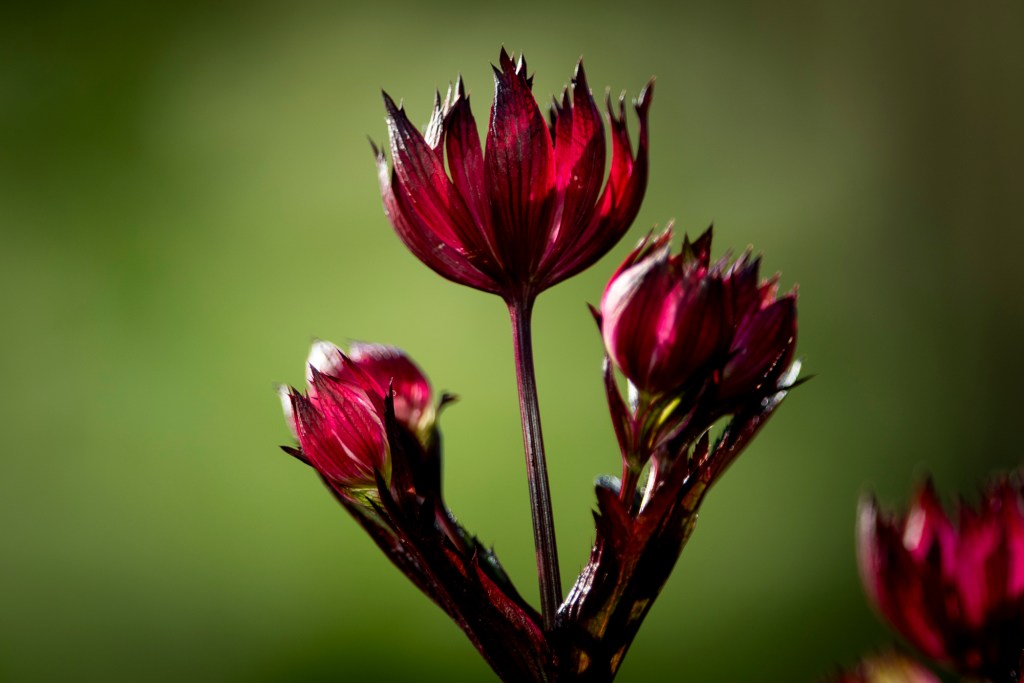
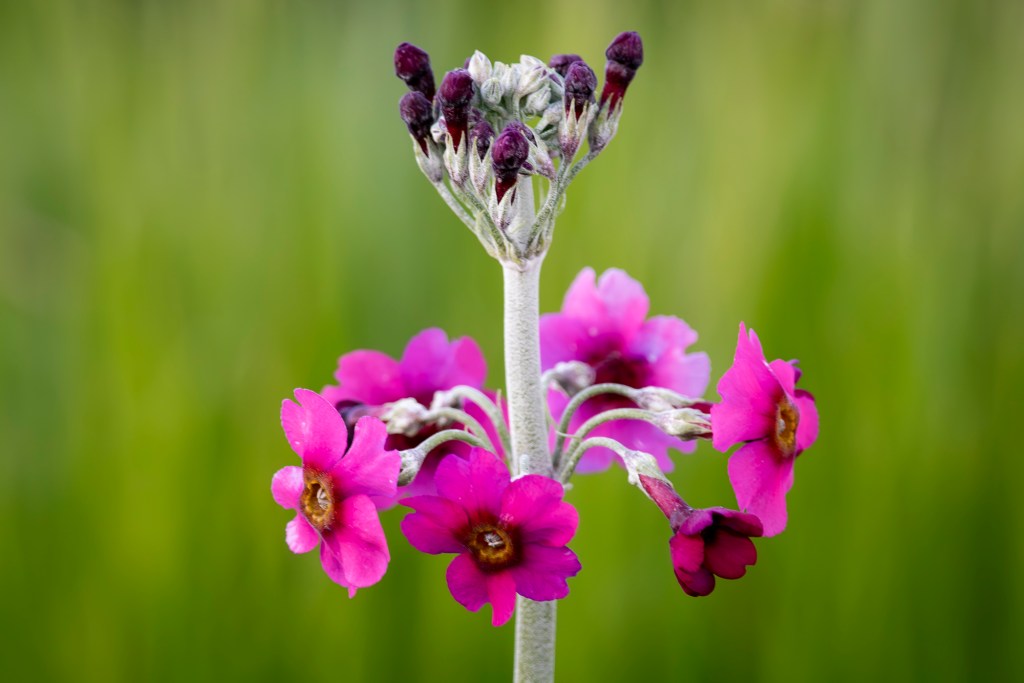
A few favourites have started to appear. In a front garden, Astrantia claret, which with regular dead heading will flower for most of the year, has come into its own. A new plant that has thrived despite our drought is Primula pulverulenter, they’re a genus that does well here, but as newly transplanted plugs in dust dry front garden soil, we had our doubts.

Astrantia claret
Primula pulverulenter

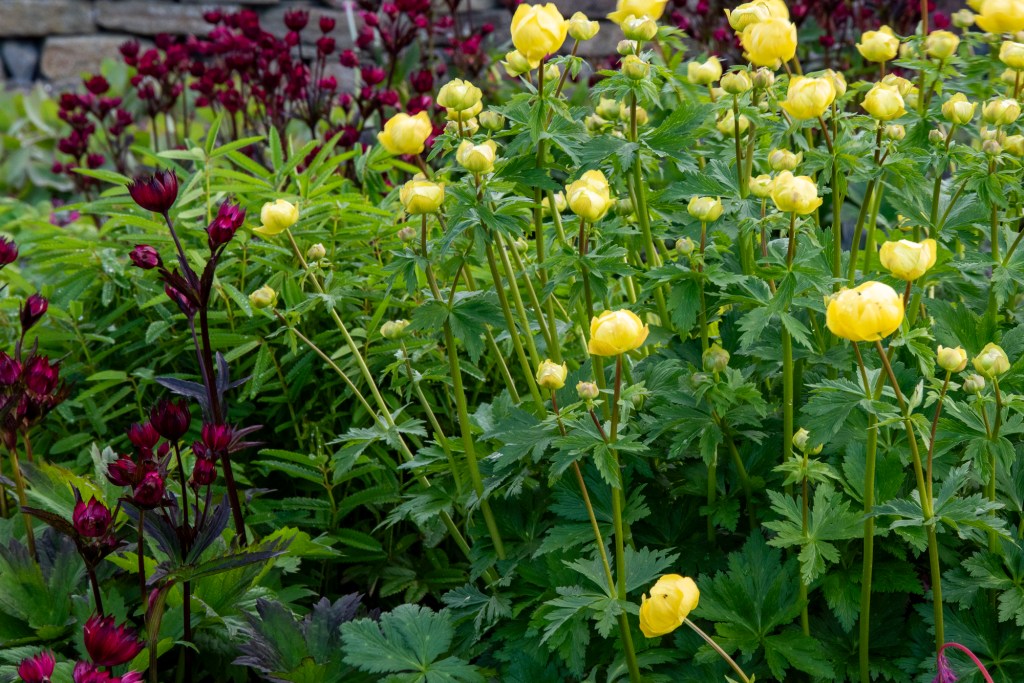
Another garden favourite is Trollius europaeus, a relative of the buttercup family that fortunately hasn’t the DNA of its wilder creeping cousin. It flowers for a while and then sits for the rest of the year as a well behaved clump of greenery. The bright yellows work well with dark flowered A.claret.

Trollius europaeus

Camassia are yet another favourite – it’s a long list. They hail from the pacific North-west of America. The bulbs are edible, once a staple of Amerindians, who prepared them in fire pits. They’re a plant of damp meadows that thrive in our cool and, with the exception of this year, usually wet soil. We grow both cream and blue varieties and the blues are always the first to flower. They don’t last long, by the time the top flowers of a stem are out, those at the bottom are already fading. When the time comes to split them, the spares will go into a boggy spot where we’ve planted Alder and Aspen, once there they’ll be left to naturalise and do their own thing.

Camassia

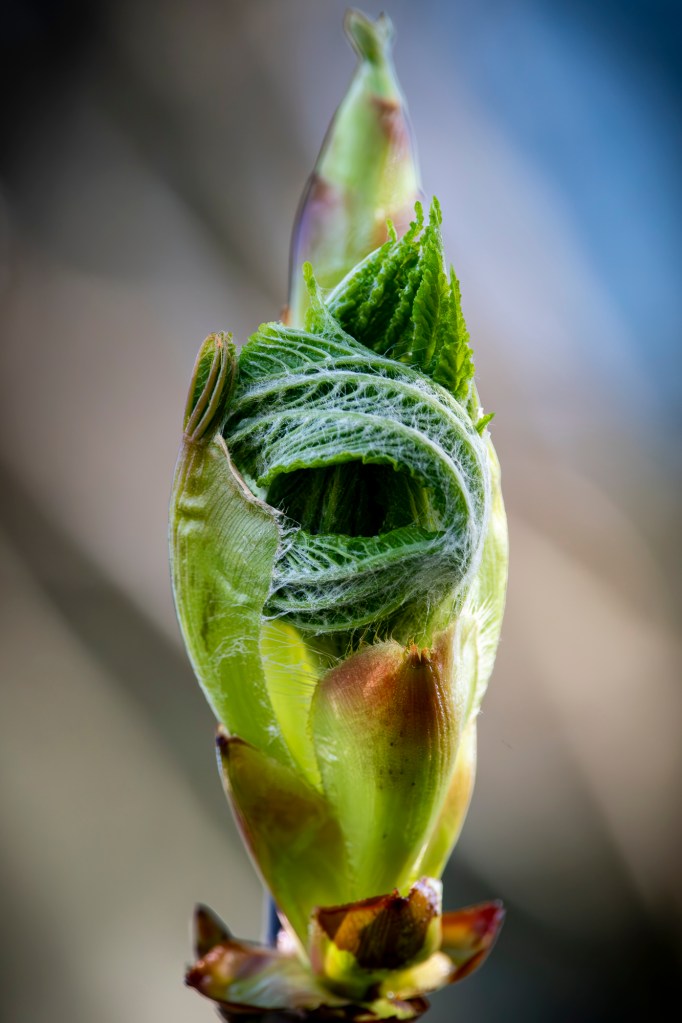
Despite all this growth and unseasonable mildness, most of our trees have yet to come fully into leaf. At the northern edge of the garden, tucked among a few inherited Larch and Sitka spruce, there’s also an inherited Horse chestnut. It’s thin and leggy, stretching for light. Not a tree for an edge of moorland spot in Orkney. I often wonder if it was picked up as a conker further South, grown on and then planted out in the best shelter that could be found.  However it arrived, it’s determined to grow, each spring the leaves  slowly unfurl in hope and stay bright and lush against Larch and Sitka, until we get a gale from the North. Green then turns to crispy brown. In some summers, depending on the will and direction of the wind, the leaves will last for a few weeks, in others until late Autumn.

Horse chestnut leaves are slowly unfurling

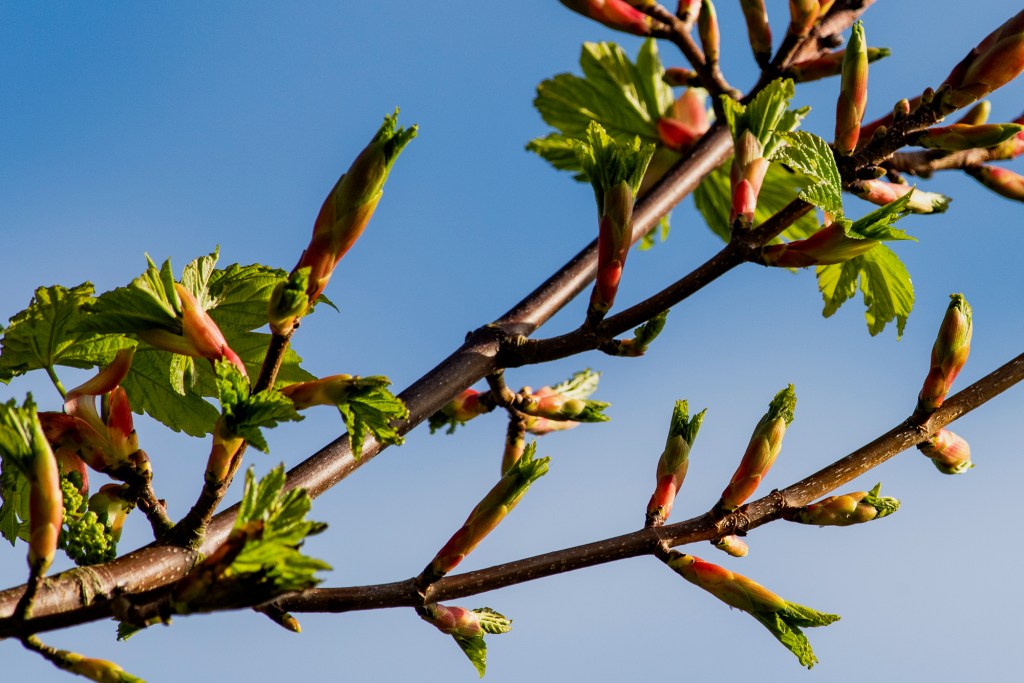
A tree that does better here, but for us is a painfully slow grower, is the Sycamore. Three were here when we arrived and more have since been planted. The ones that were here must be many decades old. Their leaves are also just starting to unfurl, fat pink buds turning green. In a few weeks racemes of lime green flowers will hang in the canopy and the trees will literally buzz with life, time to crane your head and watch and listen as dozens of bumblebees busy themselves amongst the upper branches.

Sycamore buds

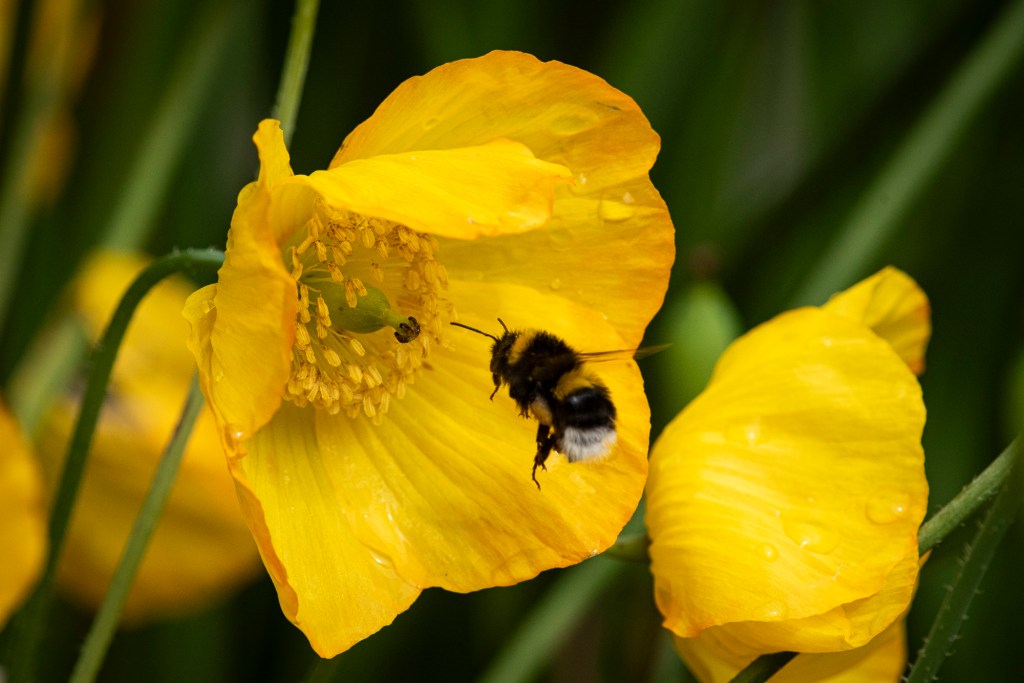
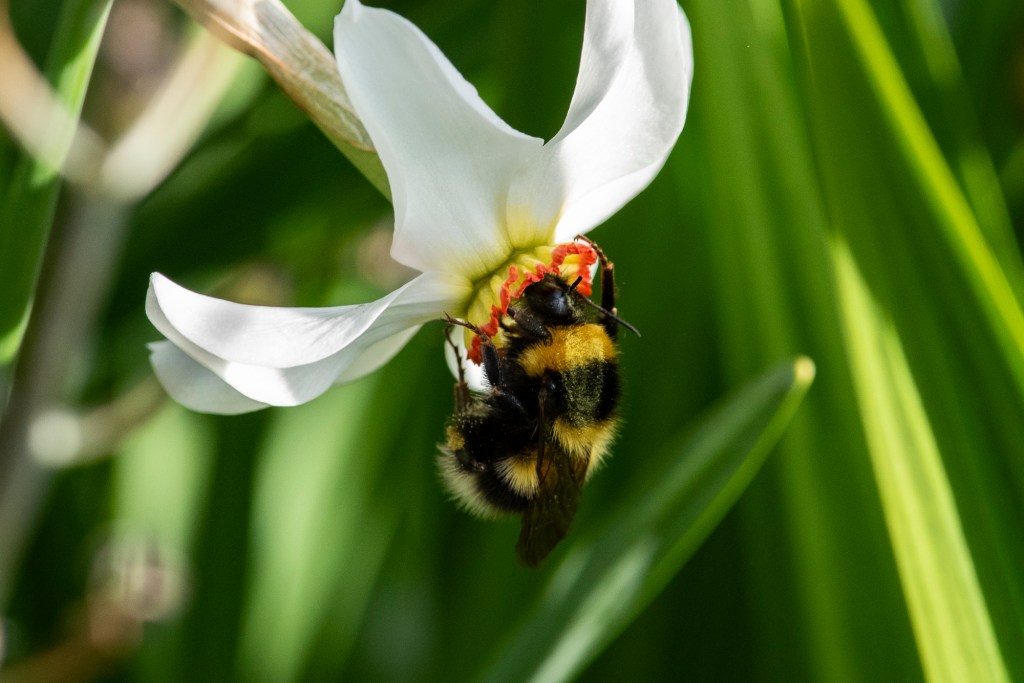
As the year goes on, we’re seeing more and more bees on the wing, as with the swallows and cuckoos, both of whom arrived in mid April, bees up here are slow to appear. I watched a queen bee, either a white or buff-tailed, go from various flower to flower, delicately probing each one, when she reached a pheasants eye daffodil she made me smile, ladylike manners forgotten she clung to the edges of the flower and dived in head first. Watching her woke a childhood memory, a cousin and myself, on a hot summers day, dunking for apples in a bucket of ice cold water.

Dunking for nectar…

A walk to Heldale.

Greylag

With our unseasonable dry spell continuing, most of the past week was spent in other gardens. Like many islanders, when it comes to earning a crust, we wear more than one hat. One day you’re selling plants, another day antiques online, the next might be gardening or dry-stone walling. This week, for me, it was gardening, cutting and planting a double screen of grey willow for a new garden a few miles away. We don’t go mad, working part time, happy to work to live rather than live to work, enough to keep the wolf from the door. With willows planted, on Friday, while Jacqui prepped some plants for sale, I took myself off on a favourite walk, to the valley of Heldale. Walk half a mile along the road and then follow a stone track up into the moors. At first, as you leave the road, there’s a flat landscape of mixed habitats, Grasses and Heathers and wet spot Rushes. It’s a home to breeding Greylags (pictured top) and Curlews. At this time of year, the male Curlews rise over the ground like Larks, soaring upwards before falling leaf-like back to earth, marking their territories with a haunting bubbling call.

Curlews over Heldale.

As the track climbs higher, heather wins out. To your left though there’s a shallow valley, a place where native willow scrub thrives. The willows are rarely more than head high, chastened by the winds. They never leave the valleys, there’s an invisible growth line that’s never crossed. Tucked among them are dozens of bird sown rowan, silver barked and leafless, buds just starting to thicken.

Rowan and Willow scrub.

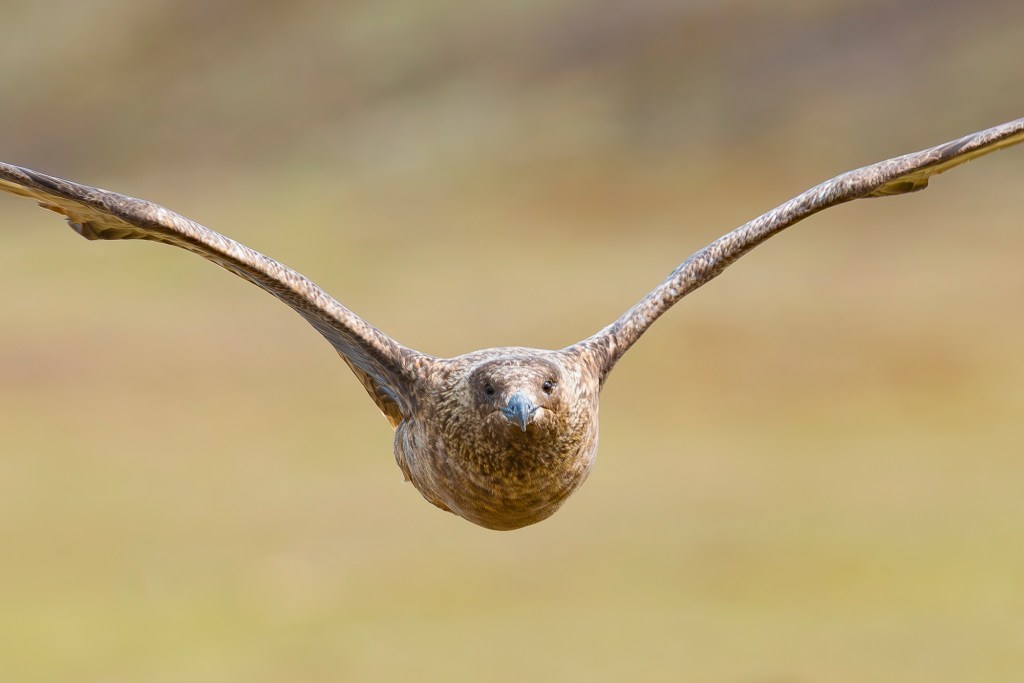
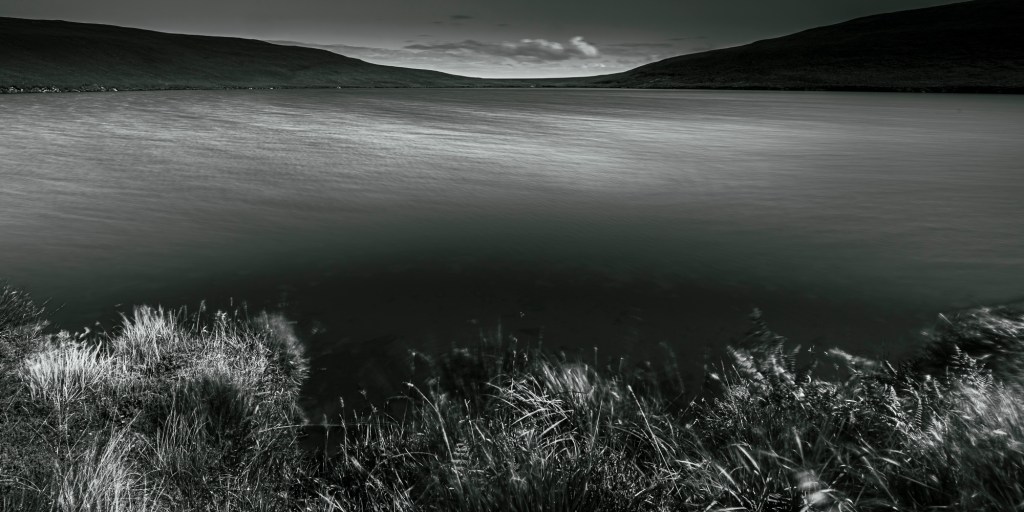
After a mile and a half or so, you rise a crest on the track and a natural reservoir, Heldale water, comes into view. A wide ribbon of silver in a landscape of browns and greys. Supplier of potable water to this end of the island. Out on the water, too distant to photograph, were the black shapes of a dozen Bonxies, Great Skuas, newly arrived from a winter in Spain or Africa.

Heldale water

To the North-west of Heldale there’s Bakingstone hill. I wanted to see Eagles and Mountain hares and close to home there’s no better spot. I cut up from the reservoir, following a fence line that had long lost its purpose, bleached stabs and rusted wire, only useful now to the Meadow pipits who keep a lookout from the post tops. It’s not much of a climb, but despite our dry spell the ground is boggy and soft, making the going far harder than it should be.

Meadow pipit

As expected, Mountain hares were seen in numbers, most are wary, scutting away at the first sight of man. One though sat up on hind legs and watched as I passed by, if a hare can look wise, he or she did. As with all the other hares seen that day, he or she wore a piebald coat, the Spring moult in progress, half winter white, half summer brown.

At this time of year  Emperor moths are seen. As I climbed higher I saw males on the wing, brightly coloured fast fliers that at a distance are easily mistaken for butterflies. The females are larger and paler, a bluish-grey, and unlike the males they fly only at night. Tucked down amongst the heathers they are almost impossible to spot, given away only by amorous males who are drawn to the females by pheromones. Follow the male and you’ll find the female. Eggs are laid in April and May and the caterpillars, after a summer of munching on heather, will spin a silk cocoon and overwinter close to the ground, they’re the UK’s only native silk moth.

Emperor moths, female (top) & male

At the top of Bakingstone the ground plateaus and dries out, yet to green up heathers are crunchy underfoot. Here and there are pools of bright water, homes to whirligig beetles that constantly skate and circle. A shimmer of silver upon the skies reflection. To the west there’s the glitter of a sunlit sea. To the North, nothing but open moor, low hills, shallow valleys and countless lochans. The silence, on a still day, is deafening.

Looking West.

At the end of Bakingstone there’s a rock, dropped by a passing glacier, that’s big enough to show up on an OS map. A good place to stop and eat a chocolate bar before setting off home. The rock is covered in a mini forest of brittle lichens, silver greys and soft yellows, each of them decades or perhaps centuries old.

Looking North

To sit on the stone and crush the lichens would be an act of vandalism, so I sat on my coat on the heathers and realised, after a while, that I was being watched. The watcher given away by a bright eye and a pair of long furry ears.

The hills have eyes…

I went home via the waters shore. From the ridge a steep, and careful, foot sideways descent that occasionally needs the reassurance of grabbed handfuls of heather. As the ground levelled out more hares sprung from their forms, none of them pausing, each showing a clean set of heels. To the West, way up high, soaring on the updrafts, I saw three broad winged specks, white tailed eagles, the hares nemesis, a pair and a single bird.

In addition to the hares and eagles, I’d hoped to see Hen harriers and Red grouse. For the former a sighting is pretty much a given here, at home they’re a bird seen almost daily, either hunting the shore or quartering the moor beyond the back garden. Red grouse are here but are much more often heard rather than seen. As luck would have it the Harriers were absent that day but a few dozen yards from the track that would take me home, a pair of Grouse flushed from under my feet. A glimpse of a brief few seconds, all sunlit red and ginger-black, curling away at fence post height.

Red Grouse.

April the 13th.

Lunaria annua.

April so far, is following the trend set by March, unseasonably dry and warm days with little in the way of rain. Trees in pots awaiting new homes are being checked and watered almost daily. A sack of wild garlic, brought home from a garden where it grows thick as grass, has been scattered and planted beneath the Red alders that shelter the rear garden from the worst of the westerlies. The ground was like dust, once planted, a hose at full stretch with the jet at full power, just managed to reach them.

Wild garlic.

Despite the warmth, gardening here is a slow burn start, in the rear garden we’re still on phase two of the daffodils, ‘Tête-à-tête’ have gone over, double headed Thalia has opened, but a week or two yet before phase three, Pheasants eye, the last of our daffs, will start to unfurl and flower. A new addition to the garden is a delicate pale blue Muscari, valerie finnis, definitely a keeper.

Narcissus thalia.
Muscari valerie finnis

In the front gardens perennials are starting to clump up. With no trees to shade it, the front catches the most sunlight. When we laid out the garden the decision was made to create three small areas, each bounded by stone dykes, rather than have one long and narrow space. With the sea only a couple of stone throws away it has  worked well, the dykes giving shelter and just as importantly, trapping warmth. Of the plants we grow there, first out of the blocks is a Bleeding heart, dicentra formosa, a magnet for early flying bees, not far behind is Honesty, lunaria annua (pictured top), a useful pollinator that is left to self sow, popping up wherever it wants.

Dicentra formosa.

While the sun shone a pleasant task was to walk a mower over the meadow, not to cut the grass, that at this time of year has still yet to turn green, but to top off the rushes. They’re a lover of damp places and we’re lucky here to have a mix of soils. The meadow faces east, sloping gently to the shore, but the ground also undulates north to south, rising and falling like a gentle swell on the sea. High spots tend to be dry, low spots wet. The upside is that you can grow a wide variety of wildflowers, the downside is that the rushes, if left unchecked in the damper spots, will swamp out everything else. When I started to mow a pair of Greylags were grazing the yet to turn green grass. They tolerated me at first, walking away, head to one side, keeping an eye on me just in case I was following. As the mower got closer nerves got the better of them, taking to the wing and settling at the edge of the moor, honking and chuntering at the inconvenience of it all.

The neighbours aren’t happy….

At the bottom of the meadow, where the ground levels out before falling to the shore, it is permanently wet, squelchy in even the driest of years. We planted a long thin coppice of grey leaved willow and with an excavator, also dug four ponds, three for ourselves, plus another for a like minded neighbour. At this time of year the willows are a picture, yet to come into leaf they’re clothed in yellow-green catkins.

Willow catkins and a male Reed bunting.

The ponds are slowly starting to naturalise, well worth the worry and crossed fingers, that the sunk to its belly excavator, wouldn’t get stuck. As hoped, they’ve proved to be a draw for wildlife. Last week saw Curlew and Oystercatchers probing the muddy edges, the first Swallow was seen this week, soon they’ll skim the water, blue darts, drinking and hawking for insects. In the rough and never mown ground between the ponds and the shore, a pair of Mallards are nesting, ditto the Greylags who last year hatched a half dozen goslings. Herons are regular visitors but the highlight this week was a brief visit from a pair of Teal, the uk’s smallest native duck. A bird that gave its name to a shade of green.

A drake Teal

Clear skies brought the mirrie dancers, they also brought moonlight and the moon will wash out all but the brightest aurora. An app that pings of a possible display also comes with the caveat of a rising moon spoiling the show. Most nights brought a faint glow of green and nothing else, but one night stood out, the aurora streaking high into the sky above the house. It’s impossible to correctly expose both the moon and an aurora in the same frame. One needs a fraction of a second exposure, the other many full seconds. In the photograph below the starburst top left is the moon. Setting a small aperture on the lens gave the starburst, the overexposed moon did the rest.

March the 30th.

As March draws to a close, it feels as if the door to Spring, ajar for a while, has finally been thrown open. It’s still early days, weeks yet before the garden is full of colour but changes are seen daily now, buds are swelling, catkins are open, birds absent since autumn are returning to the garden. With the arrival of british summer time, dusk today will fall well after 8pm. As with February, March brought little in the way of heavy rain or severe gales, the days that spanned the first day of spring were especially beautiful, bright and flat calm. 
The first day of Spring, the village of Longhope, a few minutes before sunrise.

It’s an unwritten rule here though, that you can’t have a spell of sunshine without an inevitable haar, an all enveloping sea fog that brings with it a background noise, the low rolling boom of a distant foghorn. Warm days brought a few, each drawing a veil over the land, stealing the view and washing the colour from sea and sky. But a haar is also a good thing, forming when warming air moves over a cool sea, rare in the winter, they too are a sign of spring.

North Bay haar.

So far we’ve only seen one queen bumblebee, a buff tail, rescued half dead from a bare patch of soil and given a sip of sugary water before being placed on the open flowers of a Ribes. We watched as she revived, shivering and vibrating to generate heat, I checked back a while later and she was gone. She was flying too early but as we move into April we’ll see other queens coming out of hibernation. At the moment there’s a limited menu, there are bulbs in the garden and celandines in the shelter belt but the best early bee magnets here are Ribes, flowering currants. We inherited a few that flower pink, all had gone feral at the edge of the moor, and have since added white flowering icicle. They strike easily from cuttings and offspring from both are now dotted here and there, a half dozen in the garden, more at moorland or shelter belt edge, wherever there’s a space. 

Ribes icicle.

The first of the Siskins and Lesser redpolls have arrived, both are small and feisty, taking on all comers at hanging feeders. They punch well above their weight. They’ll stay for the summer and at the moment both can be counted on the fingers of one hand, before too long we’ll count them in tens.

A male Lesser redpoll.

In late Autumn a male Great tit arrived, a rare bird for this neck of the woods. We expected him to move on but he has stayed, claiming a (house sparrow) nest box and calling for a mate. I’ve a feeling he’s in for a lonely summer.

Our resident Great tit.

Other birds are singing of spring, a pair of Robins have claimed a nest box that’s hidden amongst the lichen covered boughs of an old garden edge Rowan. The male standing guard and singing a warning to a second pair who have claimed a box fastened to the trunk of a Sitka spruce.

A Robin sings of Spring.

A Starling has decided a cleft in a stone dyke would be an ideal des res, in his case though not so much a song, more a collection of squeaks and whistles.

A Starling gives it his all.

In the wider landscape the first primroses are being seen. One day last week I walked a circuit from the farm of Snelsetter, cutting first across grass fields and then coastal heath, before returning back along the cliffs. In a few weeks the grasslands and heath will be bejewelled with yellow rattle and spring squill. At the moment that’s hard to imagine, it’s an exposed spot and after a winters scouring by salt laden winds, the land has yet to turn green. For now a landscape of bleached grasses, lichened fence stabs and a well worn sheep track. The hardy sheep that graze the headland use their common sense, the track leads to a sheltered hollow, on cold winter nights when I’ve been along there to photograph the aurora, I’ve shone a head torch into the hollow and seen dozens of eyes shining back at me.

Snelsetter landscape.

The Primroses were growing amongst cliff edge scree, a dusting of creamy yellow. Tucked down low, like the sheep.

Primroses.

From the track that leads to Snelsetter I’d seen two flocks of Barnacle geese, each of a hundred or more. They were on pasture that in summer will be a home to cattle. All were head up and alert, as if waiting for a sign. It was a surprise to see them, the previous weeks had seen skeins of them fly north over the house, we’d assumed they had all left. Later, as I cut across the heath, I heard them start to yap, taking to the air as one, sounding like distant hounds on the scent of a fox. The first skein passed way to my right, the second skein came low, directly overhead, so close that you could fill the viewfinder with just a couple of birds.

Barnacle geese.

They were heading due north, to the tundra of Greenland, where they’ll nest and rear young in a summer even shorter than ours. From where I stood, our house was also due north, as the goose flies perhaps four or five miles distant. Jacqui was in the garden, splitting plants for a garden gate sale, and I wondered if, in a few minutes time, Jacqui would also see them. She did, one skein out over the bay, the birds that passed to my right. The second skein, still flying low, went directly over the house. 

Next stop Greenland….

Watching them leave felt like saying a goodbye to winter, a confirmation of the arrival of spring. As I headed home, another confirmation, a small raft of Razorbills bobbing on the swell, returning to the cliffs after a winter at sea.

Razorbills.

Old acquaintances.

Yesterday dawned grey and wet, the first real downpour we’ve had for a while. Low grey cloud, clinging to the land like a wet shirt to skin. Despite the gloom, the rain was welcome, a local weather station recording Hoys driest and warmest February for 35 years. I’d agree with the driest, but at home many a day in February brought cutting Easterlies, straight off the sea with a windchill that you felt in your bones. Yesterday though was warm and calm, the rain clearing by midday to give an afternoon of mist and soft light.

Clearing rain, near Snelsetter.

I wrote last year of a Ravens nest that sits tucked on a ledge in a steep sided geo,  close to the farm of Snelsetter on the island of South Walls. I’ve kept an eye on it for a few years now and have become almost protective of the birds, seeking them out each Spring like old acquaintances. Hoping that they have made it through the winter.

An afternoon of soft light, Snelsetter coast.

The nest is an untidy pile of Kelp stems, every year winter storms wreck it and every spring the birds patiently rebuild it, collecting kelp from the shore and, when the major works are done, lining the nest with beakfuls of wool picked up from the heath.

Wool on the heath.

Last year you could see the nest from the clifftop, a narrow squint giving a birds eye and slightly vertigo inducing view. This year the rock that you stand on to look through the squint, has a fissure as deep as your arm, slowly but surely pulling away from the cliff face. The nest is in no danger, the rock, when it falls, will miss it by some margin but to stand on the rock now would be an act of folly. Plan B, to see if a clutch had been laid, was to fit a long lens, hold the camera in an outstretched hand, point down and shoot blind, firing the shutter repeatedly until the screen at the back showed that a lucky shot had captured the nest.

There were five eggs in the nest, four were near identical, the fifth, paler and speckled with black. Had it been early summer and a smaller species of bird, blame for the odd one out might have been laid at the feet of a Cuckoo. I knew the birds weren’t sitting, both had watched from afar as I walked along the headland. Only when I got close to the nest site did they acknowledge my presence, the male leaving the female to circle and kronk a warning. When I walked off he followed, settling a few metres away, scolding me from a tussock of yet to flower sea pink.

The geo is on a favourite walk but for the next few weeks I’ll cut across the heath to leave them in peace. A typical clutch is five to seven eggs, it may be that more eggs are yet to be laid before incubation begins. In a few months I’ll seek them out again. Hopefully there’ll still be two adults, with a least five youngsters in tow.

February the 16th.

Late afternoon, towards Caithness.

February has, so far, brought unseasonably dry days. We’ve had the odd spell of driving rain and the usual shower-sun-shower, rinse and repeat. But generally the days have been dry though often bitterly cold. Today, as with recent days, there’s a straight off the sea south-easterly, a cutting wind that goes through you rather than around you.

February sky, North Bay.

There are stirrings of life in the garden. Snowdrops are just starting to put on a show. At the moment, flower wise, they’re few and far between. Green spears of new growth are everywhere but it will be another week or two before the greenery is topped with nodding white bells. The Goldfinches that arrived earlier in the winter are still here, ditto Greenfinches and Chaffinches. There’s not quite the four and twenty Blackbirds required to bake a pie, (in reality they were probably Rooks), but again they are counted in numbers, one, a last years youngster given away by a beak that has yet to turn to adulthood orange, meets you at the shed door each day, following you inside to pick up titbits that are dropped as feeders are filled up.

The titbit thief.

In the wider landscape, after a few months of absence wandering the seas, Fulmars have returned. At the end of January we saw one or two and wondered if a storm had driven them temporarily to the coast, but numbers have since swelled and now, on any headland or clifftop walk, they’re a regular companion. They’re awkward on terra firma but are masters of their airborne environment, however blowy the weather, they ride the winds effortlessly, gliding past on set wings. 
A Fulmar is lit by the last rays of a setting sun.

The Fulmars nest wherever they can, some on towering cliffs, others, like the birds closest to home, on a low cliff that in reality is more a vertical grassy bank. A favourite spot to see them is close to Snelsetter on South Walls. There’s a sea stack called The Candle that in early medieval times was topped by a small hermitage and was a home to Christian monks. The monks probably didn’t know the Fulmar, the birds didn’t spread into Scotland until the 19th century, but where men once prayed Fulmars now nest. They generally get along, nesting in close proximity to each other but now and then, as small territories are reclaimed, a loud and guttural squabble will break out.

Settling a boundary dispute.

As some birds arrive others will soon leave, following an irresistible and instinctive urge to move on to pastures new. A favourite winter visitor is the Barnacle Goose. Smaller than the now resident in Orkney Greylag, they have striking black and white plumage and get their name from a medieval belief that they hatched from similarly marked Goose Barnacles. Before migration was understood, an easy enough two plus two makes five, especially if you only saw the birds in winter and never saw them nest. In autumn I was lucky enough to see them arrive, skein after skein, heard long before they were seen. They roost on the small island of Switha and I watched, in the half light of dusk, as each skein, at around a half mile distant, dropped from height to sea level, approaching Switha at wave height, like aircraft intent on avoiding radar. They’ll leave soon, back to Greenland to nest and rear young. A bird that in Orkney marks both the arrival of winter and the coming of spring.

Barnacle Geese.

Another favourite visitor is the Wigeon, rare summer breeders whose numbers in autumn are boosted by thousands of Icelandic, Scandinavian and Russian birds. They’re a bird of coasts and marshes and on Hoy we see them mostly in sheltered bays. Usually by the dozen or two but occasionally in rafts of many hundreds. As with most duck species the females are feathered for concealment when sitting eggs, all mottled browns and greys, without binoculars, and at a distance, they’re easy to misidentify. Not so the males who sport a chestnut head with a tell-tale mohican streak of creamy yellow. Add in a pink breast and silver-grey body and you have a bird that, binoculars or not, can’t be anything but a Wigeon.

A pair of Wigeon.

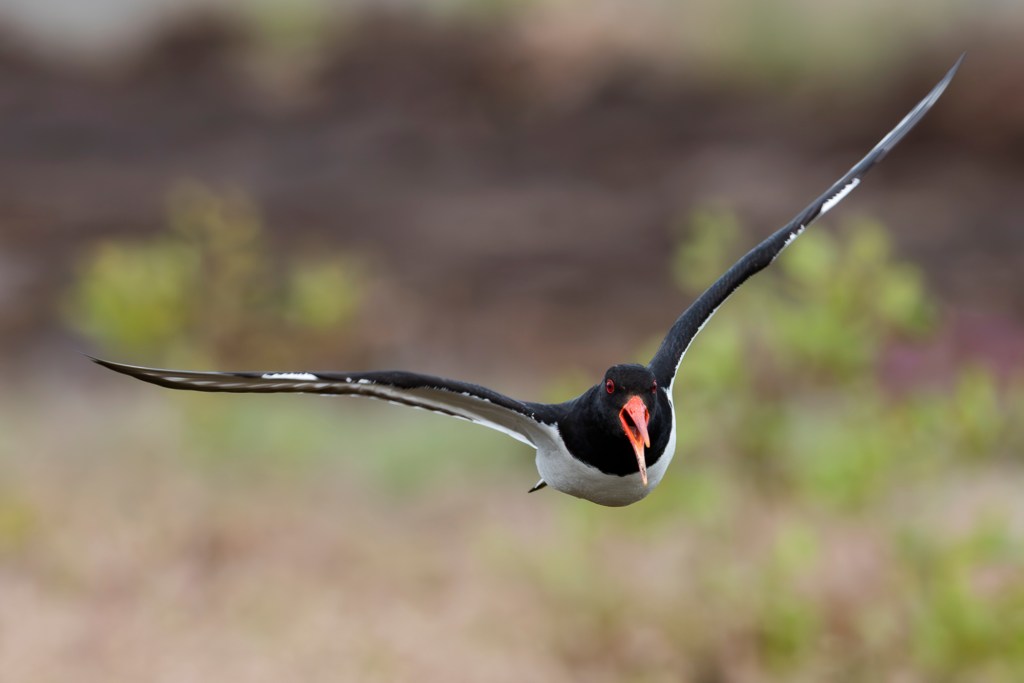
Oystercatcher numbers are also up. They’re here all year, but we see a rise through winter and spring, courtesy of visiting Norwegian birds They spend their days feeding on fields of sheep shorn pasture, prodding and poking the wet earth with long, carrot coloured, bills. They’re usually in the company of curlews and gulls and obligatory for grassland here, large flocks of starlings. Oystercatchers were once seen as only a bird of coasts, but during the last century they started to breed inland. When we lived in Yorkshire they were just as much a bird of moor and dale as they were of the shore. In Orkney they’re the Skeldro or the Chaldro, a scolder or teller off. An apt name for a bird that if you wander too close to its nest or young, will scold you constantly with a shrill and distinctive high pitched peeping.

Oystercatchers.

February also brought the Snow moon, so called because in Northern hemispheres Februarys full moon often coincides with snow. To the Celts it was the storm moon, but my favourite comes from native Americans, the Bear moon, the time when cubs are born. 

The Snow moon and a passing Great black-backed gull.

Where men burnt earth.

When we first moved to Hoy we lived in the village of Longhope. Our next door neighbour, who lived in what would once have been the customs house, had moved here from Germany many decades ago. Chatting over the wall one day, I asked what had brought him to Orkney. He said he had read of islands where men burnt earth and wanted to see them for himself. It sounded very poetic and what he meant of course, was the cutting and burning of peat for fuel.

We left Longhope some six years ago and, as the crow flies, the peat banks that would once have have served our new home are around a half mile away. Walk through the back garden shelter belt, carry on up the moor to the boundary fence, jump the fence and go over a brow and they’re spread out before you. A longer and better route is to go through the front garden gate and walk a mile or so along the road, hook a right, go through a five bar gate and follow a stony track that climbs gently into the moor. As the ground rises the landscape opens up below you, the Pentland Firth & Caithness, its own moors dotted with rows of turbines, coming into view. 

The Pentland Firth and the Caithness coast.

I walked up to the peat cuts one day last week. The weather had settled and had brought, before storm Eowyn rolled in on Friday, bright days and crisp nights. Once through the five bar gate, instead of following a track that leads directly to the cuts, I opted for a longer route, following a fence of bright wire and sun silvered stabs, that loops around to the North and if followed to its end, leads to the islands reservoir. In small ravines and sheltered valleys you’ll find Rowans and native Willow scrub but once on the tops, where the soil is thin and the winds relentless, the stabs, and the occasional accompanying gate, are the tallest things for miles.

Up on the moors Red grouse are usually heard but rarely seen. They’re generally scarce in Orkney and on Hoy were possibly deliberately introduced for sport. Last week I got lucky, a covey of six birds crossing in front of me. Two of them paused, just long enough for a photograph to be taken, before running on, quickly lost again amongst the Heather. A half mile further on a pair lifted literally from under my feet, gliding away at Sheeps back height.

Red grouse.

As you follow the fence and climb higher, the peat cuts come in to view below you. A friend along the road tells of days when the cuts would ring with voices, an entire community cutting and drying fuel for the Winter. Bar the call of wild birds, and depending on the day, the whisper or roar of the wind, the cuts are silent now. Oil replaced peat, just as heat pumps and solar are now replacing oil. From above, in the low angled light of a January afternoon, the works are obvious, long shallow rectangles, cut here and there by a track that allowed access first by pony and later by tractor or quad. Our own cut is among them and at home there’s an area of ground that’s black with a deep layer of peat dust. The spot where fuel, once dried on the hill, was brought down and stacked for the winter. By one of those odd coincidences, it’s the exact same spot that we chose for a solar array. Same needs, different times.

Peat cuts and, middle distance, the island of South Walls.

Nature doesn’t do vacuums and the cuts have, in the space of a few decades, regrown. A Harris tweed mix of easily overlooked colours, heathers and moor grasses, bright mosses and silver grey lichens.

Mountain Hares are common here, they were introduced a century or two ago, and as with the Grouse, probably by the Lairds for hunting. At this time of year their white winter coats make them easy to spot, a pause and a quick sweep of binoculars gave a count of twenty or so, some in the cuts, others on a west facing slope, making the best of the late afternoon sun. They’re protected by law and as there are no foxes in Orkney their only threat here comes from the sky. After more than a century’s absence White tailed eagles nested on Hoy in 2015, Scotlands 100th breeding pair, and since then, after a forty year absence, Golden eagles have also successfully bred here.

A (juvenile) White tailed eagle.

At this time of year the hares must be an easy target, at least to spot if not to catch, bright white against brown moor. Occasionally, on a raised or flat area of grass or heather, you’ll come across the bleached bones of an unlucky hare. The eagles aren’t choosy of course, I know of another spot, at the North end of the island, where the remains of Greylag geese will be found, a flat topped grassy  mound, littered with plucked quills and down.

As the light faded I cut back down a slope, intent on picking up the track  that I’d ignored a few miles back. At the bottom of the slope, and at the very edge the cuts, there’s what’s left of an old caravan, the place where the cutters would brew tea. Over the years the winds have done their worst, and with the track to it long overgrown, it has the look of a piece of space junk, randomly dropped in the middle of nowhere.

As I found the track and followed it home, dozens of snipe flushed from the cuts to either side of me, small wisps of half a dozen or so at a time, rising and jinking away with a quiet and nasal “kraaaat”, backlit against a pre-sunset sky. Woodcock were also seen, rising silently from under your feet. Long billed and dumpy bodied birds whose feathers, in shades of browns, buffs and greys, make them invisible until almost stepped on. On the raised banks of the cuts, Hares, too distant for a photograph, sat up on hind legs so that an eye could be better kept on the interloper.

Common Snipe.

With the sun already below the hills to the West, while the light just about allowed it, I took one last photograph, kneeling in a cut and getting wet knees in the process. A photograph of the mosses and heathers that have claimed the ground back.