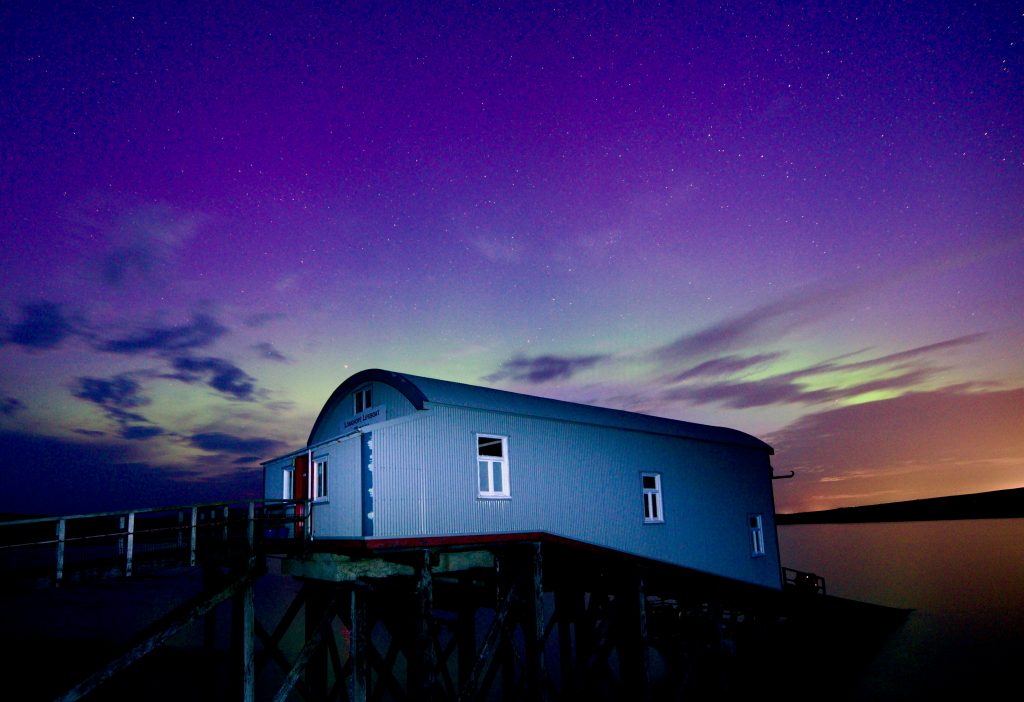
The mirrie dancers, the northern lights, paid a brief visit in the early hours of this morning. They were seen over most of the UK the day before but here we got the short straw, a localised haar putting paid to plans to photograph them.
Today they were less spectacular, a faint glow to the north. I took a camera and tripod to the old lifeboat station on South Walls along with a wide beamed torch, used to “paint in” the station that otherwise would have exposed as a silhouette, and spent a couple of early morning hours watching the sky while listening to the slap of the waves against the shore.
The show was good but not the best we’ve seen. There’s always next time though, haars permitting.
A front garden, and narcissi ‘stint’, lit by early morning sun.
The past week brought a real mix of weather, grey days and haars, sunshine and showers. Despite the occasional days where sea mists rolled in and stole the view, most days brought warmth and light winds. A fleece and tee shirt week.
Grey days bring a soft light.
The garden is growing at a pace now, first light is around 4.30 with dusk at 10pm. The milder days, combined with the long hours of daylight, are bringing a rush of growth and colour to the garden.
Early morning in the Kailyard.
Catmints and camassias have come into flower, the former, brought up from our south facing and free draining garden in Yorkshire, shouldn’t really like our cool summers and wet winters but plants don’t read gardening books and so far, five years in, they are thriving. Of the varieties we grow, ‘six hills giant’ and ‘walkers low’, are favourites. The cammassias are plants of North America, natives of damp meadows, for here they’re plant and forget bulbs that do well in our soil and climate.
Camassia
Pheasants eye daffodils have opened this week. Also known as the poet’s Narcissi, pheasants eye is the daffodil of Greek legend, associated with Narcissus who was said to have turned into a flower ‘white of petal and red of cup’. Along with a variety called stint, that we are trying in a front garden, pheasants eye are the last to flower here, in some years lasting until early June. As some daffodils are opening, others are being dead headed, early flowering ‘tete-a-tete’, and follow on thalia, are both finished for the year. Their foliage, if not already lost amongst thickening clumps of perennials, is bent over and discreetly tucked beneath the soil.
Pheasants eye.
Beneath the Red alders that give the rear garden shelter from worst of the winds that swing in off the moor, wild garlic are flowering. Cadged from the garden of a friend they are slowly but surely spreading. Also growing well are seedlings of sycamore that have spun in from two nearby trees. In the garden they are a pain, growing as thick as grass, hoed off or pulled out on sight, but in the shelter belt, for the moment, we’ll leave them be. The alders have a lifespan of 60 or 70 years, the sycamores 200 or more. In time we’ll thin the young sycamores out, leaving the best to grow on. Decades from now they’ll replace the alders that shelter them.
Wild garlic.
In a shady spot, hostas are pushing up broad spears of growth. In Yorkshire they were slug magnets, more lace curtain than plant, up here they grow pretty much untouched. We put it down to dressings of seaweed compost, perhaps there’s a slight seawater saltiness that acts as deterrent, or perhaps it’s just luck.
Hosta ‘francee’
Another shade lover that has come into its own this week is solomon’s seal. A woodland plant of arching stems that gets its name from round indents on the rhizomes that are said to look as if a wax seal has been pushed into them. A plant we grow more for its foliage than flowers. Unless you get down to ground level, the flowers are easy to overlook, green tipped creamy white bells that hang from thin pedicels just below the stems.
As April has turned to May the weather here has at last improved. April was wet, a local weather station recording over a metre of rain for the month, a third more than the average. The last days of the month stayed true to form, bringing brief spells of sunshine followed by heavy showers. Since then the weather has settled, mostly blue skies and light winds with the occasional haar, a sea mist, rolling in from the east.
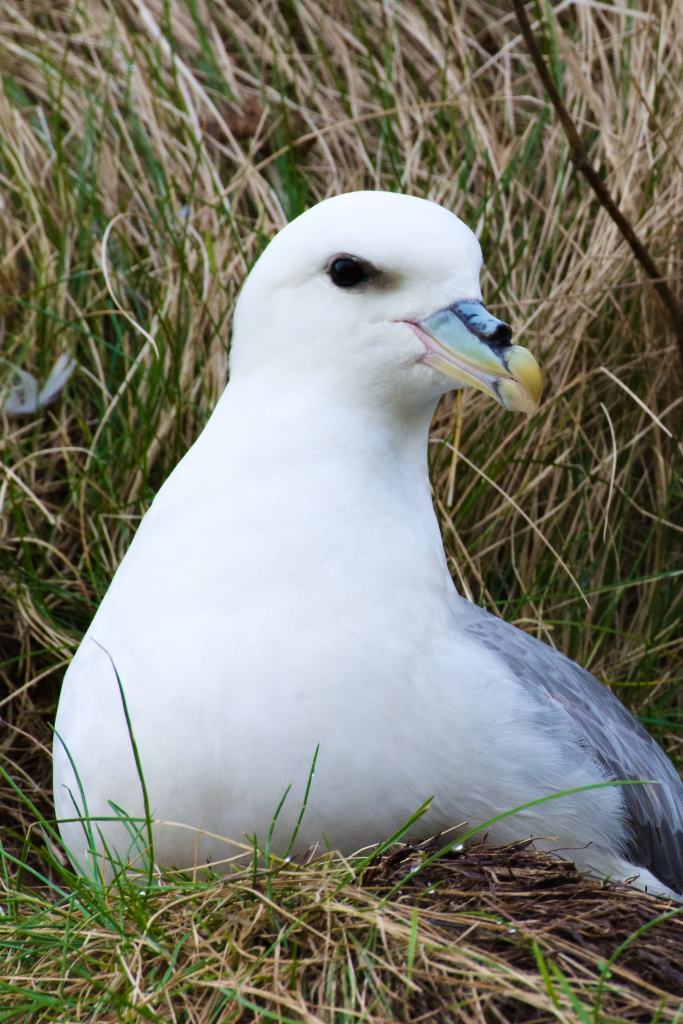
A Fulmar and a haar. From South Walls, looking towards Brims.
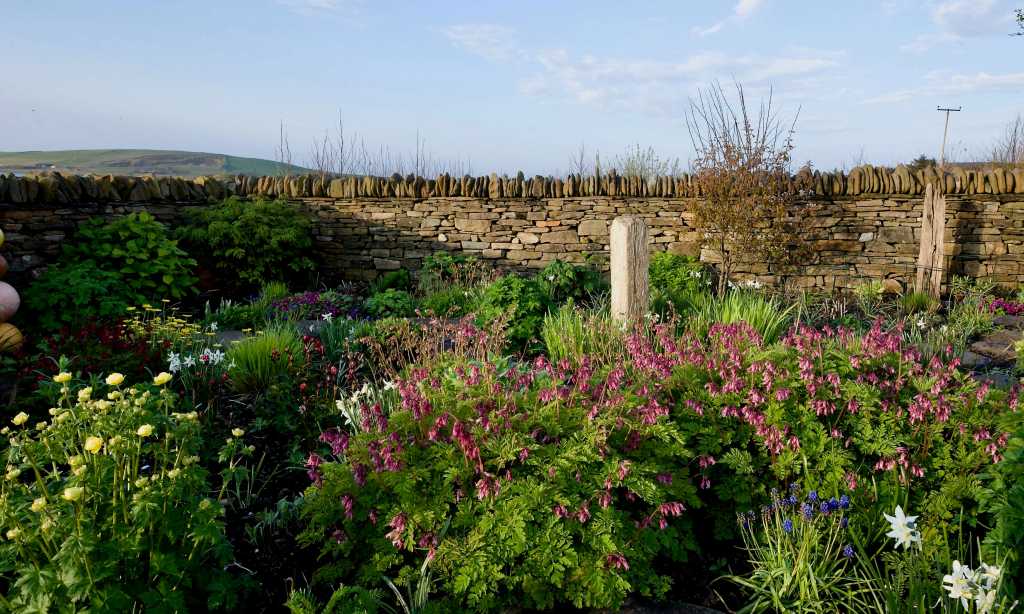
The garden is slowly but surely filling up with new growth. We garden in an exposed spot, sea to the front, open moor to three sides. At the back, beyond the thin shelter belt of trees, you can walk for miles and see nothing taller than fence stabs and stock wire. To the front are stone dykes, they sit well in this landscape and frame the garden without blocking the view, the protection they offer though is limited, easterly gales, straight from the sea, tend to spin straight over them, shredding all in their path.
Kailyard dykes, in the foreground are bee magnet Dicentras with Trollius on the left.
We embrace where we are, bulbs bring early colour but we garden here for late spring through to early autumn. At the moment perennials are up and forming clumps but most have yet to flower. Further south, in our old garden in Yorkshire, many of the plants that have yet to bud up would by now have been flowering for weeks. You learn to go with the flow, enjoy the garden while you can and when shelter belt trees lose their leaves and natures secateurs, the inevitable salt laden autumn gales, swing in and scorch everything black, cut back, dress the ground with muck and seaweed, and look forward to next year.
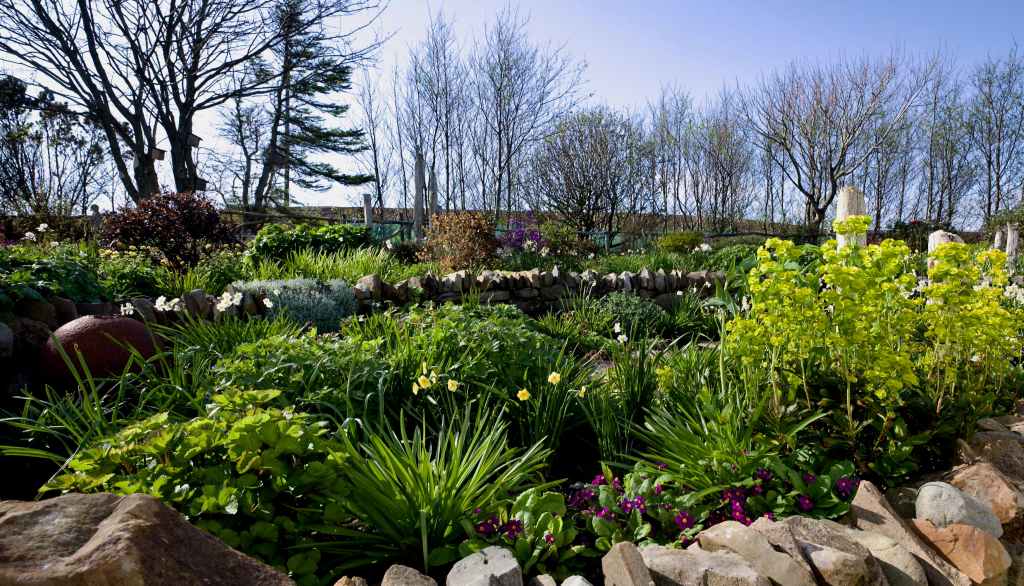
Perennials in the rear garden are starting to clump up – trees have yet to come into leaf.
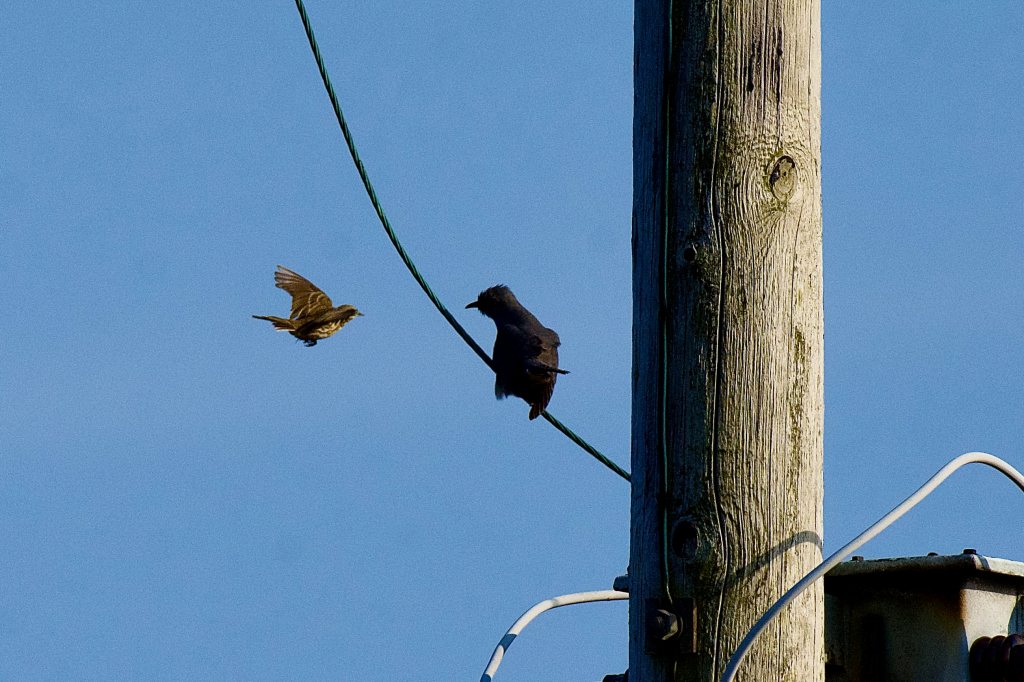
Along with better weather the first days of May also brought the first Cuckoos. They time their arrival to perfection. Meadow Pipits are a favourite host and for the last week or two, over the moor just beyond the rear garden, male Meadow Pipits have been performing their parachuting display flights, rising like Larks before fluttering slowly back to earth. As nests are built and clutches are laid, the Cuckoos, newly arrived from a winter in Africa, watch and wait from the wires that string across the moor and bring power to this house and the houses of our neighbours. The pipits, somehow recognising the threat, rise up from the moor and mob them.
A Meadow Pipit attempts to see off a Cuckoo.
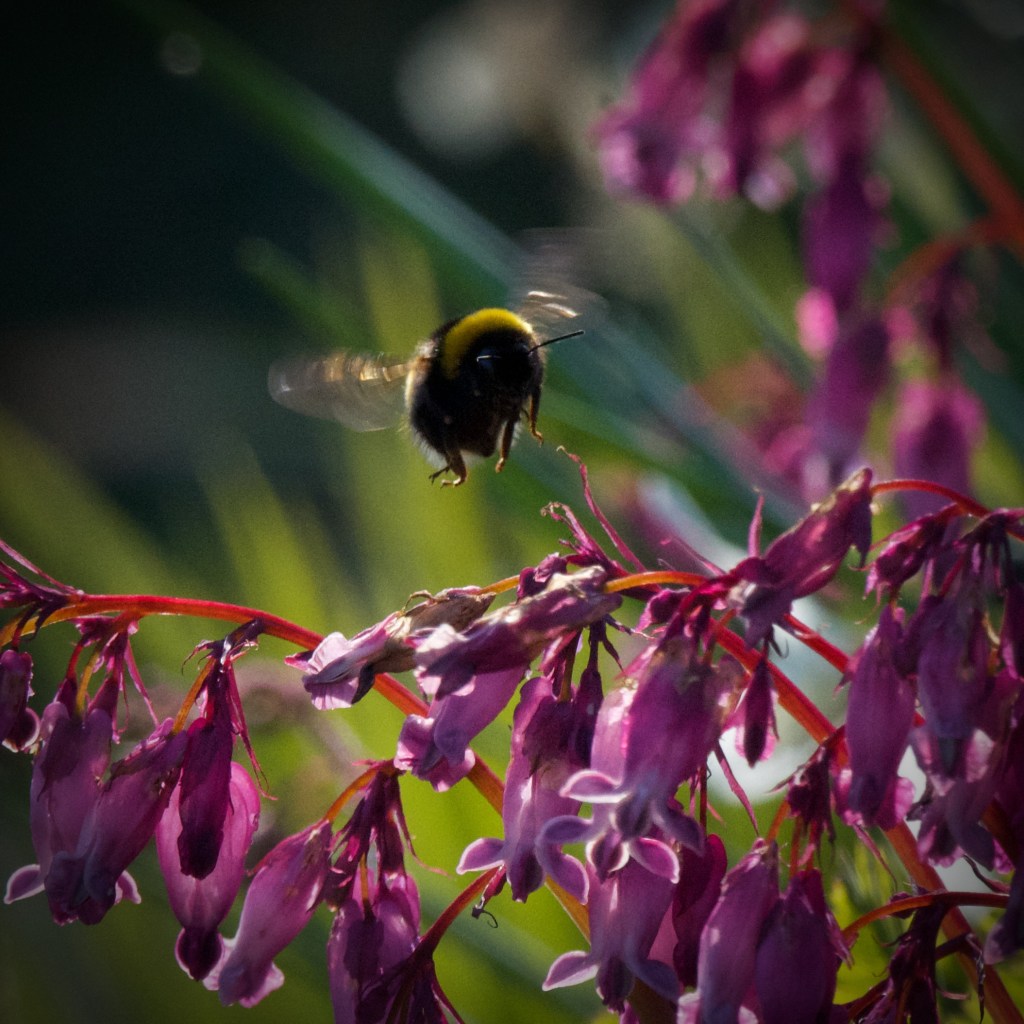
The better weather has brought more bumblebees to the garden, they’ve been seen on and off since march but only now are we seeing them in numbers. At the moment the flowers of bleeding hearts, dicentras, are a favourite. They’re one of the first plants to flower in the garden, some have been in bloom since early April, an essential food source for queen bees awakening from a winters hibernation.
Bumblebee and bleeding hearts.
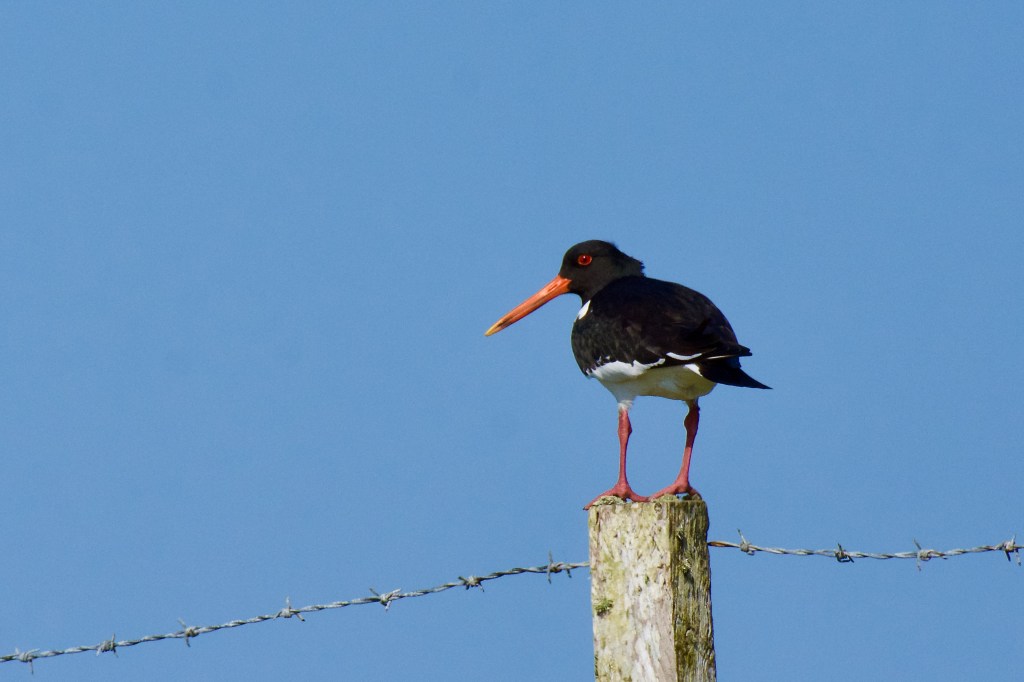
In the wider landscape, a Sand martin was a rare spot for here, there are colonies in Orkney but the first one we’ve seen close to home. Red throated divers, Loons, are back on the bay, in flight they remind me of bumblebees, their wings appearing too small for their bodies. A bird that looks awkward in the air and graceful on the water. With the grass in the meadow yet to start growing the short sward is proving a magnet for Oystercatchers, a handful are here most days, probing the turf with bright orange beaks.
Oystercatchers visit most days.
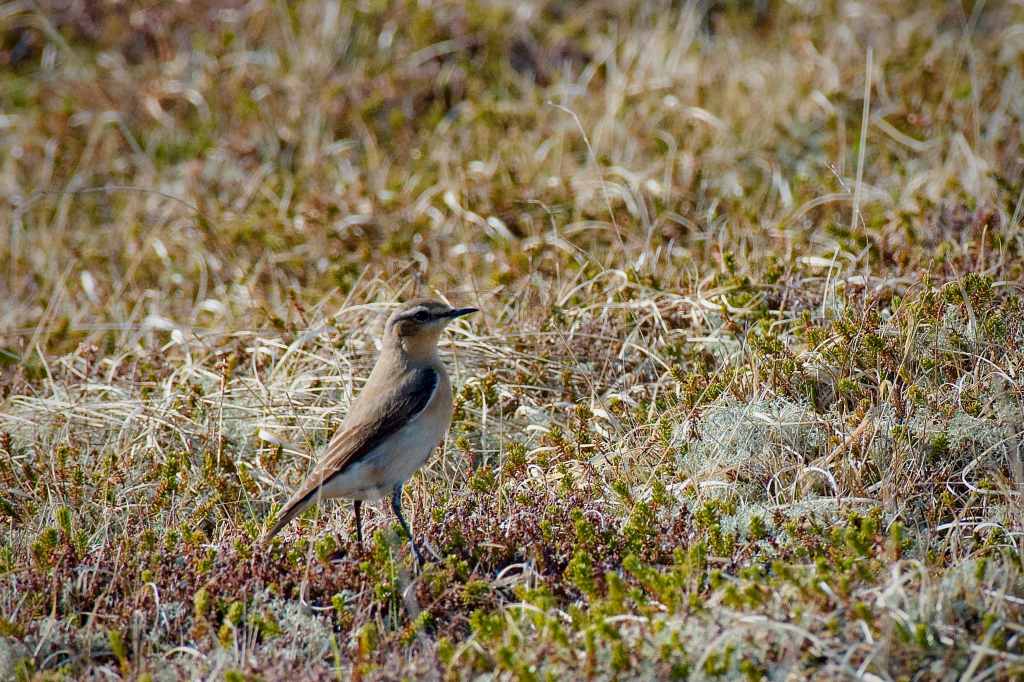
Along with the Cuckoos, other birds are also returning from a winter in Africa. Wheatears are once more a common sight on clifftop and coastal heath. They nest in stone walls or old rabbit holes and will often hop away from you rather than fly. When they do take to the wing they show the white rump that gives them their name, nothing to do with wheat or ears but a corruption from the Old English – white arse. The males are unmistakable, black wings with blue-grey backs along with a pale orange chest and a prominent eye stripe making them hard to miss. The females are softer in colour and much easier to miss, soft creams and buff browns with a pale flush of orange to cheeks and chest.
A female Wheatear, newly arrived from central Africa.
On Sunday past we took ourselves off to Rackwick. From home, as the crow flies, less than seven miles, by winding, mostly single track road, closer to twenty. The Orcadian poet George Mackay Brown described Rackwick as a “hidden valley of light”, today more murk than light, a grey day with low cloud and a clinging mist.
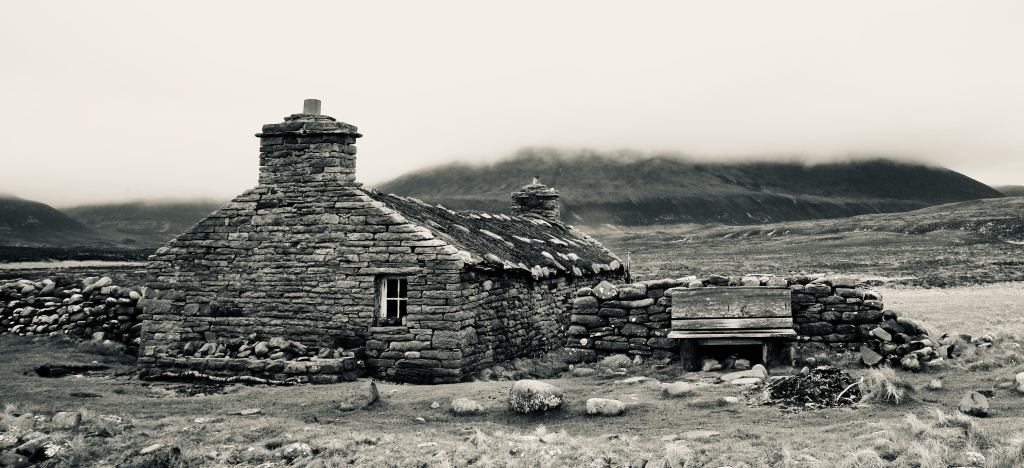
A day of mists and low cloud. Burnmouth bothy.
We are here to bag the bruck. A regular event, collecting man made rubbish cast onto the shore by rolling seas. We meet with around fifteen others at the Burnmouth, a heather thatched 19th century croft house that is now used as a bothy, offering shelter and basics to walkers and campers. The RSPB warden gives a briefing, gloves and bags are handed out along with a good humoured warning that lunch in the Bothy Kailyard, a low walled enclosure, is at 12.30, be there or be hungry.
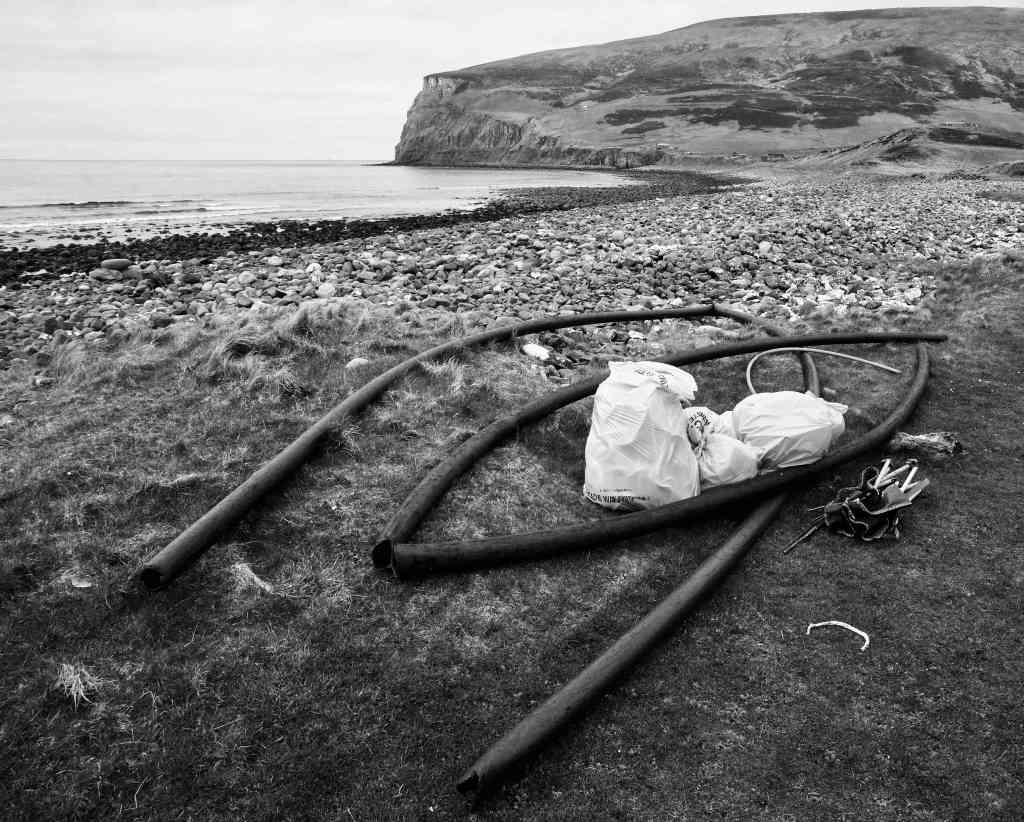
Rackwick comes from the Old Norse, rack is wreck or wreckage, wick an open bay. A remote and beautiful spot. The shore is ever changing, shaped by the moods of the tide. Stone dominates, a mix of car sized boulders through to fist sized cobbles, but to the south, at low tide, there’s also beach of smooth golden sand. It was once a thriving crofting community, with a population in 1851 of 101, now the permanent residents can be counted on the fingers of one hand. The volunteers split into small groups, we head to the north end of the bay, a beach of tumbled stone, and start to fill our bags. A bright orange glove, a yellow welly, rope and torn net. Long lengths of black aquaculture pipe, bent by the sea, have the look of a pair of giant fire blackened ribs. A dinghy, torn beyond repair, is hauled from the shore and stashed in a roofless byre. Plastic bottles are picked up by the dozen.
By mid afternoon the shore is cleaner than before, dozens of bags have been filled. Ankles are aching from walking on banks of sea thrown cobbles, they constantly move underfoot as you walk, one step forward and two steps back. As we leave we nip along to the roofless byre and pick up a couple of stashed bags, the dinghy, far too big to go in the car, is rolled up and weighed down with rocks.
A small part of the haul. Ribs of pipe, bags of bruck and a folding chair….
On Sunday past a Minke whale and her calf paid a brief visit to the bay. We saw the calf first and thought porpoise, only when the mother broke the surface a few seconds later did we realise a whale and her calf. A brief visit that gave glimpses rather than good views, by the time binoculars snapped them into focus they had already taken a breath and were curling back beneath the water of the bay, their long streamlined bodies with a low dorsal fin barely making a ripple as they slipped back beneath the surface. North Bay is wide and shallow, in the past there have be strandings, a thrill to see them but also a relief to watch them turn away from the shallows and head back out into Scapa Flow.
North bay is wide and shallow.
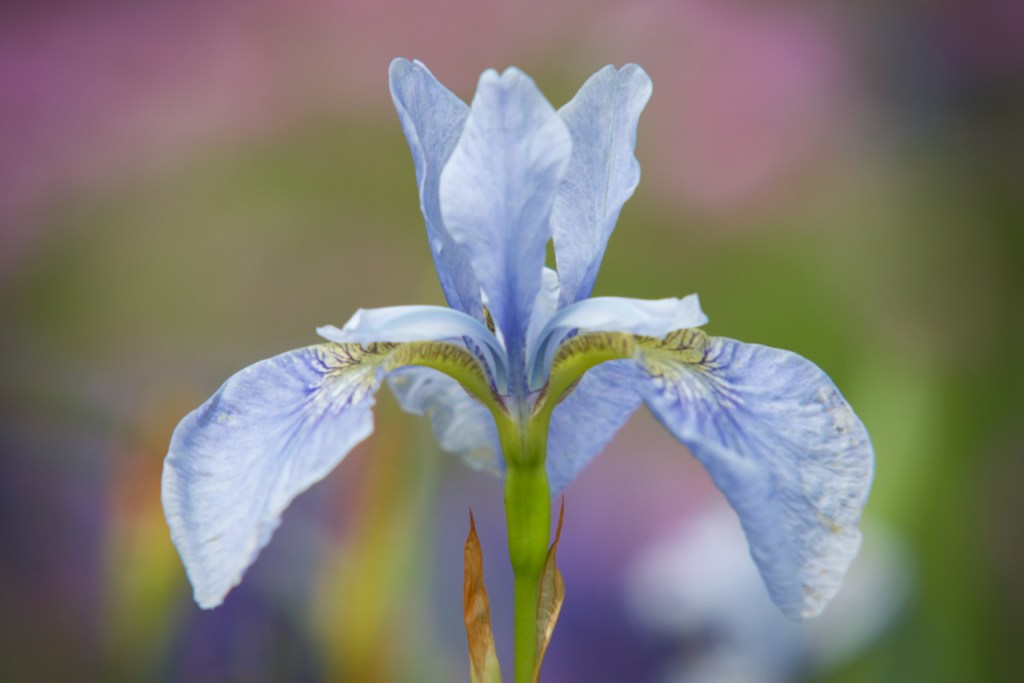
A quiet week in our own garden, Jacqui has been planting a garden a few miles away, a long narrow rectangle a stones throw from the sea that is enclosed by low dry-stone dykes on three sides and the house on the fourth. I tidied up the dykes last year and ran a tiller over the ground. In autumn jacqui planted a selection of bulbs, now perennials are going in. A mix of plants, some grown by the owners, some bought in, some from our garden. The plot is wet and north facing so there’s a bias towards damp and shade lovers. Primulas and hostas along with the likes of siberian iris should do well there.
Iris sibirica
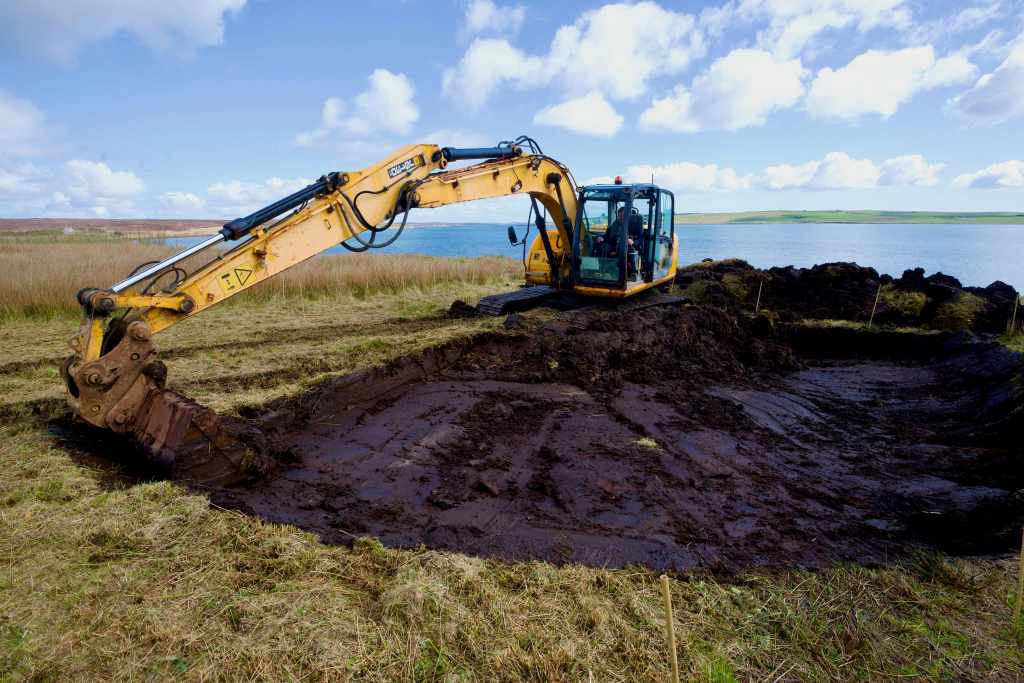
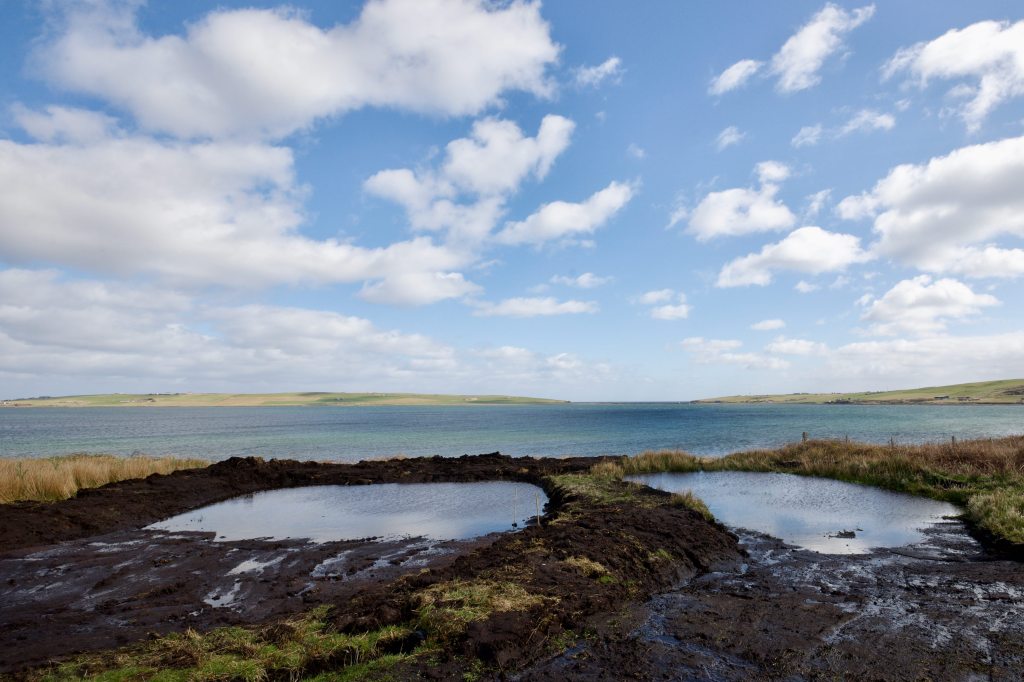
I spent a few days working on a plot next door to our meadow. Our soon to be neighbours are like minded souls, their house has yet to be built but a meadow is already in progress, dozens of young trees have also been planted. This week a pond was dug close to the shore. Kevin the excavator owner working his magic and turning a patch of wet mud into a wildlife haven. Before Kevin left he tracked across the land and dug another pond for us, he dug two here last year, one in each corner of the meadow. With hindsight we regretted not making them bigger. Financially liners aren’t an option and despite the ground down there being permanently wet there was always the nagging thought of “what if they don’t hold water”. We shouldn’t have worried, within days the ponds had filled. Within a week or two whirlygig beetles were twirling and spinning over the surface of the water and diving beetles were being seen, rising from the depths to steal silver bubbles of air.
A start is made on pond number three.
One of the original ponds got a tweak, doubled in size and given a wide shallow area for waders. The other got a twin, a new pond dug along side it. Eventually, when everything settles and the water levels rise, the ground that divides them will become a small narrow island. The ponds are an important part of what we are doing here, true wildlife magnets. Today brought mallards on the water with curlews and oystercatchers probing the shallows. As they were dug pied wagtails and meadow pipits arrived, flitting here and there across the mud, seeking out newly uncovered snacks.
Just add water. By the end of the week both will be full to overflowing.
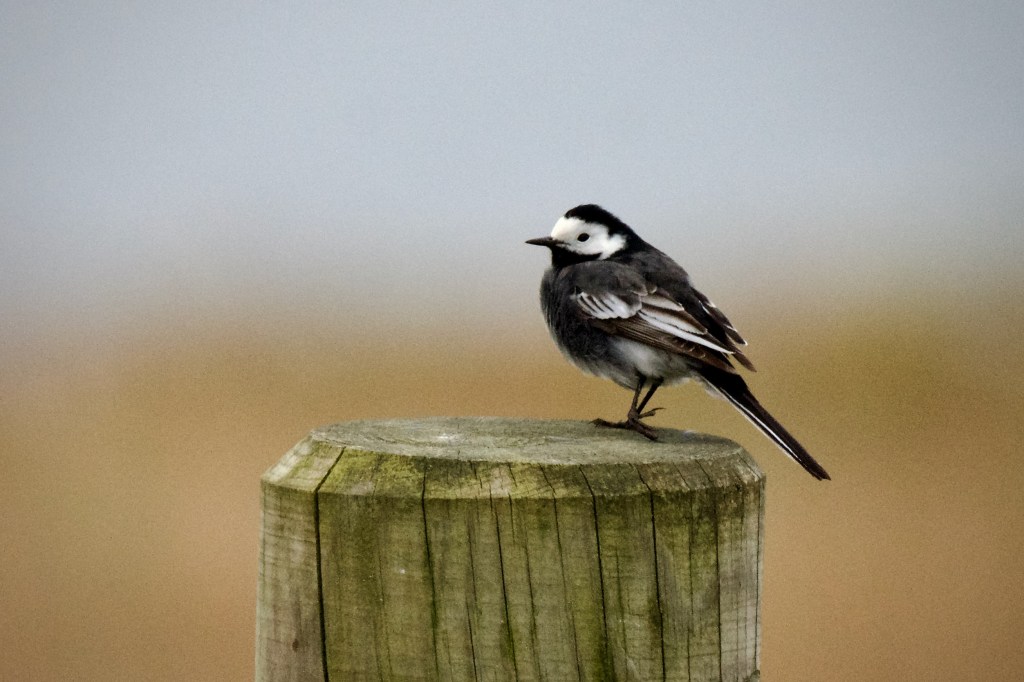
As the year moves on birds not seen since autumn are becoming familiar again. The already mentioned meadow pipits will breed just beyond the garden, hiding nests in a no mans land of tussocky grass and gone feral pink honeysuckle. A pair of pied wagtails are checking out potential nest sites in the nooks and crannies of a pile of stone that one day will become a dyke. The first chiffchaffs have been seen. In a patch of bramble on the edge of the moor a pair of song thrushes have built a nest of dried grasses lined with mud. Siskin and redpoll are starting to arrive, at the moment in ones and twos, but soon we’ll count them in tens. Small feisty finches that hold their own on hanging feeders, refusing to give way to others twice their size.
Pied wagtails have returned for the summer.
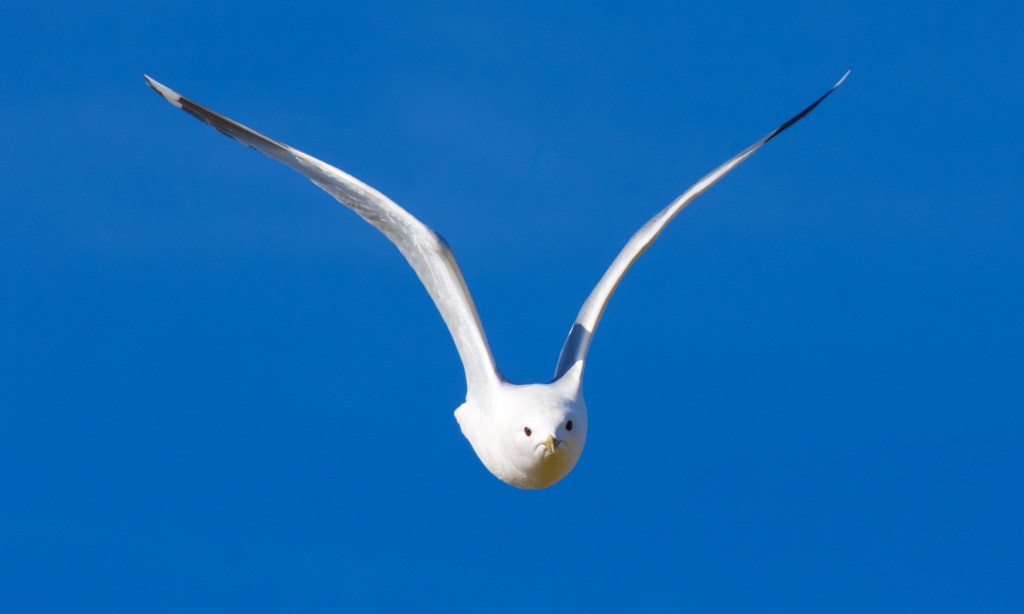
In the wider landscape Common gulls have returned. Named for the habitat they prefer, they nest in loose colonies on areas of rough pasture and moor. There’s a colony just along the way, perhaps fifty or sixty pairs scattered over an area of wind cropped heather. They are close to the road and as some birds sit eggs others keep guard, as you walk past the nearest of the guards will rise up and scold you, the bravest setting their wings to dive bomb your head, veering off at the last moment and seeing you on your way.
A Common gull eyes its human target and starts its bomb run…
The past week brought the usual mixed bag of weather, warm bright days and spells of rain with the odd gale thrown in for good measure. A mild week with winds from the south, even on poor days there was a warmth in the air.
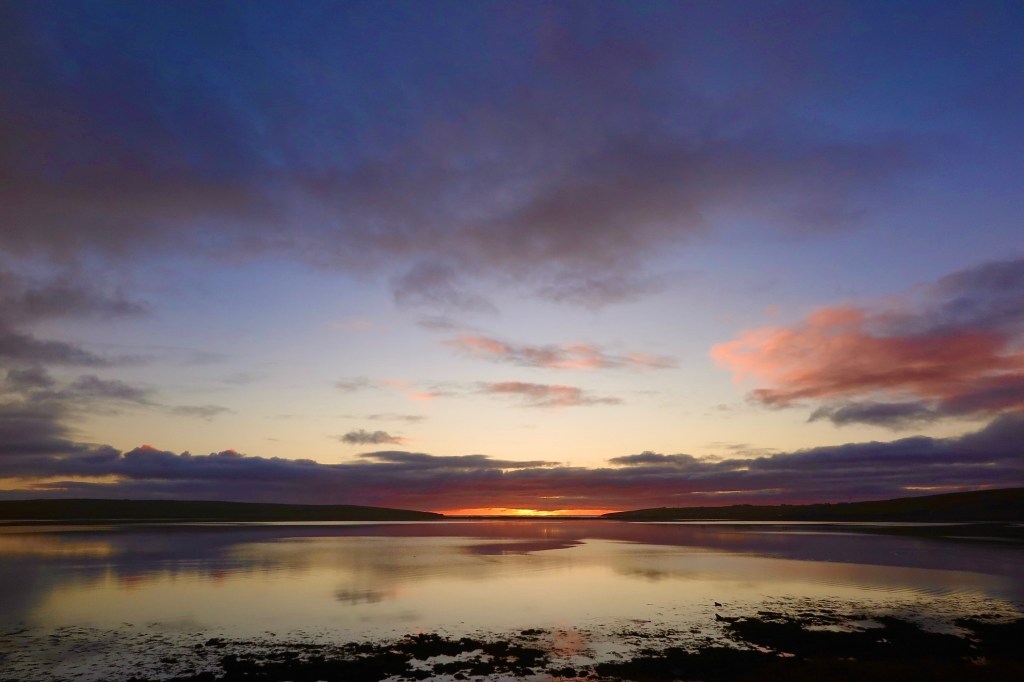
Sunrise, North Ness
The first swallows were seen this week, back from a winter in Africa. On Monday a single bird, by midweek, a half dozen, hawking for insects close to the shore. As swallows arrive other birds have left. Barnacle geese no longer rise yapping from the fields. Although most of the barnacle geese that winter in Scotland head west to the Island of Islay, around 1500 birds winter here. Ever wary, the sight of a distant human is enough to lift a flock of hundreds into the air at once. The most common goose here is the greylag, britains only native goose . As a breeding bird they were absent from Orkney until the 1990’s, now there are around twenty thousand resident pairs, their numbers in winter swollen by the arrival of around seventy thousand Icelandic birds.
Ever wary Barnacle Geese.
In the garden more daffodils are starting to open, the turn now of a variety called Thalia, in the half light of dawn or dusk their creamy white heads appear almost luminous. Lodden lilies, the summer snowflake – Leucojum aestivum, are brightening a shady corner. Other bulbs are starting to show, camassia are up but a while yet before they throw out spires of star shaped flowers of either white or blue. In the leaf litter below shelter belt alders, clumps of wild garlic, begged from a garden across the bay, are heavy with yet to open buds.
Daffodil thalia.
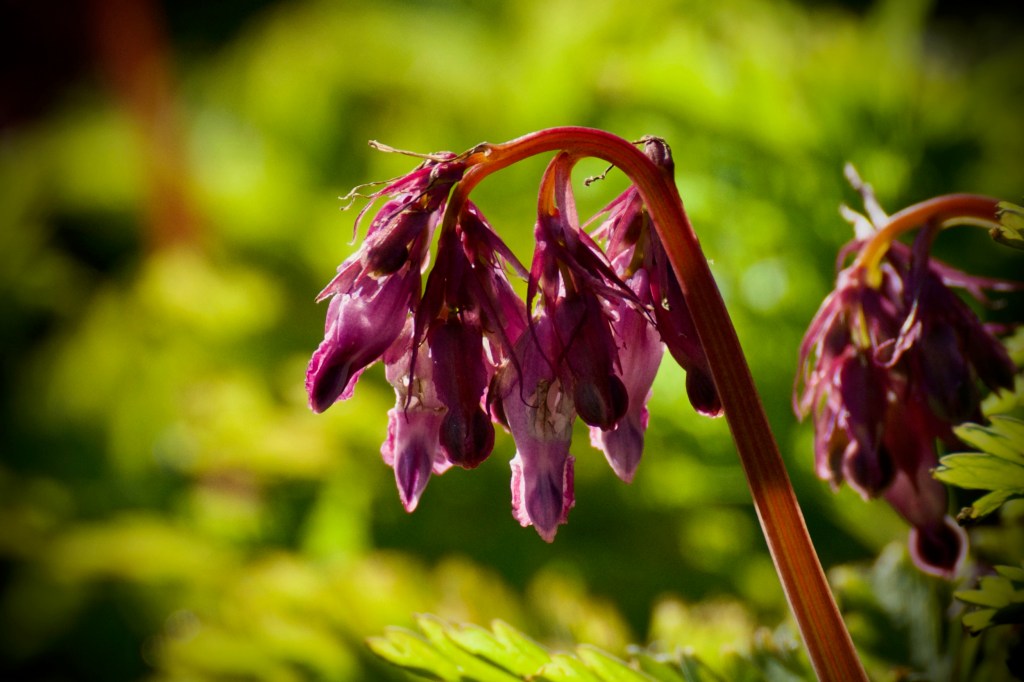
The buds of shelter belt trees have yet to burst open. From the back garden the open moor can still be seen through a screen of bare branches, a few weeks yet before newly opened leaves draw a green veil across the view. Early perennials are starting to put on a show. Variegated brunnera silver heart is flecked with tiny blue flowers. Leopards banes are bright with yellow flowers. The nodding heads of bleeding hearts are opening, a favourite, with its soft green foliage and pink flowers, is dicentra luxuriant.
Bleeding Heart, dicentra luxuriant.
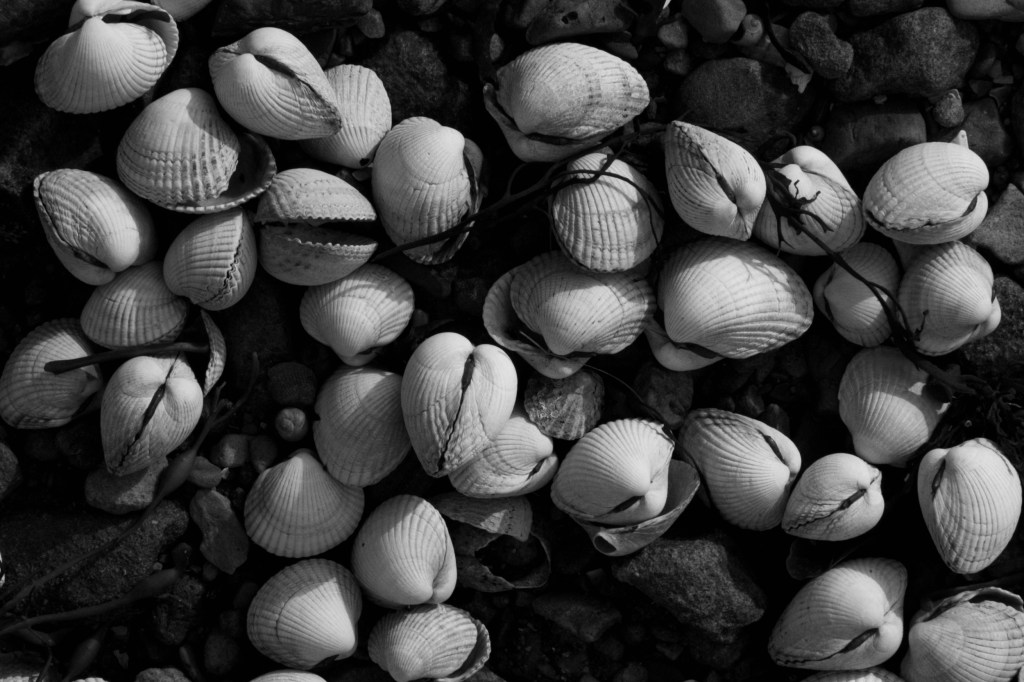
Finger thick Aspen cuttings were taken from the garden of friends along the road. They moved here forty years ago, taking on a few wet acres that were thick with Rush. Drains were dug and trees were planted by the hundred. Forty years on they live in a woodland, their home, invisible from the road, only coming into view as you reach the end of a shady tree lined drive. The house, its rendered walls painted sugar almond pink, sits low amongst the trees. Warm and welcoming, just like its owners. After taking the cuttings, and borrowing a pair of loppers for a job at home, I walked back along the shore, the bay here is too sheltered for driftwood but finds are made now and then. A while ago, a bright orange double handled shellfish basket turned up, now a trug for the garden. The best so far is an 1950’s aluminium fishing float, its original bright yellow paint beautifully faded and sea worn. Stamped into the alloy is the name of the maker followed by its country of origin – Espania. This time around though pickings were thin, a few pieces of sea glass and a pocketful of cockle shells.
Cockles cast up by the tide.
Fulmars have returned to the low cliff at the bottom of the meadow. Cliff is really too strong a word, more a raised eyebrow, at its highest perhaps thirty feet from meadow to shore. The lack of height doesn’t put the Fulmars off, in places they nest just a few feet above the high tide mark. The birds spend the winter at sea, only occasionally returning to land. Space is limited, the cliff face is thick with wild rose and bramble but here and there, on a flat spot that allows uninterrupted takeoffs and landings, a bare scrape of a nest will be made and a single egg will be laid. Incubation takes around 50 days, with a further 50 days or so before the fledgling leaves the nest. From an egg laid in early May it will be mid August before the youngster is ready to spread its wings.
The Easter bank holiday brought calm and settled days, blue skies and light winds. The days of warmth have worked their magic, in the garden more and more perennials are pushing through the earth, new mounds of growth dotted across the garden like molehills. Soon there’ll be a burst of growth, a sudden rush where plants grow visibly taller by the day. Soon, like Black Friday shoppers hoping for a bargain, they’ll be elbowing each other for space.
Newly emerged Lupins.
While the sun shone I ran a flail mower over the rushes in the meadow. The ground gently rises and falls like a low swell on the sea. The high spots tend to be drier, the low spots wetter. When we started to make a meadow the low spots were a monoculture of Rush. In the Yorkshire Dales I once watched a farmer run a flail over a field thick with Rush, we got chatting and he said mowing would weaken them and “let the cold in”, we tried it here, mowing hard every fortnight for the first year, after that in early spring and late autumn. So far it has worked, the rushes no longer grow in thick clumps, now they pop up as individual stems, dotting the newly flower rich turf like spent arrows at Agincourt. With the flail blades set high to miss the turf the rushes are knocked back, each years new growth weaker than the last. Sea shells are scattered here and there, cockles, mussels and whelks, picked up from the shore by Hooded crows who drop them from a height onto the meadow, mistaking the soft turf for hard ground. There’s a spot just along the road where their aim is much better, the tarmac littered with shells that have broken on impact to give an easy meal.
Whelk shell.
The warm Easter weather was of course a Siren song, tempting you to till the ground and sow seed. Wednesday brought grey skies with bitter north easterlies straight off the bay. Until gales and rain stopped play, Jacqui had carried on with a new border, each spit of earth turned over produced more stone. A guesstimate of the ever growing pile is, so far, around three tons. Along with the stone there’s the usual ex-croft junk, pieces of rusting wriggly tin, old copper pipe, fence wire and lengths of chain. Once, when planting trees here, we found the remains of a horse drawn turnip drill. As the ground is dug compost is added, a well rotted mix of seaweed from the shore and green waste from the garden.
Any old iron. Junk dug from the garden.
As the week went on the weather worsened, time to move indoors. The workshop became a potting shed. A few trays of seedlings sown last autumn were pricked out into cells, wild carrot dara, aquilegias from seed collected in the garden, wood cranesbill for the meadow. Friends from South who will eventually become neighbours had, like us, ordered trees through an island carbon neutral scheme. With groundworks on their plot yet to be started we decided to pot most of them on, willow and alder can, when the weather improves, go out on wetter ground close to the shore, but the rest, hawthorn and dog rose for a hedge, along with bird cherry for a mixed copse, all to be used closer to the house, will be better held back until the groundworks are finished.
Dog Rose, rosa canina, potted on and waiting for new homes.
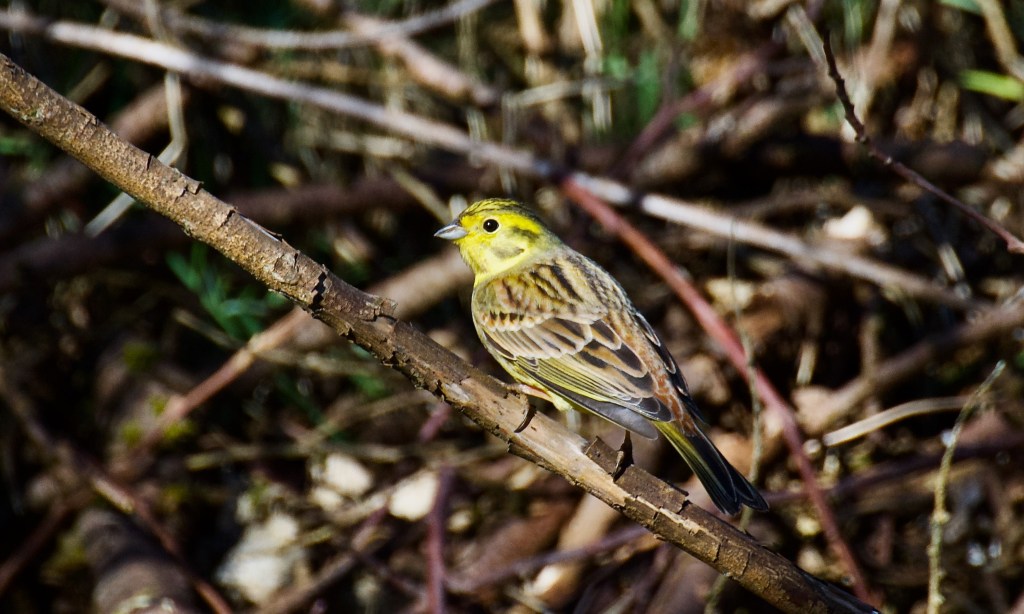
Along with the midweek winds, three Yellowhammers arrived in the garden. Rare birds for here, only the second time we’ve seen them. Not a bird of Orkney, just pausing for a while before eventually moving on. Together with a mixed flock of reed buntings and finches, they’re feeding on seed thrown beneath shelter belt trees. A memory of my East Yorkshire childhood, a bird of fields and hedges, once common, now a red list species, lost to many parts of the UK. The scribe bunting, named for the delicate copperplate markings on its eggs.
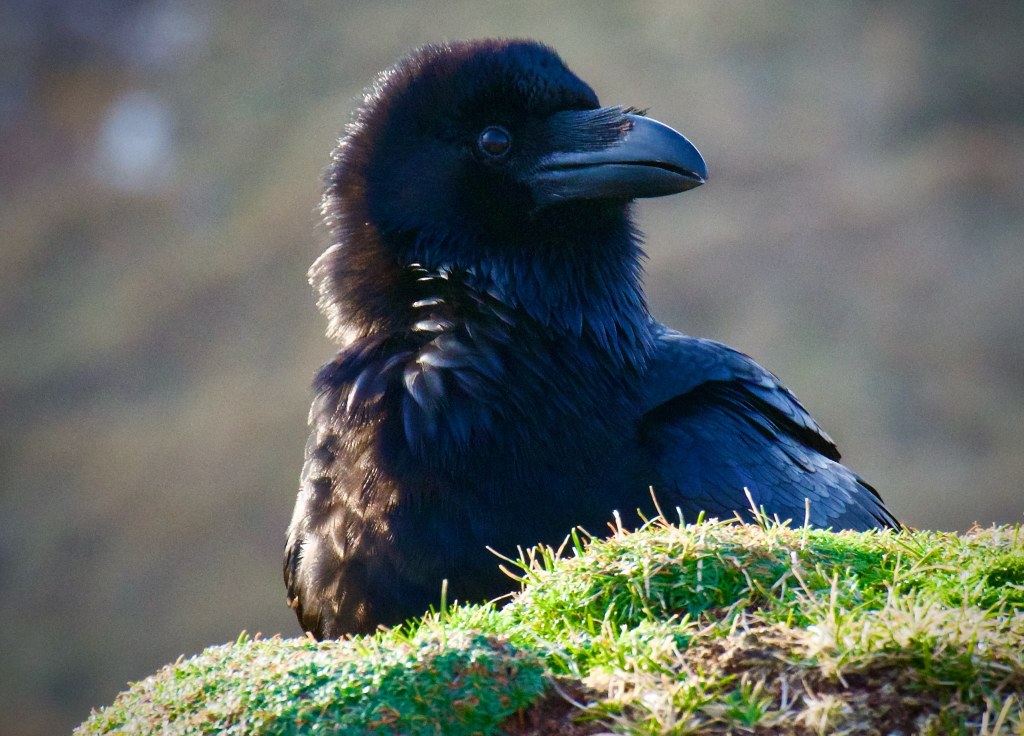
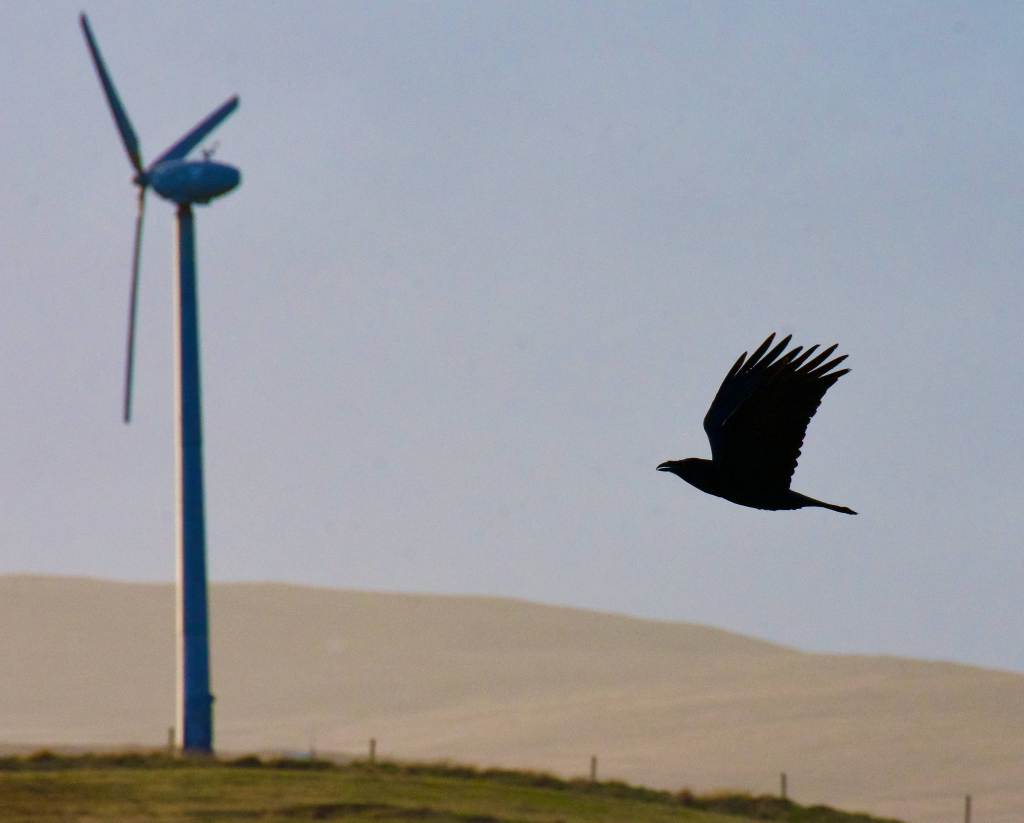
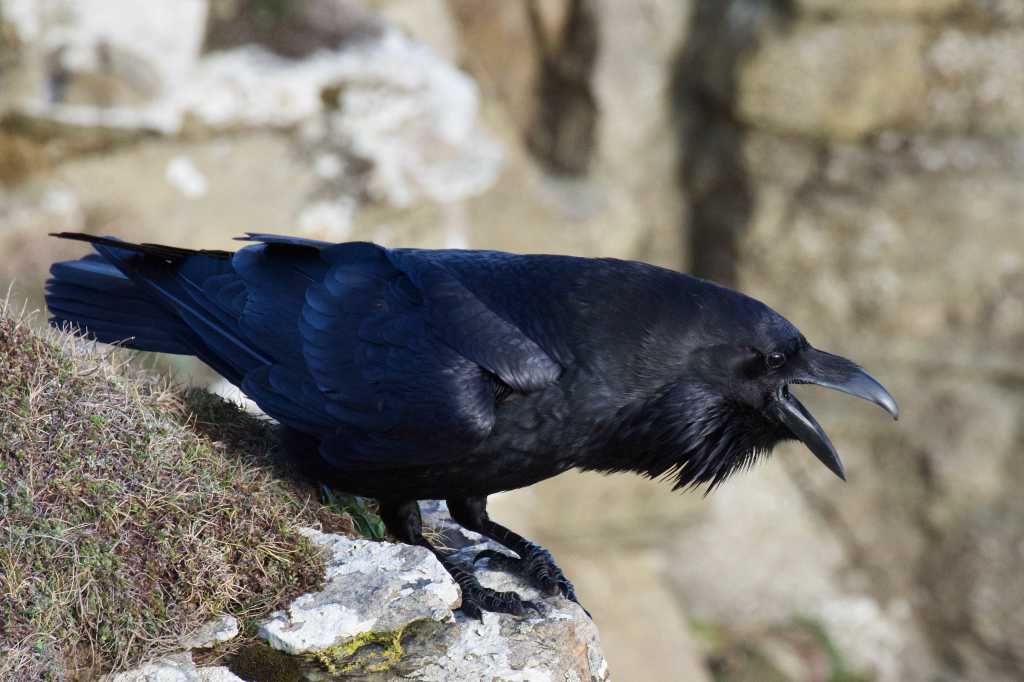
A few miles from here there’s a steep sided geo where every spring for the last four years I’ve watched a pair of Ravens rear a brood of chicks. It’s an area of coastal heath, wind scoured in winter, in late summer lit blue with the flowers of devils bit scabious. Apart from a distant wind turbine, the tallest things for miles are the lichen silvered posts of old stock fencing.
The geo is wide and deep, a half moon bite from the surrounding land. At the bottom is a beach of wave rounded cobbles. In November Grey seals haul out there and give birth to doe eyed pups. In summer the beach is just about accessible. At one end of the geo the fall is less steep, with care and dry ground beneath your feet and with hands free to grab newly regrown tussocks of grass, you can get down to the shore and sit for a while.
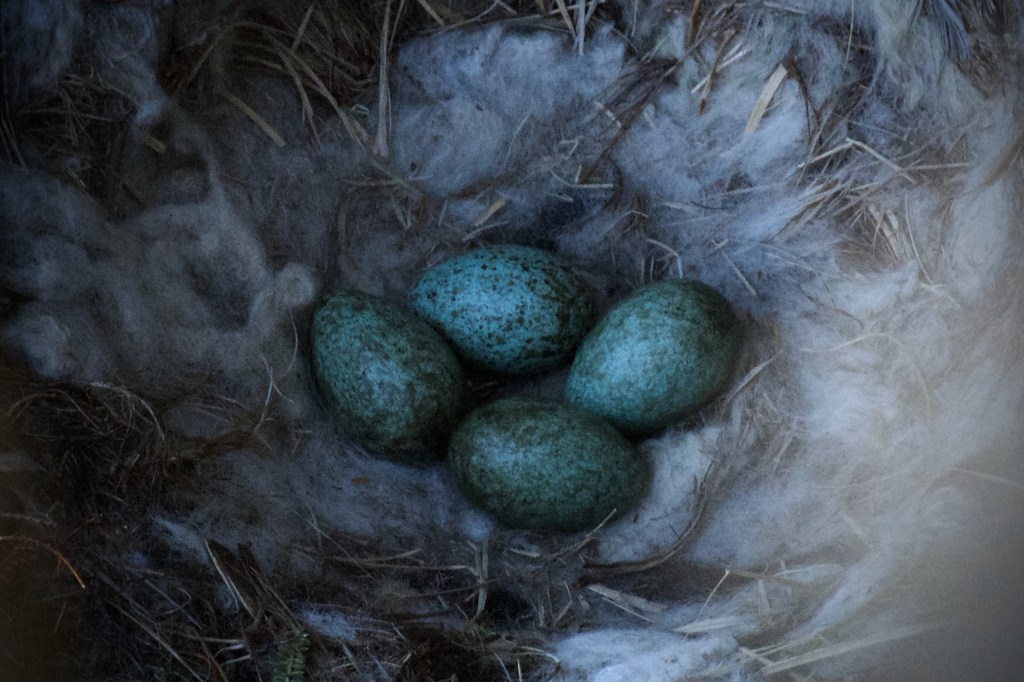
The nest sits on a narrow ledge at the steepest end of the geo. Built almost entirely of seaweed, every year winter storms wreck it and every year the birds tirelessly rebuild it, carrying kelp stems up from the shore and collecting a lining of wool from fleeces caught on stock fence.
As you approach the geo, a check on the nest can be made with binoculars. Once closer it’s lost from sight until you are directly above it. There’s a narrow cleft in the cliff, perhaps a footstep wide, that, like a squint in the wall of a church, gives a limited, and in the case of the nest, a slightly vertigo inducing view of proceedings. A fortnight ago the nest was lined but empty. A week ago four eggs had appeared, a clutch in progress but no sitting bird. A long lens on my camera snapped the eggs into focus. Two days ago, as I approached the site, binoculars showed tail feathers and a tucked down head. A bird sitting tight on a full clutch of eggs, time to turn away and leave them be.
The eggs hatch in 21 days, the same incubation period as a domestic hen, after that, another forty odd days before the chicks have fledged and left the nest. If the nest is successful, later in the year adults will be seen on the headland with youngsters in tow. With luck a Raven can live for fifteen years but winters are hard and the attrition rate for young birds will be high. I’ve watched this pair for four years and have no idea if they are old or young but next year will look out for them again, checking the nest for signs of rebuilding.
On Wednesday past we had the vernal equinox, the first day of astronomical Spring, the point at which days here rapidly become longer than nights. For Orkney, by June, it won’t really go dark. The time of the simmer dim, where, for the few hours between sunset and sunrise, the sun will track just below the horizon.
Wednesday dawned dry and bright, a fleece and tee shirt day. In the garden Jacqui made a start on a new border, as is typical for here, every spit that is turned over unearths stone and junk. The stone at least will come in handy, infill for a yet to be started dry-stone dyke. I cleared a tree at a house along the way, a lodgepole pine flattened by a gale. Despite a sharp chain, the saw struggled with the trunk, the timber, full of rising sap, swelling and tightening on the bar as the cuts were made.
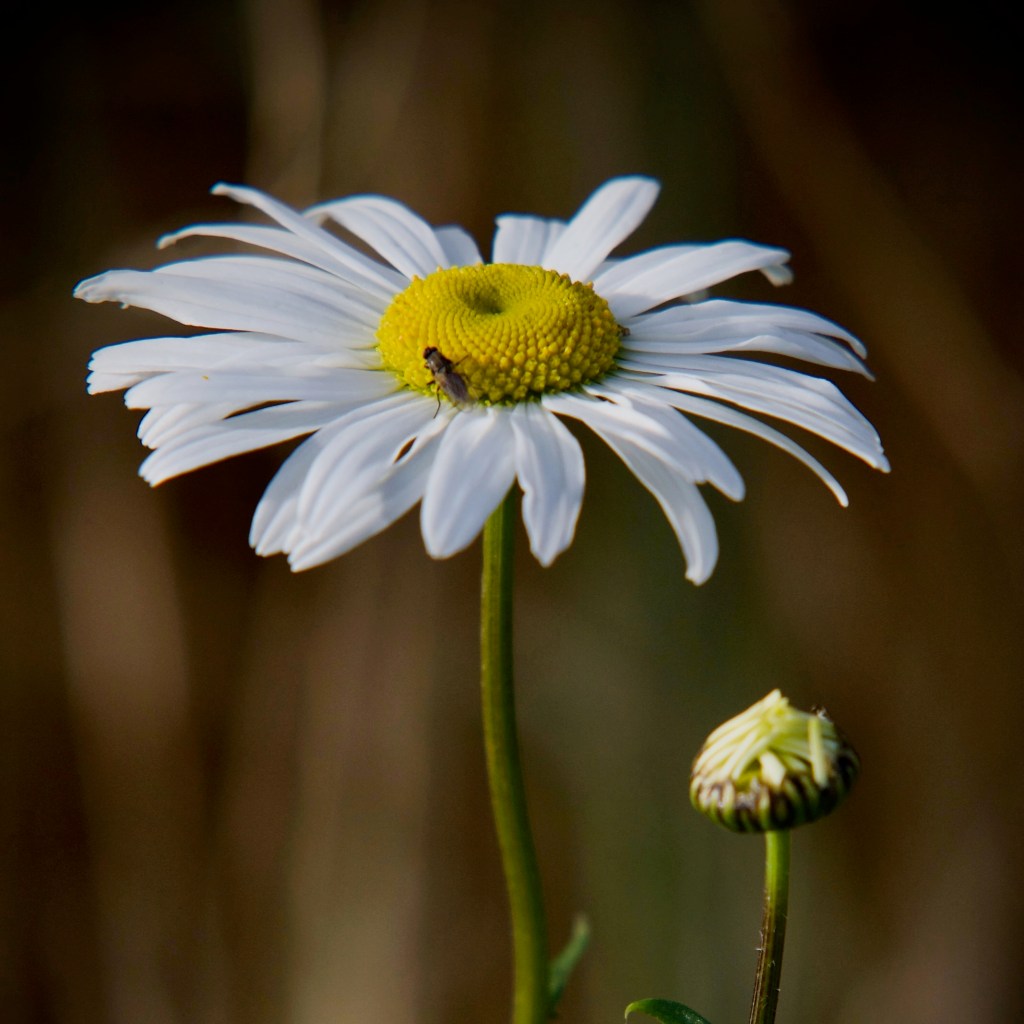
The weather turned on Thursday, sun and showers and winds from the east. A few wildflowers went into the meadow, a couple of dozen water avens for a wet spot close to the shore along with ox-eye daisies sown in trays in late summer. Friday brought gales and cancelled ferries. A brief pause this morning and then more of the same. A day to be indoors looking out.
Ox-eye
The charm of Goldfinches mentioned last week are now being noticed by their absence. A few are still here but the flock has moved on. Hooded crows are checking out nest sites, a pair have been hanging around the edge of the garden, a tall sitka spruce is looking like a promising spot. On Tuesday a waxwing arrived in the garden, still here today, feasting on half apples, a few feet from the kitchen window.
A Waxwing visits the garden.
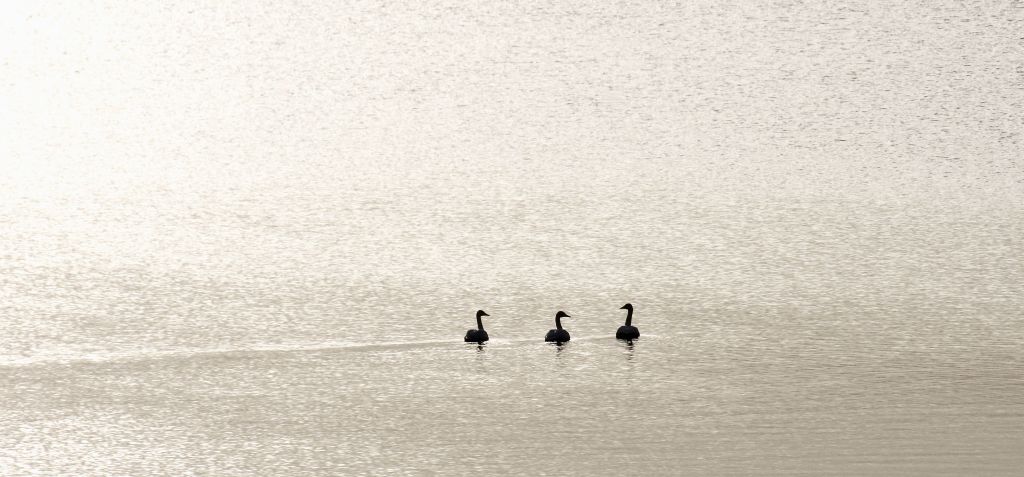
The first day of Spring saw three whooper swans on the bay, They dropped in at first light, way out on the water, three dark silhouettes on a silver sea. Icelandic birds pausing awhile before leaving to steadily beat their way home to summer breeding grounds. From Orkney, none stop, a flight of around five hundred miles, half that if they pause for a pit stop on the Faroe islands.
For Orkney, March has so far arrived with mostly settled days. A mixed bag of bright sunshine along with grey days that often brought rain. A day or two of gales were thrown in for good measure, but so far, March has come in more like a Lamb than a Lion. The only real downer is that the winds, when they did arrive, tended to be easterlies, straight off the sea and straight at the garden. Those days even if bright were bitterly cold.
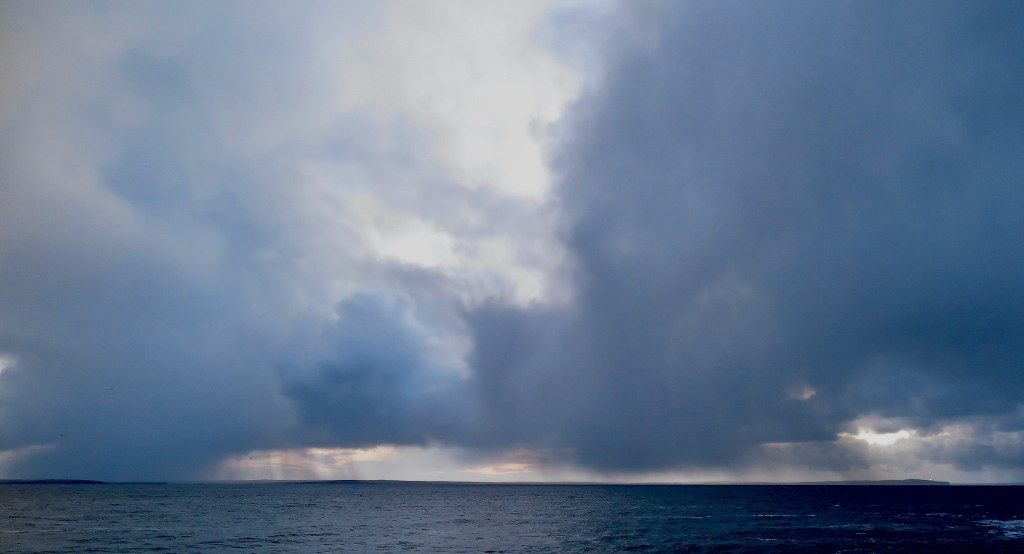
Grey day showers.
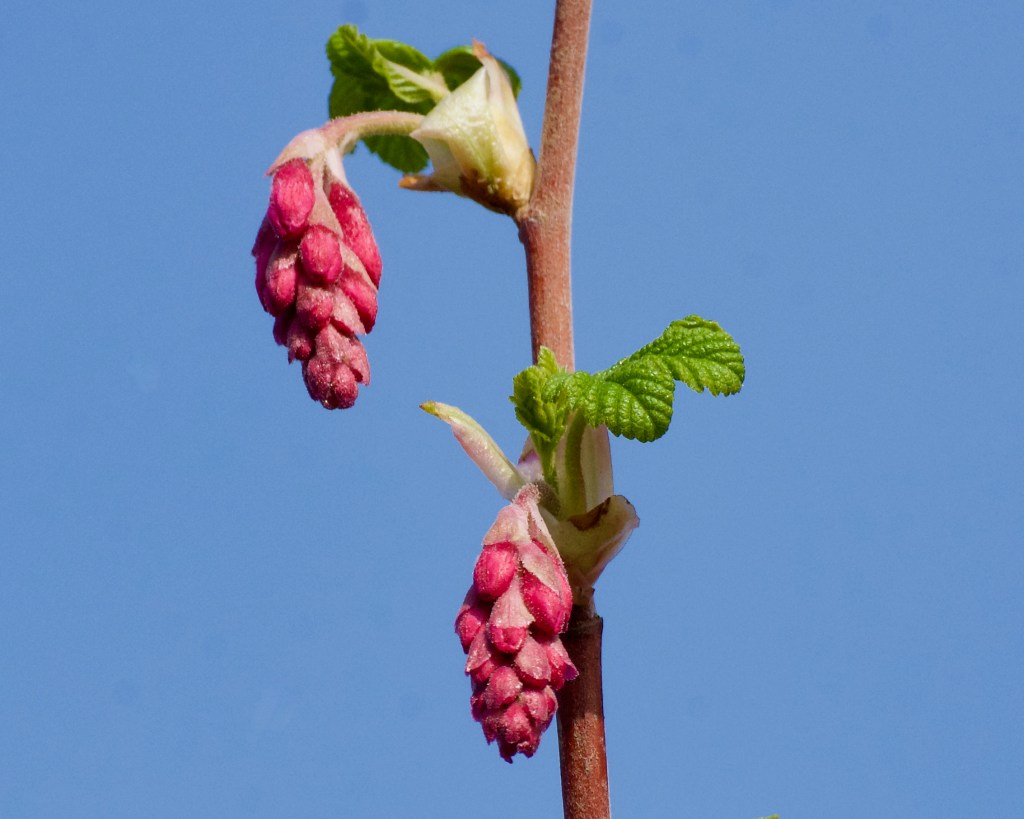
The garden is slowly reawakening after months of slumber. Perennials are pushing through the earth, low clumps of fresh growth giving a tell that longer and warmer days are just around the corner. From branches cut back hard in autumn, Elder black lace is sprouting dark new growth. The flowers of Ribes are starting to open, the first Bumblebees are being seen.
Ribes for early bees.
Spring in Orkney though is a slow burn start. Snowdrops are still in full flower, ditto crocus. ‘Tête-à-tête’ daffodils are fully out but no sign yet of their follow on cousins, thalia and pheasants eye, the latter of which will still be in bloom here in late May
Jacqui has been dividing and staking perennials, preparing the garden for summer. Plants that have grown too big for their space are being lifted and split. A year or two ago they would immediately be found a new home in the garden, now, with limited space, spares are potted on for a garden gate sale, stored in fish boxes picked up from the shore.
Newly potted plants and fish boxes from the shore.
Low growing perennials are being given corsets of alder sticks, essential support against inevitable summer gales, within a couple of weeks their twiggy restraints will be hidden by new foliage. For taller plants commercial hoops are used. For the very tallest hoops aren’t always enough, a belt and braces approach also sees them wired to the top stones of a dyke or to an old fence stab driven into the ground.
A newly emerged geranium gets a support of Alder twigs.
Goldfinch are here in good numbers, a charm of around forty birds clustering on feeders, most will move on but a pair or two will breed here. At the edge of the garden a song thrush is singing a claim to a patch of bramble. A rare sight this week was a single blue tit, a first for here. Starlings are also calling for mates, not so much a song as a collection of squeaks and whistles. Close cousins of myna birds they’re excellent mimics, last year we had one that had a curlew off to a tee, another did a half decent cuckoo, best of all was a bird at our first home here, managing a slightly squeaky bok-bok-bokker of a hen proudly announcing to the world that it had just laid an egg.















 A garden in Orkney