
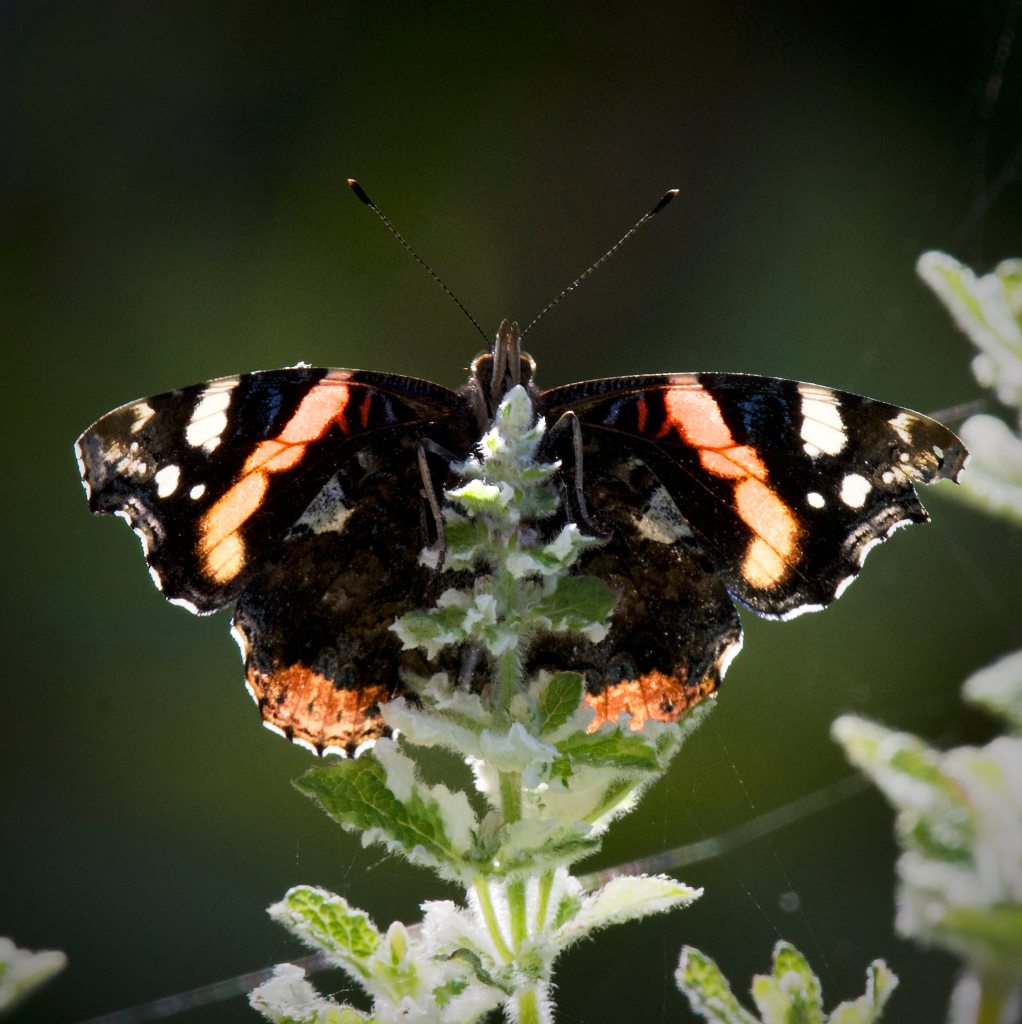
The last days of September are sticking to the script. Following the pattern of previous weeks. The odd haar, the occasional spell of rain, but generally dry and bright. Sunshine and showers. What the past week has brought though is a sharp edge to the wind and, on still days, a real nip to the morning air. We’re into fleece and body warmer days.
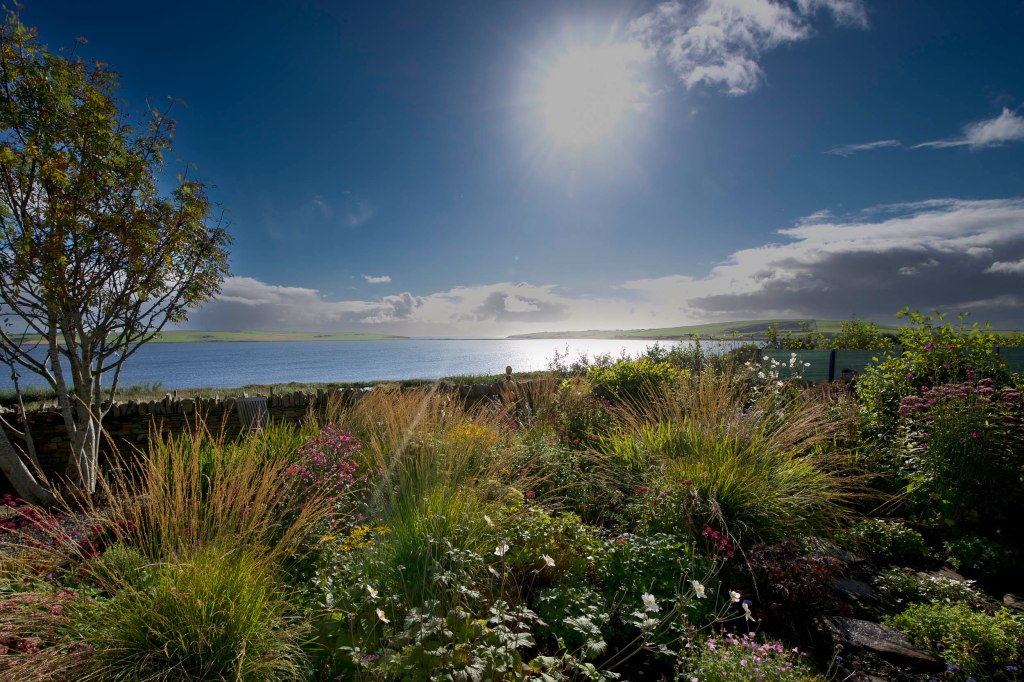

From the rear garden, the moor can be seen again. Shelter belt trees are losing their leaves. At the moment the view through the trees is patchy, like looking out through the window of a long abandoned croft house, tattered and torn lace curtains and dirty glass. The Alders will shed their leaves first, already falling, crisped and browned. Sycamores and Rowans will cling to their green modesty for a few more weeks. Sycamore keys are hung in bunches, waiting for a gale to set them free. In Spring they’ll germinate in borders by the hundred, growing as thick as grass.

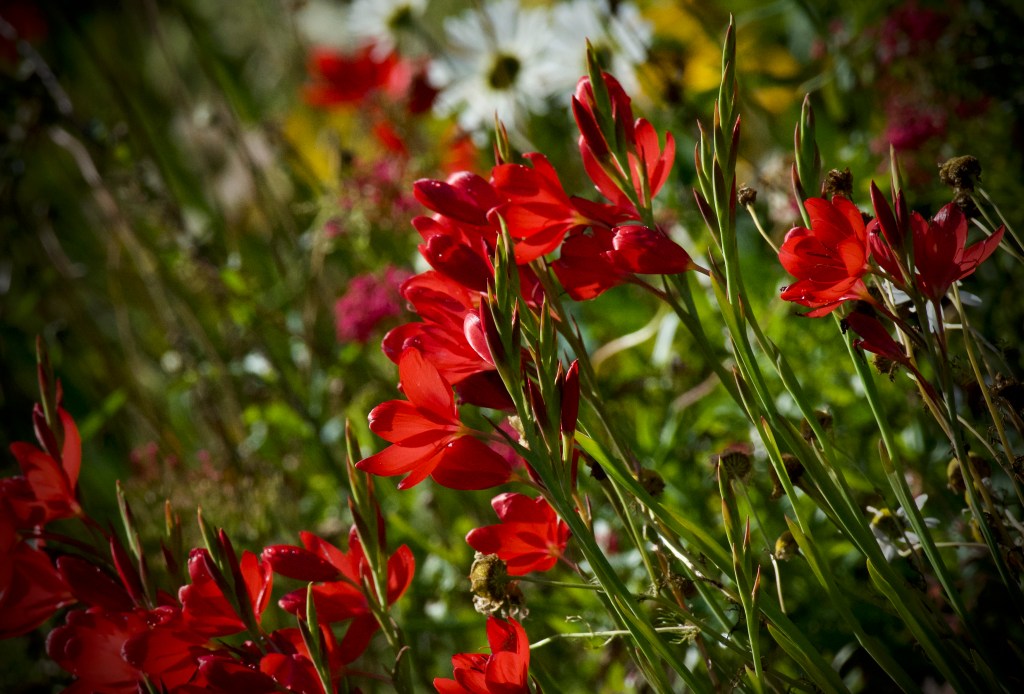
Hesperantha coccinea has come into its own this week. The books tell us that they need shelter and don’t like the wind, regardless of that, they thrive here. By November they’ll be the last plant standing. Another good doer, that we never tire of looking at, is Rudbeckia goldsturm, we plant them close to the house, a splash of sunlight on a rainy day.

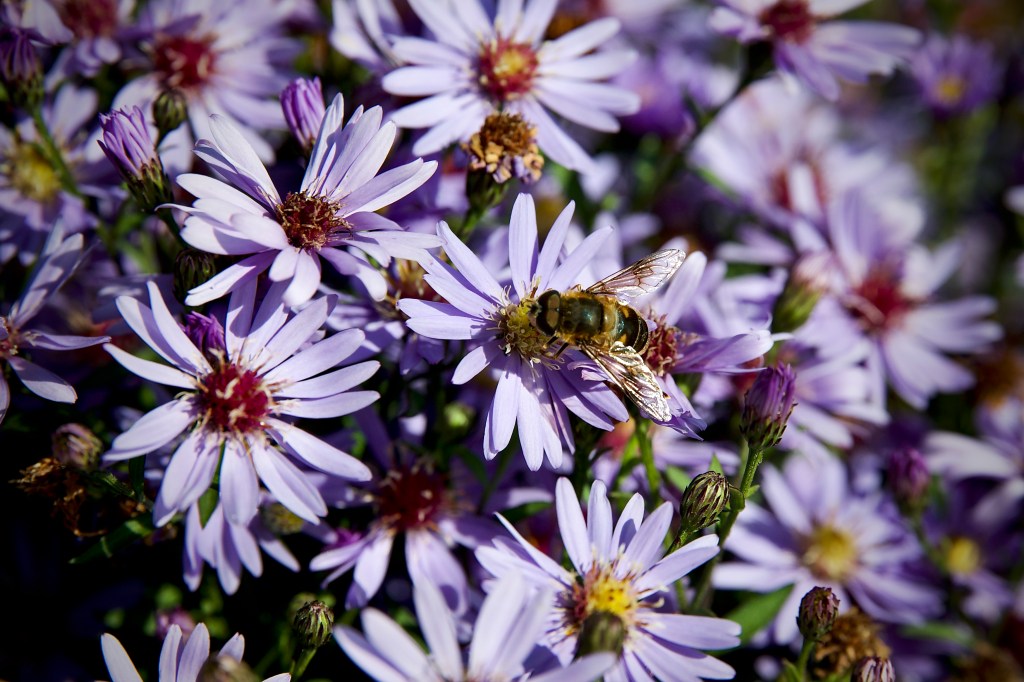
Late Summer flowering Aster, little carlow, is proving to be a bee and hoverfly magnet. It’s quite tall and leggy and in its exposed front garden location has to be discretely wired to a fence. Bought from an online nursery in a 9cm pot it has grown at a rate of knots, clearly a keeper.

Other plants of course are fading, done for the year. Two favourites, whose full names are lost to the mists of time, are a compact purple flowering geranium, whose leaves at this time of year give a show of reds and yellows, and a leucanthemum, a gift from a garden a few miles away. The leucanthemum has flowered through August and is only now starting to fade, shedding its petals to the wind. As with all plants that are gifts, even if we found out the name tomorrow, it would always be “the one from Leslye’s garden”.


After a few weeks of quiet, Starlings have returned. Most are juveniles, moulting into adulthood. An odd mix of spangled bodies and dull brown heads, the moult into adulthood must start from the bottom up. They arrive en masse and spend as much time squabbling as they do eating, a brief peace for a communal bath before returning to the feeders for fisticuffs. As a child they were Sheppies, a corruption of their old name of Sheepstare. The stare is believed by many to have given the Starling its name, from the white speckled starry plumage of its breast.


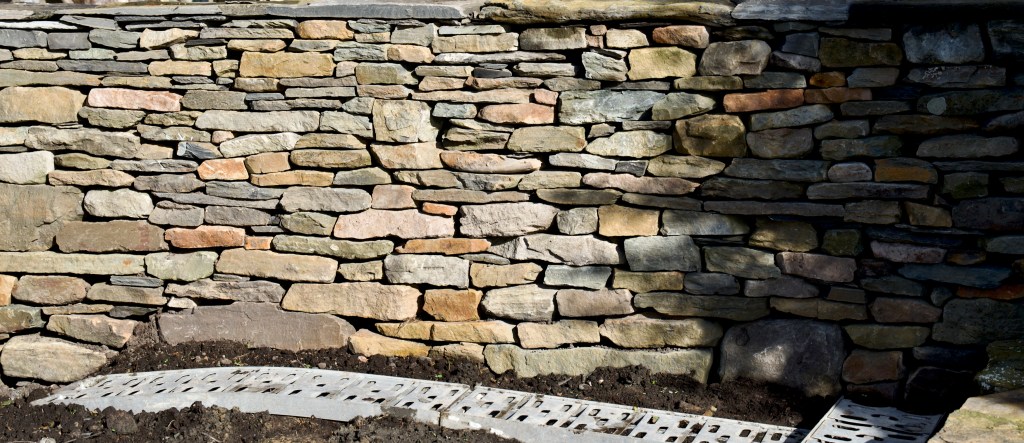
An on-off summer project has been the building of dry-stone dykes to create a small courtyard garden. The best stone here came from a long ago closed island quarry, varying in thickness but flat and easy to lay. The worst comes off the hill, rubble with no ‘face’ or flats, fit only for farm tracks. After rebuilding front garden dykes we were down to the dregs of our of quarried stone, and so have had to use both. The inner face, seen from the garden, is a match for the rest of the dykes, quarried stone, a continuity of colour and shape. The outer face is whatever we had, rubble from the hill and stone dug from the ground while making the garden. It’s awkward and slow to build with. I once built a rubble-stone dyke around a half acre plot at the North end of the island, it took weeks and I said never again, but beggars can’t be choosers and so the walls, after a Summer of an hour here, and two hours there, are up, awaiting their pennies.

The pennies are the upright top stones. There’s a spot a few miles away, where the stone is just right, accessible by a barely passable track. In days past the place where fishermen would collect flat stones to act as weights for wooden creels. I went a few days ago, planning to visit a nearby geo with a camera before filling the van with suitable stone. It’s dark here now by 7.30 and I’d left it too late, managing the single photograph below before realising that if I didn’t get a scoot on I’d be searching for stone in the dark. All went well until I attempted to turn round at the end of the track. A crack like a pistol shot and a loss of power steering. I googled the part when I got home, one third of the value of the van. The next day I took it to the islands mend anything man, a couple of hours later as good as new, in the sense that a sixteen year old, moon and back mileage van, can be ‘new’. The necessary part fashioned with heat and a hammer from a pipe taken from a long dead tractor.

It has been a good month for the mirrie dancers. At the moment on a clear night it’s rare to look to the North and not see at least a hint of green. The aurora giving the impression that just beyond the hill there’s a town or city whose streetlights are glowing green, lighting up the atmosphere. Just after midnight on Wednesday, the dancers put on a show of pinks, reds and greens that lasted an hour, only brought to a close by the arrival of low cloud and rain.


