
Today it’s wild, high winds with a mix of sunshine and horizontal rain. All courtesy of storm Floris, currently tracking his way across Scotland. We’ve had the warmest July ever recorded in Orkney, ditto June, Floris is a reality check, a reminder of what Autumn will likely bring.

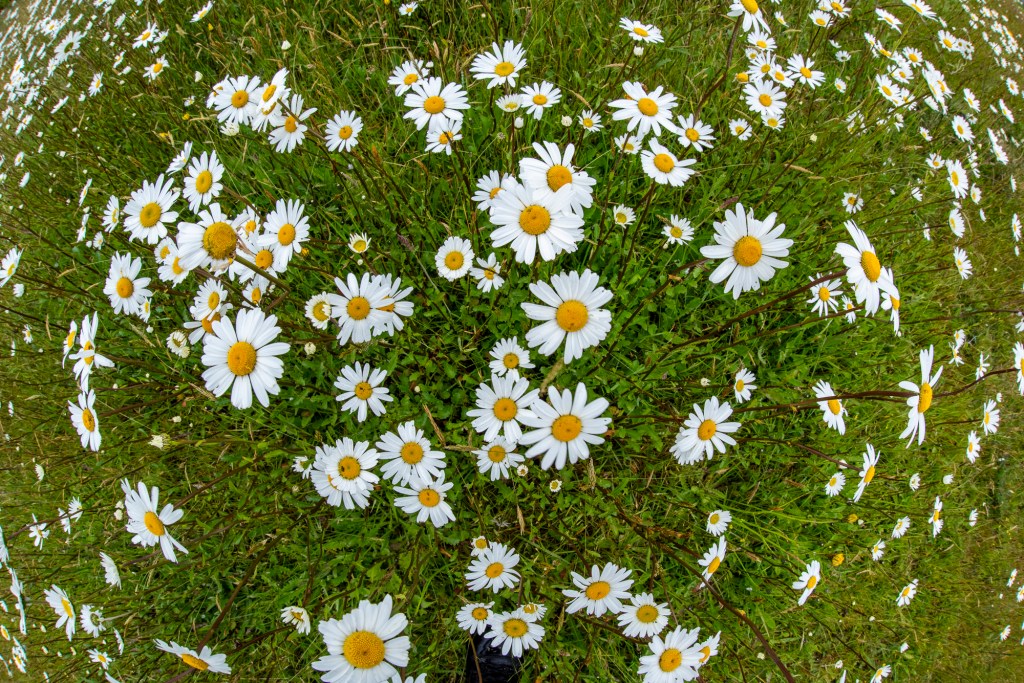
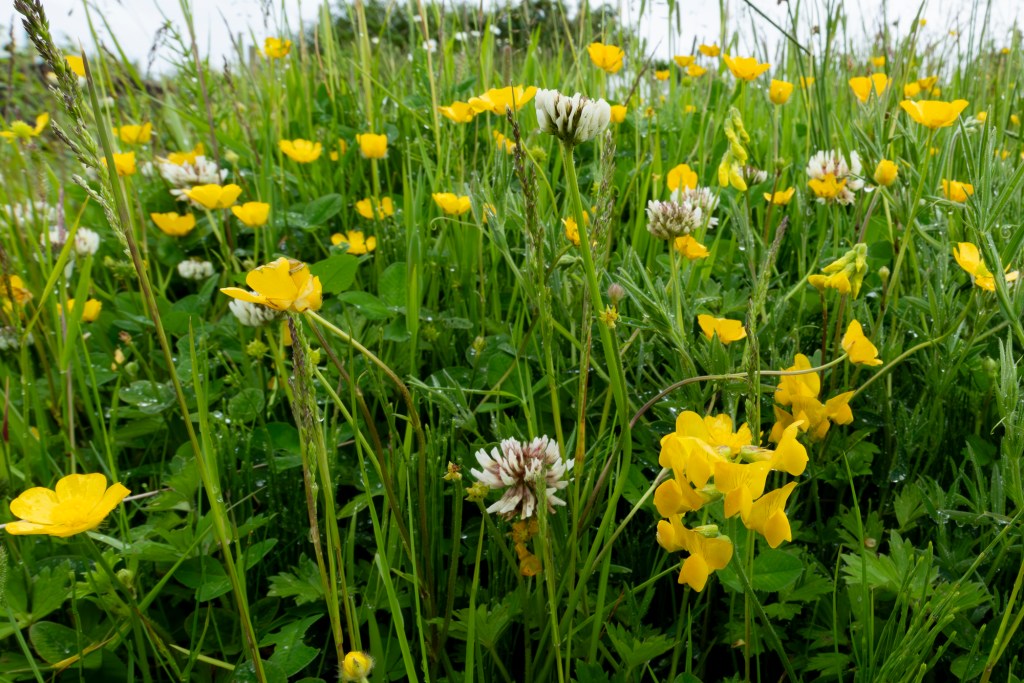
With or without Floris, by this time of year it feels as if Autumn is lurking in the shadows. The nights are drawing in, the seemingly endless daylight of the simmer dim already a memory. In the meadow the Ox-eyes, that in June turned the field white, are fading to seed. It’s now the turn of Cats ear to be dominant. The meadow on a sunny day is lit golden-yellow by their flowers. They’re heliotropes, turning their faces to track the sun, starting the day facing East and ending it facing West. A member of the Hawkbit family, when we first cleared the meadow they needed no reintroduction. Springing to life from the fields slumbering seed bank, growing as thick as grass.

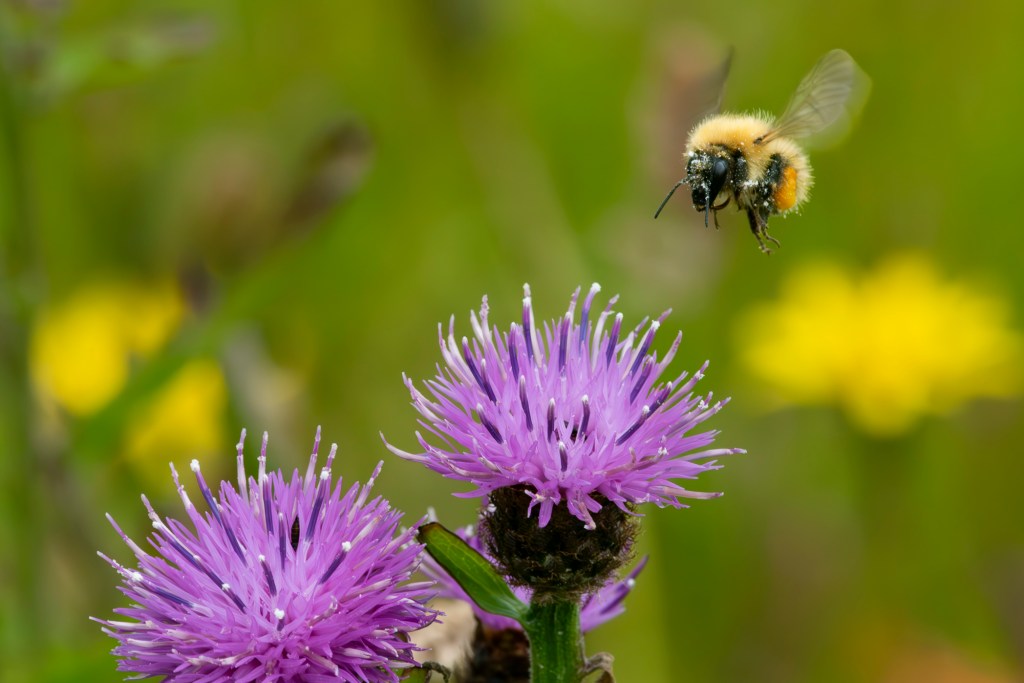
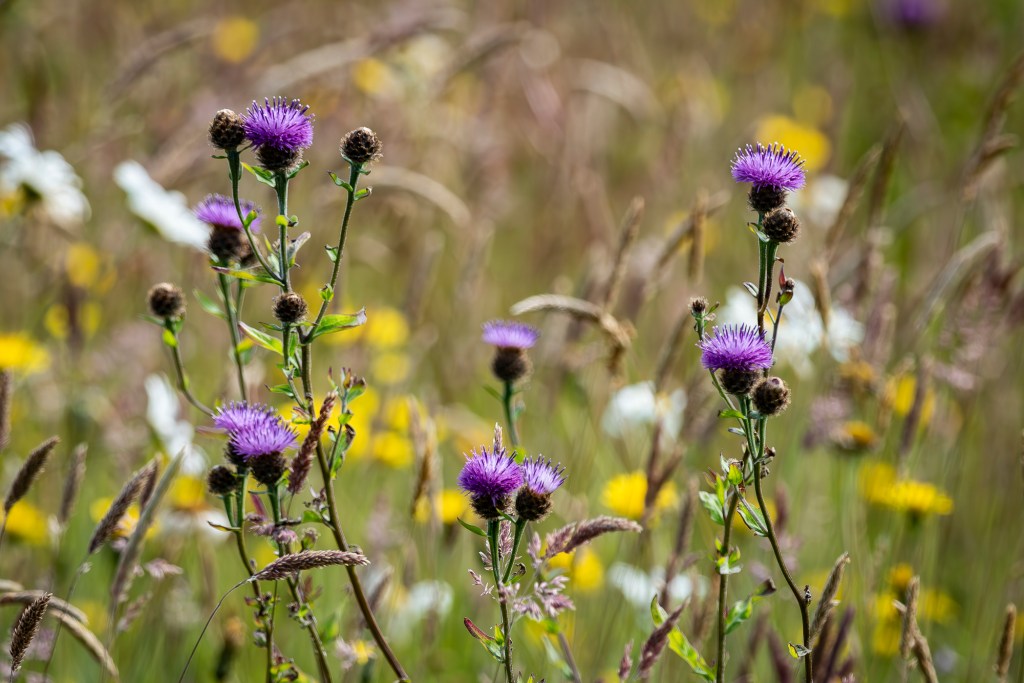
It’s also the time of year for less dominant late summer wildflowers to put on a show. Common knapweed is a favourite, aka ‘hardheads’ – a great bee and butterfly plant. Reintroduced via home grown plugs, they’ve established well. Unlike the Ox-eyes and Cats ears, who seem set on world domination, they’re happy to mingle with others. Their purple-pink flowers noticed not from afar but up close, as you brush past them.
Another harbinger of Autumn is the Devils bit scabious, named for its stubby “bitten off by the Devil” root. Up here they’re more a plant of coastal heaths, the clifftops at this time of year are literally bejewelled with their blue pom-pom heads. At home they’re slowly establishing. Year on year the grasses have grown shorter, sucking up what little nutrients the ground had and weakening themselves in the process, in contrast the Devils bits have gained ground, reintroducing themselves as conditions turn in their favour.

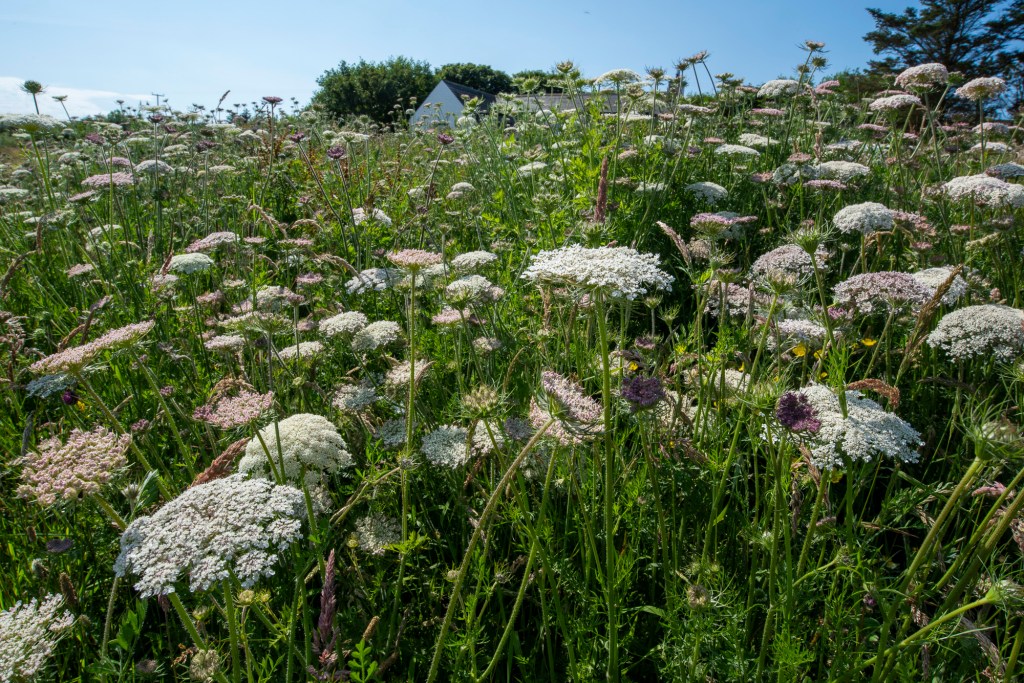
The only part of the meadow where Ox-eyes and Cats ear, at least for the moment, aren’t dominant, is a spot close to the house. The ground is new, a bank of subsoil imported from a friends building plot just along the way. Once rotavated and cleared of stone, the bare earth was sown with a mix of native grasses plus whatever wildflower seed we had, almost as an afterthought I added wild carrot to the mix, a biennial, whose root as its name suggests, gave us the cultivated carrot. As with all biennials, sowing in year one gives flowers in year two. They didn’t quite get the memo, nothing in year one, as expected, but also barely a flower in year two. This year though brought an explosion, a sea of large white umbels, occasionally tinted pink. In the garden we treat them as annuals, sowing in cold frames in late Summer, planting out to flower the following year. In the wild they’re a plant of chalk grasslands and drier soils, not suited to Orkney and her winter wet. I’ve a feeling that for the meadow at least, this is their swan-song. Beautiful while they last.
A carrot family member that is much more at home here is Wild angelica. Legend says that Angelica came here with the Norsemen, the Vikings who started to settle here in the late 8th century. In a nod to this a local distillery adds Angelica to Kirkjuvagr gin. The distillery is based in Kirkwall, the Orkney Islands capital, the Northmen knew it as Kirkjuvagr – Church bay.

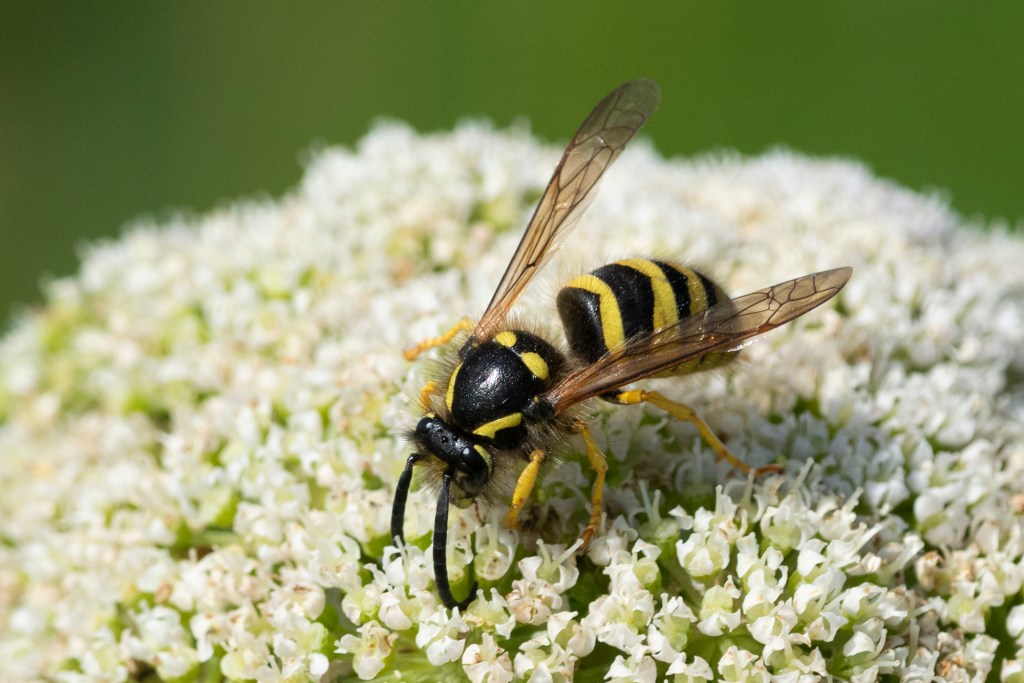
In the meadow it’s a great insect plant, attracting everything from beetles to butterflies. They’re a particular favourite of both Wasps and Red Admirals. I’m happier getting closer to the latter rather than the former. Both were photographed last week, sipping on the Angelica’s energy giving nectar.

At the bottom of the meadow, close to the shore, three ponds were dug, each filling naturally with run off from the hills. The ground there is peaty, black as coal. A ‘soup’ of life was added, bucket fulls of mud and brown water, collected from a flooded peat cut, after that the ponds were pretty much left to their own devices. The ‘soup’ immediately brought tiny shrimp like invertebrates, whirligigs turned up within days, diving beetles within a few weeks. Wet and Rushy areas close to the ponds were planted with Coastal willow, salix hookeriana. In Summer Reed buntings nest among them, tucking their nests low, amongst the rushes and grasses that grow in the Willows shade.

This summer, for the first time, Damselflies are being seen over the ponds. Like the Scabious mentioned above, they’re tarred with the same brush, this time the Devils darning needle. It is said that if you fall asleep near a pond, damselflies will alight on your face and sew your eyelids together. The one below is the appropriately named Blue-tailed damselfly. Their eggs will hatch as nymphs, who will live an underwater life. Two years from now, providing my eyes haven’t been stitched together because I fell asleep near the ponds, I might just get lucky and see a nymph crawl from the water, bursting from its skin and becoming a Damselfly.









































 A garden in Orkney