

As June has turned to July, the past week brought mostly grey days. We’ve had occasional bursts of sunshine and the odd shower of rain, but generally a spell of mild days with low cloud.

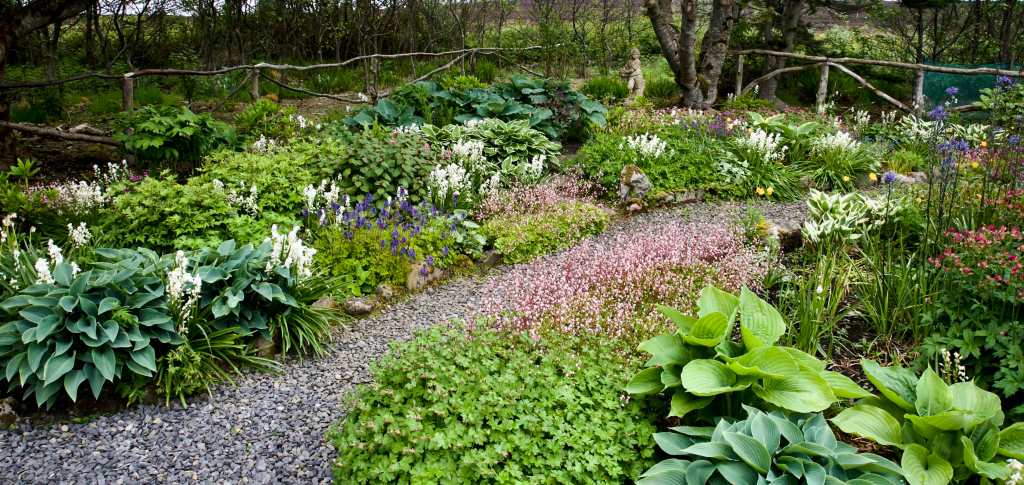
In the garden as some plants are starting to flower, others are already setting seed. Alliums, an early summer favourite, have gone from starburst flower heads to starburst seed heads.

As the alliums fade, others are just getting going. Wild carrot dara, a biennial that gives broad flower heads in shades of pinks and purples, is dotted here and there throughout the borders, pushing up through gaps between more established plants and stretching for the light on hairy stems.

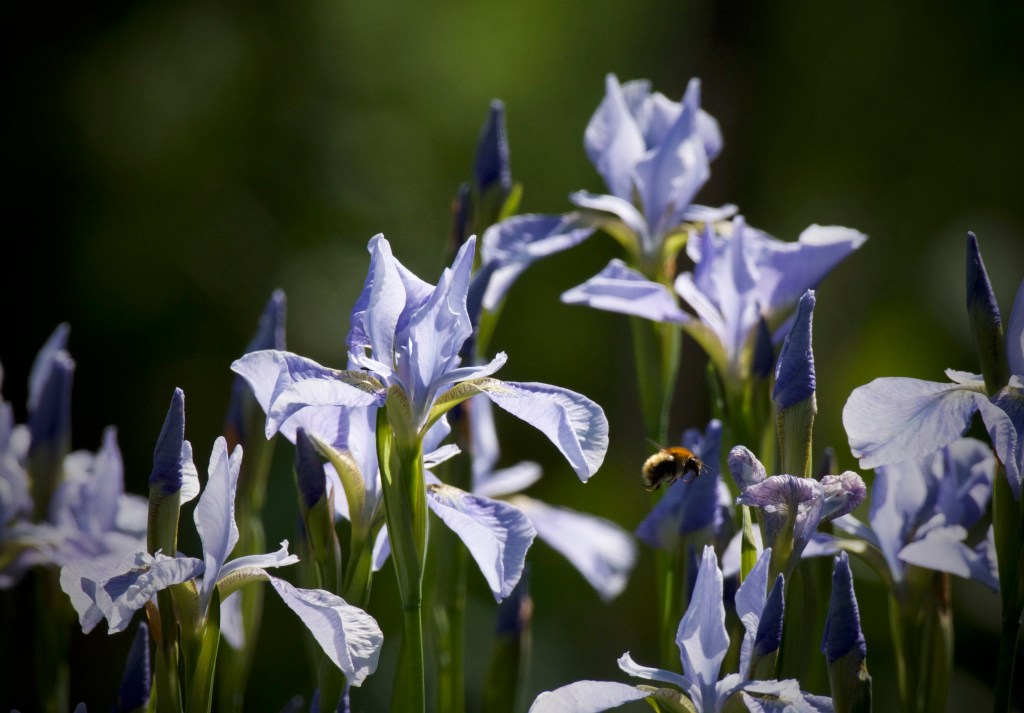
Siberian iris are just about over for the year, a plant that thrives in our cool summers and damp climate. Most have already finished but a white variety whose name, for us at least, is long forgotten, is still holding court. We’re still in the simmer dim, light until past eleven pm, at dusk viewed from a window, they can appear almost luminous.


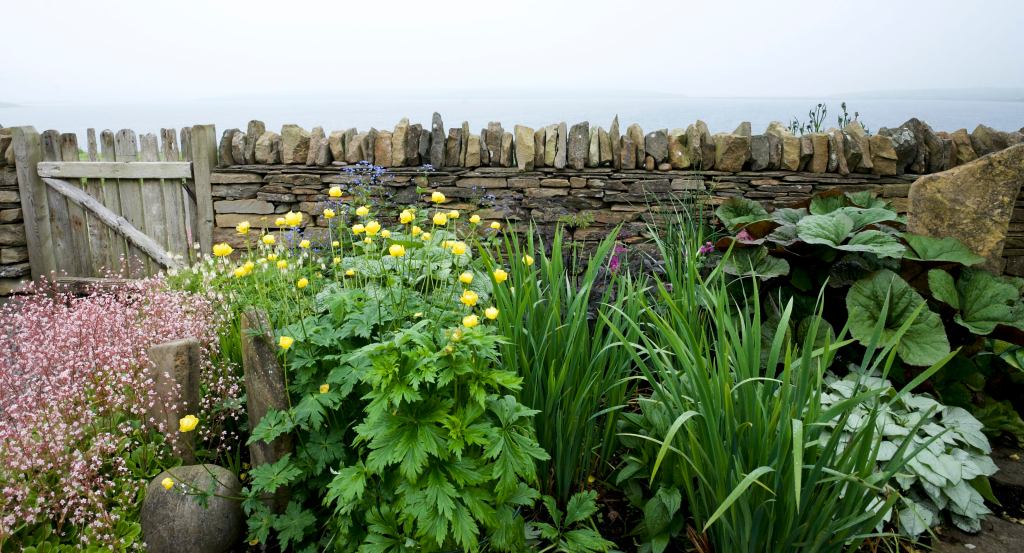
Lychnis are starting to flower. They’re a member of the campion family and we also grow their wilder cousins, Ragged robin and Red campion, the former in wetter spots in the meadow, the latter scattered amongst newly planted trees. As with their wilder cousins the garden variety is a real bee magnet. They’re not really suited to our soil, but they do ok. For us, the main attraction is the silver-grey foliage that has the texture of felt, the flowers are an added bonus for both human and bee alike.


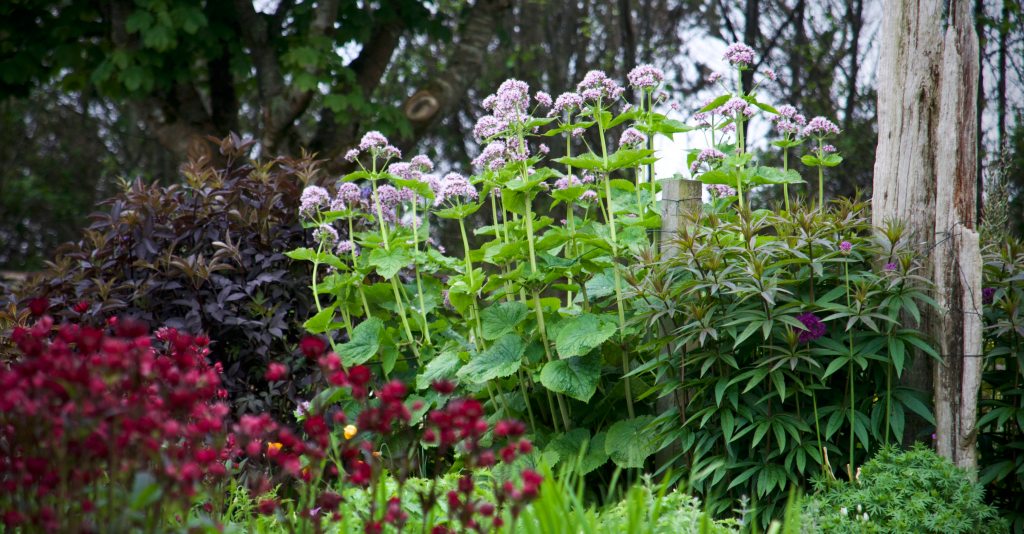
A plant that, once established, does well in our soil, is Persicaria polymorpha. We saw it years ago in a garden down south and not having a pen to copy down the name, told ourselves that if, as is usual, we forgot the name, to think of Monty pythons dead parrot sketch. The logic worked and when we got home one was found online. It went into a corner of the kailyard and promptly sulked for the first year, only in year two did it come into its own and reach the height and spread of the one seen further south. Great for the back of a border it will easily reach six feet, in summer throwing out spires of creamy white flowers, that in autumn, turn a soft red as they fade to seed.

An unusual visitor to the garden this week was a female Hawfinch. They’re the uk’s largest finch, chunky thickset birds with an oversized beak that is perfect for cracking hard stoned fruit. A sparrow on steroids with a pugilists beak. They’re not a bird of Orkney, rare breeders in the South of England they are occasionally seen on passage in the Northern Isles. In the five years that we’ve been making this garden they’ve visited perhaps a half dozen times.


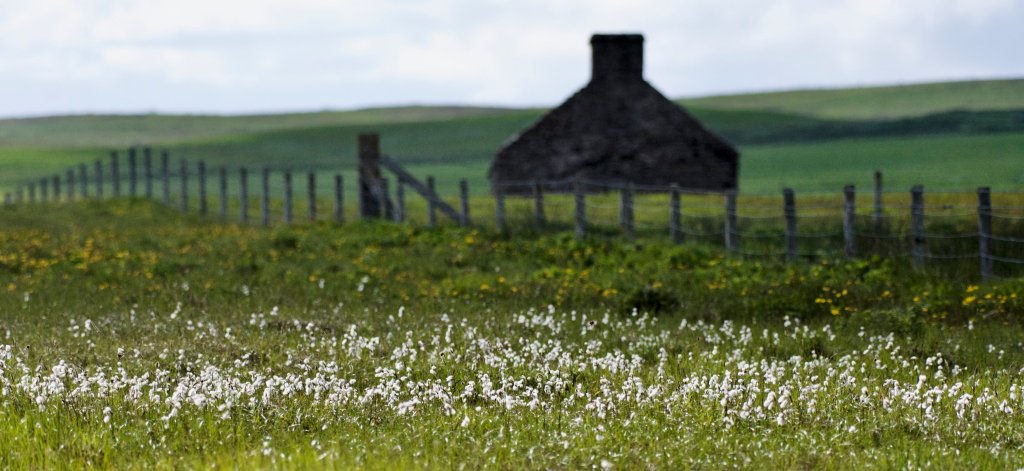
For the past few summers we’ve been making a small field back into a meadow. It’s at the stage now where we can pretty much leave it to its own devices, not yet in full flower, it will be a week or two before the ground is carpeted with colour, but Ox-eyes and others are out of the blocks and already putting on a show.

Narrow paths have been mown through the meadow in rough figures of eight, they’re walked most days, usually with a cup of tea in hand. Below the meadow, where the ground falls steeply to the shore, a bob of harbour seals haul out at low tide, basking on the rocks or stretching out on a thin mattress of bladderwrack. When we first moved here they would panic at the sight of a human, tobogganing back into the water, noisily splashing to warn others of our presence. Now we are tolerated, watched warily from a distance but no longer enough of a threat to break the peace of their out of sea siesta.

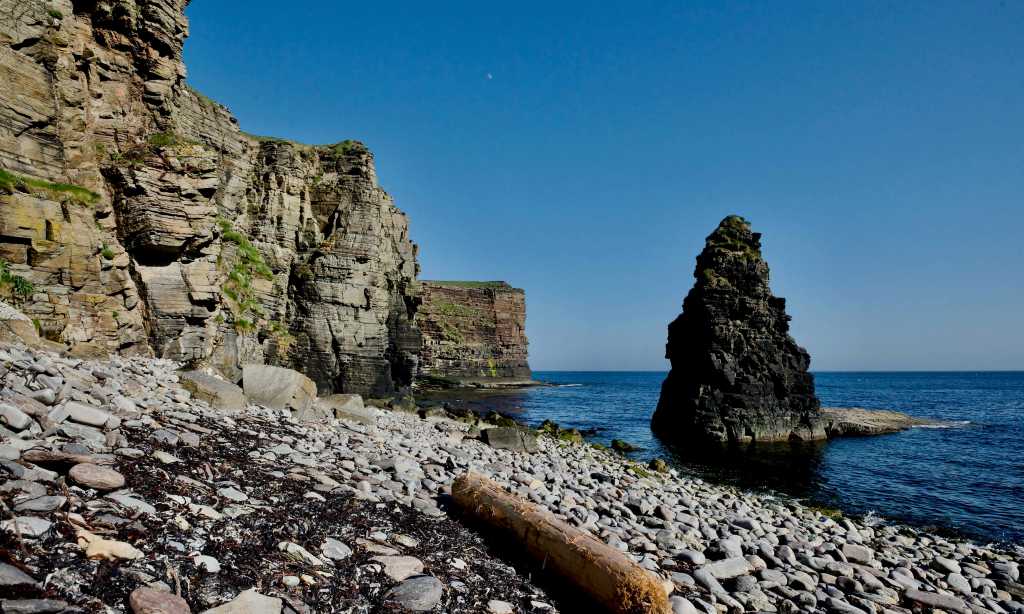
In the wider landscape in a nearby geo, there’s a rock covered in what I think are the fossilised anchor marks of Limpets. In the whole of the bay it’s the odd stone out and perhaps it has been cast up from deeper waters, jet black in colour, with surface cracking, it has the look of fossilised mud. I photographed it mid week, under a low grey sky with an incoming tide that threatened to overtop my walking boots. A time exposure seemed appropriate and an exposure of one minute was made. For a rock that might be millions of years old, not even the blink of an eye.


















 A garden in Orkney