When we first moved to Hoy we lived in the village of Longhope. Our next door neighbour, who lived in what would once have been the customs house, had moved here from Germany many decades ago. Chatting over the wall one day, I asked what had brought him to Orkney. He said he had read of islands where men burnt earth and wanted to see them for himself. It sounded very poetic and what he meant of course, was the cutting and burning of peat for fuel.

We left Longhope some six years ago and, as the crow flies, the peat banks that would once have have served our new home are around a half mile away. Walk through the back garden shelter belt, carry on up the moor to the boundary fence, jump the fence and go over a brow and they’re spread out before you. A longer and better route is to go through the front garden gate and walk a mile or so along the road, hook a right, go through a five bar gate and follow a stony track that climbs gently into the moor. As the ground rises the landscape opens up below you, the Pentland Firth & Caithness, its own moors dotted with rows of turbines, coming into view.

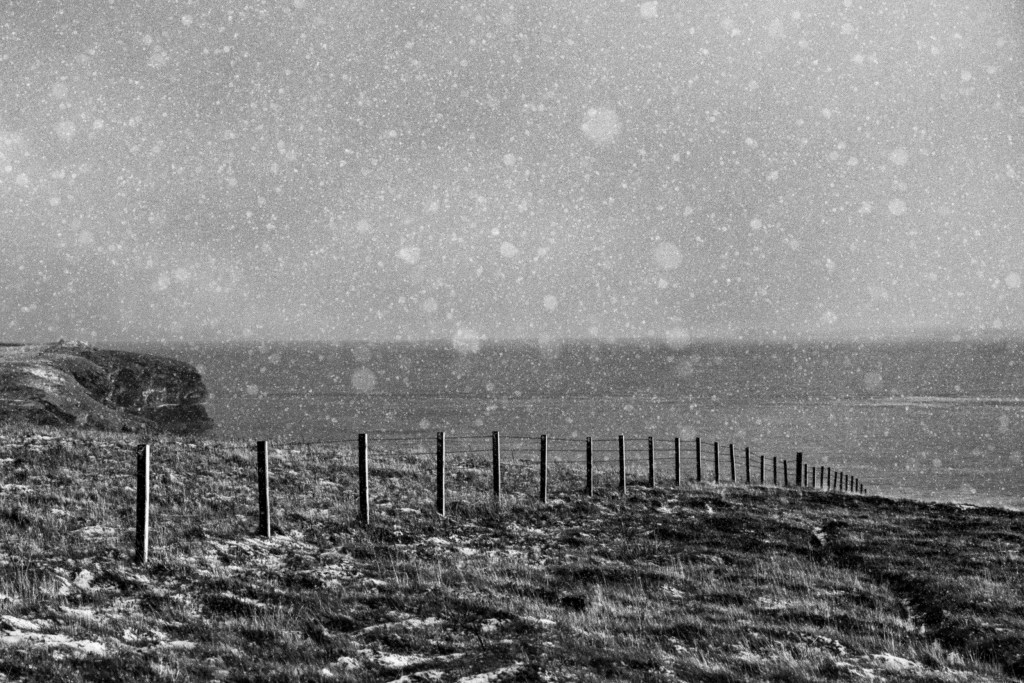
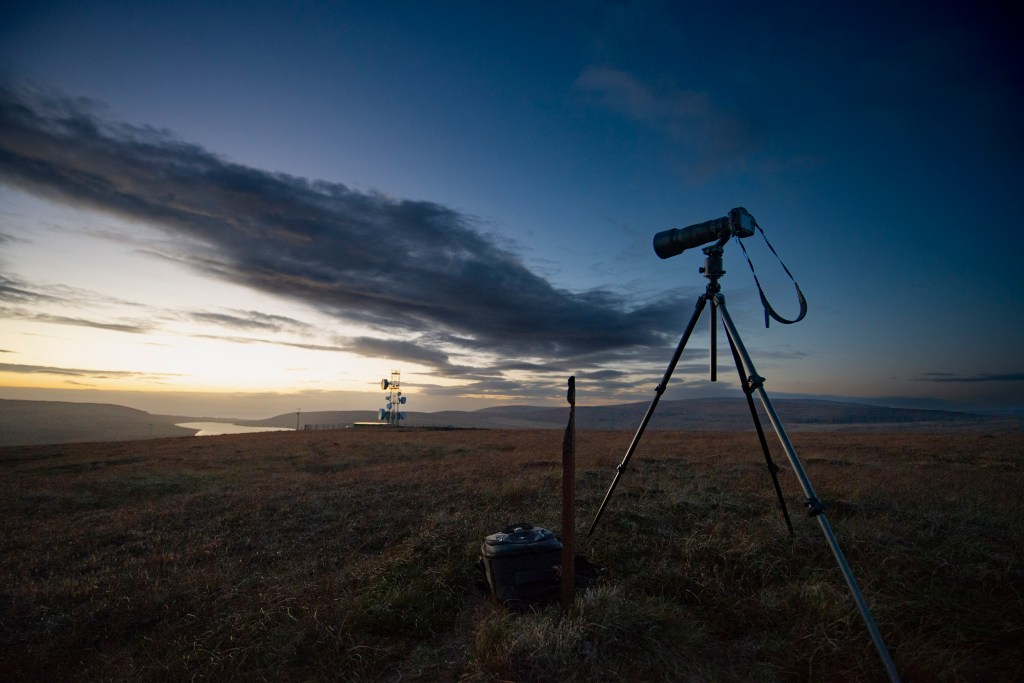
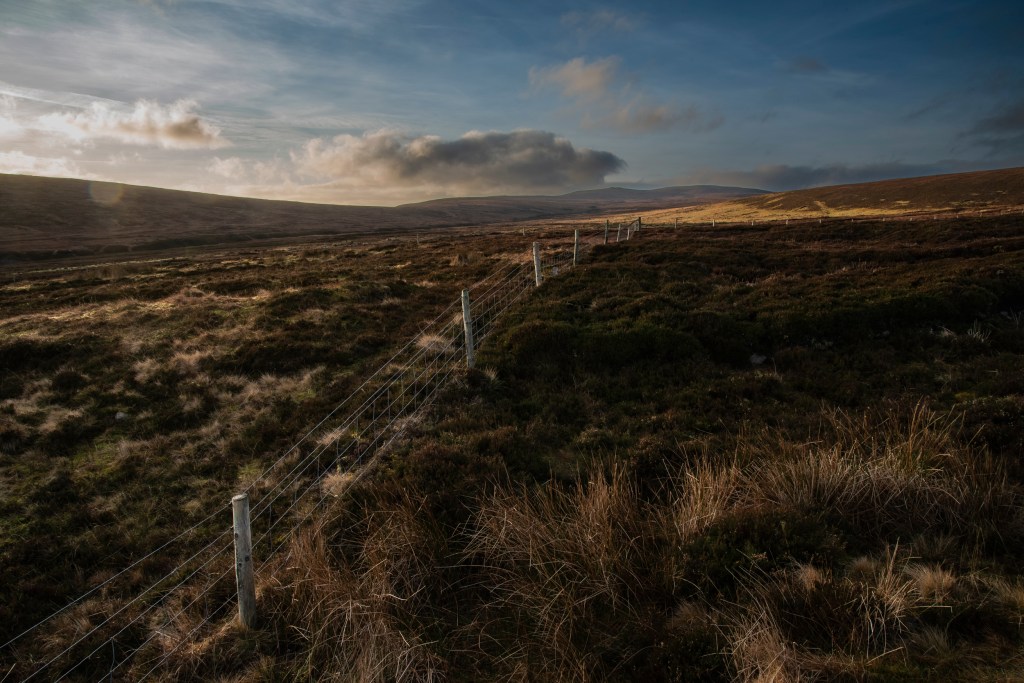
I walked up to the peat cuts one day last week. The weather had settled and had brought, before storm Eowyn rolled in on Friday, bright days and crisp nights. Once through the five bar gate, instead of following a track that leads directly to the cuts, I opted for a longer route, following a fence of bright wire and sun silvered stabs, that loops around to the North and if followed to its end, leads to the islands reservoir. In small ravines and sheltered valleys you’ll find Rowans and native Willow scrub but once on the tops, where the soil is thin and the winds relentless, the stabs, and the occasional accompanying gate, are the tallest things for miles.
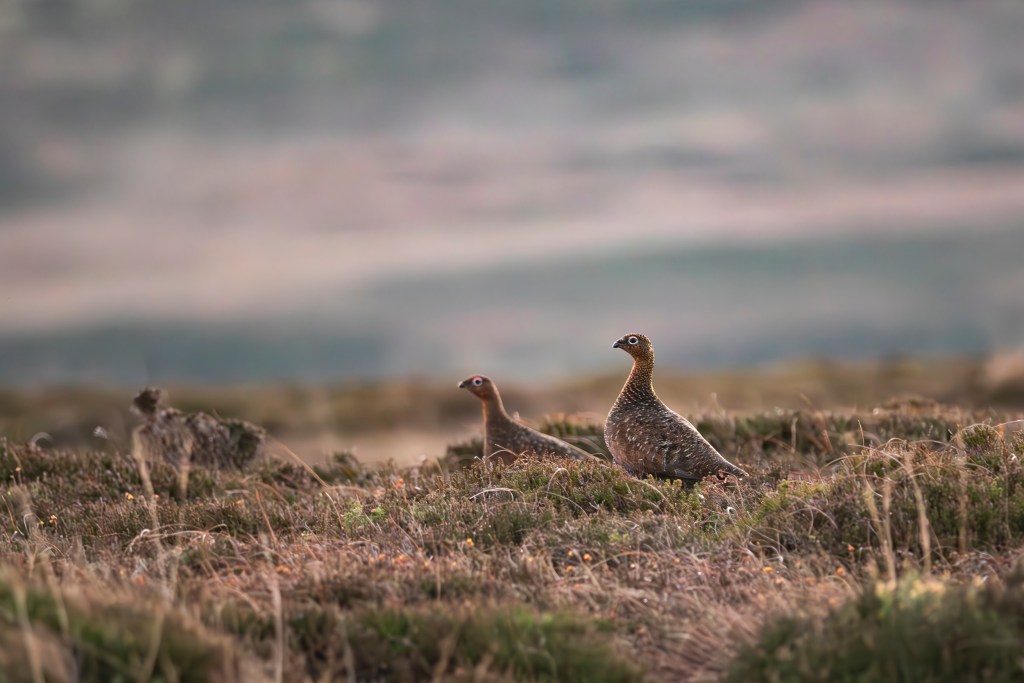
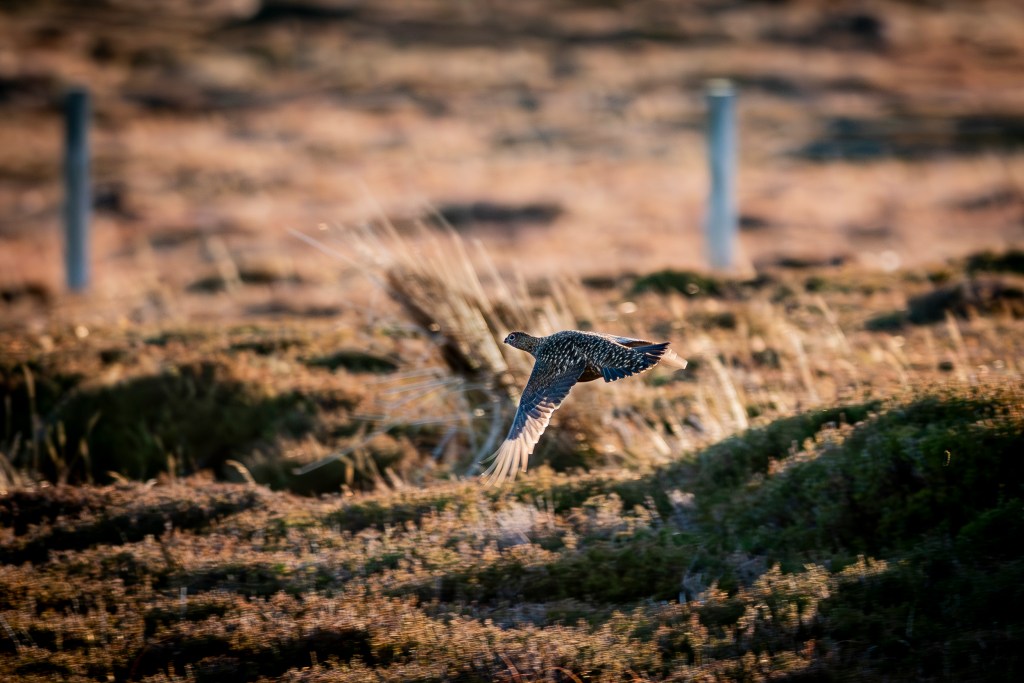
Up on the moors Red grouse are usually heard but rarely seen. They’re generally scarce in Orkney and on Hoy were possibly deliberately introduced for sport. Last week I got lucky, a covey of six birds crossing in front of me. Two of them paused, just long enough for a photograph to be taken, before running on, quickly lost again amongst the Heather. A half mile further on a pair lifted literally from under my feet, gliding away at Sheeps back height.
As you follow the fence and climb higher, the peat cuts come in to view below you. A friend along the road tells of days when the cuts would ring with voices, an entire community cutting and drying fuel for the Winter. Bar the call of wild birds, and depending on the day, the whisper or roar of the wind, the cuts are silent now. Oil replaced peat, just as heat pumps and solar are now replacing oil. From above, in the low angled light of a January afternoon, the works are obvious, long shallow rectangles, cut here and there by a track that allowed access first by pony and later by tractor or quad. Our own cut is among them and at home there’s an area of ground that’s black with a deep layer of peat dust. The spot where fuel, once dried on the hill, was brought down and stacked for the winter. By one of those odd coincidences, it’s the exact same spot that we chose for a solar array. Same needs, different times.

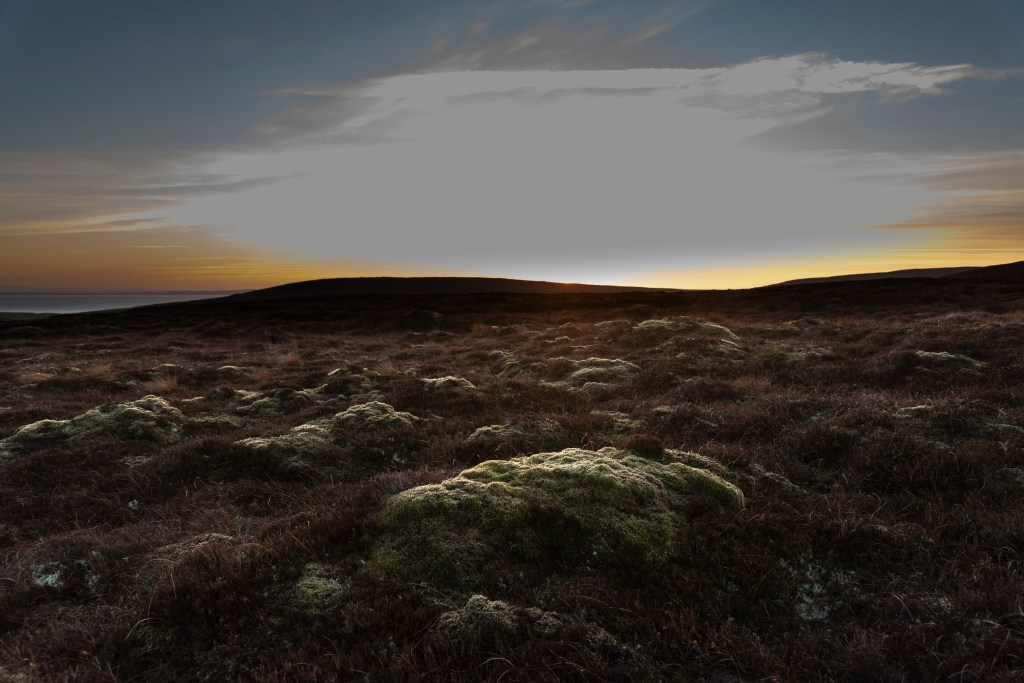
Nature doesn’t do vacuums and the cuts have, in the space of a few decades, regrown. A Harris tweed mix of easily overlooked colours, heathers and moor grasses, bright mosses and silver grey lichens.


Mountain Hares are common here, they were introduced a century or two ago, and as with the Grouse, probably by the Lairds for hunting. At this time of year their white winter coats make them easy to spot, a pause and a quick sweep of binoculars gave a count of twenty or so, some in the cuts, others on a west facing slope, making the best of the late afternoon sun. They’re protected by law and as there are no foxes in Orkney their only threat here comes from the sky. After more than a century’s absence White tailed eagles nested on Hoy in 2015, Scotlands 100th breeding pair, and since then, after a forty year absence, Golden eagles have also successfully bred here.
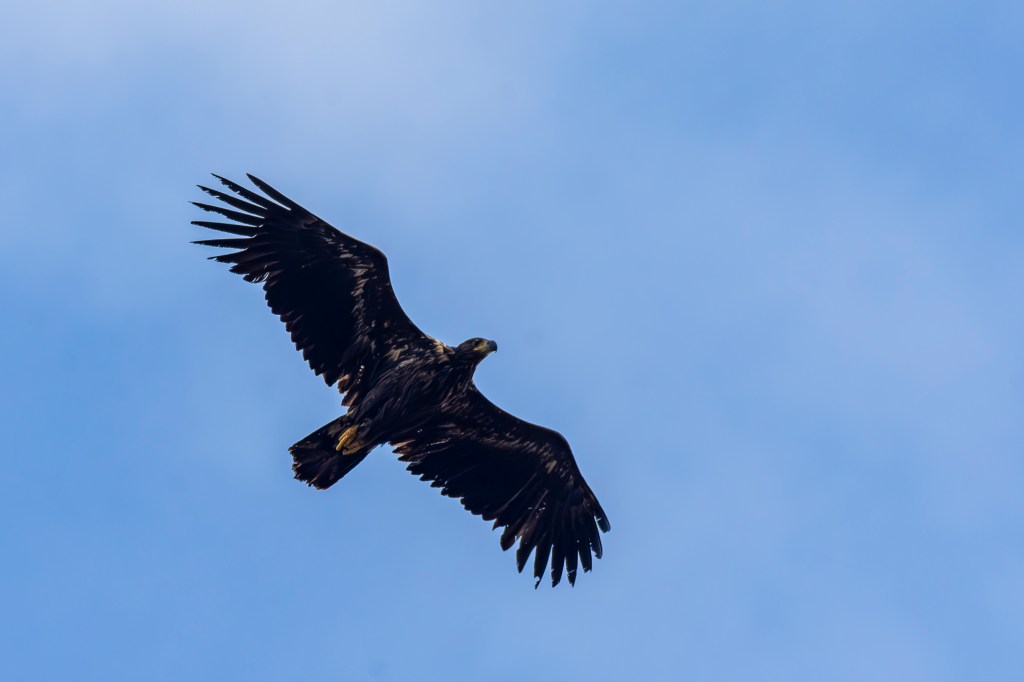
At this time of year the hares must be an easy target, at least to spot if not to catch, bright white against brown moor. Occasionally, on a raised or flat area of grass or heather, you’ll come across the bleached bones of an unlucky hare. The eagles aren’t choosy of course, I know of another spot, at the North end of the island, where the remains of Greylag geese will be found, a flat topped grassy mound, littered with plucked quills and down.

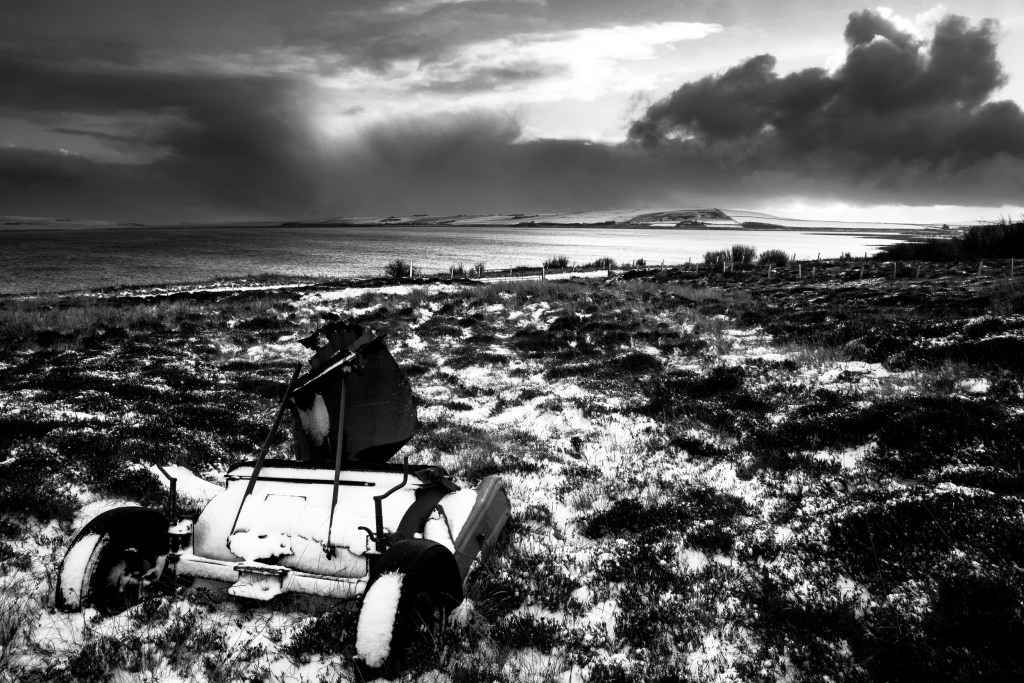
As the light faded I cut back down a slope, intent on picking up the track that I’d ignored a few miles back. At the bottom of the slope, and at the very edge the cuts, there’s what’s left of an old caravan, the place where the cutters would brew tea. Over the years the winds have done their worst, and with the track to it long overgrown, it has the look of a piece of space junk, randomly dropped in the middle of nowhere.

As I found the track and followed it home, dozens of snipe flushed from the cuts to either side of me, small wisps of half a dozen or so at a time, rising and jinking away with a quiet and nasal “kraaaat”, backlit against a pre-sunset sky. Woodcock were also seen, rising silently from under your feet. Long billed and dumpy bodied birds whose feathers, in shades of browns, buffs and greys, make them invisible until almost stepped on. On the raised banks of the cuts, Hares, too distant for a photograph, sat up on hind legs so that an eye could be better kept on the interloper.

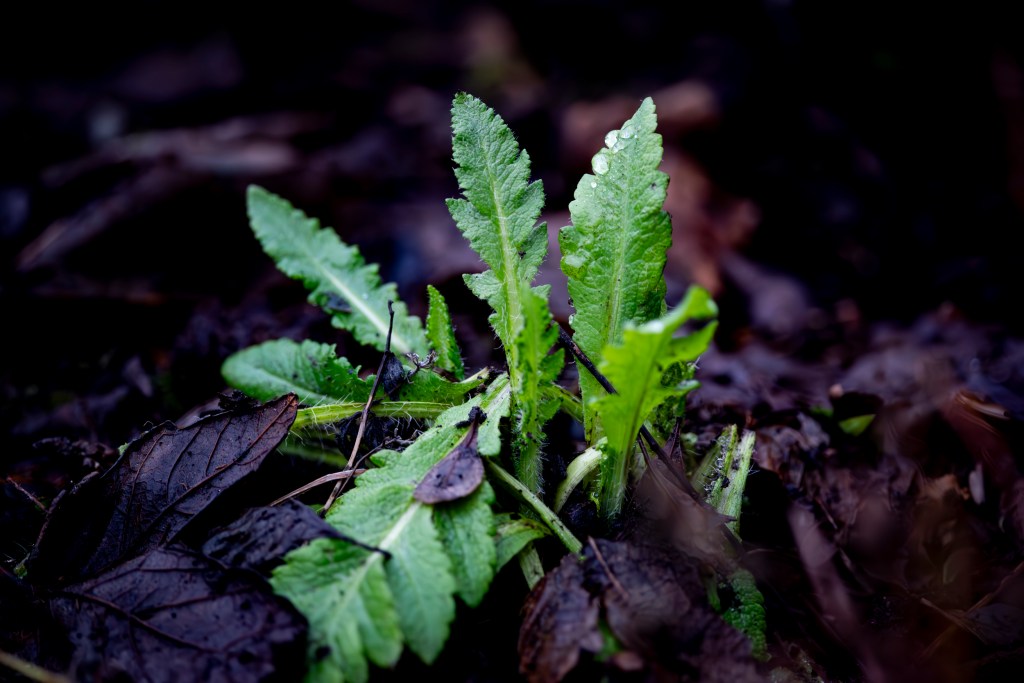
With the sun already below the hills to the West, while the light just about allowed it, I took one last photograph, kneeling in a cut and getting wet knees in the process. A photograph of the mosses and heathers that have claimed the ground back.