
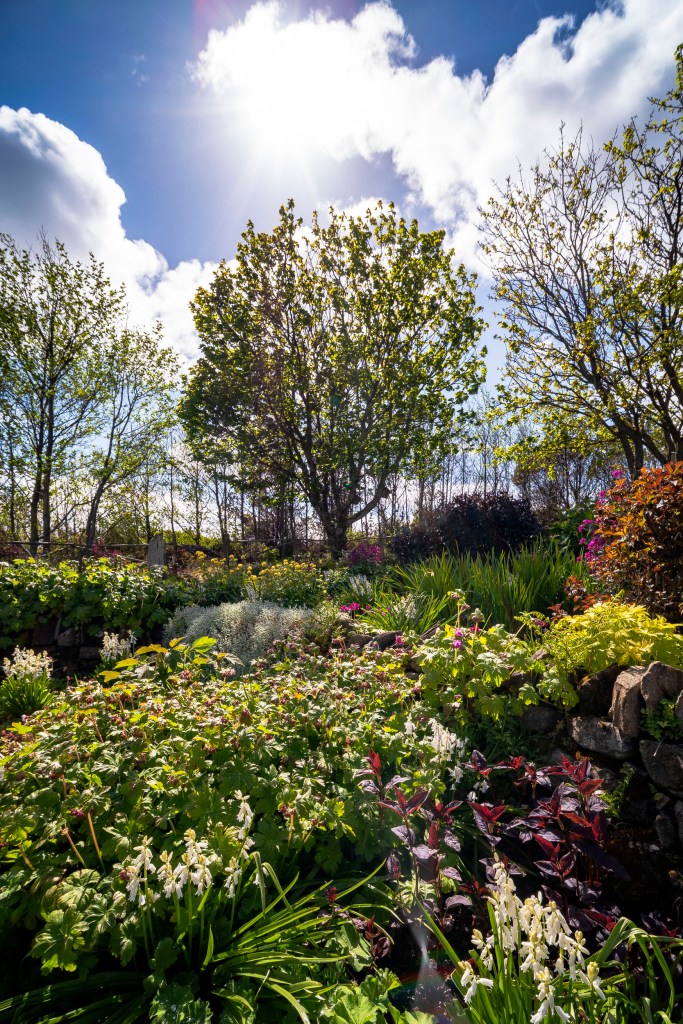
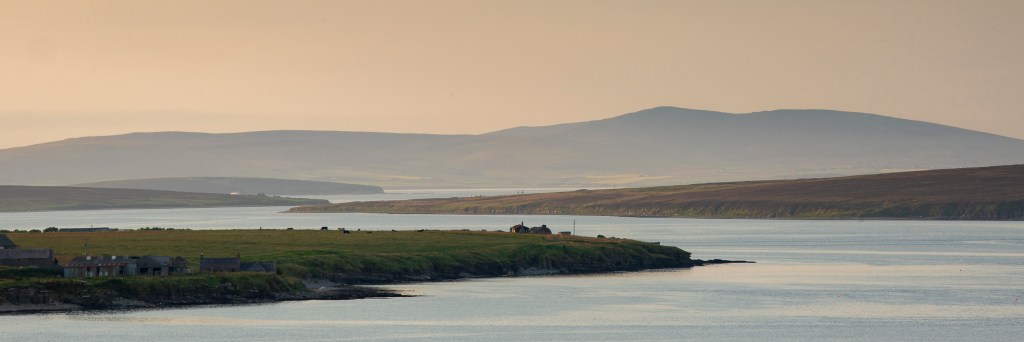
The past few weeks have brought a settling down of the weather. The days are much longer now, the first glow of light arriving in the North-east at well before 5am and at the days end, the last light of the evening lingers in the west beyond 10pm. The first day of (astronomical) summer is more than a month away but for us it feels like summer is already here. With the odd curveball gale excepted there’ll be weeks of long days now, stretching into autumn – sun and rain, flowers and birdsong, well worth winters six long months of wait.
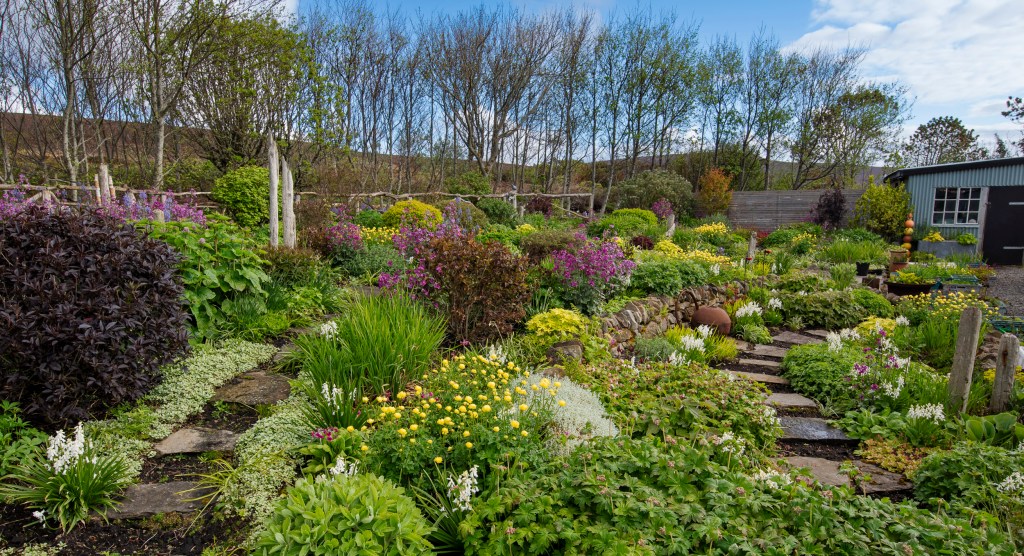
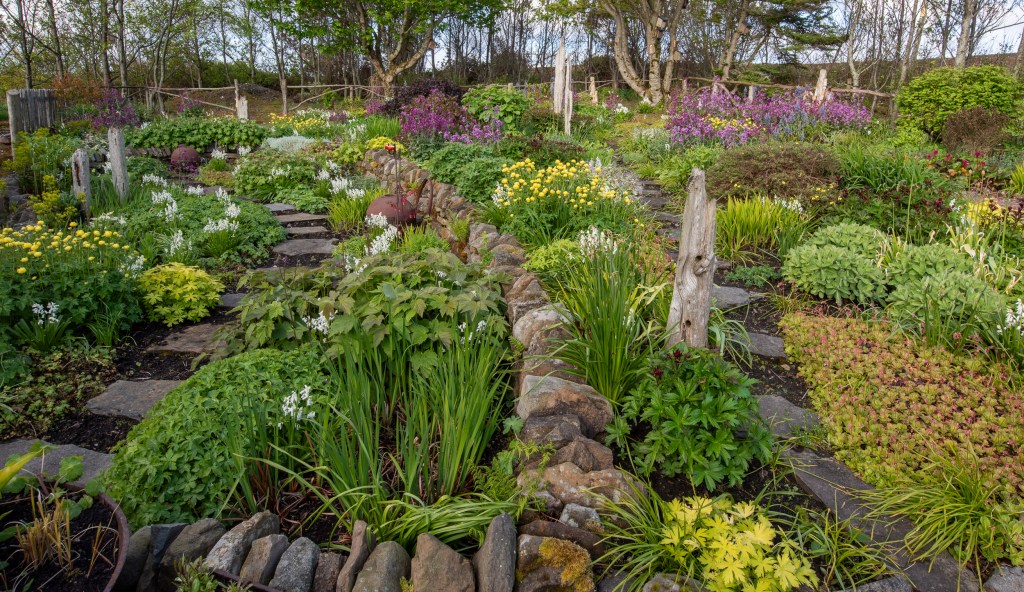
In the garden there has been an explosion of growth, a rapid change, in a few short weeks we’ve gone from spring bulbs and bare earth to lush clumps of greenery, all full of promise for the summer and autumn to come.
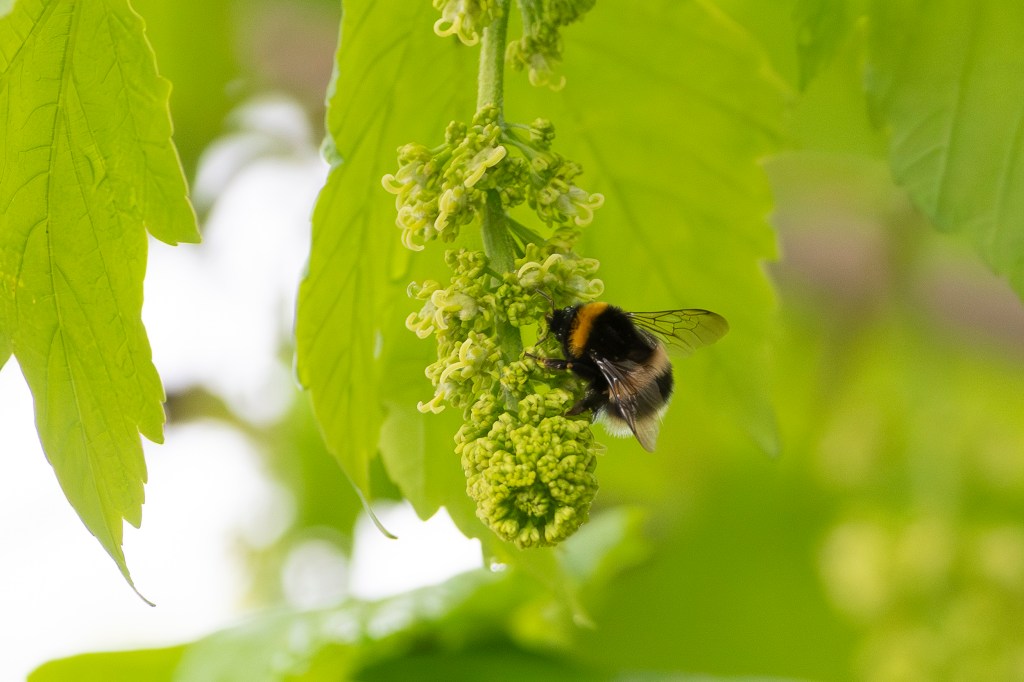
Sycamores are bursting into leaf. This morning brought a gentle rain, I stood for a while beneath the sycamore in the photograph at the top of the page, listening to the hum of bumblebees going about their business in the branches above me. Harvesting nectar from the easily overlooked flowers and, like the human below them, benefiting from the shelter of a newly unfurled pale green umbrella.
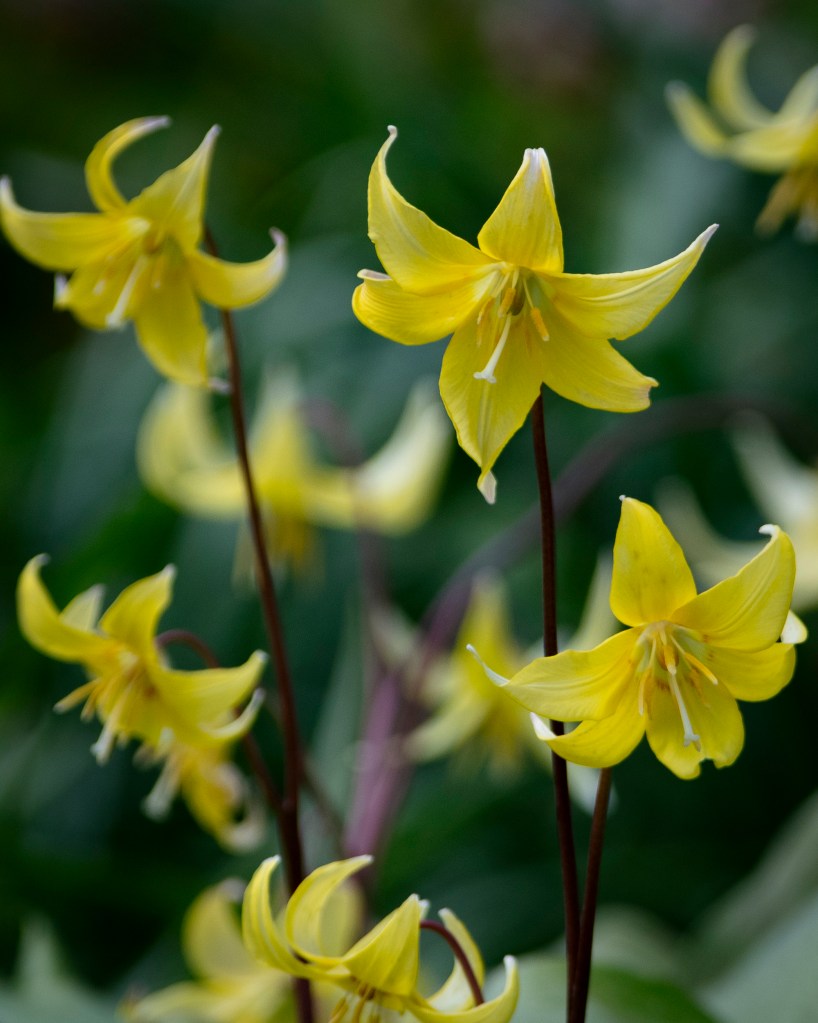
A few years ago, in a border that sits in the the shade of the sycamore (and its same age twin), Jacqui planted a handful of erythronium bulbs. They thrived in our cool, moist and slightly acidic soil and are now dotted here and there beneath the two trees. They get their common name of dogtooth lily from the shape of the bulbs but my favourite, from much colder climes than this, is the glacier lily, one of the first species to flower after snow melt.
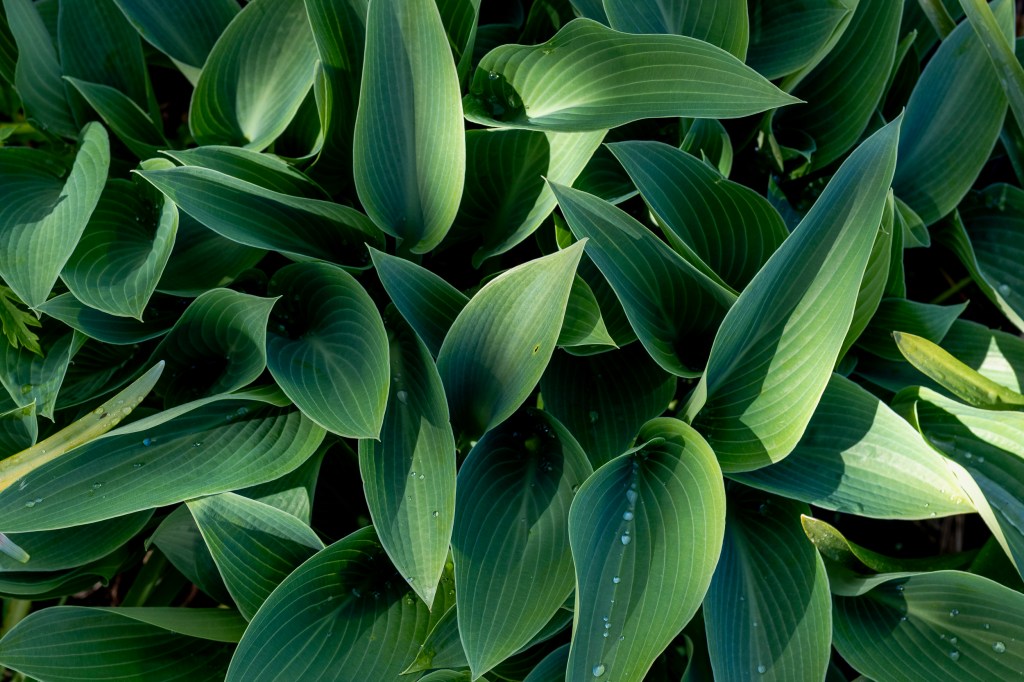
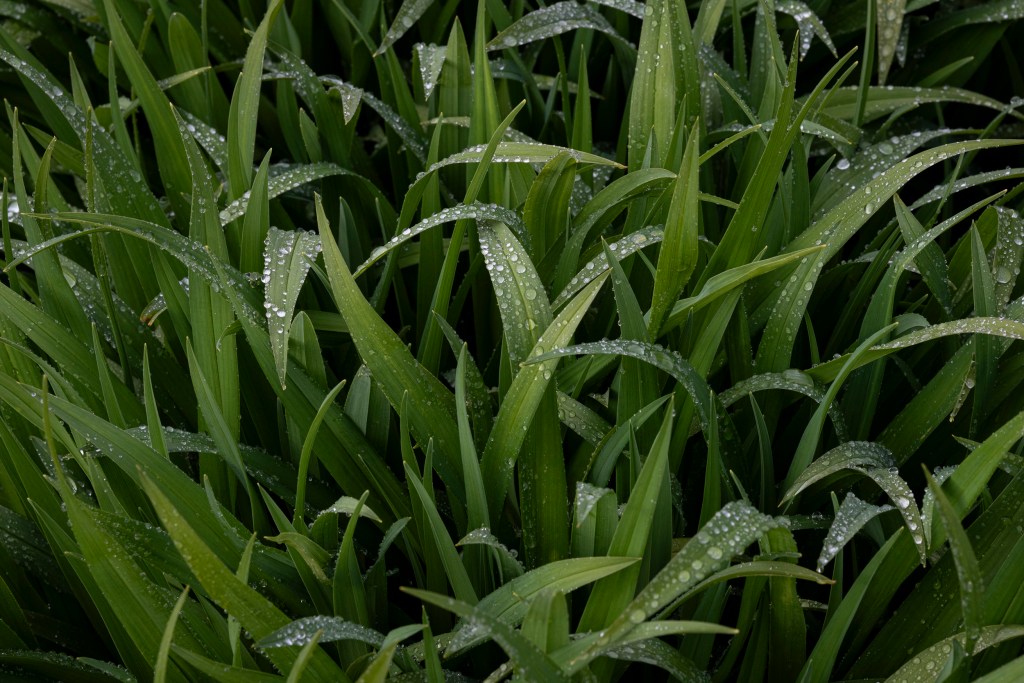
Where flowers have yet to appear, foliage makes up for a lack of zing. The two below are hosta halcyon and hemoracallis stafford. Halcyon, to be fair, doesn’t need flowers, a plant grown for its broad spears of veined blue-green leaves whose flowers are almost an afterthought. Stafford is the opposite, the day lily, grown for its hot, late summer, furnace-red blooms. At this time of year you tend to pass it by, eyes on other things, until a shower of rain gives its foliage sparkle and life.
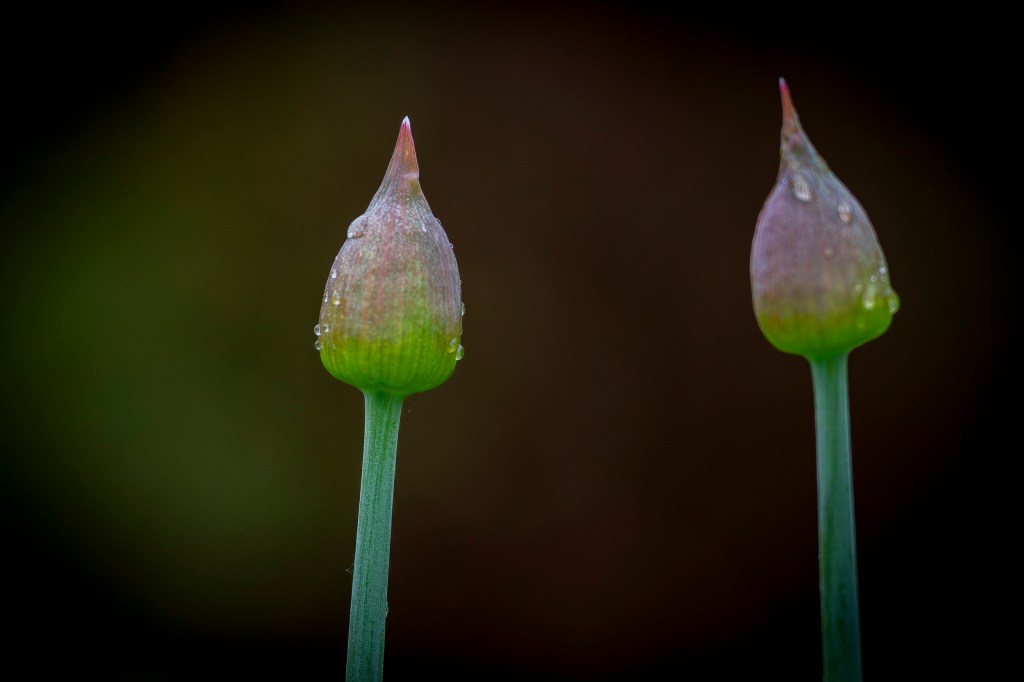
As with the dogtooth lilies, alliums were also introduced a few years ago, lovers of sun rather than the lilies shade. For here they were risky, preferring free draining soil and said to be haters of winter wet. Fingers were crossed and as is often the case, they thrived. They’ll open in a week or two, purple star-burst heads that draw bees like a magnet draws iron, but there’s also beauty in their ripe buds, all soft purples and lime greens, held upright on long, silver-green stems.
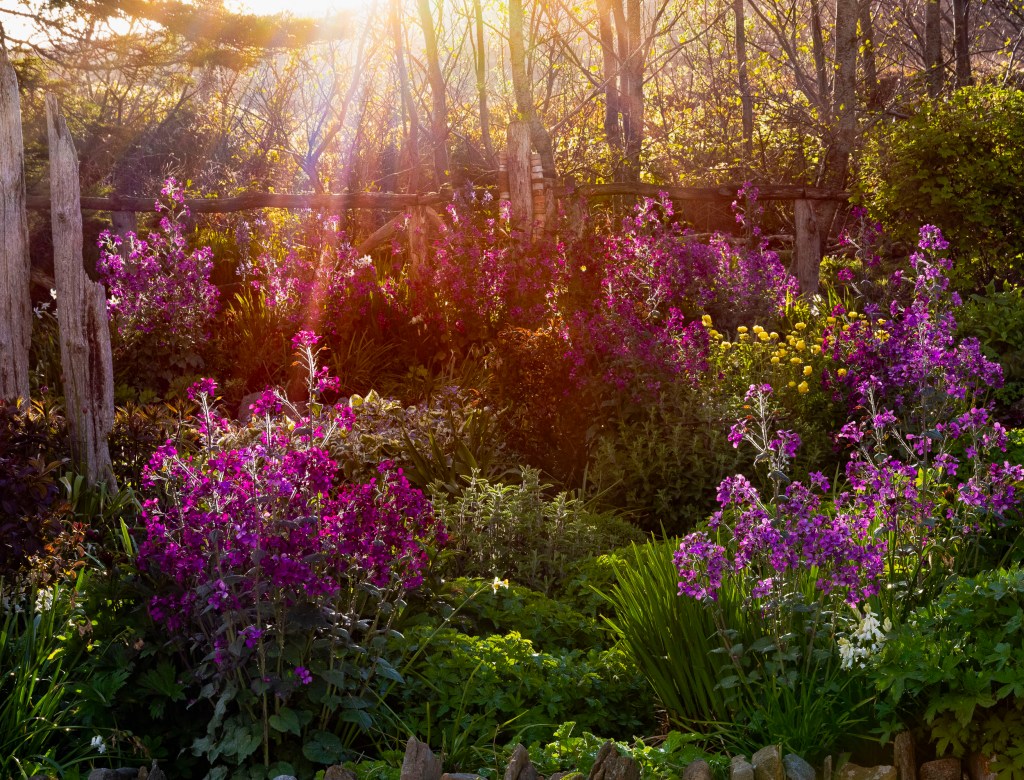
Another fairly recent introduction to the garden is honesty, lunaria annua. Jacqui has a live and let live attitude to self sown plants and now, after a slow start, they pop up anywhere and everywhere, from full sun front gardens to shelter-belt shade. Lunaria comes from lunar, a nod to the moonlike silver seed-heads that will follow the flowers and for here, will last until Autumns winds scatter them far and wide. Annua suggest that they’re an annual, but it depends, in this garden, perhaps because of our short summers, they’re a biennial. They look best in the late evening, backlit by a dipping sun.
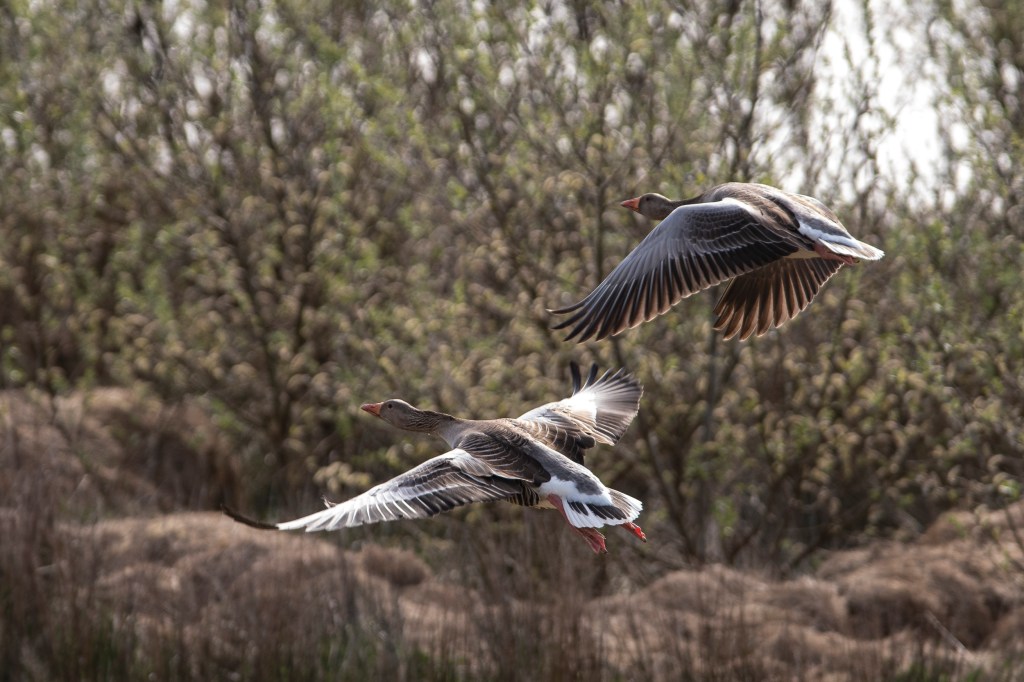
Outwith the garden, a job that finally got done was the mowing of the meadow. I usually mow and clear it in late autumn but had the (not so) bright idea of leaving it until spring so that finches, red-listed Twite in particular, could feed on the seed heads. Good idea for the birds, not so good for the human who cut it. Wet and gale flattened it took twice as long and yielded three times as much “hay” as an autumn cut. Raked into winrows and left to dry, it then had to be quickly and laboriously cleared before new growth started to anchor the winrows to the earth. Plan B is to return to an autumn cut and plant a couple of separate areas for finches. It cheered up the pair of Greylags that nest nearby though, fresh short grass for them to graze. A tiny silver lining 🙂
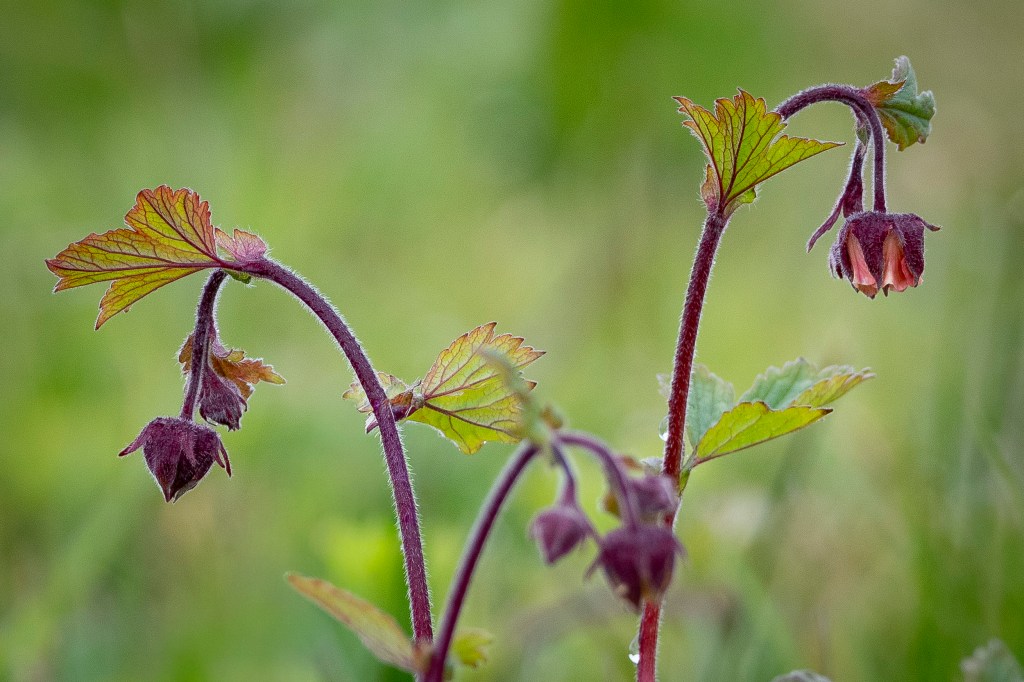
Unlike the garden proper, it will be a few weeks yet before the meadow comes into its own. Each year it goes from strength to strength and it’s genuinely heartwarming to see a carpet of new seedlings, each vying for space with grasses and established perennials, in what a few short years ago was pretty much a soulless and lifeless monoculture. Mid may though is early days for grassland in Orkney, I had a “dodge the rain” walk through it with a camera this afternoon, of all the species present only Water avens, geum rivale, looked to be on the cusp of flowering – a single half open bud with a shy peep of an apricot pink flower.


😍🤗🥰🙌🏼🤩🍃
LikeLiked by 1 person
Good to see you again, Gary. Your garden looks lush.
Here down South we’ve had a miserable Spring, cold, windy and so dry. Just had a small amount of very welcome rain but need masses more.
None the less long established shrubs/perennials are beginning to flower, roses, clematis, cistus. spirea etc benefitting from our so wet Winter! Am reducing watering this year and am trying my hand at okra, should be OK I think.
In very exciting news, I’ve got gold finch coming to my feeders.
Have a great week. Margot xx
LikeLiked by 1 person
Hi Margot
For Orkney it has been very dry here as well, I saw a post on local media saying April was the driest for 35 years. I have to keep remembering to water trees that are still in pots awaiting new homes, the pots dry out very quickly due to the breeze, hopefully they’ll be going in soon.
Good news on the Goldfinch, most of ours have left now but there are still a few visiting feeders that will hopefully stay and breed. Siskins are arriving, together with a few Redpolls, both are summer breeders here, I’d love to know if they are moving down from Scandinavia or up from the Uk, either way it’s great to see them returning.
Hope you enjoyed the holiday.
x
LikeLike
What a beautiful garden. You and the Head Gardener should be rightly proud.
Interesting to read about the meadow timing. I hadn’t considered the effect of reemerging plants growing through the cut stuff to make a thatch. Glad you’ve found a compromise between your effort and the feeding of the finches and twites.
I had to look up pictures of twites – what distinguishes them from sparrows?
Hope your okra grows well, Margot!
LikeLiked by 1 person
Thanks Penny, I’ll pass your compliments on to the Head gardener 👨🌾
At a distance a twite and female house sparrow could be quite easily mixed up but up close they’re reasonably easy to tell apart, the twite is slimmer and streaked underneath. Their habits and habitats are also very different, twites are a bird of hills and coasts and in flight they have the typical finch ‘bob’, and also have the habit of flying a short distance and then settling again. In winter though they can easily be mistaken for female linnets or female redpolls, all fall under the technical classification of LBJ’s – little brown jobs 😁
Not a UK site but this site sums it up nicely https://birdsdontpee.com/birding-in-praise-of-little-brown-jobs/
A site has been chosen for a finch crop, the master plan is a mix of local cereals added to something like this – the highland pheasant and finch https://www.brightseeds.co.uk/product-category/game-cover-mixes/spring-sown-mixtures/
Quick edit – google tells me that birds don’t pee is actually based in Vancouver! I always thought it was a US or South american site, your sparrows are far more confusing than ours!
LikeLiked by 1 person
That Birds Don’t Pee site is very useful reference for us, thanks! Yes, we argue all the time here about whether we’re looking at a song sparrow or a white crowned one. I’ve only ever heard Brits use the term LBJ, so perhaps the writer is from the UK.
The meadow mixes available certainly are comprehensive. I hope the finches appreciate all your research efforts and pose for some photos in recompense 😉
LikeLiked by 1 person
Your garden is glorious! And the greylags are quite lovely.
LikeLiked by 1 person
Thank you, all credit to the head gardener, aka Jacqui 😉
The geese are great neighbours.
LikeLike
Does she also do the photography? Someone must get tons of credit for that contribution ❤
LikeLiked by 1 person
Hi Gretchen, the photographs are mine, before moving to Orkney I freelanced for thirty-odd years.
In the garden we have a good split, I tend to do the building and landscaping, the ‘bones’, Jacqui is the plantswoman, responsible for putting flesh on the bones and for colour combinations and aftercare. She has a great knowledge of plants and what they like, whereas I’m terrible, truly hopeless at remembering plant names, although saying that I do OK with wildflowers.
Out of the two of us J is definitely the true gardener 🙂
LikeLiked by 1 person