
My last six on Saturday was a half dozen favourite garden blooms, this time it’s the turn of favourite garden birds. As with the blooms, choosing six favourite birds is nigh on impossible but here goes.
First up is the Starling, for me a beautiful and much overlooked bird. As a child, on the small East Yorkshire council estate that I grew up on, it seemed that the pantiled roof of every house had at least one Starlings nest under the eves. We called them Sheppies, a name which surely must originate from their habit of hitching rides on the backs of sheep. Starling itself comes from the Anglo Saxon, little star, some say it’s named for its star spangled plumage, others for its silhouette shape in flight.

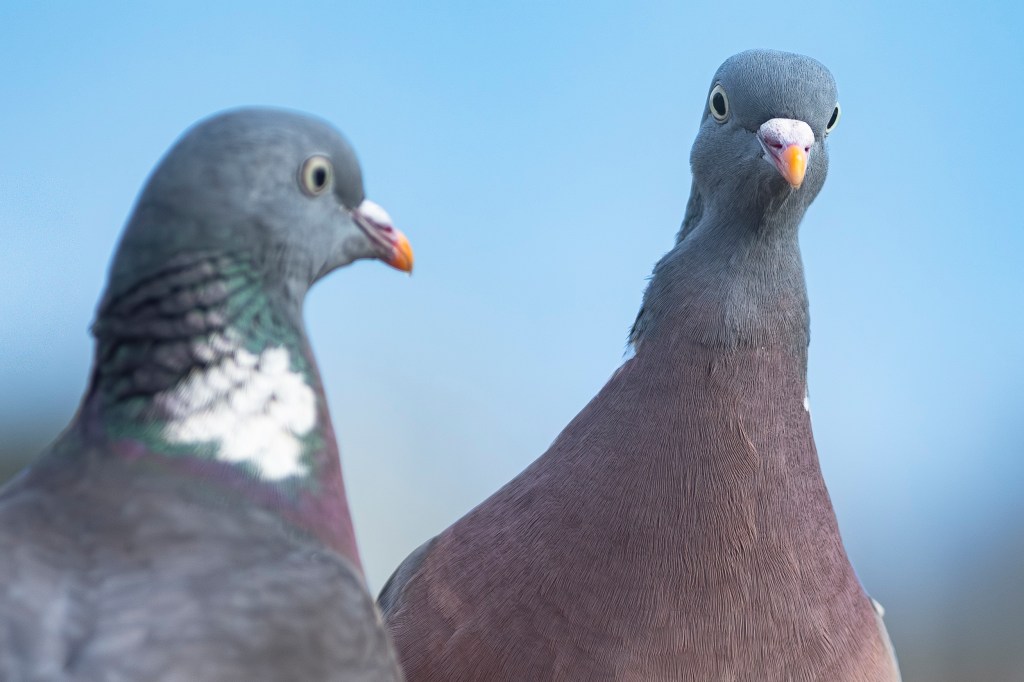
Next up comes another bird that, like the Starling, sometimes gets bad press in a garden environment, the Woodpigeon. We don’t see many here, on Hoy Rock/feral doves, who roost on the cliffs and raid the garden daily, are much more numerous. These two are regular visitors, quite shy when compared to the Rock doves who arrive at dawn to hoover up all before them. Woodpigeon nests are flimsy, a thin and semi-transparent platform of twigs through which the typical clutch of two white eggs can often be seen. Years ago, on a farm where the barns were being rewired, I found a hedgerow nest made entirely of offcuts of electrical cable. Twigs of blue, brown and yellow-green, each with a bright copper core.
We get a lot of Finches here, regular readers will know that the plan was always to make this plot not just human but also wildlife friendly and as time has progressed bird numbers have increased. Of the ten species of Finch we have seen here, five are now regular breeders. Of those the Siskin is by far the most tolerant of humans, a tiny finch that arrives here in April, along with its equally diminutive Lesser Redpoll cousins. The photo below is an example of their tolerance, the bird was so close that I had to step back to allow the camera to focus.

Next comes the Wren, not quite the Uk’s smallest resident bird, that prize goes to the Goldcrest, but if there was a prize for the loudest song from the smallest body, the Wren would win it hands down. A bird that sings its heart out. Nest sites are always inventive and varied, among other places we’ve had them inside a ball of twine, in an old, rotting from the inside out, gatepost, and up on the moor I once found a nest at almost ground level, tucked low in a protective arch of heathers.

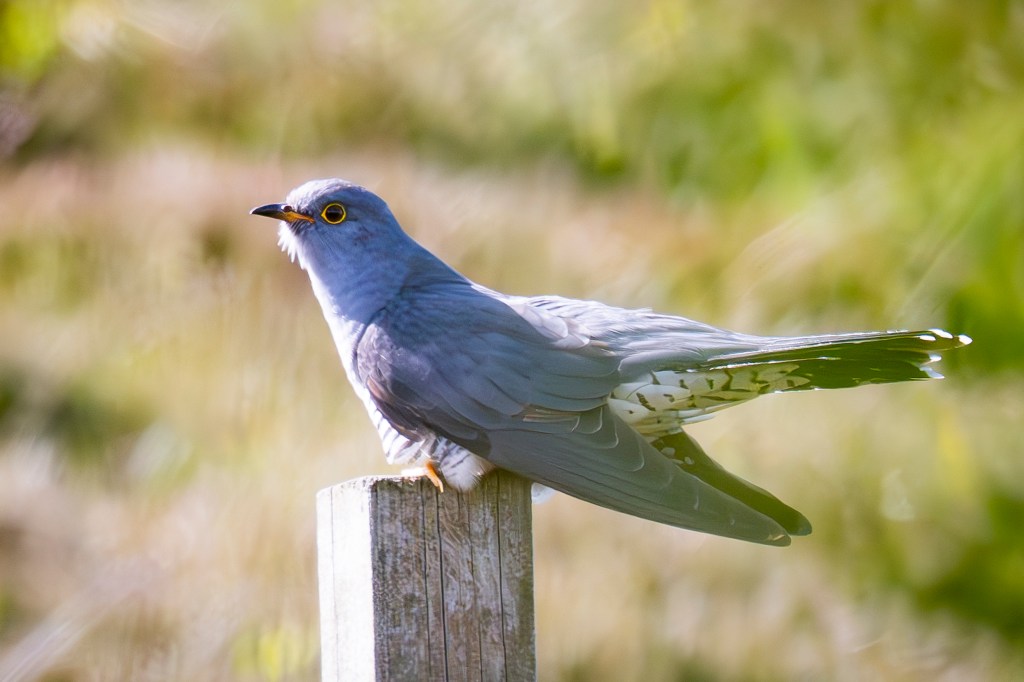
Next is a bird whose arrival here can almost be timed to the day, each year on around the 20th of April, we’ll hear the first Cuckoo call. In the North they’re the Gowk, from the norse, gaukr. Their call is said to be a bringer of good or bad fortune, depending on from which direction you first hear it. A call from West is the best, said to bring a promise of a prosperous year. At home we hear them first on the moor, which is due west – I live in hope. Another proverb, that hails from my childhood in Yorkshire, says that on hearing the first Cuckoo you should, for good luck, turn over the coins in your pocket.
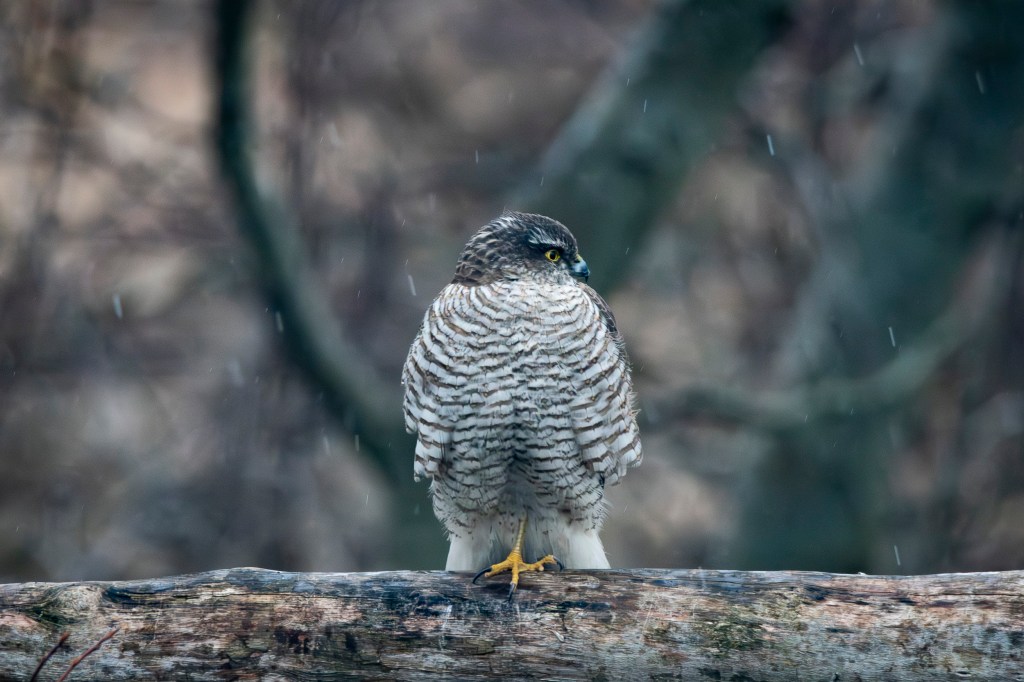
And lastly, the villain of the piece, the Sparrow hawk. One of natures natural born killers. In reality they’re no villain, more a sign of a balanced eco system, a system healthy enough to support apex predators. They visit here pretty much daily and their arrival is announced by an explosion of wings, as birds of all sizes scatter or seek shelter from bright eyes and sharp talons. The Rock doves mentioned earlier, are a hawk early warning system. Always alert they’re the first to scatter, giving a vital few seconds warning to smaller less aware birds. The one below is a female, sitting out the rain and ever watchful. She’s a quarter larger and twice as heavy as the male, capable of tackling prey up to and including the size of a Wood pigeon. In past times her old english name was Spar. To a norseman she was Freya, after the goddess whose cloak of feathers allowed her to turn into a hawk. The noticeably smaller male is a musket, from mosca – a Fly.
For more Six on Saturdays, from gardens far and wide, head over to Cornwall and Jims blog https://gardenruminations.co.uk/2026/08/01/six-on-saturday-1-8-2026/#more-20878
 A garden in Orkney
💚🍃🤗😎 marvellous pics and bird info
LikeLiked by 2 people
Thank you!
LikeLiked by 1 person
stunning photography….I’m blown away!!! and I loved your commentary too
LikeLiked by 2 people
Thank you Cath.
LikeLiked by 1 person
Greetings from the still dry, Gary! Garden birds? A strict criteria so I can’t have oysercatchers, but an easier one. Sparrows, of course, I love them and, at the moment is full of fluffy babies, demanding to be fed and bathing, blackbirds, the one with white feathers in its tail that has gone AWOL, so sad, but it has been replaced by a young one, very nervy, good, less likely to fall victim to a horrible cat, goldfinch, impossibly colourful, the young robin , being chased off by the sparrows at the moment, obviously remembering how bullying papa treated them, starlings, brilliant birds, and I have buzzards flying over, can I count them, if not, really do have sparrowhawks occasionally landing. I worry for my sparrows, while admiring their ridiculous yellow feet. My wonderful moth and butterfly attracting buddleia is on the wane and I’m hoping. the sedum will hurry up and flower and take its place. The willow at the back garden is still alive with predators, so many it’s got quite a loud buzz/hum! And, although bumble bees are said to be on the decline, I think I’ve had more than usual in my garden.Tamarix is a particular favourite of theirs, as it is of mine! I had a look at that blog you recommended, but just felt overwhelmed. I like yours so much because it is so very manageable! Lots of other reasons of course! Have a great week Margot xx
LikeLiked by 1 person
Morning Margot
I saw an article online about the drought, it said the South had had only seven percent of its expected rain for July, East anglia was at one percent. I hope you get some soon.
I would love to have included Oystercatchers, we get them in the meadow in winter but I thought that was stretching the word garden a little bit too far🙂 House sparrows nearly made the cut, we didn’t have any here when we first moved in but they’ve arrived as the trees have established and nest boxes have gone up, we’re open moor on three sides so the biggest issue would have been a lack of suitable nest sites.
Our adult Blackbirds are AWOL too, we’re only seeing youngsters at the moment, we might not see any more adults until get an Autumn influx of Scandinavian blackbirds.
We’re behind you by a few weeks, budleja is just getting going, sedums are still budding up, the sedums especially are a real butterfly magnet, we should get Red admirals in good numbers, a late summer visitor for us. The pond we dug has proved to be popular with bathing babies, Starlings love it and they can’t splash all the water out and empty it as they do with the birdbath!
x
LikeLike
A very interesting six. I have wood pigeons, collared doves, wrens and starlings mainly in winter. Goldfinches and Robins, the occasional blackbird, greenfinch and woodpecker. Buzzards overhead, very rarely in my garden. And hundreds of corvids. I have heard, but never seen a cuckoo.
LikeLiked by 1 person
Hi Jude, corvids are localised here, at home we see Hooded crows and Ravens but that’s about it, lots of Jackdaws on the cliffs, and in the Sycamore woodlands of “the big hoose”, the ex Lairds pile. No Rooks on the island. Magpies are so rare that a visitor made the local news. Woodpeckers are almost as rare as the Magpie, Great spotted woodpeckers are very occasional winter visitors.
Cuckoos really are quite shy, despite there being two males and at least one female here this summer we rarely get a good look at them, they’re gone at the first sight of a human.
LikeLiked by 1 person
What a wonderful post! The photos are stunning and it’s so interesting to learn a little more about these garden birds. Our six most common species would probably be parakeet, magpie, wood pigeon, robin, great tit and blue tit, though we also get wrens, song thrushes, blackbirds and sometimes even some apex predators soaring past high above. We have no shortage of wood pigeons in our garden, and they seem to love eating the broccoli leaves. They know they’re not supposed to, but what can you do? I guess other food sources are scarce in the drought.
LikeLiked by 1 person
Thanks Kathrin, of the six commonest you mentioned we would only see Woodpigeon, Robin and Great tits, the Great tits bred here for the first time this year and are still extremely rare in Orkney.
For Hoy woodpigeons are uncommon, this island is predominantly moor and cliffs so we only see them in a garden environment, they’re absent from most of the island. The Rock doves make up for them though, we get a daily visit from thirty or forty birds and like your Woodpigeons they hoover up all before them.
Luckily there’s no drought here, I hope you get some rain soon
LikeLiked by 1 person
I love seeing all your garden birds. We recorded 10 different birds on the Merlin app last week but we didn’t see all 10 or even hear them. My favourite are the little Longtail Tits that come in families. In the winter we get a good variety of finches and have a lovely pair of Collared Doves.
Last week B found a decapitated pigeon in our garden , one of a pair that were always together, preening each other and ‘chatting’ to each other. The single one has been around but very quiet and, I think, sad.
LikeLiked by 1 person
Hi, I’ve never tried it but have heard good things about the Merlin app. Long-tailed tits are winter visitors for us as well, we usually see Uk birds but occasionally get a visit from a Scandinavian species.
Hawks often eat the head first and then the body, I wonder one got disturbed mid meal, we see a lot of Geese here, like Woodpigeons they pair for life and I always find it a bit sad to see a single adult goose alone in a field. They must feel the loss.
LikeLiked by 1 person
Thank you for that info about a hawk being the possible predator. We had wondered if the neighbour’s cat was the one.
LikeLiked by 1 person
This is a lovely group of six. It would be difficult for me to narrow down the count, as well. The wrens common here in the Midwest U.S. are sweet and small, but also vocal and tough little creatures. European starlings are very common (introduced but appreciated) in this part of the world. My understanding is that they are among the smartest birds of the world.
LikeLiked by 1 person
Hi Beth, it was hard to only choose six, I read an article about how quickly the Starlings spread after their initial release in Central Park, it didn’t surprise me, they’re an incredibly bright and adaptable bird. They’re also great mimics, I’ve heard one do a passable Cuckoo call, another did a slightly off key Curlew but the best was a Starling that had the clucking of a hen down to a tee.
LikeLiked by 1 person
Oh wow, those photos are so lovely and I can’t imagine the patience it must have required to catch all of those moments. Most of my bird photos are only through my window glass because they run off the minute I get anywhere near them…
LikeLiked by 1 person
Hi Angela, thank you, the Cuckoo took a while, they’re very wary of people.
LikeLike
Sorry to be late to the party. I was fooled by the title being the same as last week’s. Wondered why you hadn’t posted anything new yet!
Beautiful wren picture, as are all of them, Gary. Wren would for sure be in my six, though of the five the wren types we have here the only one I’ve ever seen is Bewick’s wren, which seems to be silent.
I’d also have to include the Cooper’s Hawk, even though it predates the bush tits I carefully feed on peanut butter every winter. I want to keep the flocks coming back in summer, when they eat all the aphids off my plants. The adults bring in the fledglings to show them where I hang my pine cone smeared in peanut butter, then take them off to eat my greenfly.
We also get the occasional turkey vulture blow in, which causes the crows to make a lot of noise, so I can always tell when one’s arrived. The vultures aren’t very good looking, but they really are the size of a turkey and sit in the oak outside our bedroom window glowering like something from a horror movie.
LikeLiked by 1 person
Hi Penny, you got me thinking about Wrens, we’ve got the one main species but also four island subspecies, fair isle, St kilda, shetland and outer hebridean, each is unique to a specific group of islands, it does make you wonder, especially with the likes of St kilda, if they were deliberately taken there by human settlers rather than getting there under their own steam. Most of the subspecies are evolving into heavier and larger versions of the Mainland wren, must be all that sea air.
Your Coopers hawk is our Sparrowhawk/Goshawk, a woodland predator that adapts easily to a garden environment. Peanut butter is a new one, I may well try that on our Great tits.
I have to fess up, until today I always thought the Turkey vulture got its name from the country, not because it looks like and is the size of a Turkey 🙂
LikeLiked by 1 person