
Unlike many parts of the UK, where much of August remained stubbornly dry and unseasonably warm, Orkney has had its usual mixed bag of weather. We had more than our share of rain but clearing clouds often gave a silver lining – sharp crystal clear days where the garden looked so green you felt you could graze on it and then cut the air with a knife.
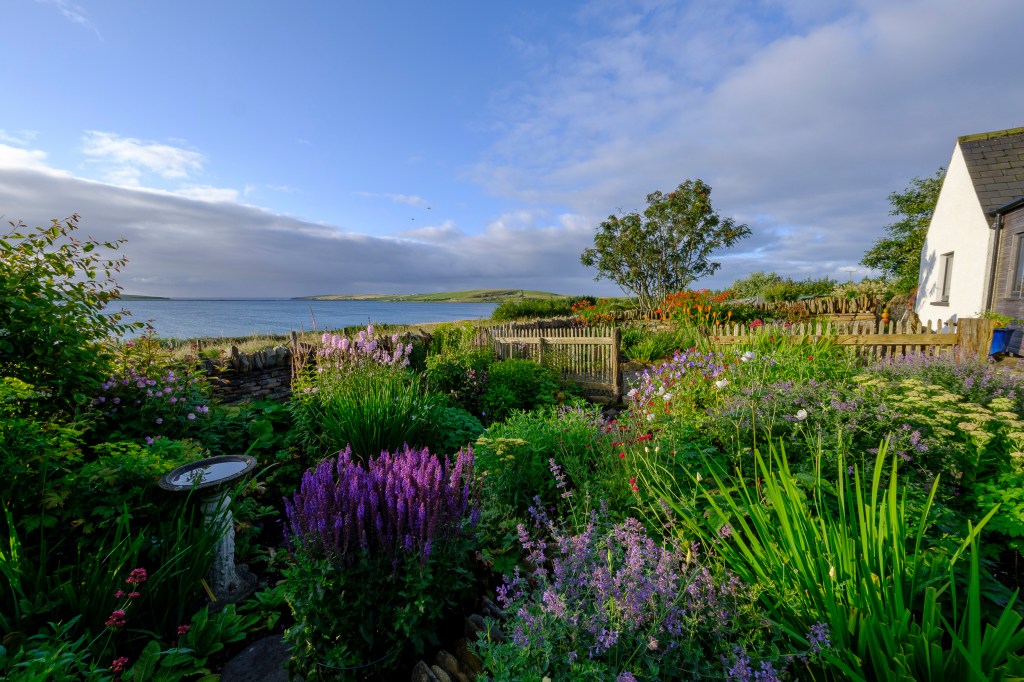
August also brings softer days, days where the light lays pale and grey over a silent land and sea. With the Autumn equinox already behind us the softer days are the tell that for us summer is over.
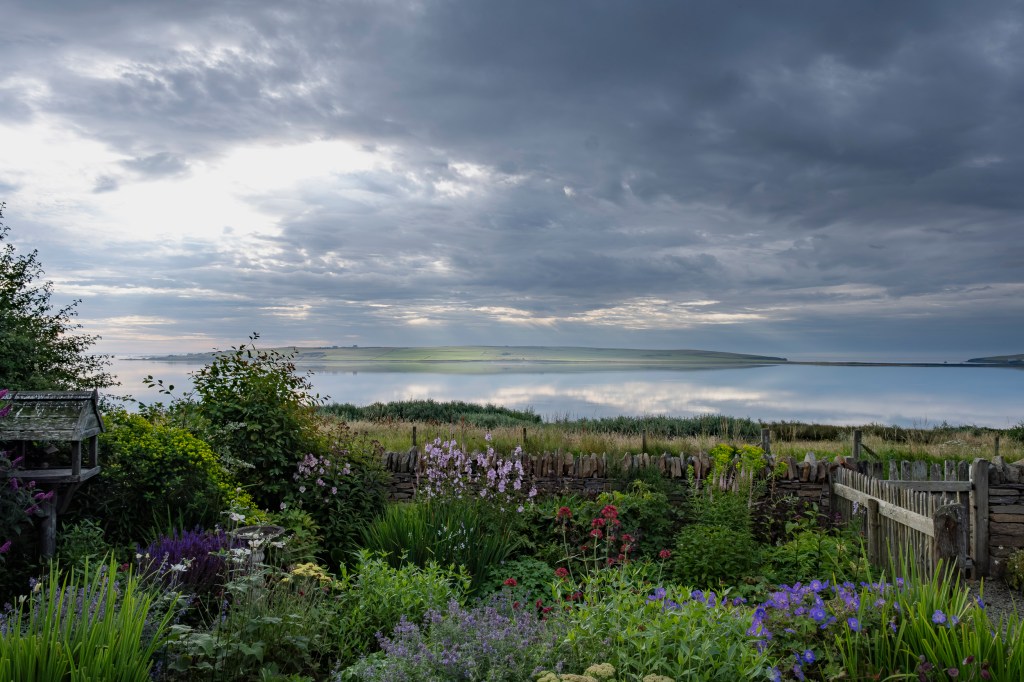
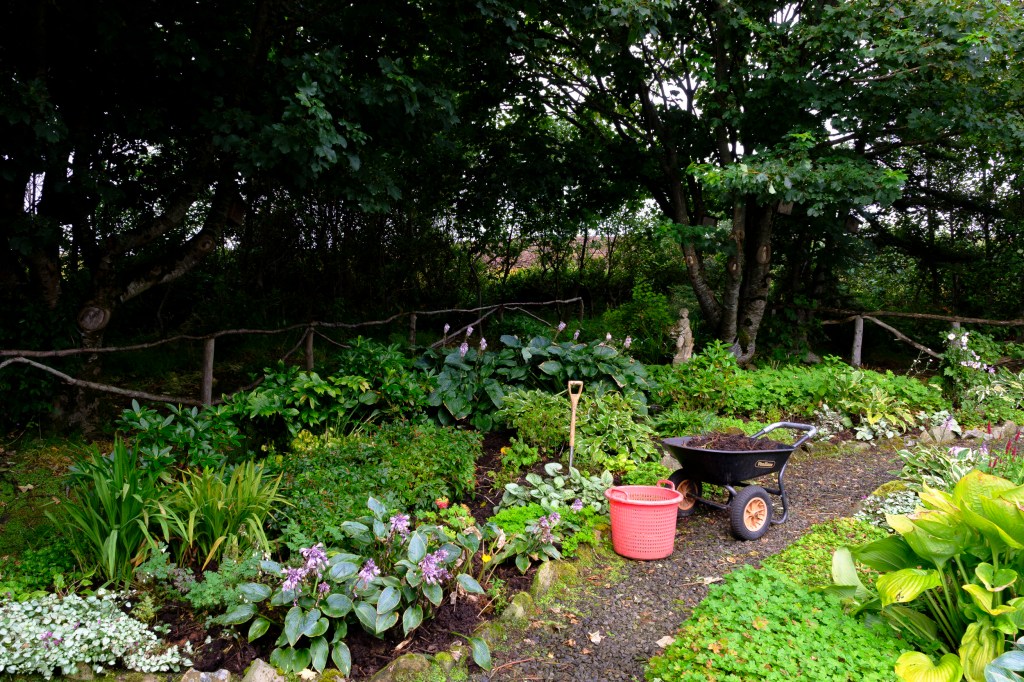
While I spent most of the month working with friends on their new build Jacqui has been busy working her way around the garden, cutting back spent foliage and topping the damp ground with a mix of well rotted compost and leaf mould. In a shady spot beneath two sycamores, as the ground is being fed Astilbes and Hostas are being split, another sure sign that Autumn is upon us.
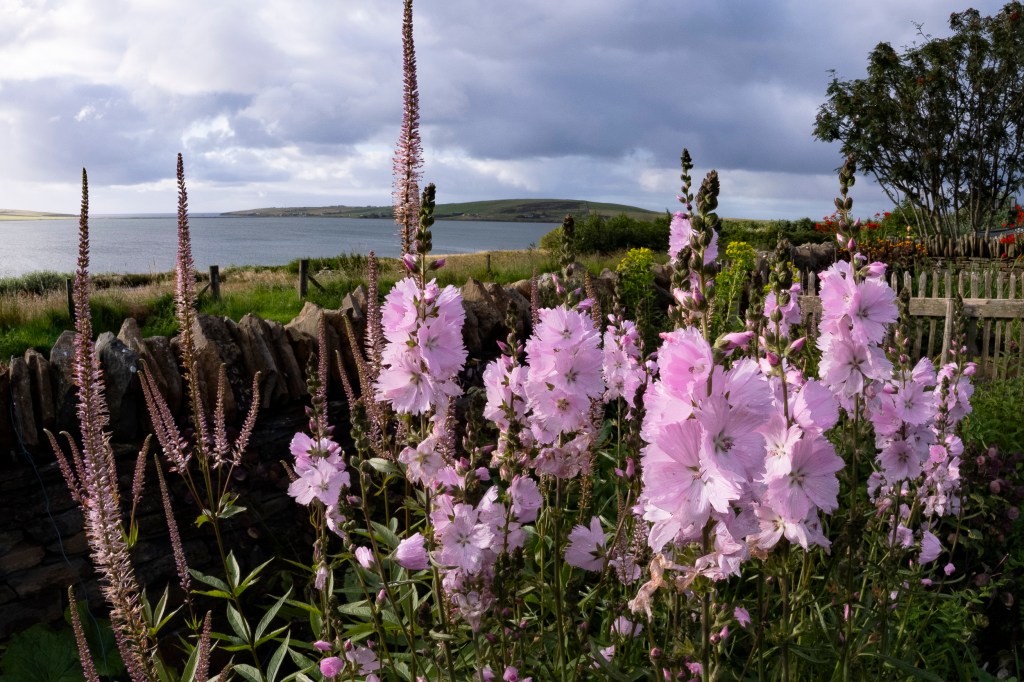
Despite the cutting back there’s still plenty more for the garden to give, at the moment the colours, like the light, are predominantly soft, a mix of pinks and blues dotted here and there with creams and yellows. In a front garden a couple of favourite pinks grow side by side, the spires of veronicastrum pink glow and the mallow-like blooms of Sidalcea elsie heugh.
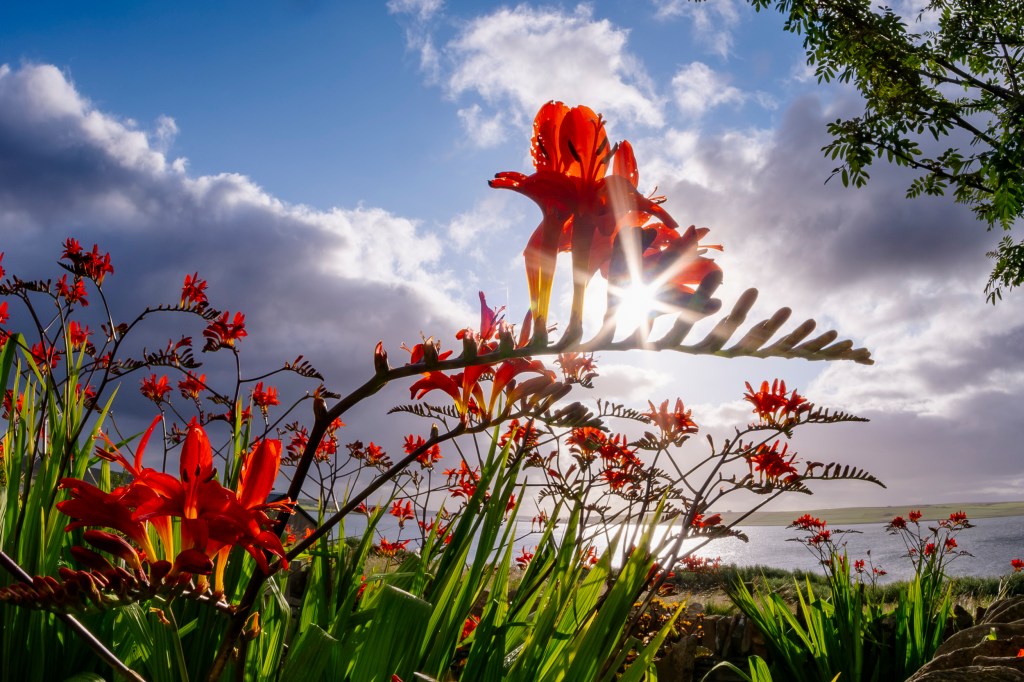
The current exception to the soft colours rule is Crocosmia Lucifer, we grow a lot of crocosmia’s here and when it comes to flowering Lucifer is always the first out of the blocks. A furnace-red flower with a sun yellow stem that glows in both light or shade. As a genus they hail from the hot grasslands of Africa and despite this they thrive in our cool damp soil.
The upside of Augusts rain is that it kept the new garden ponds, dug a few weeks ago, topped up. A Heath Robinson set up that feeds the largest pond with rain from the house roof via a buried scaffold pipe, has so far worked a treat, the smaller lower pond, out of view in the photo, gets fed from the upper ponds overflow. We’ve added native water lilies and irises together with oxygenators and although the water is still pea-soupy with algae it’s slowly but surely clearing.
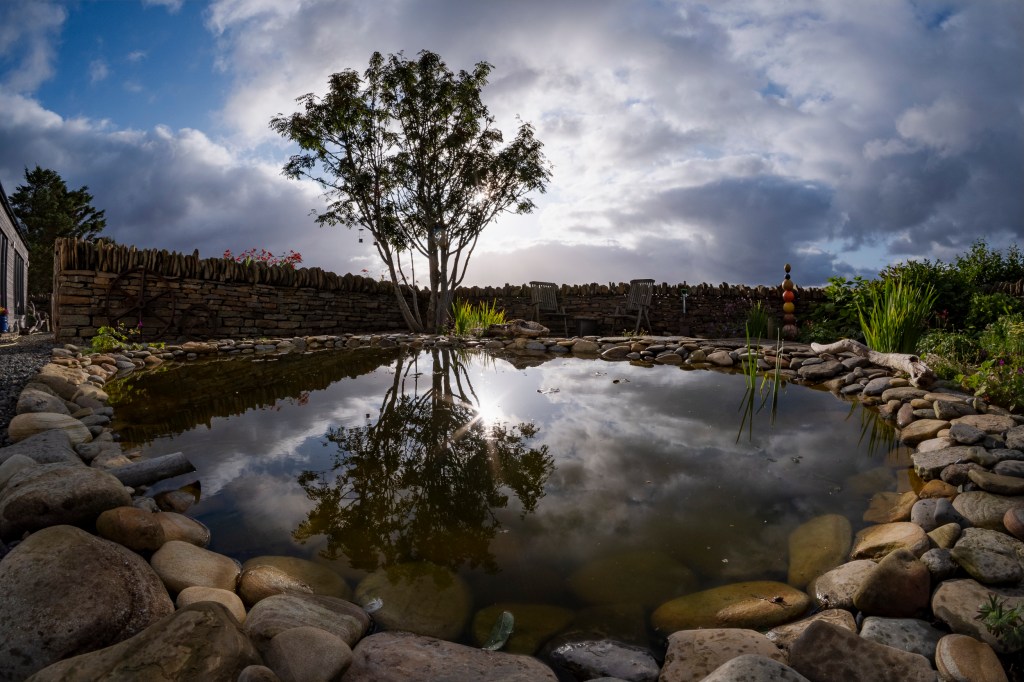
The effort of digging both out by hand and collecting what must have been a good few tons of cobbles to line them was worth it. Frogs have been seen and the hope is that both they and the Toads that lurk beneath garden hostas will spawn here next year. The first arrivals, literally within days, were whirligigs and pond skaters, I didn’t realise, until I accidentally caught it on camera, that the former are prey for the latter. No wonder they move so fast.

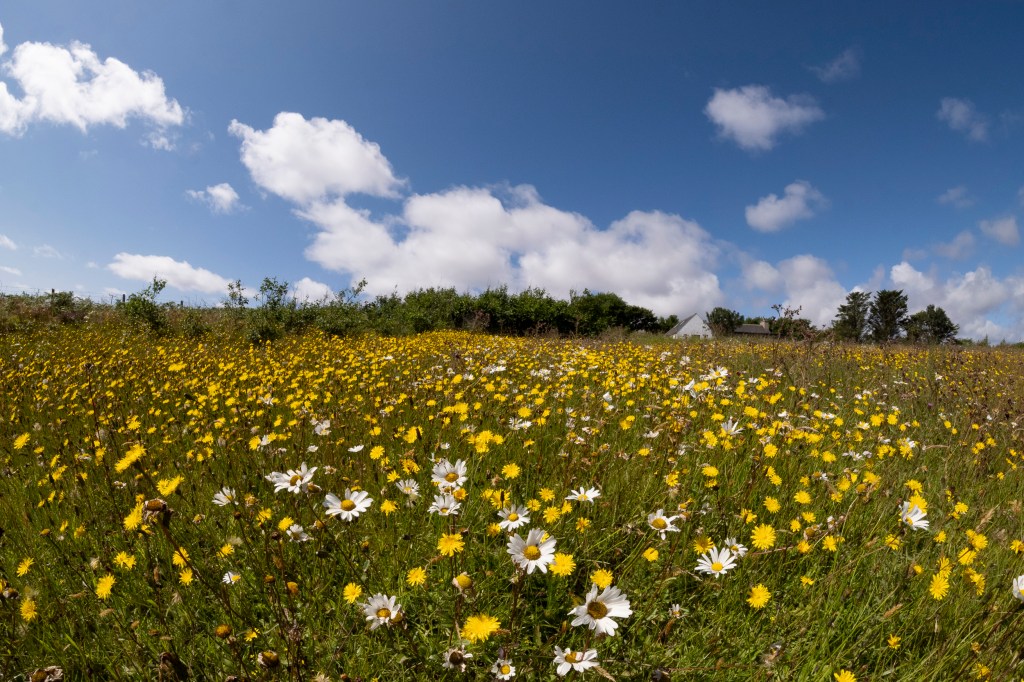
At this time of year, in the meadow that we made, the dominant colour is yellow, ox-eyes have just about finished for the year and pale blue devils-bit scabious have yet to open. Give it a few more weeks and most of the meadow will be seed heads. The carpet of yellow, courtesy of Cats-ear, a Hawkbit, is the meadows swan song.
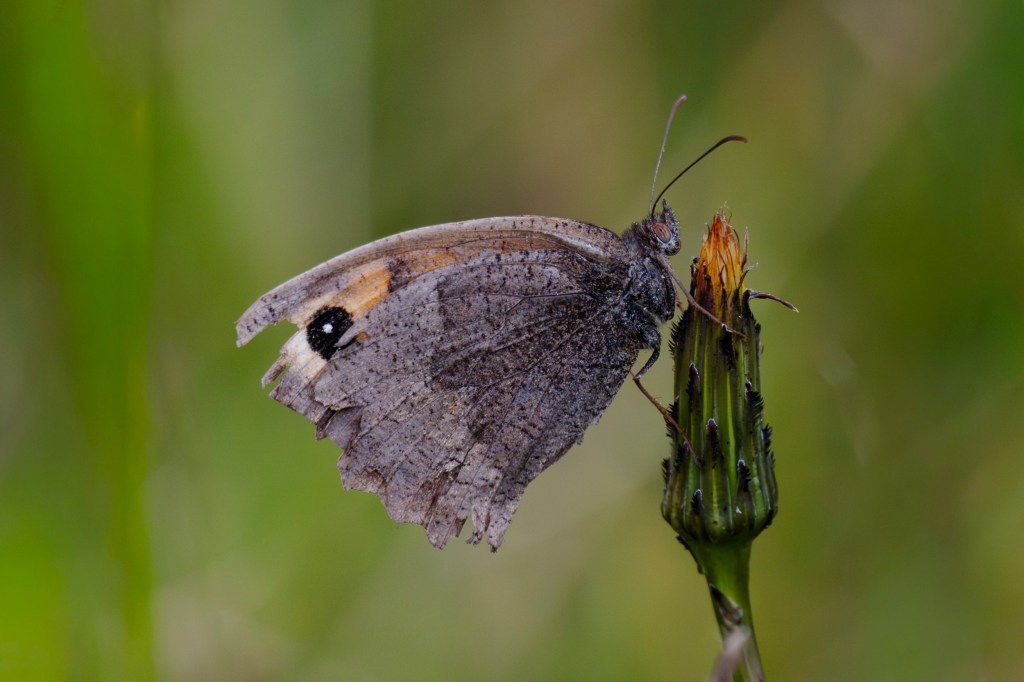
On warm sunny days aptly named Meadow brown butterflies are seen, skittish fliers that rarely settle for more than a second or two. Eggs are laid on grasses, or sometimes just dropped while the butterfly is in flight. Within two or three weeks the caterpillars will hatch and spend the winter in semi-hibernation, emerging to feed whenever a rise in temperature wakes them from their slumber.
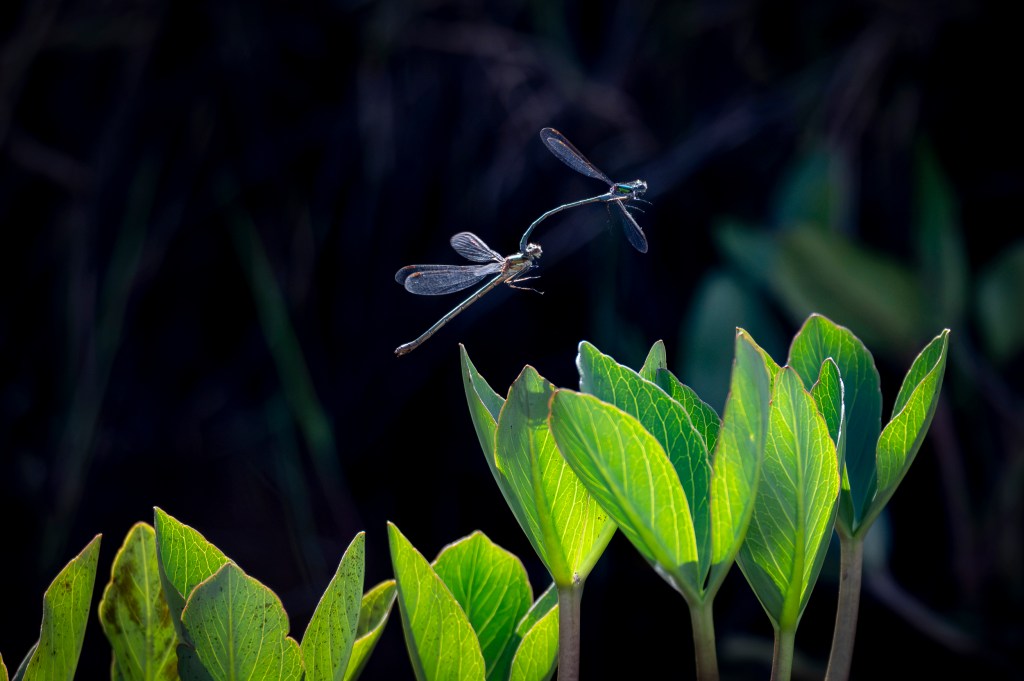
At the bottom of the meadow, just before the land falls to the shore, the ponds that were dug there, via the easy route of an excavator, are a few years in front of the ponds in the garden. This year, for the first time, one of the three had frogspawn. Offcuts of native plants, sourced from a flooded peat cut up on the moor, are slowly establishing. A favourite is Bogbean, a plant whose roots, if you had the urge, can be ground into flour. Its bright green leaves, that stand proud of the water, are a favourite spot for courting Damselflies who literally do hook up to mate.


Good to get your news, Gary. Just love that photo of those pink beauties, new one to me. Feels very Autumny here. Days still very warm but nights chilly and mornings dewy But good thing is the sea is still 22degrees and very acceptable for swimming even for me! A big cold water wimp! We had a massive thunderstorm which has helped the parched land but need gallons and gallons more. Take care xx
LikeLiked by 2 people
Morning Margot
Out of curiosity I just googled the sea temperature here, 12C, I think the technical term would be nithering 🙂
Glad you got some rain, with the “Super El Niño“ on the cards for next year along with talk of another prolonged draught what is really needed is wet Winter to top up reservoirs and aquifers, just hope there aren’t too many storms thrown in with it.
We’ve just come back from Aberdeenshire, Stonehaven, the weather, compared to Orkney, was positively tropical!
Rain welcomed us home but it’s sunny today, the biggest change I have noticed though is how quickly the night are drawing in, dark by nine.
Have a good week x
LikeLike
Fabulous. Simply fabulous.
LikeLiked by 1 person
Thank you Martin.
LikeLiked by 1 person
Ahhh what a lush garden! The frogs eye view is great 😀
LikeLike
Thank you Saila 🙂
LikeLike
Hi Gary for reasons unknown I haven’t been able to login to WordPress but finally I could today. I do read all your blogs but haven’t been able to like or comment. Good to see you are both keeping busy. The gardens are looking lush. Jaquies greenfingers once again working their magic. We still have roses blooming but the wildflower meadow is ready for cutting. The apples have suffered in the drought and heatwaves but hopefully enough for cider making. Take care love yo you both from us 😘
LikeLiked by 1 person
Hi Pauline, wordpress has a mind of its own, I subscribe to a couple of other blogs and often can’t comment or like them, a real pain sometimes. The garden here always surprises us on how long it lasts, it’s usually late October/early November before everything is truly bare. Our meadow is just about over, mowing it down is one of those late autumn sunny day jobs that I always look forward to. We were down in Stonehaven last week, it felt positively tropical, not sure how we would have coped in the heatwaves 🙂 Enjoy the cider! Love to you both from the two of us.
LikeLike
I’m with Margot on the beauty of your Sidalcea elsie heugh. Interesting that C. lucifer will thrive in your cooler garden when it’s actually from hotter climes. It usually stops flowering here by the end of July, so you get that striking red for so much longer. Still searching for a tall Kniphofia plant like yours, to hopefully take over that show of red.
Ocean temperature here today is 16.3C. Still warm enough for me to consider swimming, but not as warm as Glasgow.
If your pond is already clearing, I reckon you could offer some helpful advice about the Washington reflecting pool!
LikeLiked by 1 person
Hi Penny, a good thing about elsie, for this neck of the woods, is that despite delicate looks she stands up, it’s a blowy one today and as I’m typing this I can see her bending but not breaking 🙂
Crocosmia’s thrive here, we have eight or nine different varieties and all do really well, sometimes a season or two to establish but we’ve yet to lose any. There’s a black sheep feral version that grows here, which still carries the name Montbretia (Crocosmia × crocosmiiflora), we inherited it on the moor, on a dry sunny bank in the meadow and in a permanent wet spot where we planted a willow coppice, clearly a very adaptable plant and I can see why they are considered invasive, google tells me that for this variety the issue in Orkney is a lack of deep penetrating cold, once here impossible to be rid of, fortunately the garden varieties are much better behaved.
The infinity pool made me smile, I saw on the news that a poor guy had been arrested for touching the peeling paint and threatened with ten years imprisonment, I think Canada needs to invest in a border wall 🙂
LikeLiked by 1 person
I think I have that feral Montbretia! It copes with the very shady and dry area under the oak trees and the very sunny, hot part in front of the raspberry canes.
A Great Wall of Canuck would be perfect for a country currently suffering a humour deficit 😉
Vancouver night club slapped with social media ban after its latest U.S. commentary
LikeLiked by 1 person
I read an article that suggested in colder climes the corms should be lifted in autumn like dahlias, which probably explains why it thrives so well on the relatively mild islands and the west coast of the UK. When you dig into an established clump the corms are layered, 4 or 5 deep, I wonder if this is a defence against cold I’ve only noticed this in the feral version.
A friend suggests that what is needed is a high wall built right around your neighbour, once built fill it with water, a bit harsh but I get his thinking. November will be interesting
LikeLiked by 1 person
The pond skater and the bog bean photos are wonderful. Not to mention the rest of the garden. Mine is definitely running out of colour.
LikeLiked by 1 person
Hi Jude, thank you, I assume your running out of colour is down to the prolonged drought that you suffered, hopefully we have around another month of colour but it really depends on the weather now, a few days of salt laden gales would see leaves stripped from trees and the shelter that they give would literally be gone overnight, we’re crossing our fingers and toes for a settled few weeks 🙂
LikeLiked by 1 person