
In Orkney Autumn has arrived with a bit of a bang, rain and grey skies aplenty and today, just for good measure, we’ve got gales and the threat of ferry cancellations, rinse and repeat for tomorrow. Despite the downturn the garden will last for a few weeks yet – some plants are literally just getting into their stride. It’s fair to say though that this month marks the start of the gardens swan song. There are other things to look forward to now, in the wider landscape skeins of Pink-footed geese are already being seen, heading South after summering in Iceland and Greenland. Next will come the musical yap of Barnacle geese, settling in to graze stubble and pasture, our harbingers of Winter. The night sky with its uncountable pin pricks of light, absent for the Summer unless you got up at silly o-clock, is visible again.
Back to the garden, this weeks Six on Saturday is a half dozen September favourites.
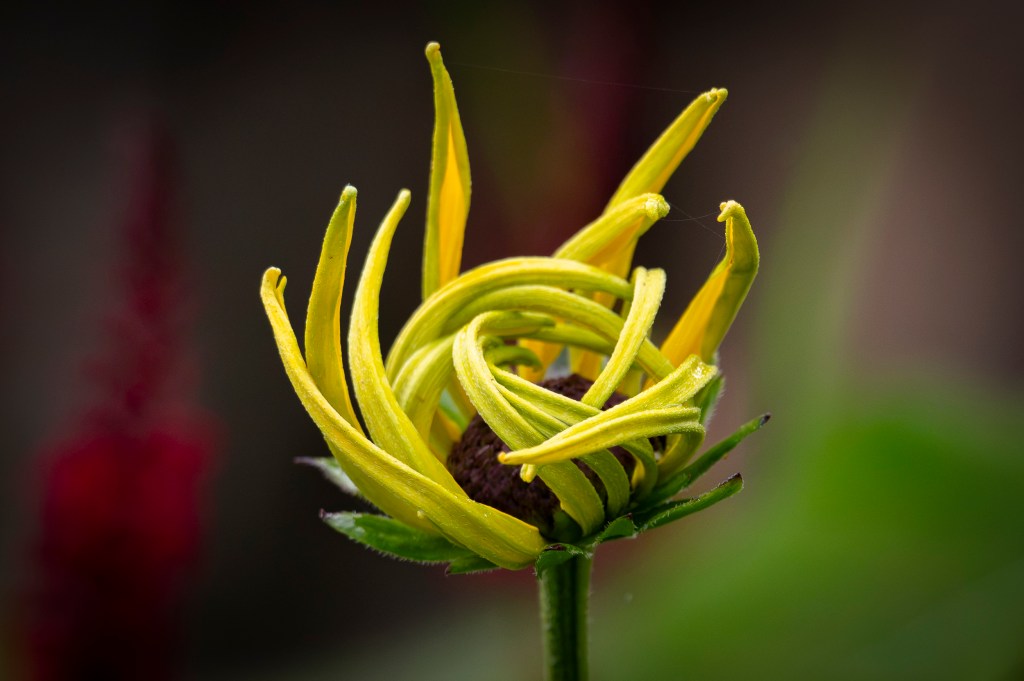
First up is a fairly new plant for this garden, Rudbeckia ‘goldsturm‘. Grown from seed a few years ago they’re now dotted everywhere, they’re perfect for this neck of the woods – tough as old boots and rarely needing a support. One of those “why didn’t we grow it years ago” plants. This one is just unfurling, yet to show the dark central cone that gives it the alternative name of Black eyed Susan.
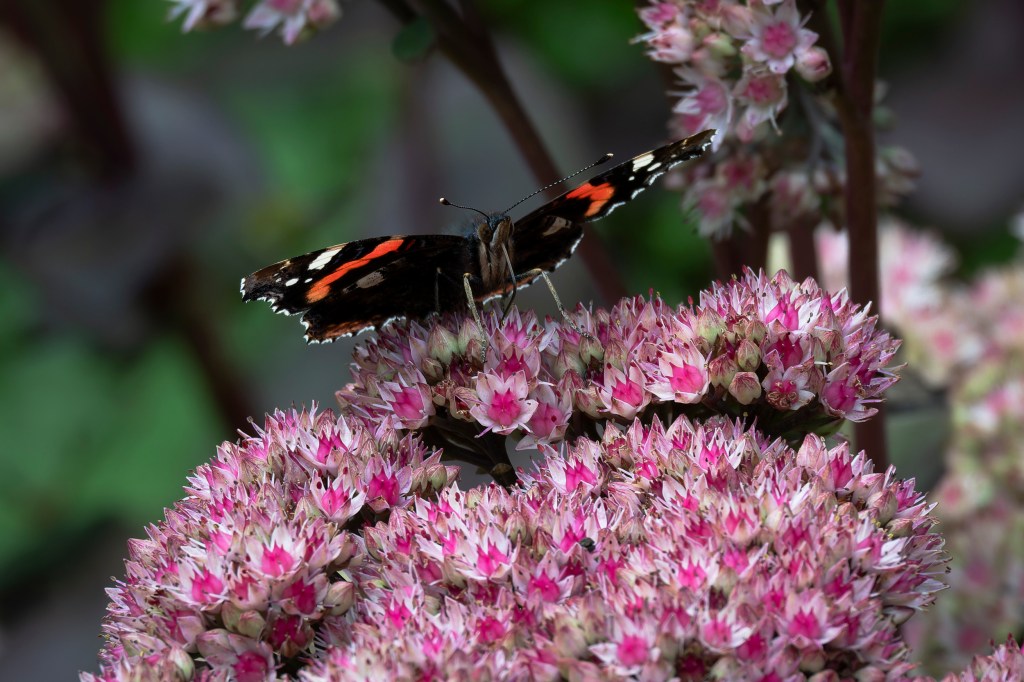
A favourite that we have grown here since we started a garden is Sedum ‘matrona‘. A member of the stonecrop family that sports soft pink flowers on ruby-purple stems, a magnet for butterflies and pollinators. Gardening lore says sedums shouldn’t really do well here but plants don’t read books and so far, despite our autumn and winter wet, it’s thriving, a little bit floppy though if we don’t split it every year.
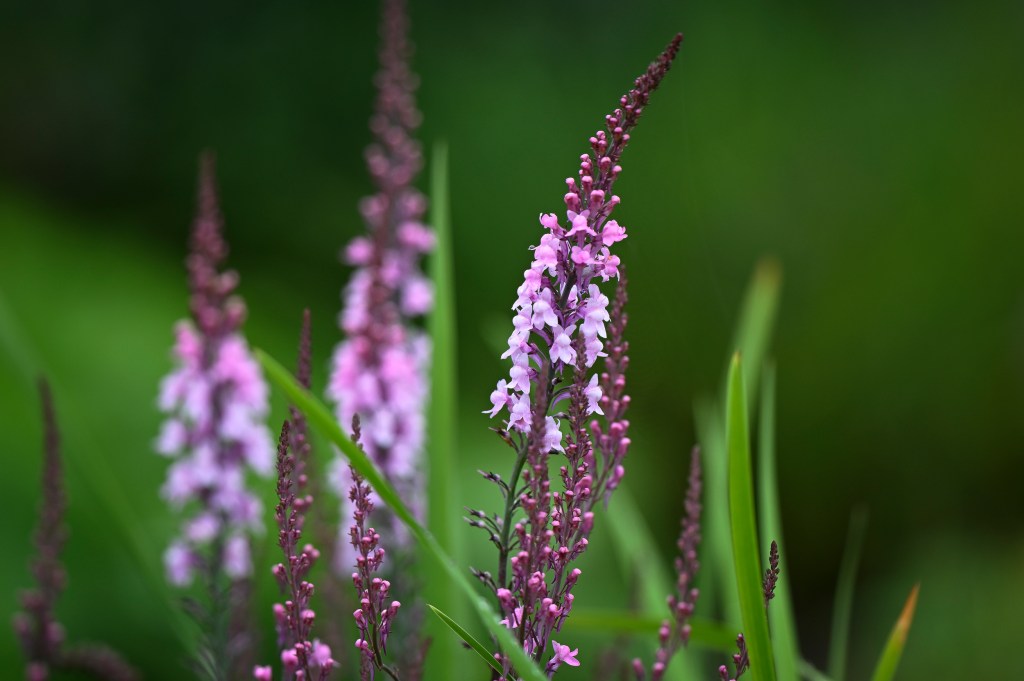
Jacqui is a live and let live gardener, generally leaving annuals and biennials to self sow and do their own thing. One of our favourite pop up anywhere plants is a Toadflax – linaria purpurea ‘canon went‘, It’s actually a perennial but at home it’s treated like an annual, leave it be and let it pop up where it wants. It flowers here for much of the year but in autumn, as everything starts to die back, it comes into its own, becoming a stand alone plant that now takes centre stage.
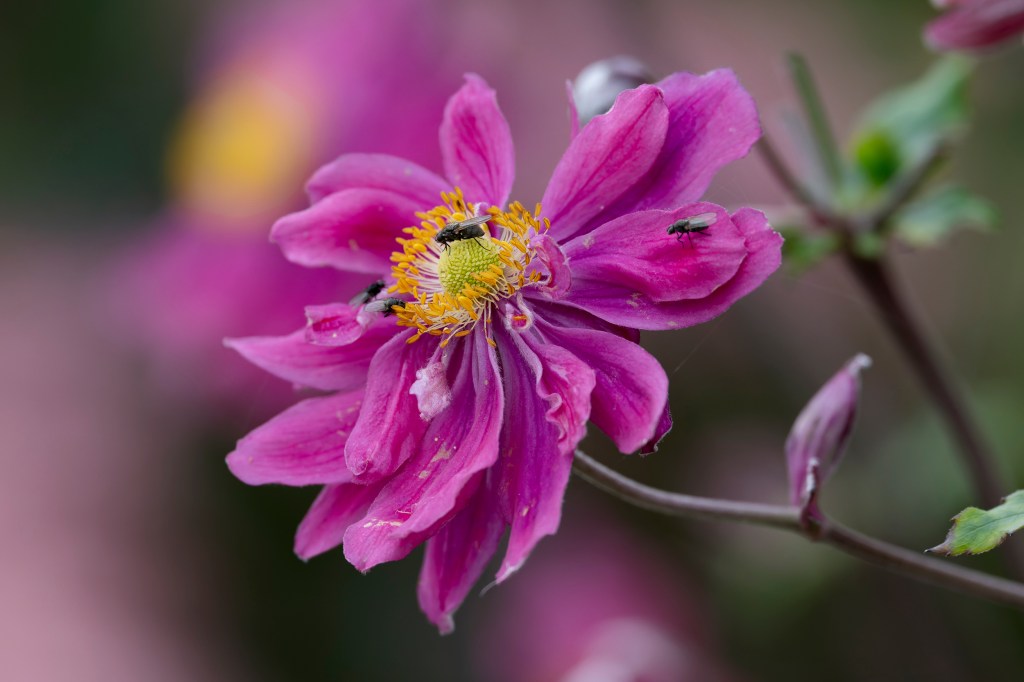
Next is an Anemone, this one is bressingham glow. As with the sedum it’s another one that could be a bit dodgy here due to our very wet winters but as with the other anemone’s we grow, so far so good.
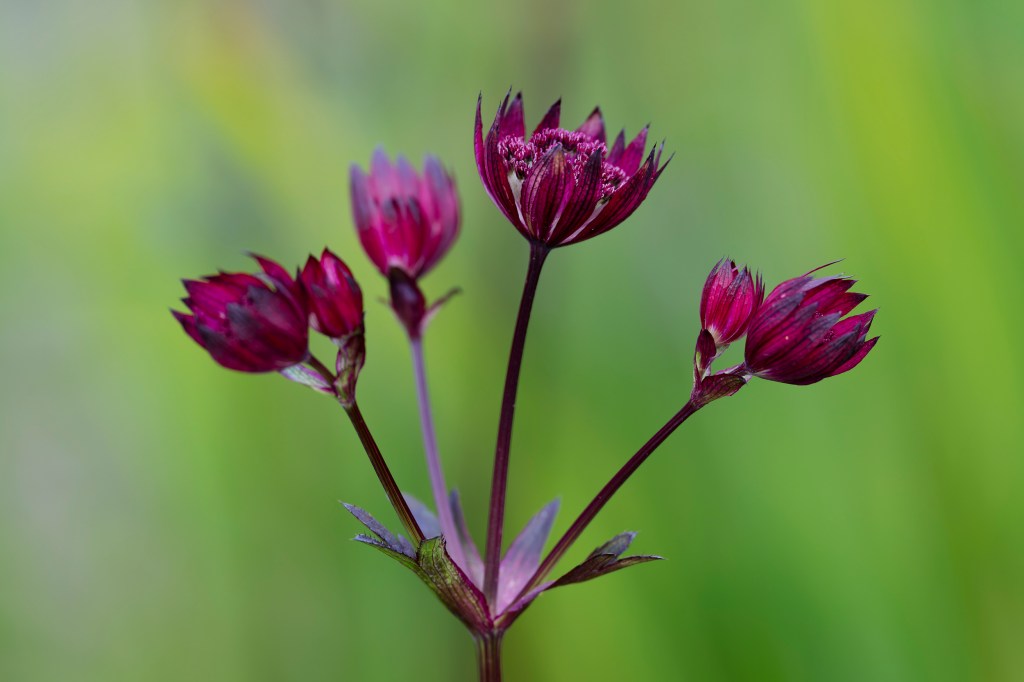
Next comes Astrantia claret, as with the linaria it’s not strictly an autumn plant, it flowers here in early summer, gets cut back after flowering and then reliably flowers again through late August and September. Unlike the sedums and anemones we grow this is truly a plant for Orkney, a lover of damp soils and cool summers.
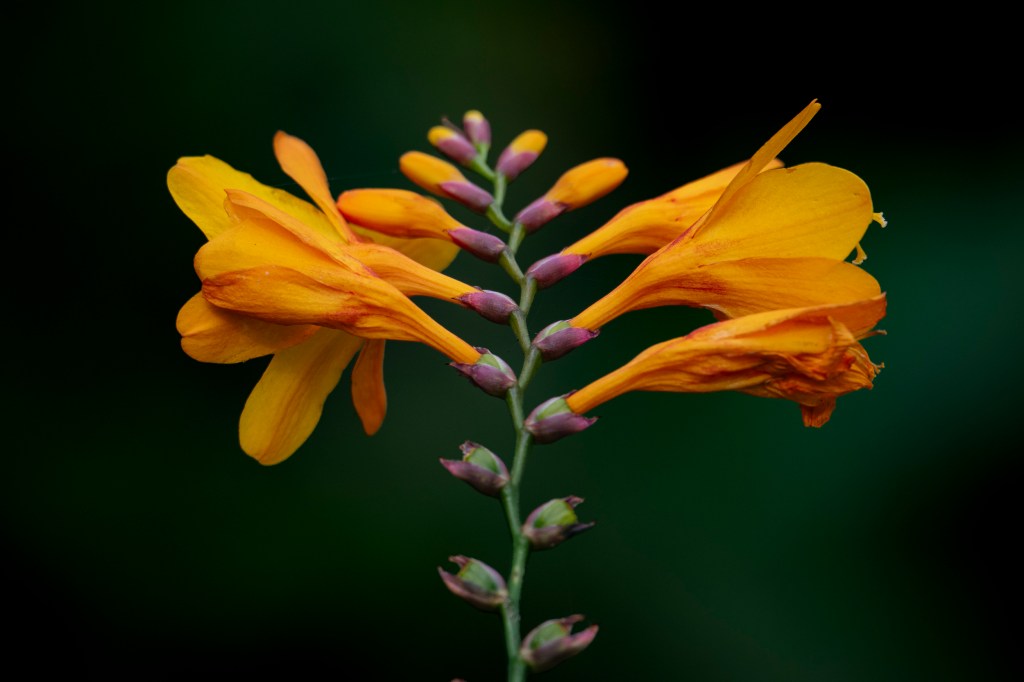
Last but not least comes Crocosmia, a genus that’s an autumn mainstay for this garden. We grow ten or so varieties in various shades of yellow, red and orange, and for here, where trees will go from green to scorched brown and then to bare branches in almost the blink of an eye, the crocosmias, along with the rudbeckias, give us our autumn colour. This one is columbus.
For more Six on Saturdays, from gardens worldwide, pop over to Jims blog
 A garden in Orkney
🙌🏼 fantastical 🤩🍃💚💕
LikeLiked by 1 person
Thank you 🙏
LikeLike
You must have a fairly good drainage to get those plants through the winter. and your photography is stunning. I too have the same approach with Linaria Canon Went, and leave as many flowers late into the year as the smaller bumble bees are still feasting on them up and until they hybernate.
LikeLiked by 1 person
The first thing we did, before even starting a garden, was to hire a mini-digger and dig a horseshoe shaped ditch right around the garden to catch water running off the hill behind us.
The upside of being at the bottom of the hill is that although our soil is pretty thin, it’s almost like silt, eroded soil that will have washed down from the hill over the years.
The second thing we did was plant a shelter belt 🙂
LikeLike
Your anemone is very similar to my Pamina. And the Astrantia is very much the same colour as mine. In fact I can probably match your weather too! I am envious of the Rudbeckia as that was another failure, though I tried ‘Little Goldstar’ which was supposed to be hardy, but didn’t return in the spring. And that is a fab photo of the bud unfurling.
LikeLike