
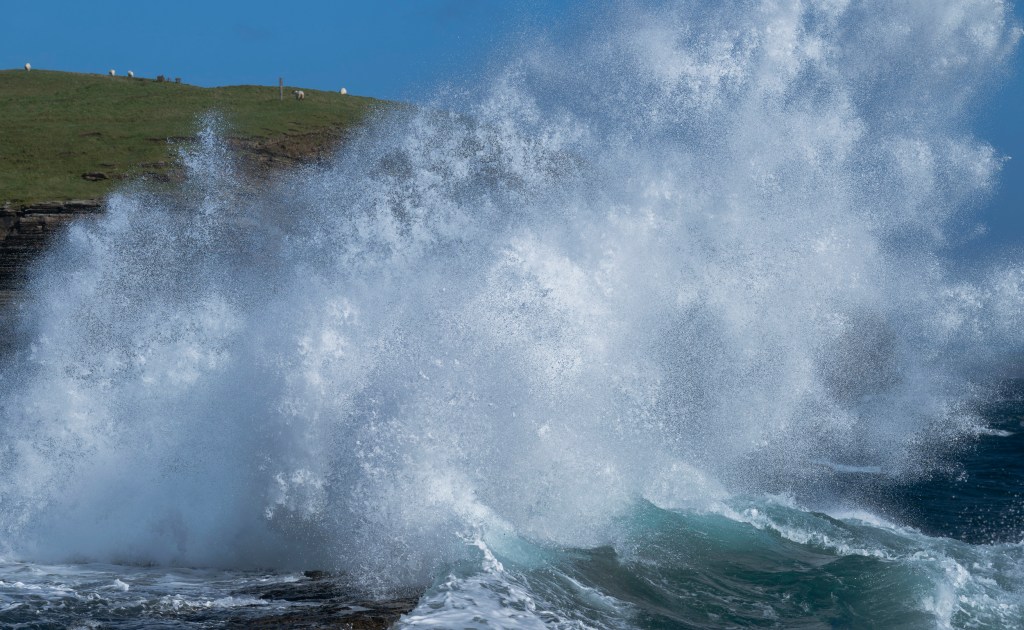
October brings the wind. Today we’ve got storm Boelo and from now through to March, if you’re out in the landscape, a stiff breeze or a gale or something in between, will likely be your companion. At home, the trees that we rely on to give shelter to three sides of the garden, are half naked, beyond them the open moor, hidden since May, is visible again. The front garden, with its lack of shelter, takes a battering but for now at least somehow stays standing. The gales have an upside though, bringers of wild seas and crashing waves, a great time of year to be out on the shore.
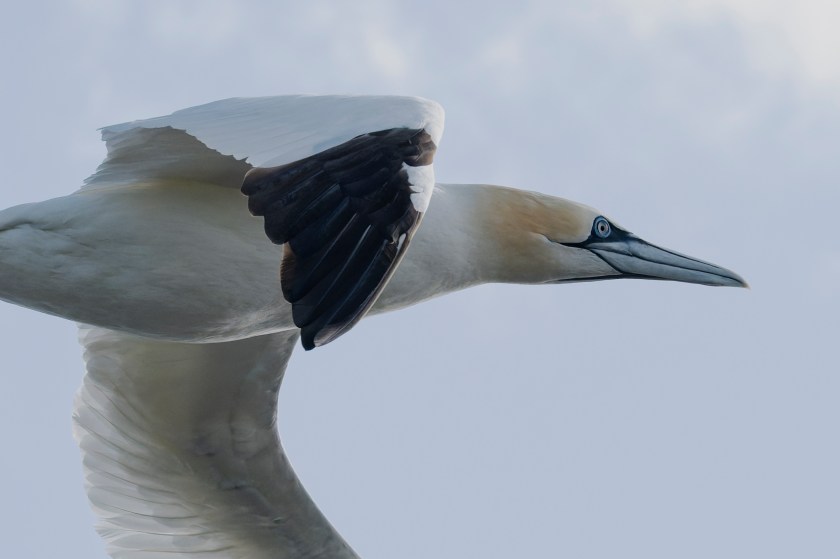
The winds have brought Gannets. A few days ago in the sheltered bay beyond the meadow, we watched a dozen birds, a mix of gloss white adults and sooty black youngsters. They must have hit a shoal, repeatedly diving into the same patch of water. The action was followed through binoculars – a loose flock of gulls entered the melee, rising and falling and fighting for scraps, they were a swirl of white snow caught on a breeze.
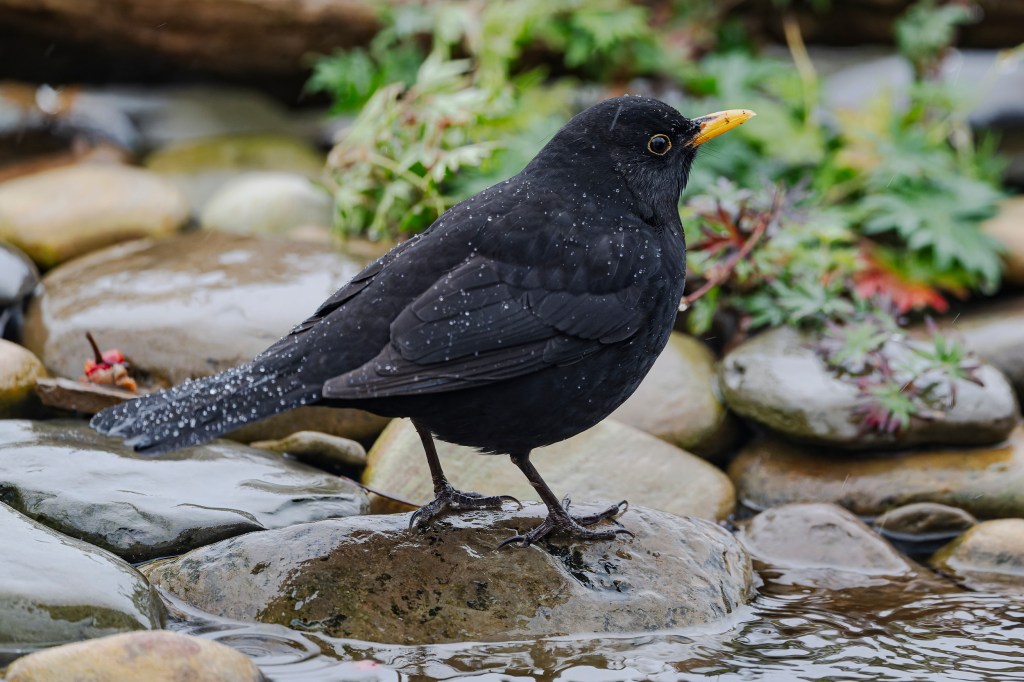
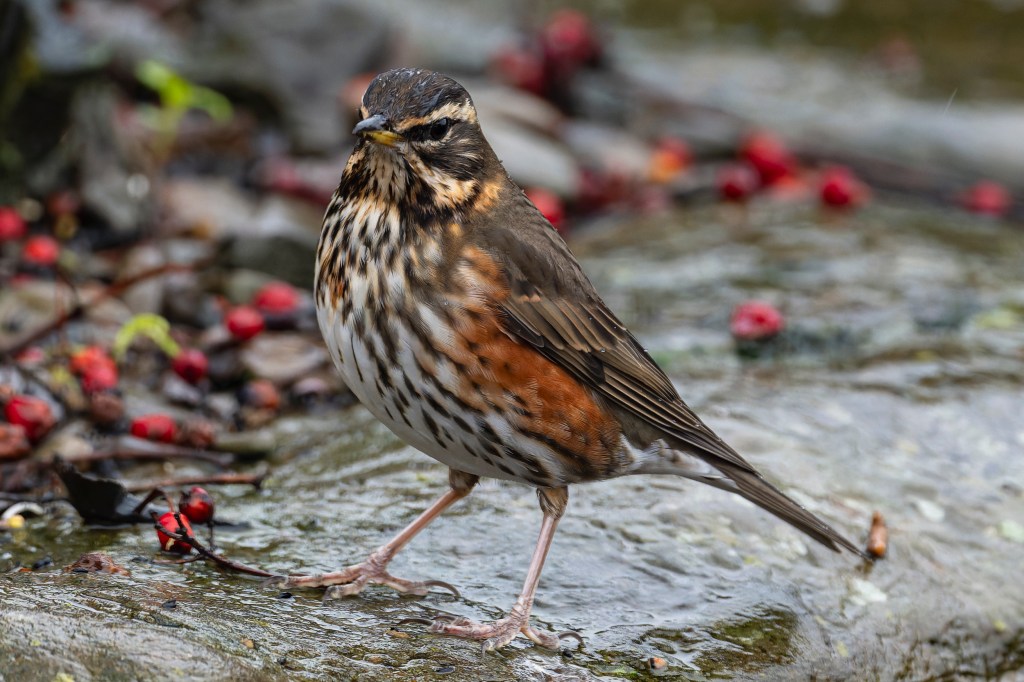
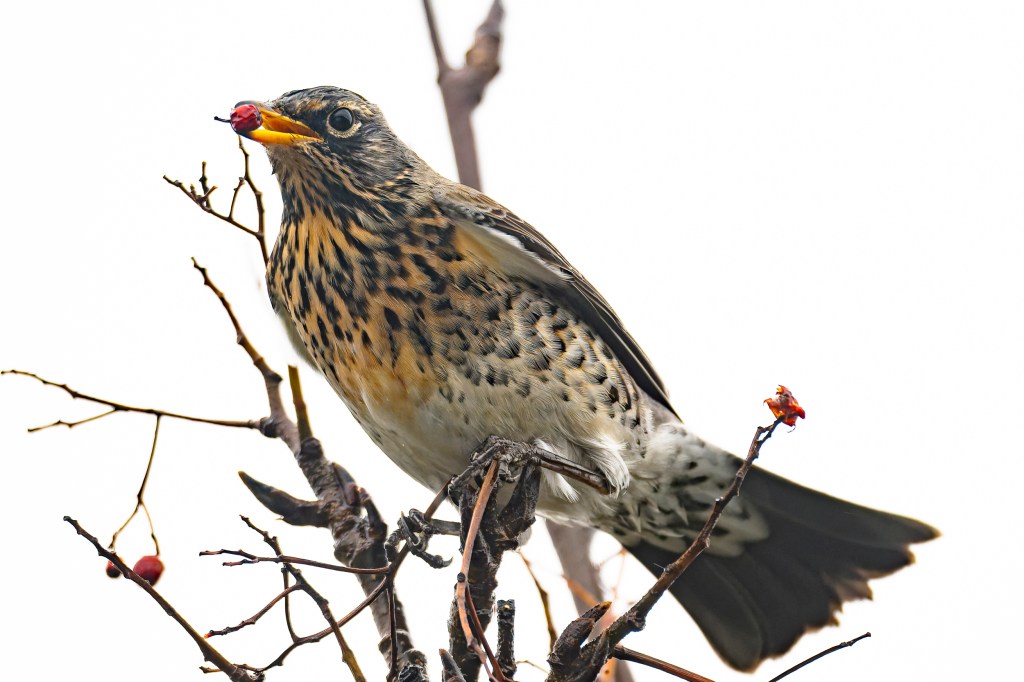
On a dreich and grey day the first of the winter thrushes arrived, Icelandic Redwings and Scandinavian Fieldfares. On the island of Westray over 3600 Redwings were counted in the space of 40 minutes. At home, garden Rowans are already stripped bare. Blackbirds arrived with them, a flock of twenty plus birds who kept themselves busy by rootling through shelter-belt leaf litter. They’re the first we have seen since August, like the thrushes these birds hail from colder climes, from Scandinavia. In Spring they’ll leave us, to be replaced by birds from the South, coming North to breed in our Short Orkney summer.
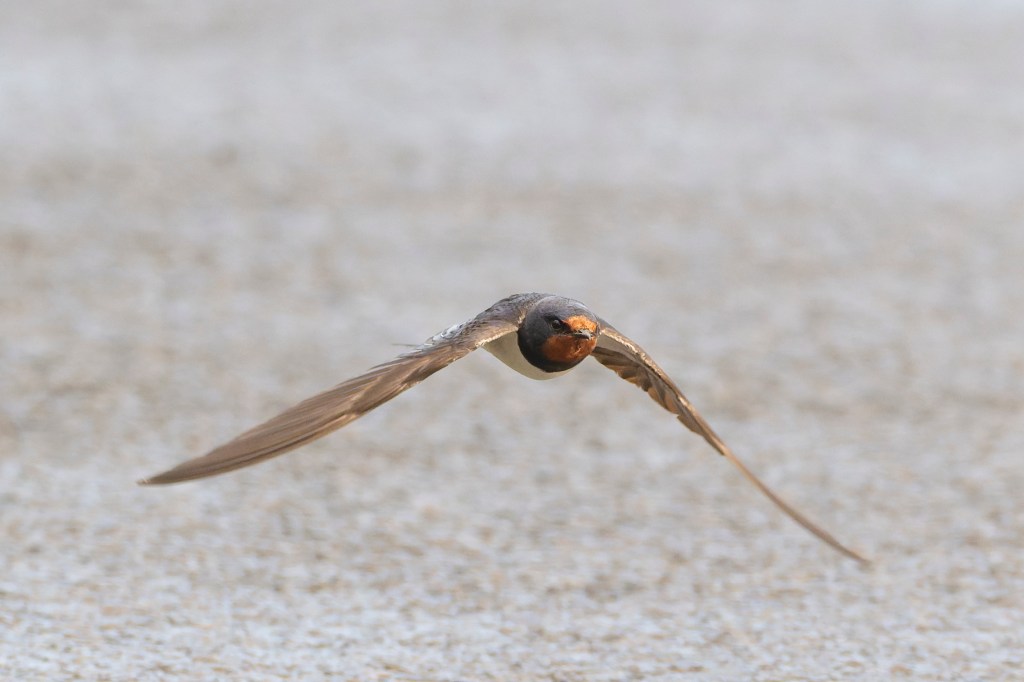
The Swallows have left us. On an early October day they put on one last show, a dozen or more birds following the same loop – skim the road at zero inches, hook right, twist through the back garden, top the the trees, hook right again, skim the the road at zero inches. They were the first we had seen for a while and I wonder if they were birds from further North, already on migration. It’s a quiet road and to get down to Swallow eye level I sat down on the tarmac, when a car arrived unheard I got a smile, a wave and a quizzical “why is Gary sitting in the road with a camera” look.
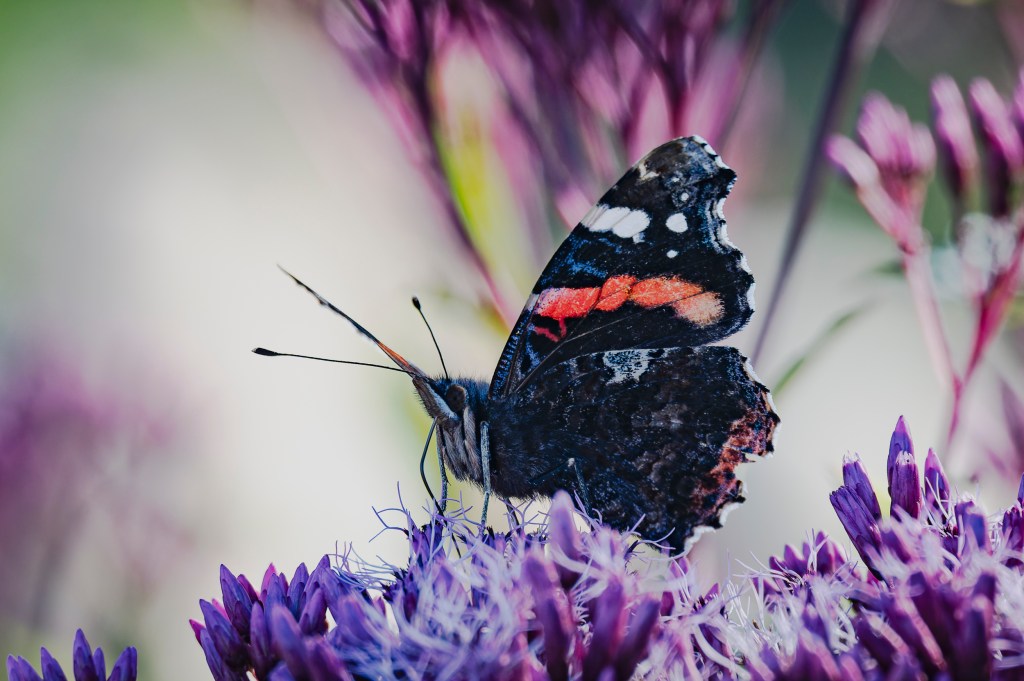
We’ve seen the last of the butterflies too, early October brought Red admirals, feasting on sedums and Joe-pye weeds, building up their reserves for a migration South, to Europe or North Africa.
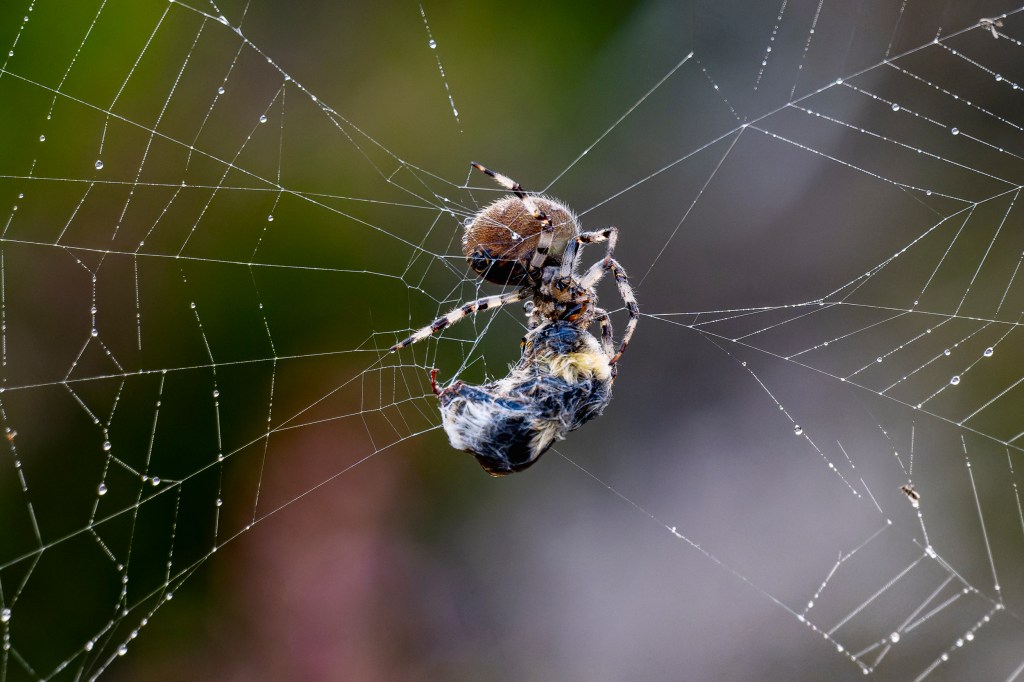
Bumblebees joined them, they were on borrowed time, the last of the workers seeking food for new queens. Before the old queen and the workers die, the new queens leave the nest and seek winter shelter amongst mosses and dead grasses. With luck we’ll see them on the wing in the Spring of next year. Not all of the older bees get to fade with the season, some go down fighting. On the moor, behind the half naked shelter belt, Orb weavers spin their traps, stringing nets of silver across narrow ginnels. More often than not a bumblebee will tear itself free from the snare but when it loses the fight, the spider will wrap it with care in a straitjacket of silk, an arachnid packed lunch.
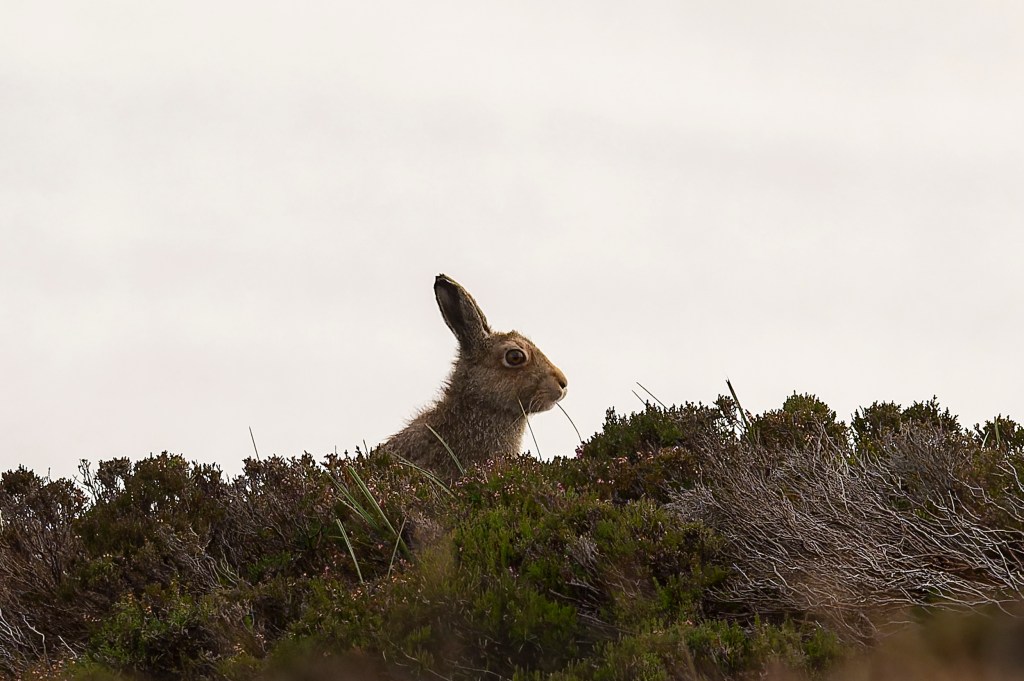
Beyond the spiders, higher up on the moor, Mountain hares are still wearing their summer coats, it won’t be long now before they turn from blue-brown to piebald and then, with the exception of their ear tips, as white as the snow that up here may never arrive. Their winter will likely be spent in a russet landscape, where they’ll sit quietly during the day and feed at night, avoiding the attentions of the ever vigilant Eagles that soar in the skies above them.
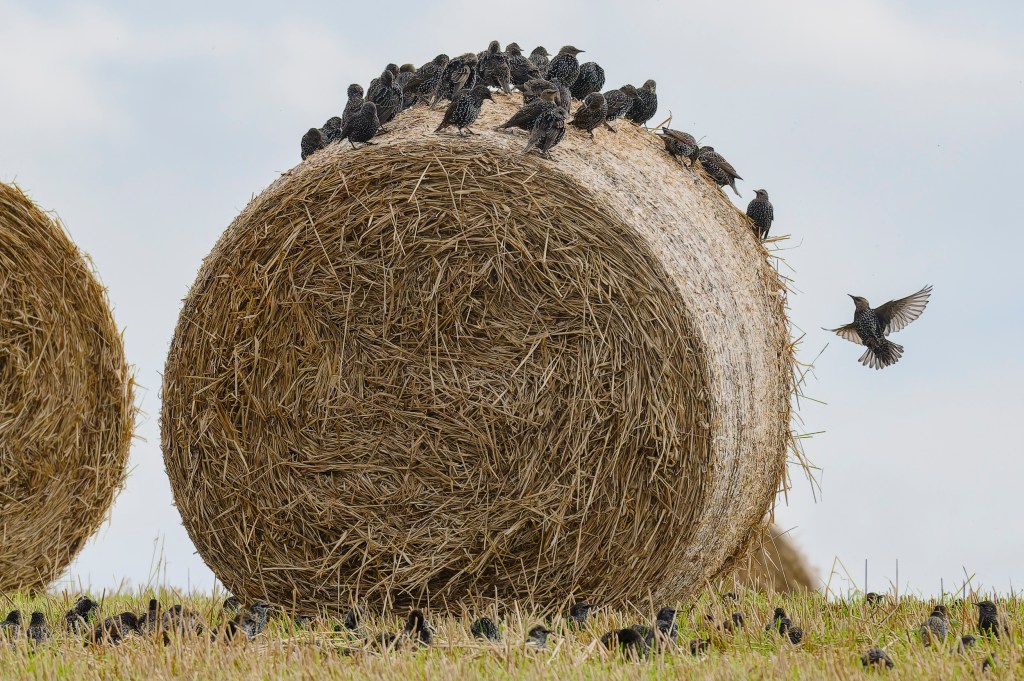
Lower down in the landscape, closer to the sea, in the few fields that can be tilled here, the last of the cereals have been harvested. Barley and oats that will be kept on the island, vital stock feed for the coming winter. For a week or two after the harvest the cut fields are dotted with round bales, once they’re collected the bare stubble will remain unploughed for the winter, a magnet for wildlife. Last week, on one field alone, with a quick scan of binoculars I counted sixteen species of bird. Starlings were there in numbers, using the yet to be collected bales as staging posts. Somewhere to gossip and preen before getting back down to the serious business of feeding.
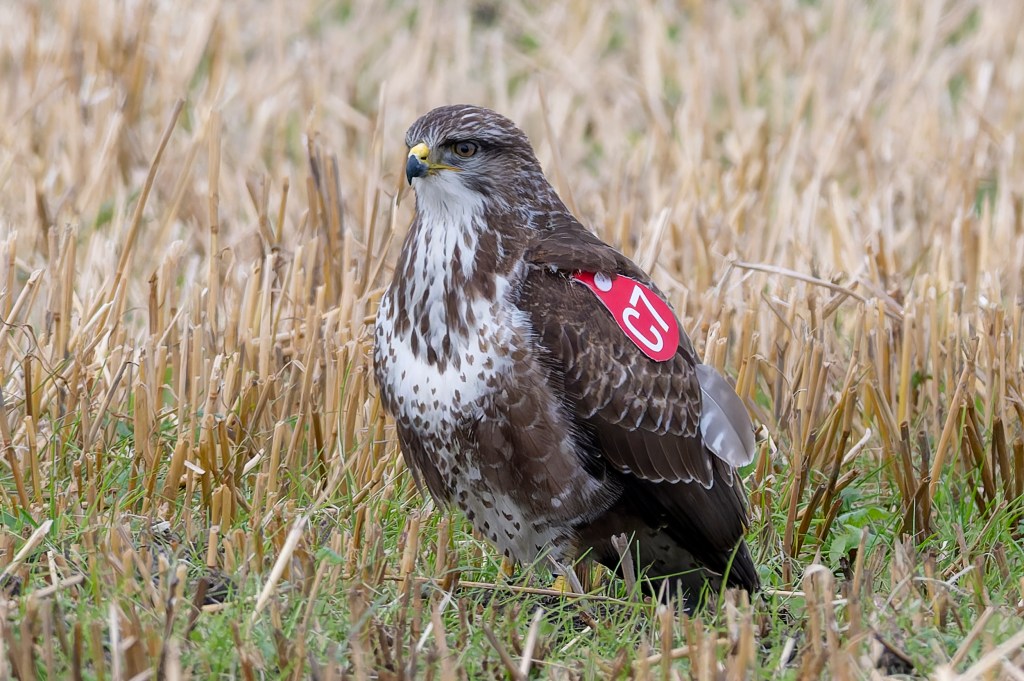
A more unusual sight on the stubble was a Common buzzard, a youngster who wore the name tag C7. In orkney un-common buzzard would be more appropriate. They first bred on Hoy in 1905 and until 2005, when a pair bred on the Orkney mainland, were confined to the crags and valleys of this island. Even with their expansion from Hoy, numbers are still low, a few breeding pairs. The tag is part of a long running scheme to track the movements of youngsters once they have left the nest.
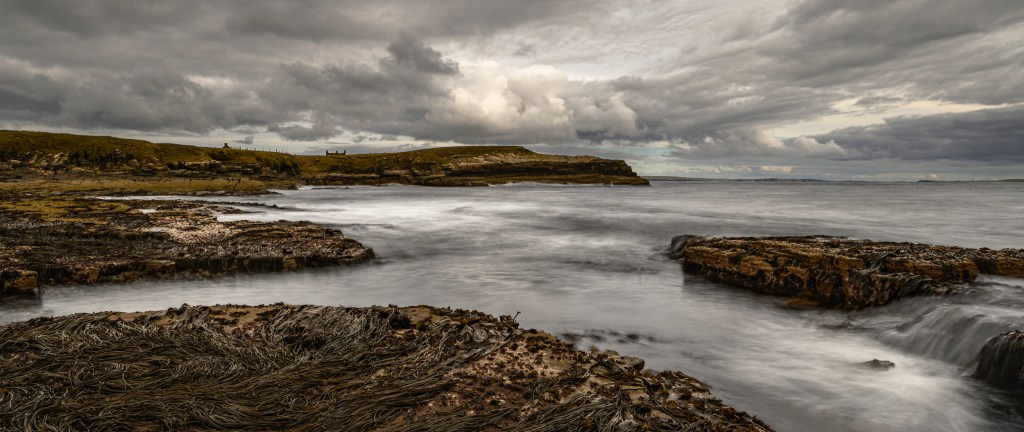
A sure sign of the changing seasons came on Thursday past, a day of wind and heavy showers. In this open landscape you can see the weather coming, I was out on the coast of South walls and when the distant Hoy hills, some ten miles to the North of me, disappeared under a shroud of slate grey, I made for a roofless byre, stooping through the low doorway and taking shelter in the lee of its inner gable. The rain arrived a few minutes later, sheets of it, driven across the land by the wind.
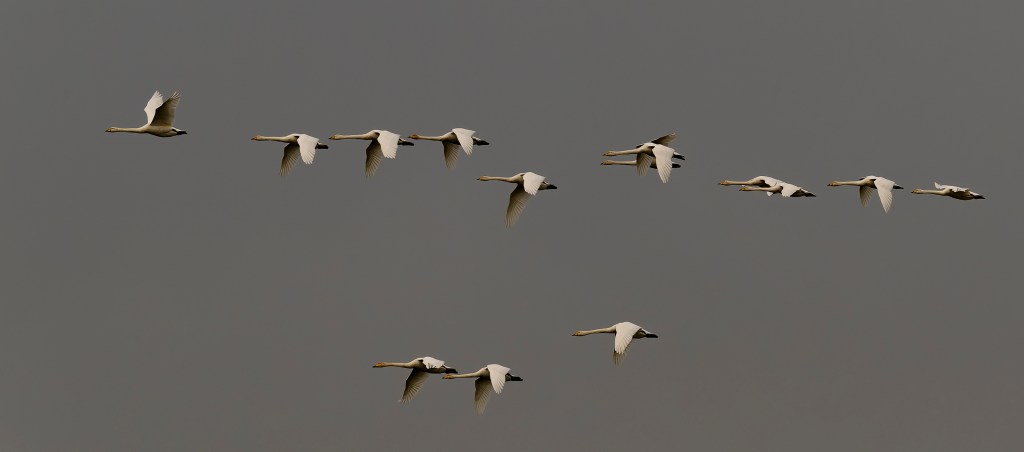
Over the noise of the wind came a low trumpeting, a brass band tuning up – Whooper swans. Birds that had spent the Summer in Iceland, 14 of them, necks outstretched, heading true South towards Caithness. Harbingers of Winter. Rain forgotten I watched them for as long as I could, half way across the Firth they disappeared, lost in the murk. They’re not a bird of Hoy, they settle now and then, a day or two’s pitstop to refuel and then on they go. Their wintering grounds are further south of here, parts of Scotland and East anglia see them in huge numbers. It makes hearing and seeing them all the more special though, a brief few minutes that made the day.


The marvels of migration never cease to amaze me. How brave these feathered friends are to travel so far. Fantastic photos and can almost hear the sound of the sea and wild winds.
LikeLike