
This weeks six on Saturday is a half dozen plants that have missed the memo about it being November in Orkney. With the garden rapidly fading, and pretty much over for the year, these six have clearly decided that November is the new July.
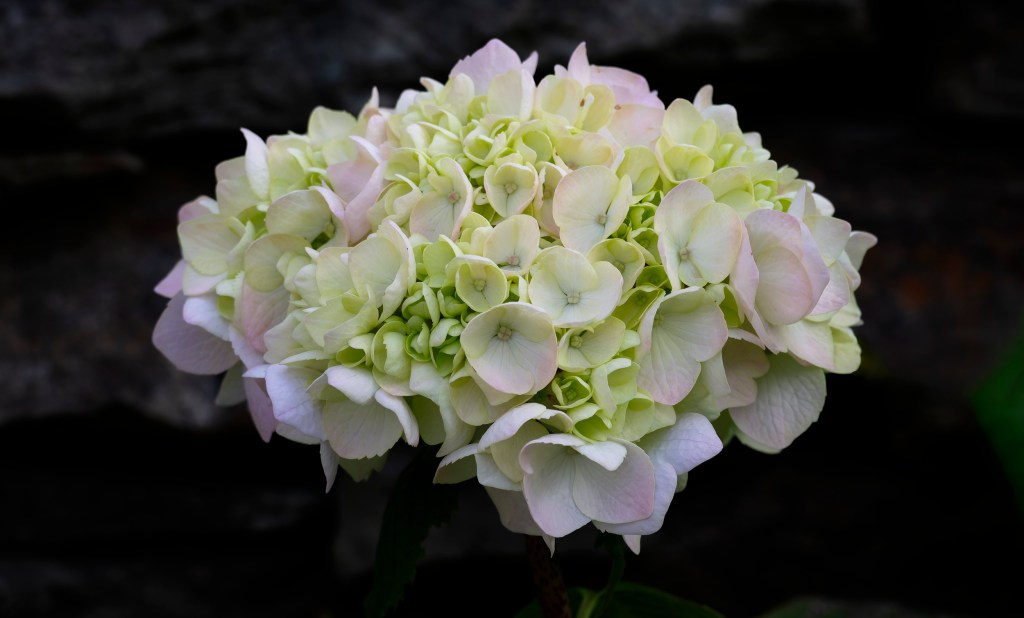
First up is a Hydrangea. It came to this garden as a gift, a cutting from friends who live along the way. Their garden, despite being only three hundred yards from ours, is far more sheltered. When they moved here 40 years ago it was to a house surrounded by bog, in the first year of their arrival they started to plant trees – half a lifetime later they live in a small woodland. We planted the hydrangea in what for us was a fairly sheltered front garden spot. It instantly scorched off in the wind and spent the summer looking decidedly unhappy. The following year though brought a transformation, it grew green and vibrant and since then has gone from strength to strength – which proves you should never be too quick to give up on an apparently unhappy plant. We’ve no idea of the name of it, and even if we did, for us it will always be “Keith and Lynns hydrangea”.
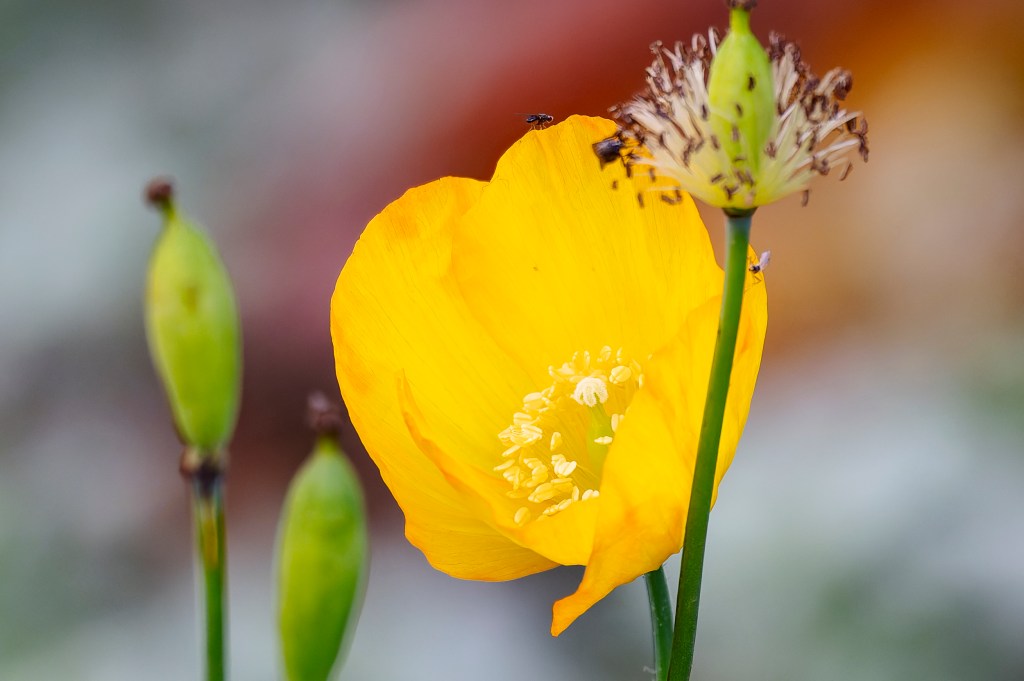
Next up is a welsh poppy, a plant that once sown you will never be without. At home they’re nomadic, never settling, always on the move. They pop up anywhere, in gravel paths, in full sun, in deep shade – they’ll often appear from beneath Hosta leaves, growing horizontally for the first few inches of life before turning 90 degrees into the light.
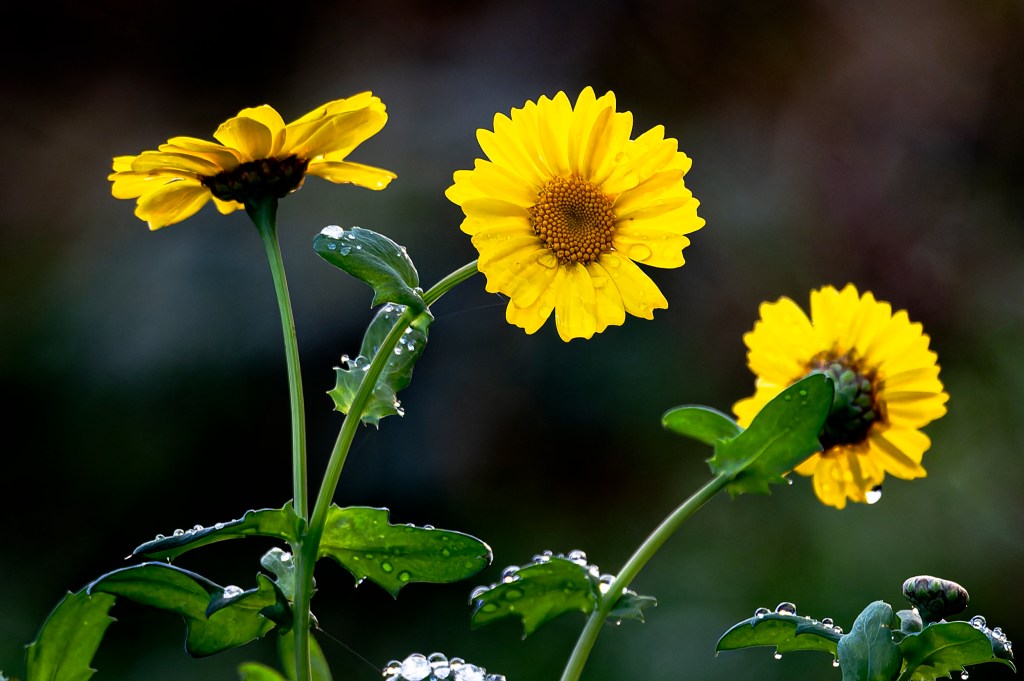
Next comes an annual wildflower, a Corn marigold, like the hydrangea it came as a gift, this time from a niece, a hessian bag full of marbles of Dorset clay, each of which was laced with wildflower seed – Bee bombs. The idea is that you simply throw the balls of clay onto suitable ground and then wait for the flowers to arrive. The only flaw I could see in this was that the flowers would grow in clumps so the marbles of clay were crushed and mixed with fine dry sand, making it easier to scatter the seed evenly. The sand is also a handy marker, to see where you’ve been. Like all the others on this page they shouldn’t be flowering at this time of year but nature doesn’t do vacuums, all it needed was a bit of accidental soil disturbance and up they popped.
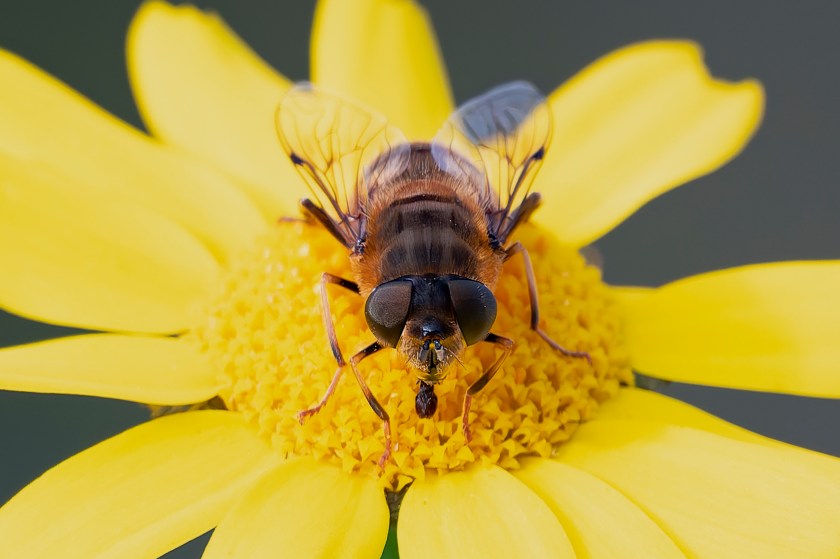
They’re a great plant for Hoverflies, the one below, to give him his full Sunday name, is a Tapered drone fly.
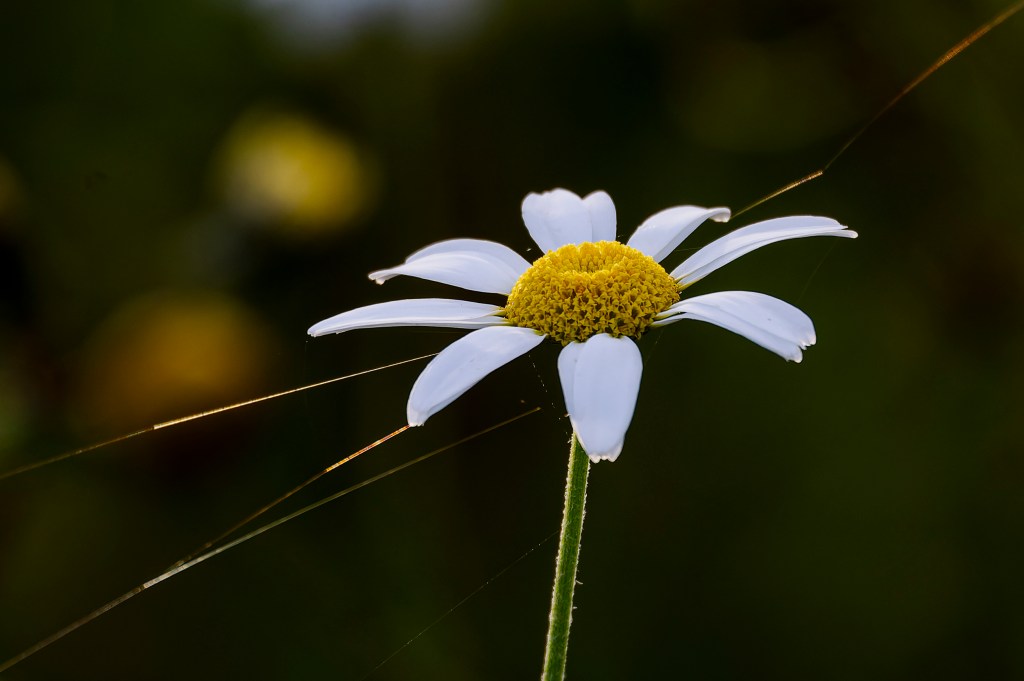
Next comes another cornfield annual, the Corn chamomile, from the same bee bomb as the Marigold. Like the Marigold it’s a once common weed of cereal crops that is becoming increasingly rare in the wild. A plan for next year is to sow an area of ground with Bere and Oats and a mix of annual wildflowers, a cornfield in miniature. The flower in the picture, with its fine guy ropes of spider-silk gossamer, appears to be braced and waiting, ready for the wind.
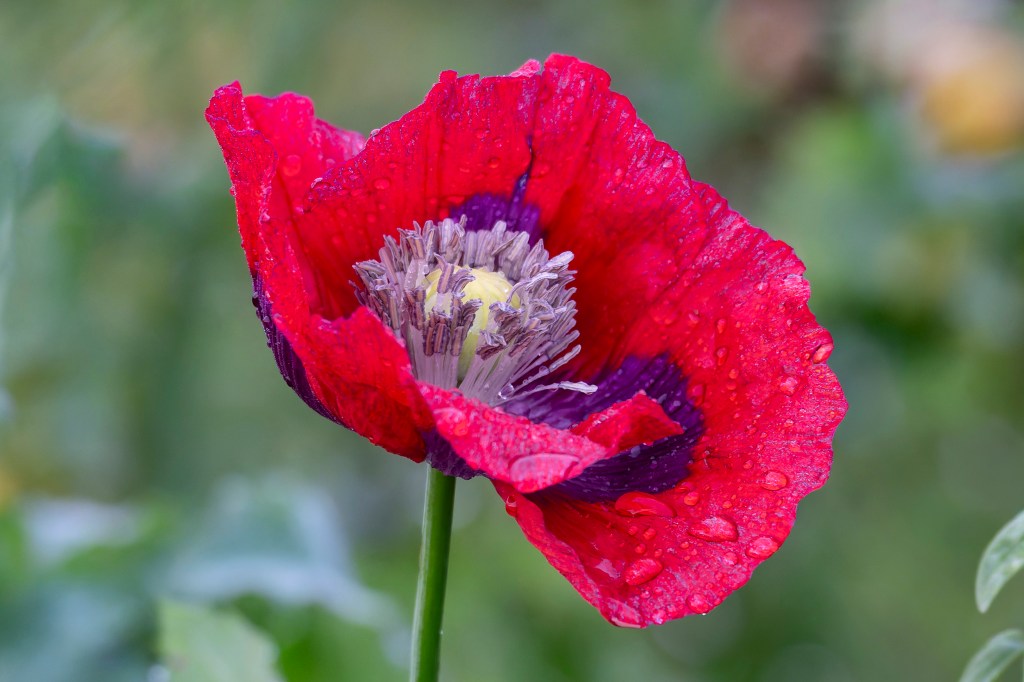
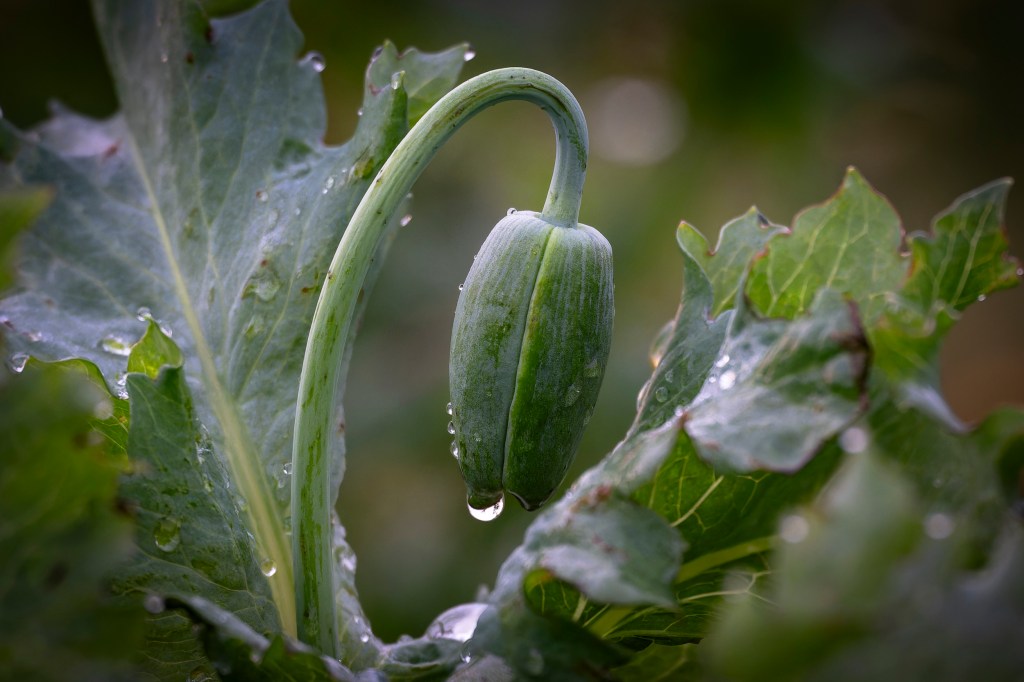
When we recently dug a couple of new ponds in the front garden, the soil from the holes was dumped at the top of the meadow, the spot where the mini cornfield is planned. I walked a rotavator over it, gave it a rough level with a rake and left it be, a project for next year. As already mentioned further up the page nature really doesn’t do vacuums and within days the bare soil started to green, up came a fine crop of annual sow thistles, together with the inevitable creeping buttercup and a few others that, when the the soil was still in the garden, would normally have been weeded out. A couple of weeks ago, as the sow thistles faded ,dots of red were seen, a few poppy heads, since then they’ve multiplied and even now are still putting out plump green flower buds, rushing to flower and set seed before the wind and the rain beats them down.
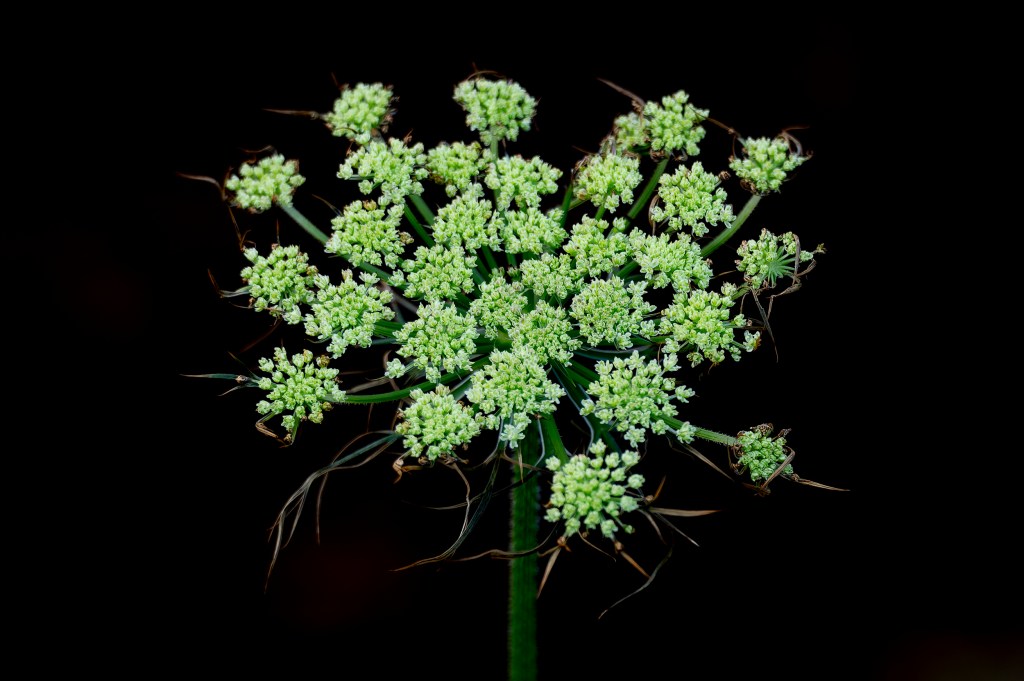
Last but not least comes the Wild carrot. A few years ago we imported hundreds of tons of subsoil into the top of the meadow, friends wanted rid of it, spoil from a house foundation, and we wanted it, to make an east facing bank where at the time, there was a steep drop. An ideal quid pro quo. After rotavating it, and removing any stone that was suitable for walling, I sowed the area with a native grass and wildflower mix, and, as a bit of an afterthought, added wild carrot to the brew. The grasses in the mix have proved to be too vigorous and it’s this area that next year will become cornfield annuals but before the grasses swamped everything out, the carrots had their moment in the sun, covering the area in a sea of creamy-green flower heads. Since then, like the welsh poppies, they’ve proved to be nomadic, popping up wherever it suits them, this one is growing at the edge of a bramble patch, 50 yards from where they were originally sown.


Wonderful photos Gary. I must be the only person in the world unable to grow poppies! You would think the Welsh one would love it here, but not a single one germinated when I tried a few years ago.
LikeLiked by 1 person
Absolutely love them all 🌼 and what amazing intrepid blooms and fascinating plantings! Your narrative enriches the imagination to see that on the rugged grand isle of Orkney more wonders exist than one might dream possible.
LikeLike